非常感谢 ATELIER BRÜCKNER 分享内容给 WeHow。
Thanks to ATELIER BRÜCKNER for sharing with WeHow.

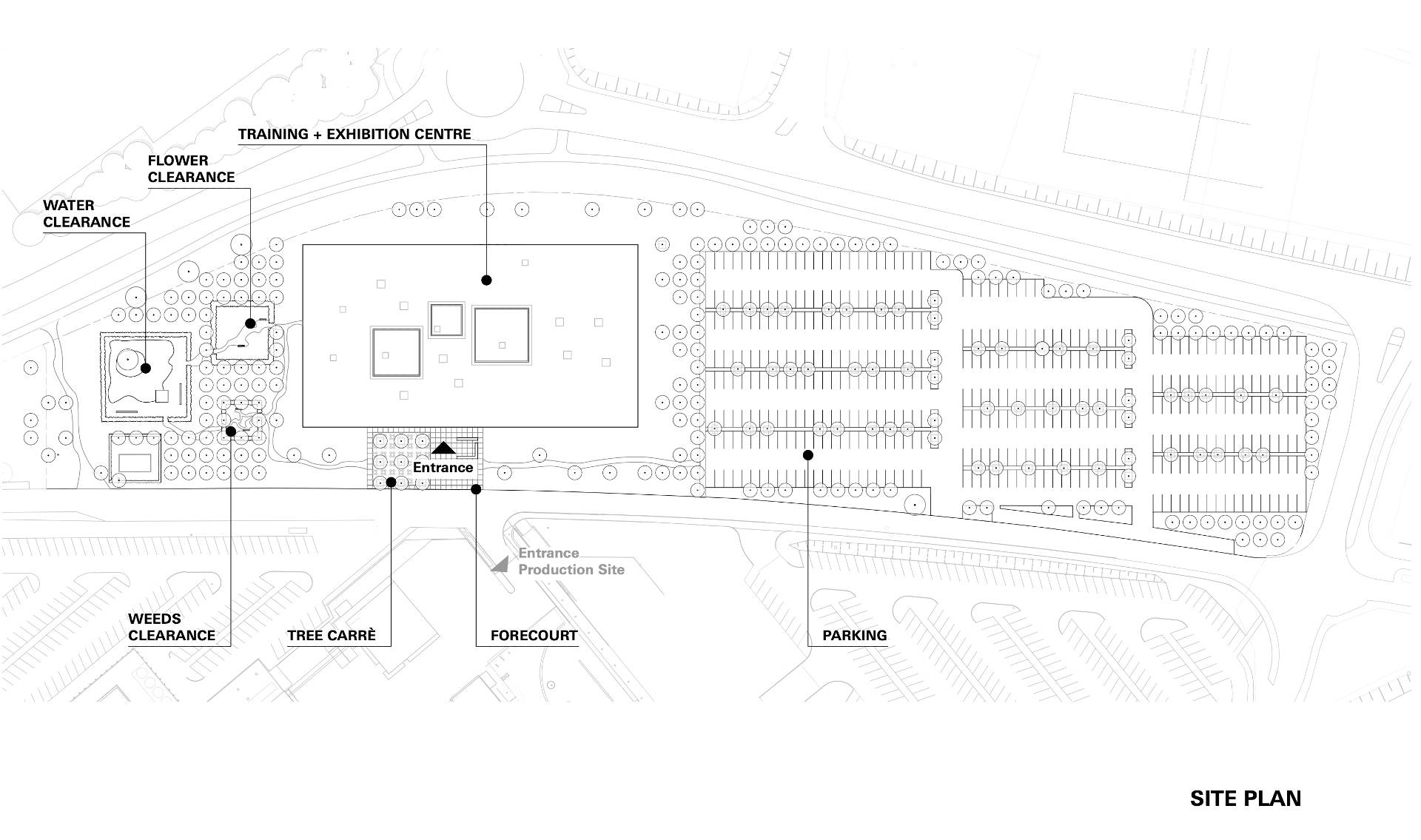
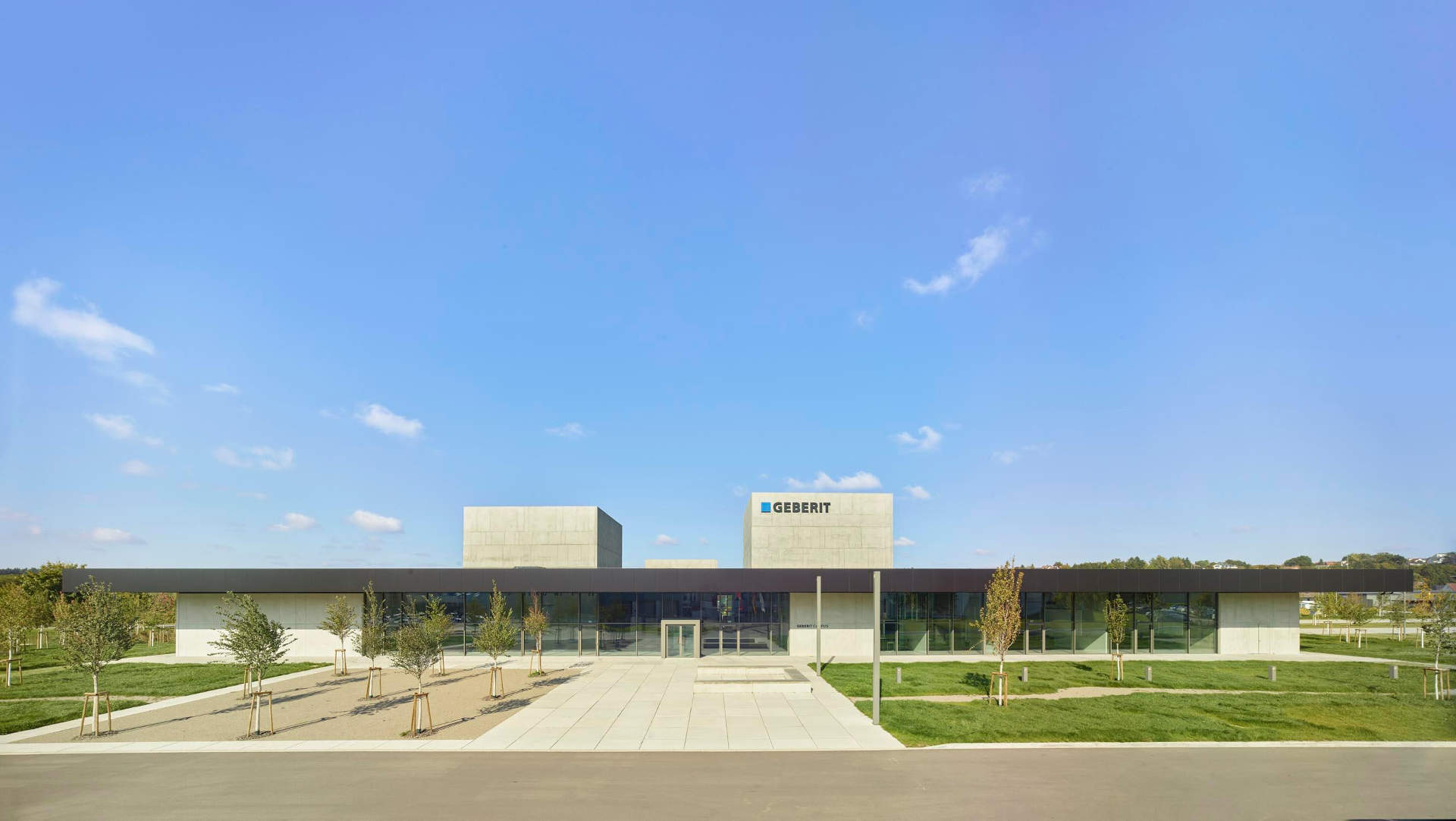
位于普富伦多夫(Pfullendorf)的吉博力园区不仅是一个培训中心,更是展览场地和品牌空间 。ATELIER BRÜCKNER 负责了该建筑、展览及景观的总体规划 。新园区遵循一个明确的目标:以直观、易懂的方式传达专业能力与实用功能,并使其触手可及 。
The Geberit Campus in Pfullendorf is a training center, exhibition venue, and brand space all in one. ATELIER BRÜCKNER was responsible for the general planning of the building, exhibition, and landscaping. The new campus pursues a clear goal: to convey competence and function comprehensibly and make them tangible.
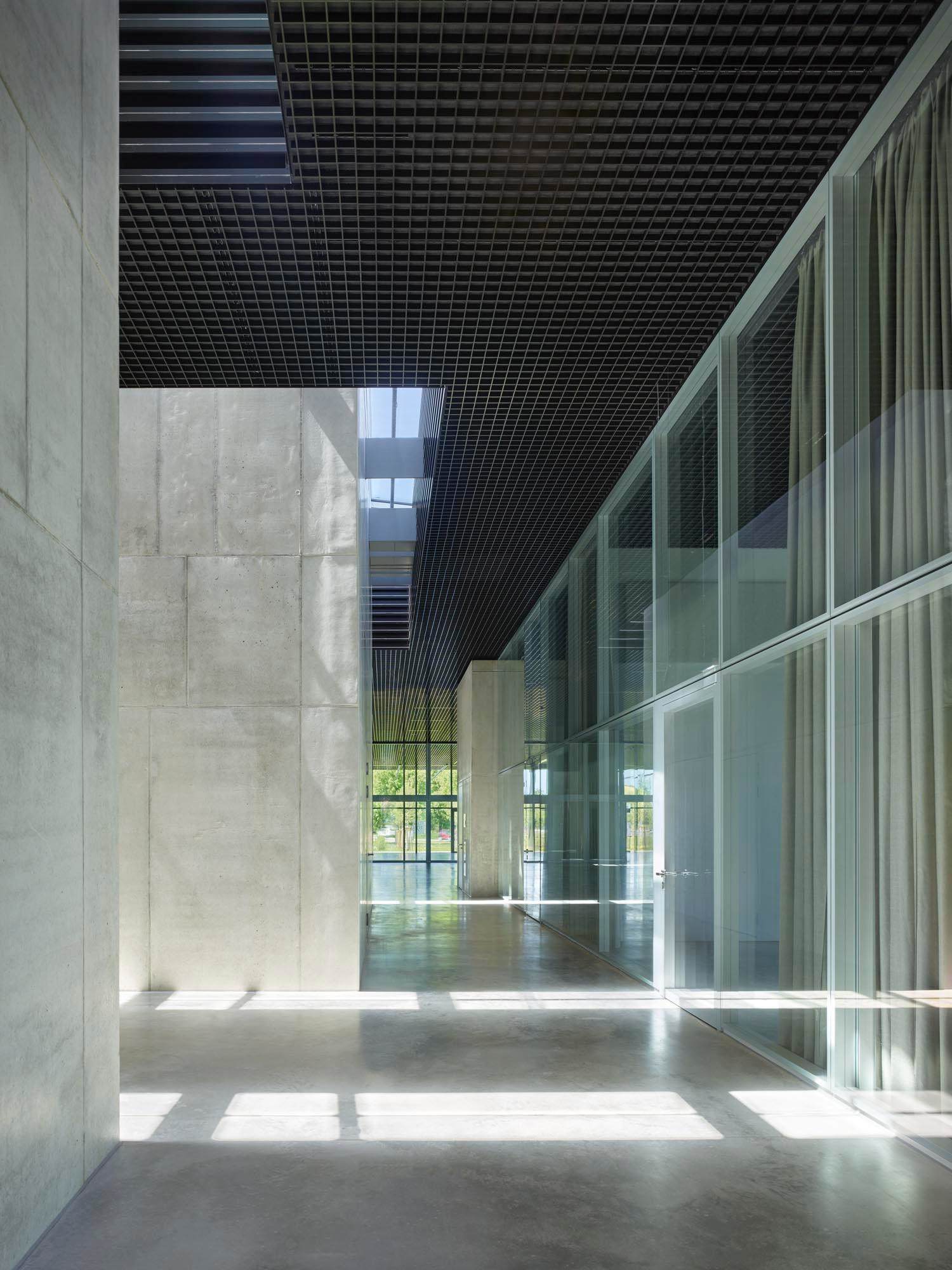
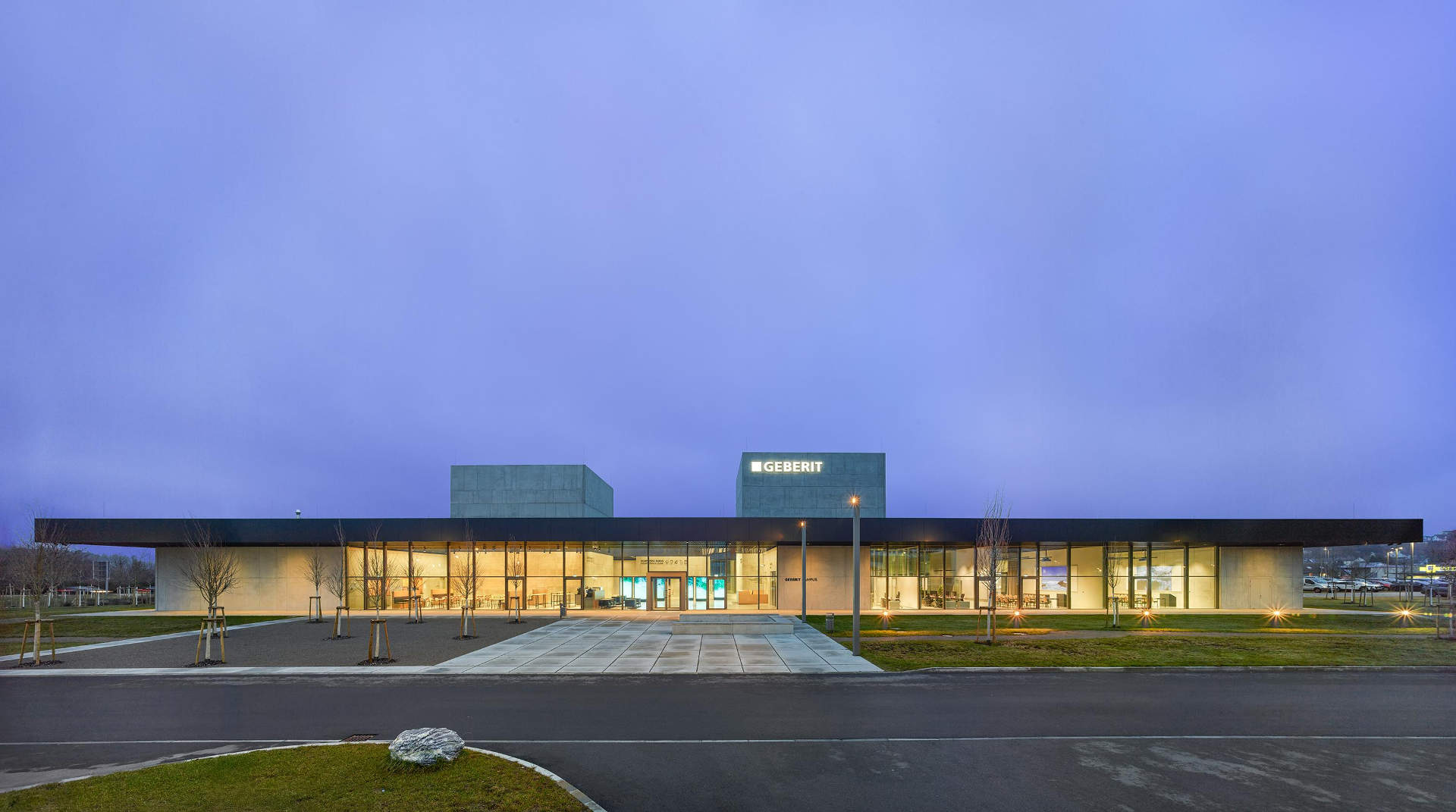
建筑基于一个清晰且被贯彻始终的基本原则:正方形,并在空间上延伸为立方体 。源自吉博力的品牌标志,正方形决定了建筑的网格、平面布局和体量 。园区被设计成一个展亭,被精简为地面、立方体和宽大的悬挑屋顶 。
The architecture is based on a clear, consistently implemented basic principle: the square, which continues spatially in the cube. Derived from the Geberit logo, the square determines the grid, floor plan, and volume. The campus is designed as a pavilion, reduced to the floor, cubes, and a widely projecting roof.

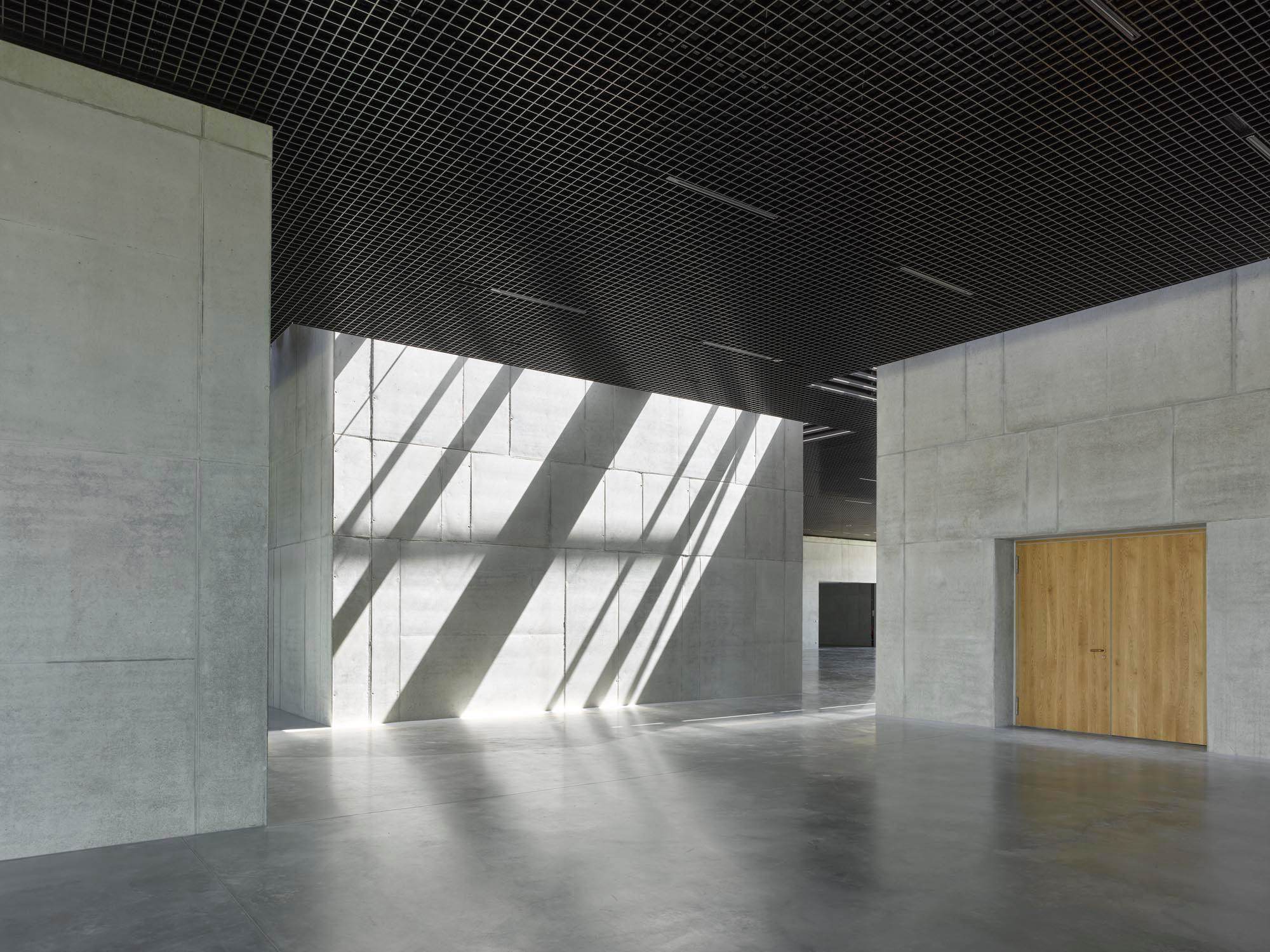
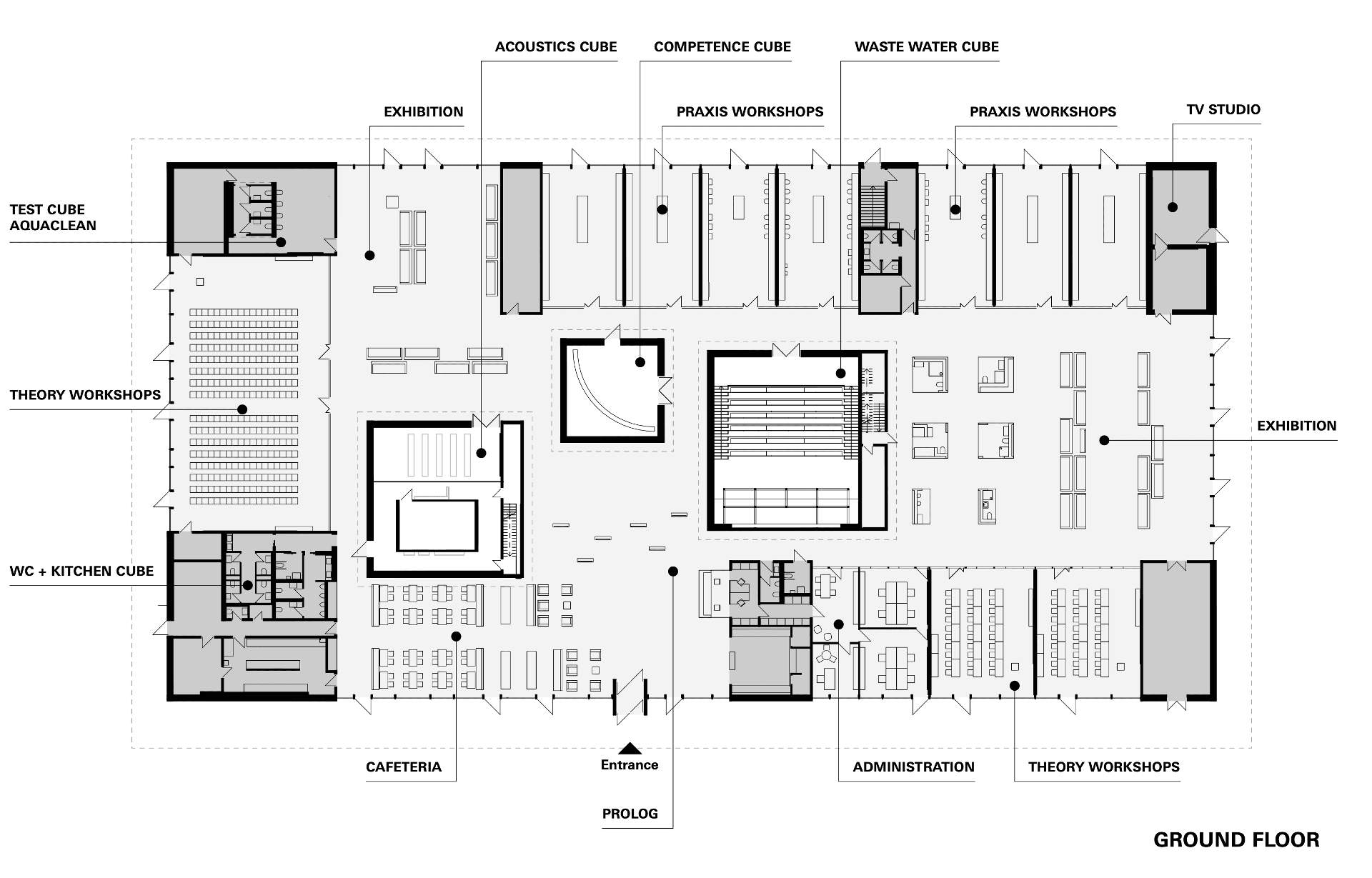
三个巨大的中央立方体穿透屋顶,标示出公司的核心专业领域 。它们在外部清晰可见,并在内部组织空间结构 。在它们之间展开了一个开放的空间网络,形成了一个循环系统:路径在此交汇,鼓励交流互动,并自然而然地产生直观的方位感 。
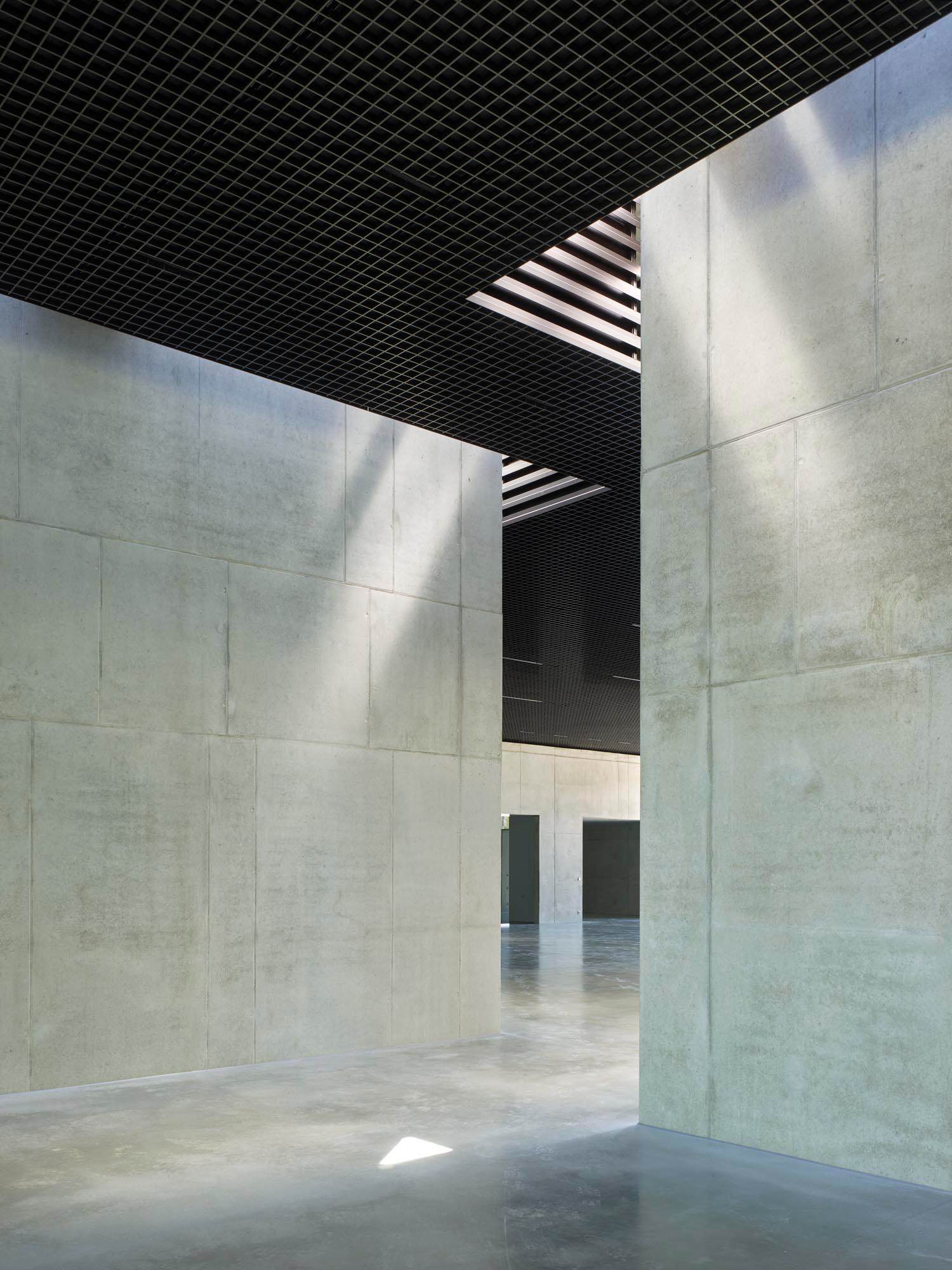
Three large, central cubes protrude through the roof surface and mark the company’s central areas of expertise. They are highly visible from the outside and structure the space on the inside. An open spatial structure spans between them, creating a cycle: paths cross, encounters are intended, and orientation arises intuitively.


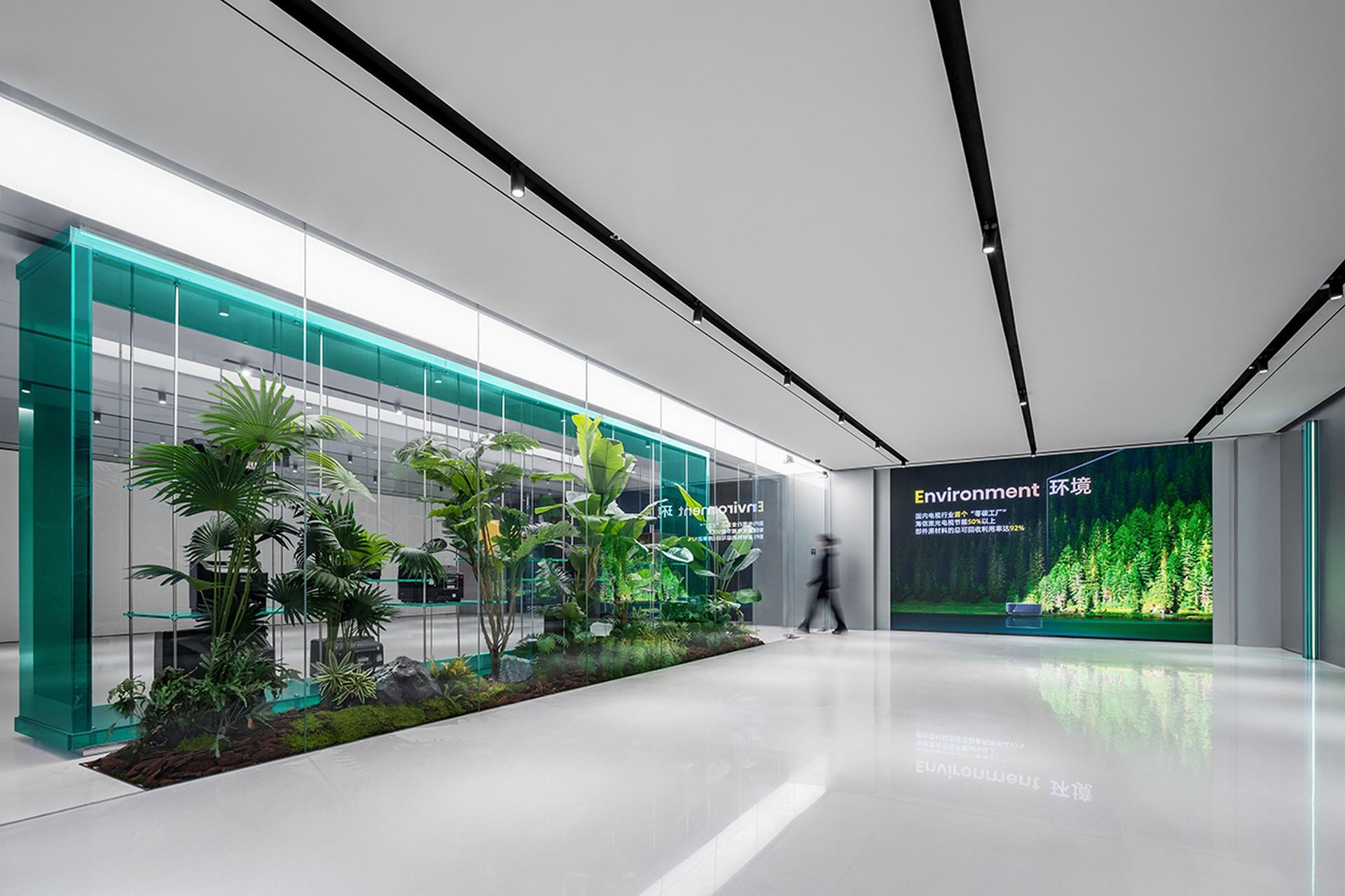
材质和细节同样遵循极简逻辑 。清水混凝土、玻璃以及少量点缀的精准橡木元素,营造出宁静与专注的氛围 。明暗区域交替,自然光被巧妙引导 。宽大的悬挑屋顶不仅能防止过热,还赋予了这座无柱建筑一种悬浮的特征 。作为欧洲卫浴产品市场领导者的新园区,其设计理念极具可持续性:在运营中实现二氧化碳零排放,利用太阳能、热泵和雨水渗透技术,并获得了 DGNB 金奖认证 。建筑不仅被视为一种宣言,更被看作是用于学习和交流的实用且持久的基础设施 。
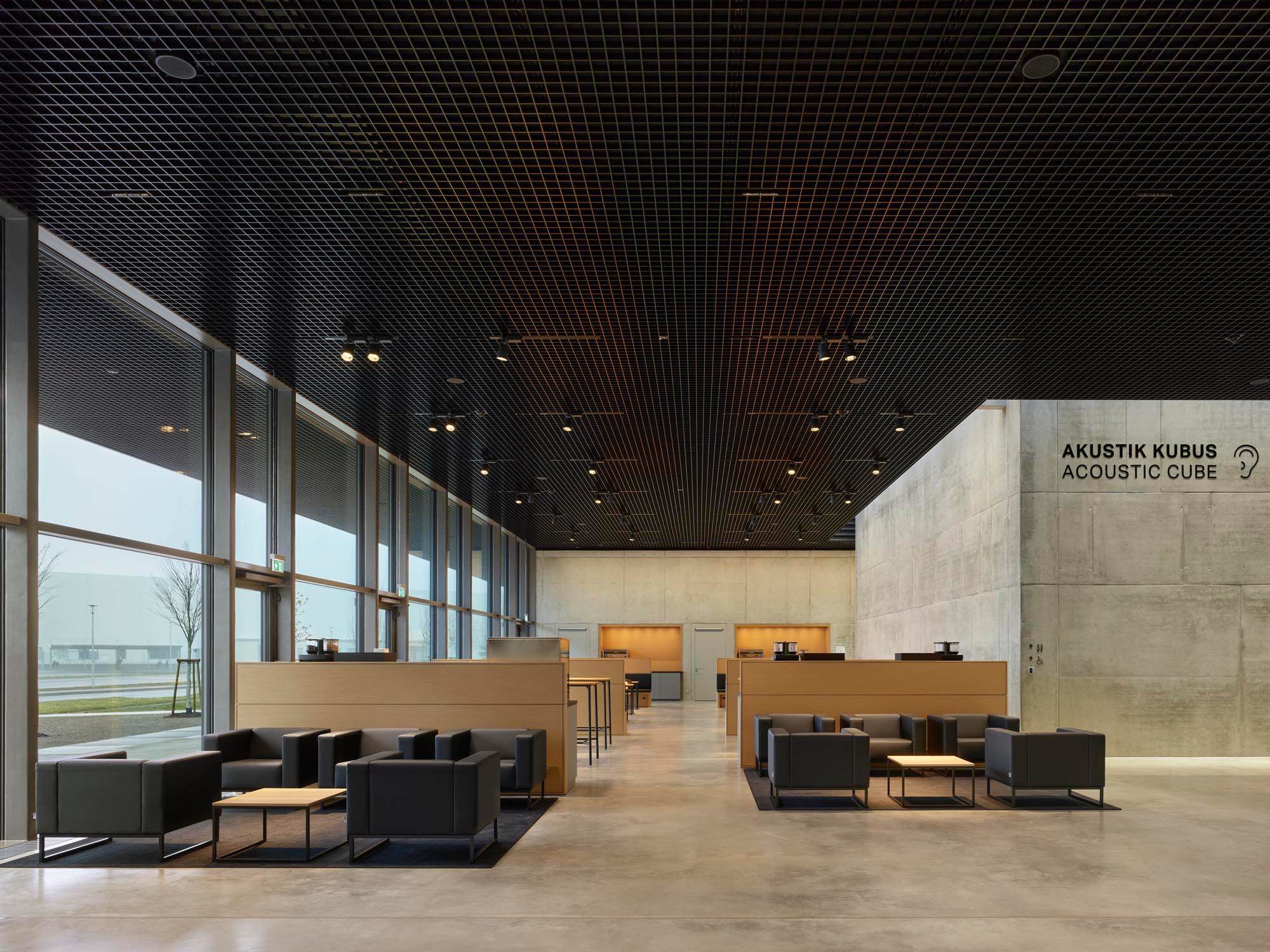
Materiality and detail follow the same logic of reduction. Exposed concrete, glass, and a few precisely placed oak wood elements create calm and concentration. Light and dark zones alternate, and daylight is deliberately guided. The roof with its large overhang protects against overheating and gives the column-free building its floating character. The new campus of the European market leader for sanitary products is sustainably designed: it operates CO2-neutrally, uses solar energy, heat pumps, and rainwater infiltration, and achieves the DGNB Gold certification. Architecture is understood not only as a statement but also as functional, durable infrastructure for learning and exchange.

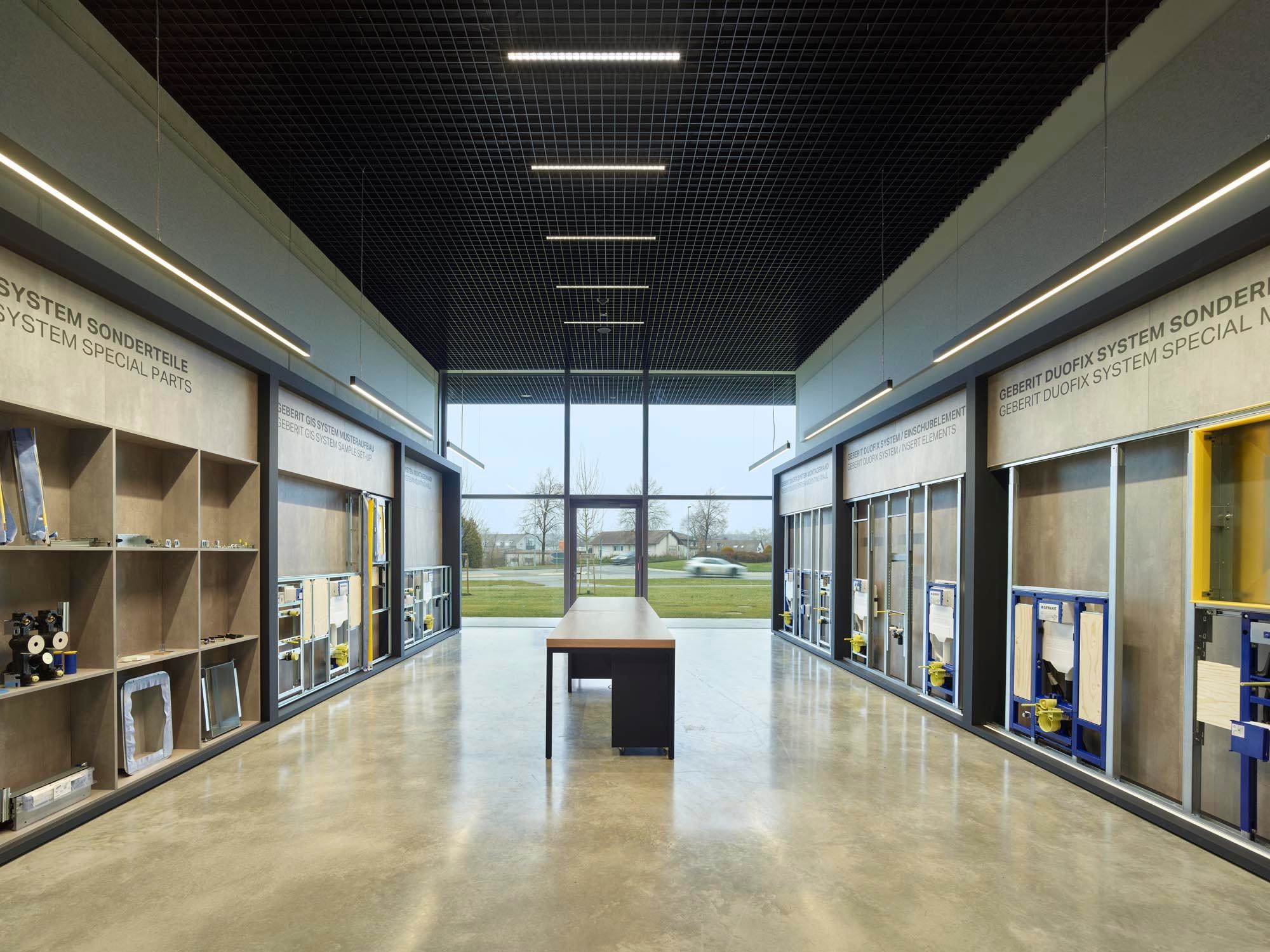
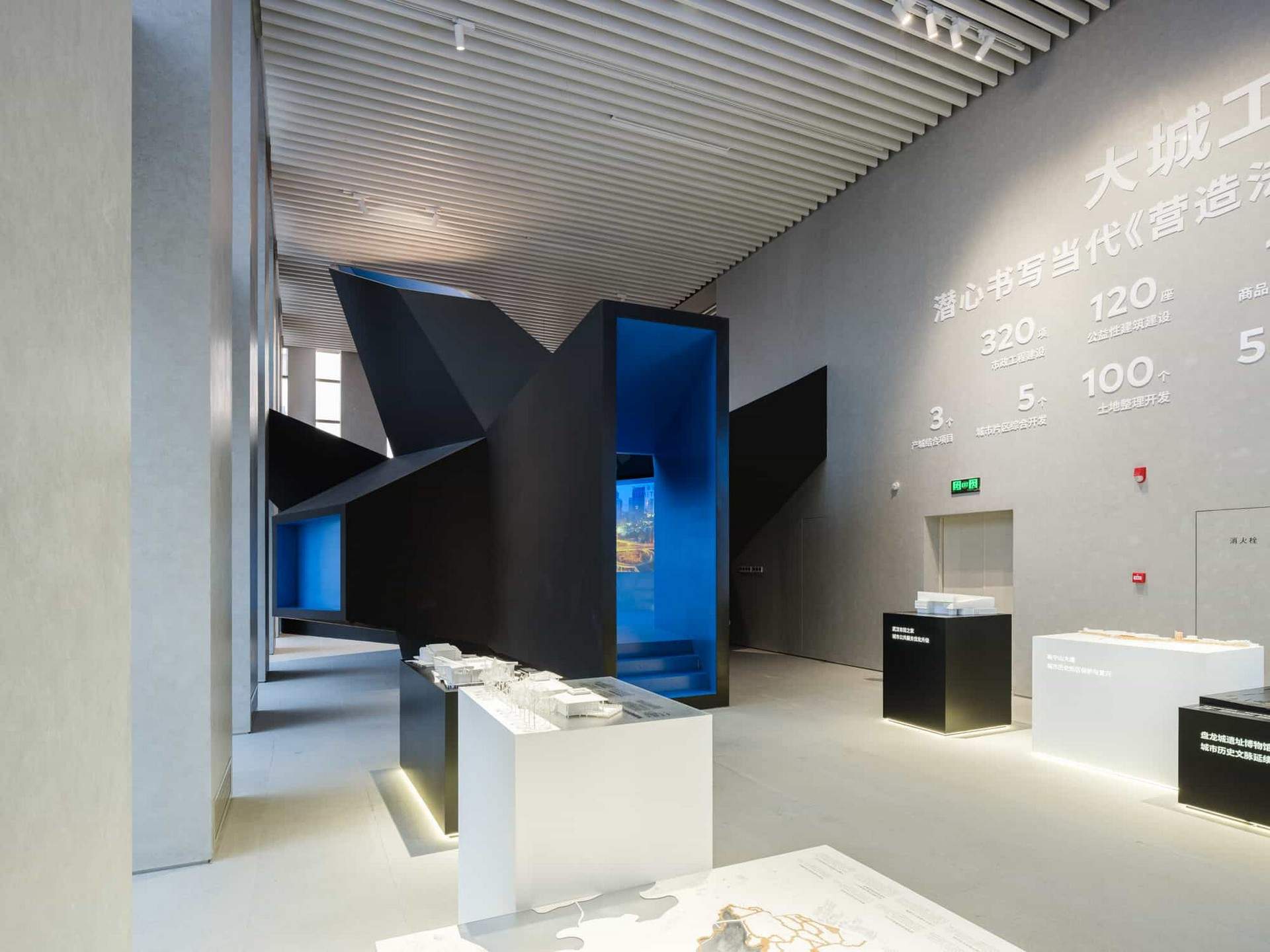
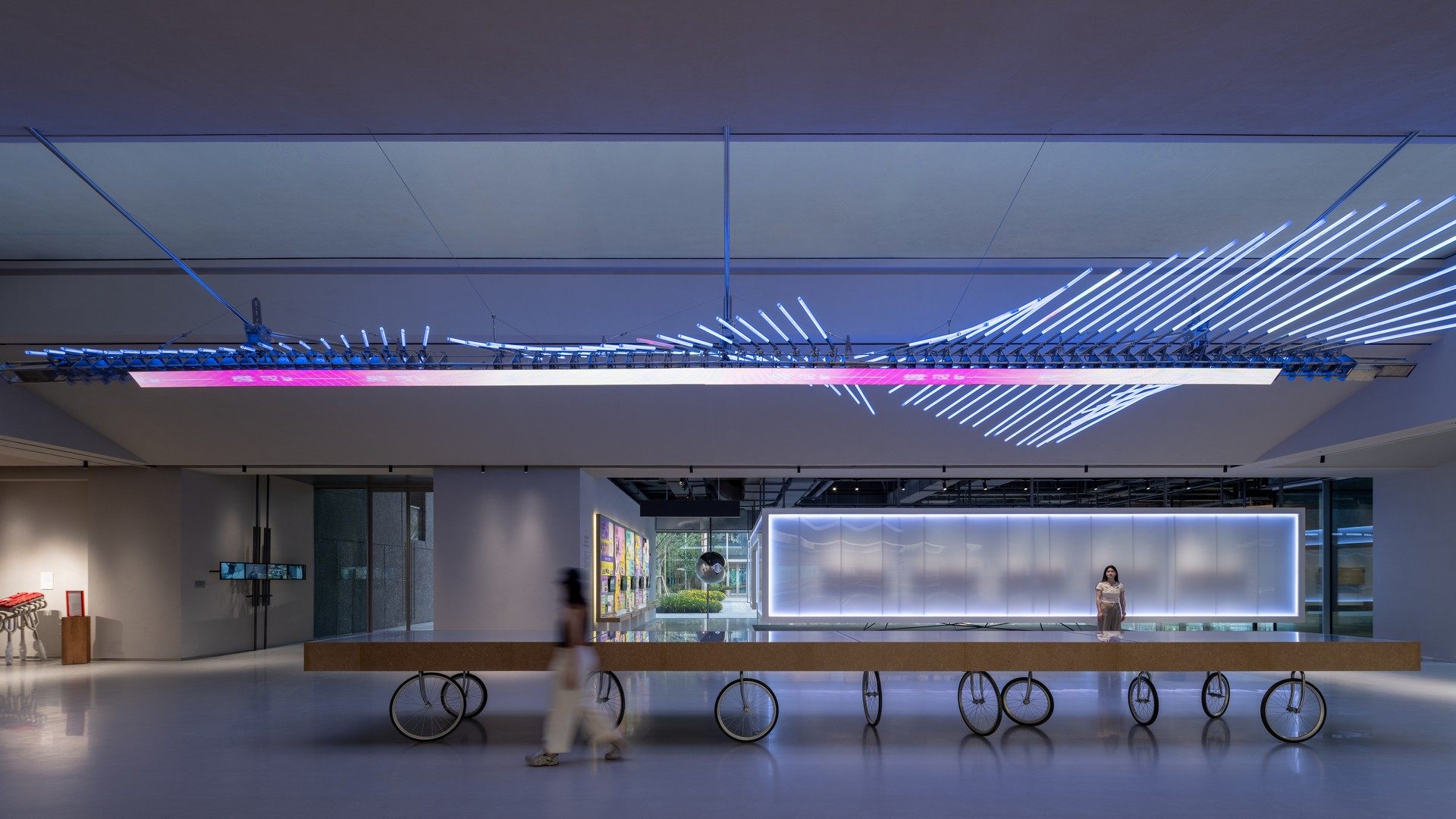
吉博力产品的展览被完全整合进这座建筑中,成为空间系统的一部分 。在内容上,该展厅分为两大主要领域:“墙后专业(Know-How Installed)”展示墙体内部的专业技术,而“设计与功能之美(Design Meets Function)”则呈现墙前的卫浴解决方案 。这种内容上的双重性反映在设计中:粗糙的钢筋混凝土与精准成型的光滑表面形成鲜明对比 。产品陈列在遵循正方形网格的模块化单元中:产品展品、数字信息面板和动手操作桌可以灵活组合与扩展 。
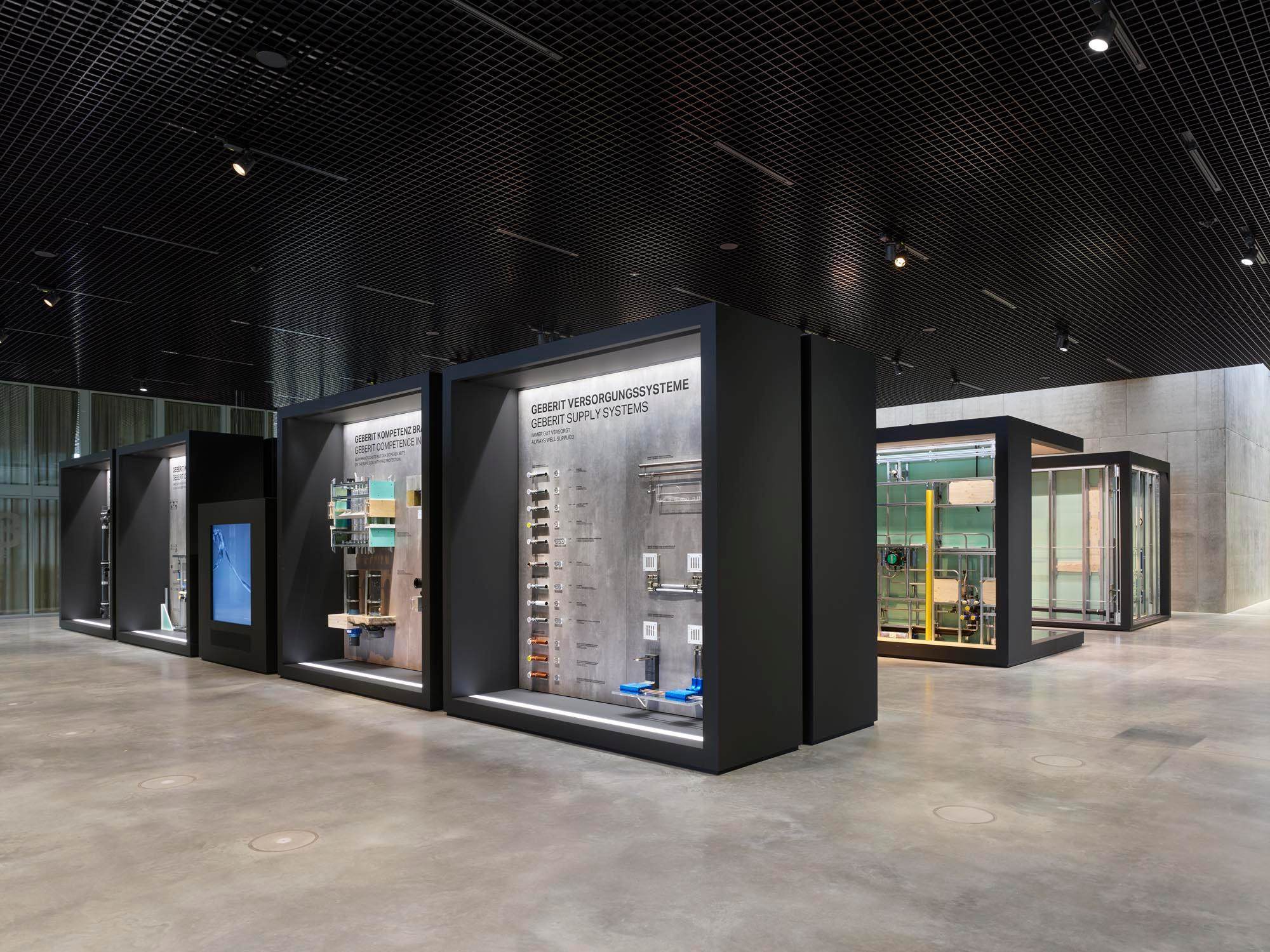
The exhibition of Geberit products is fully integrated into this architecture; it is part of the spatial system. In terms of content, this showroom is divided into two main areas: “Know-How Installed” for the expertise behind the wall and “Design Meets Function” for sanitary solutions in front of the wall. This dualism in content is reflected in the design: rough reinforced concrete contrasts with precisely formulated, smooth surfaces. The products are presented in modular units that follow the square grid: product exhibits, digital information surfaces, and hands-on tables can be flexibly combined and expanded.

以应用为导向的建筑任务是其中的一个核心组成部分 。步入式的空间装置展示了真实的浴室场景——从住宅、酒店到无障碍设施的应用 。在内侧可以看到完工后的浴室,而在外侧则展示了安装过程 。技术得到了解释和展示 。
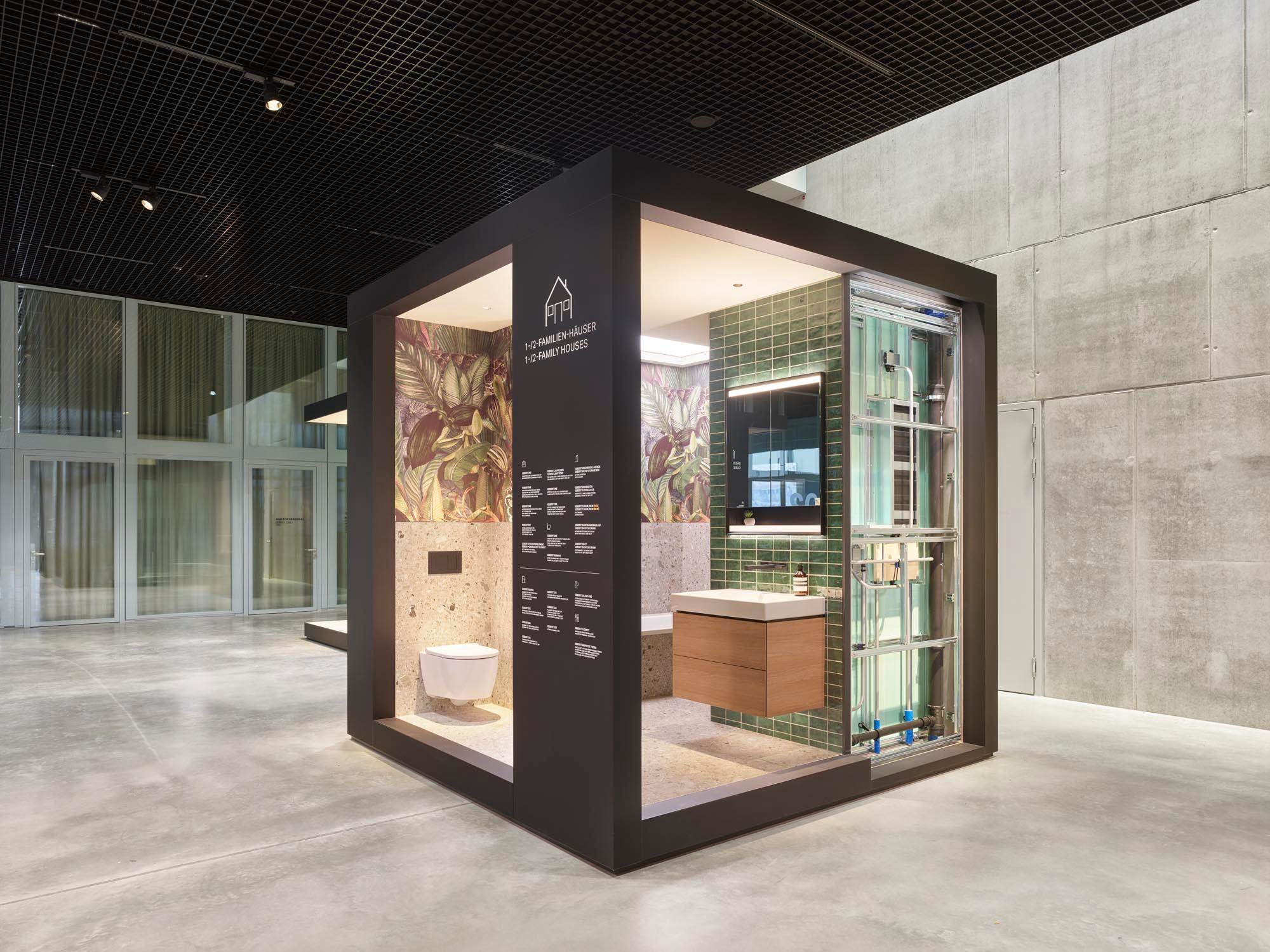
A central component is the application-oriented building tasks. Walk-in spatial installations show real bathroom situations – from residential buildings and hotels to barrier-free use. On the inside, the finished bathroom is visible; on the outside, the installation. Technology is explained and shown.

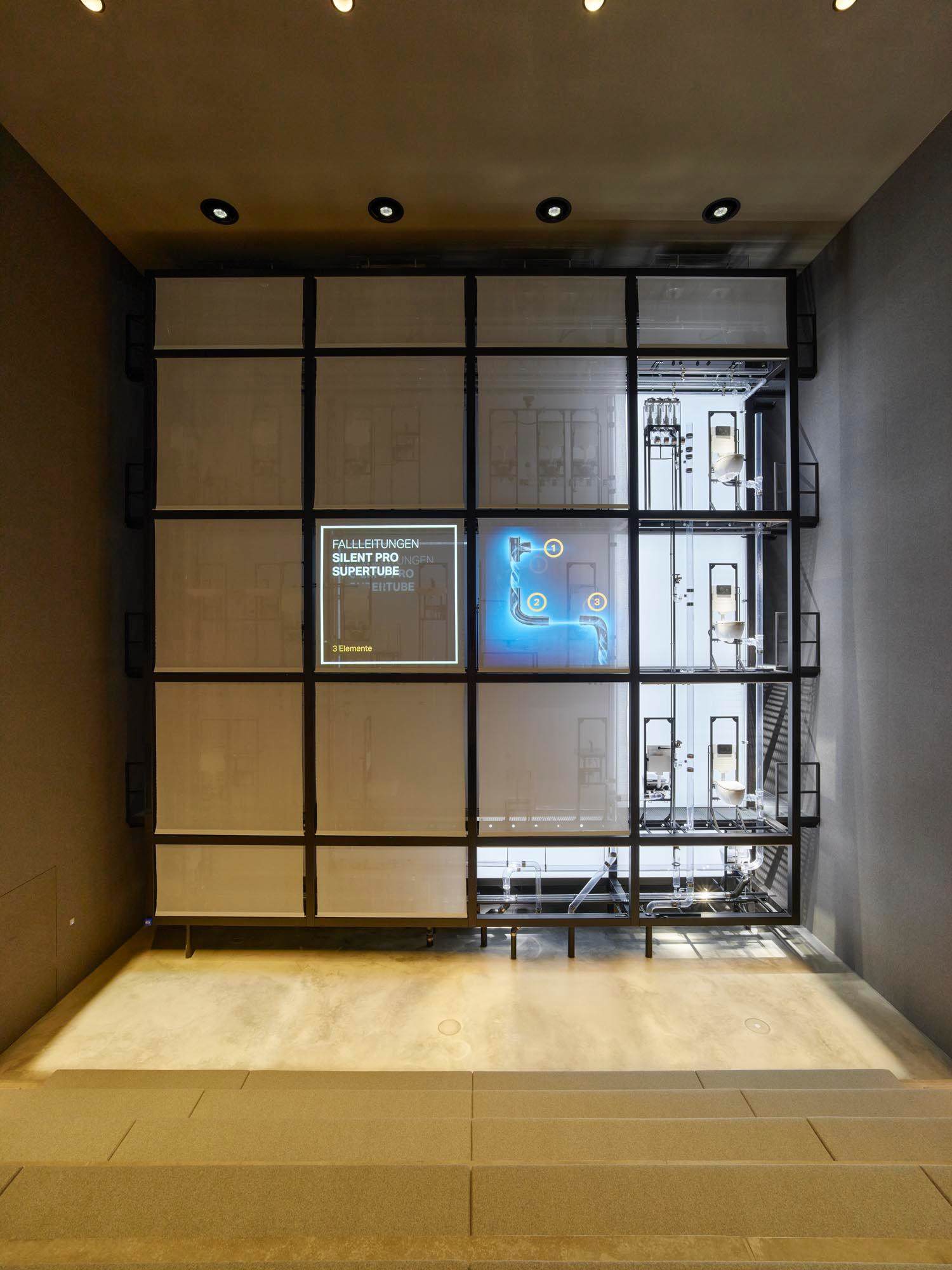
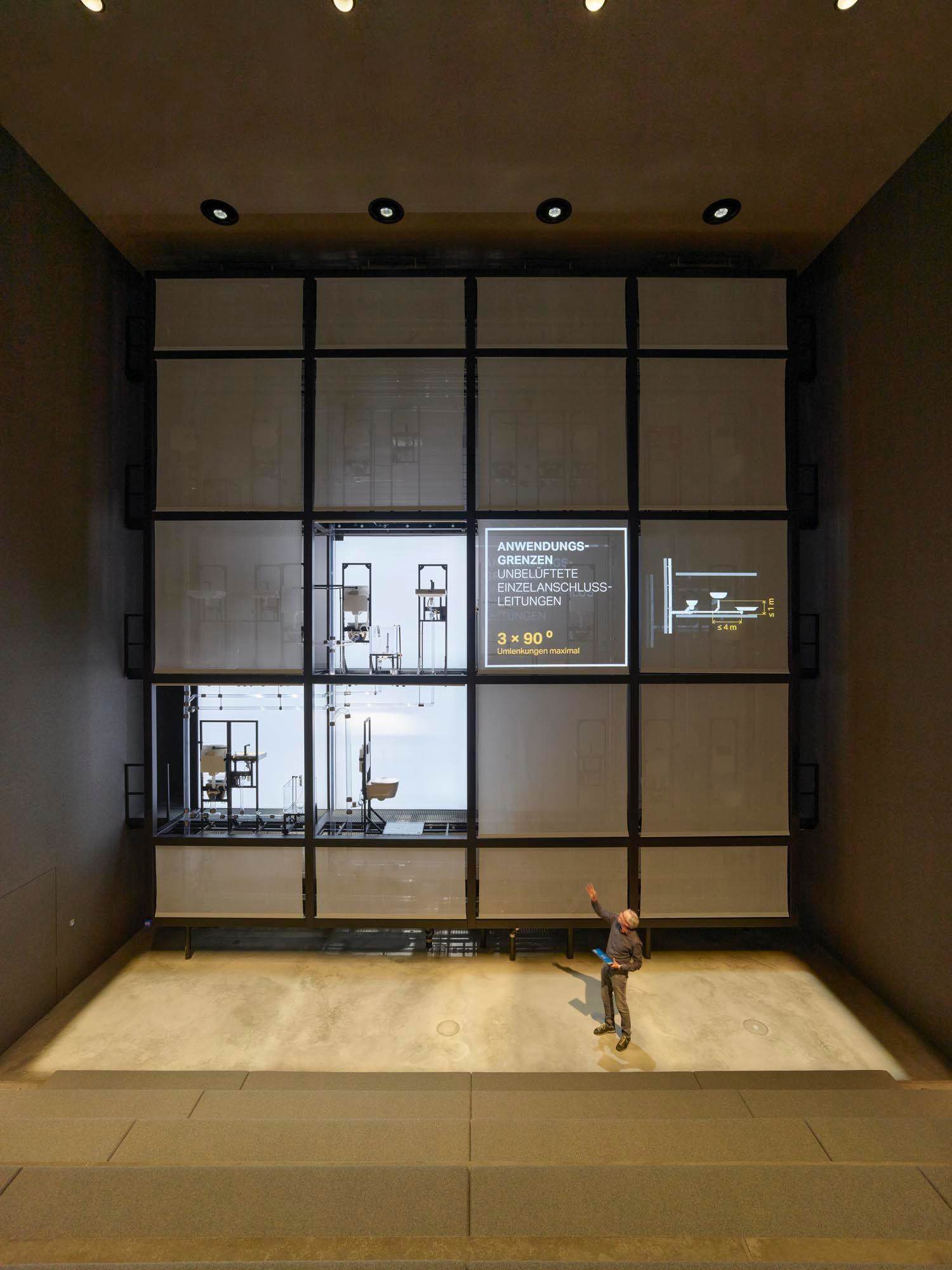
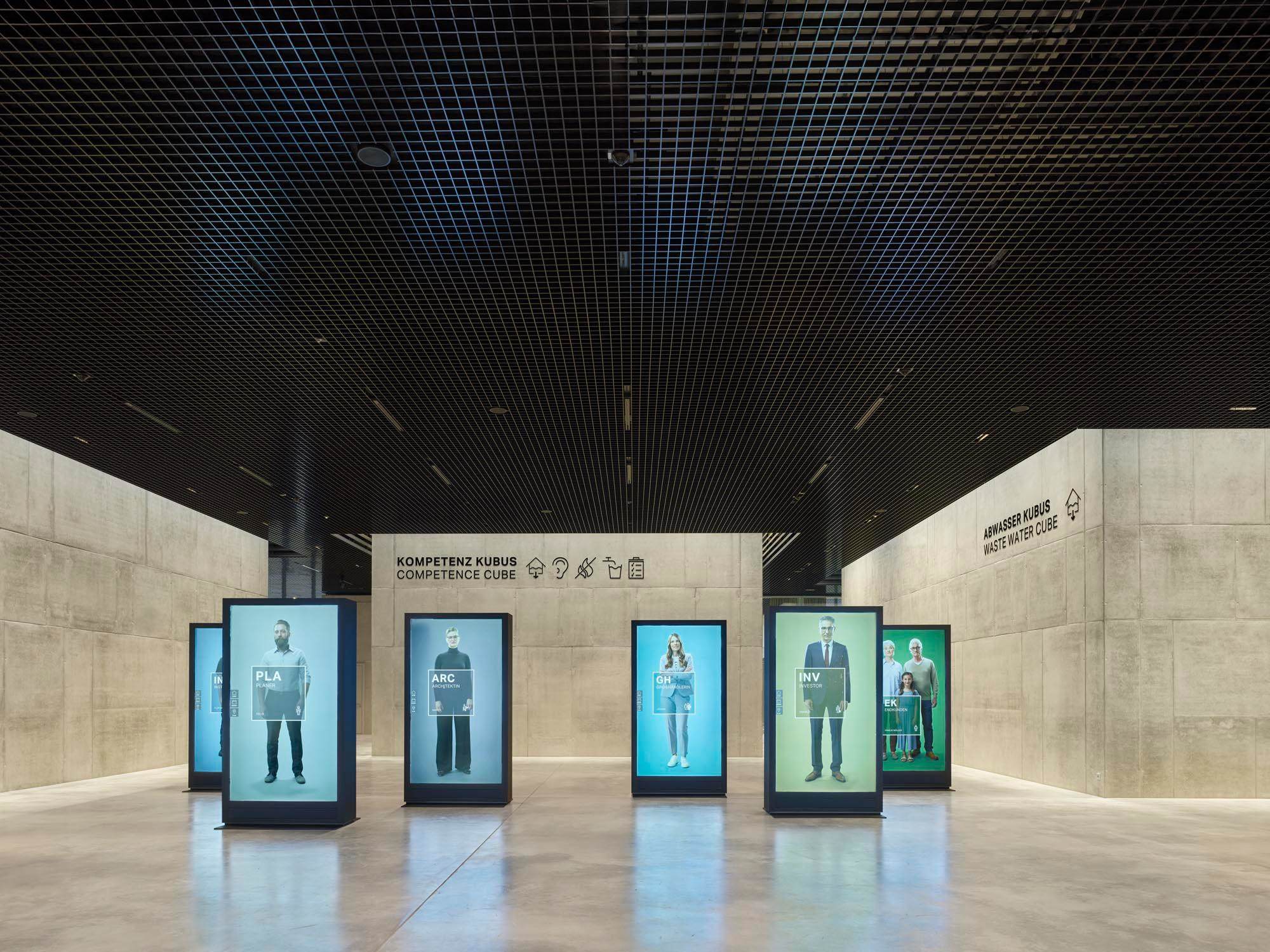
这些内容通过三个大型立方体得到补充:在废水立方体中,超过 25 种不同的情况阐明了废水水力学,通过一个 11 乘 11 米的透明装置使其清晰可见 。废水技术中的水流、错误和正确规划可通过多媒体进行体验,并通过灯光、投影和声音进行呈现 。
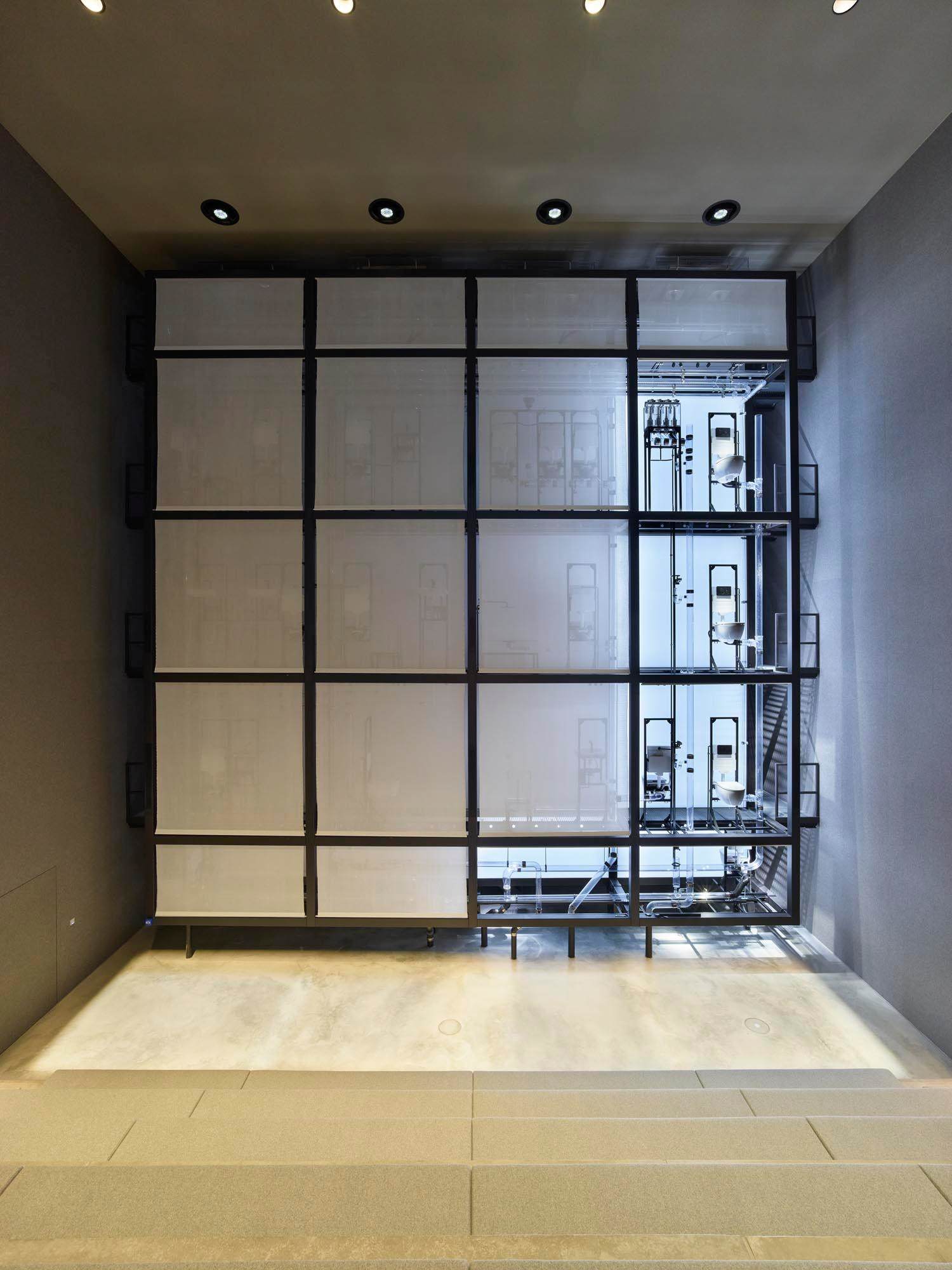
This is complemented by three large-format cubes: In the wastewater cube, over 25 different situations illustrate wastewater hydraulics, made visible in a transparent installation measuring 11 by 11 meters. Currents, errors, and correct planning in wastewater technology can be experienced via multimedia and are staged using light, projection, and sound.


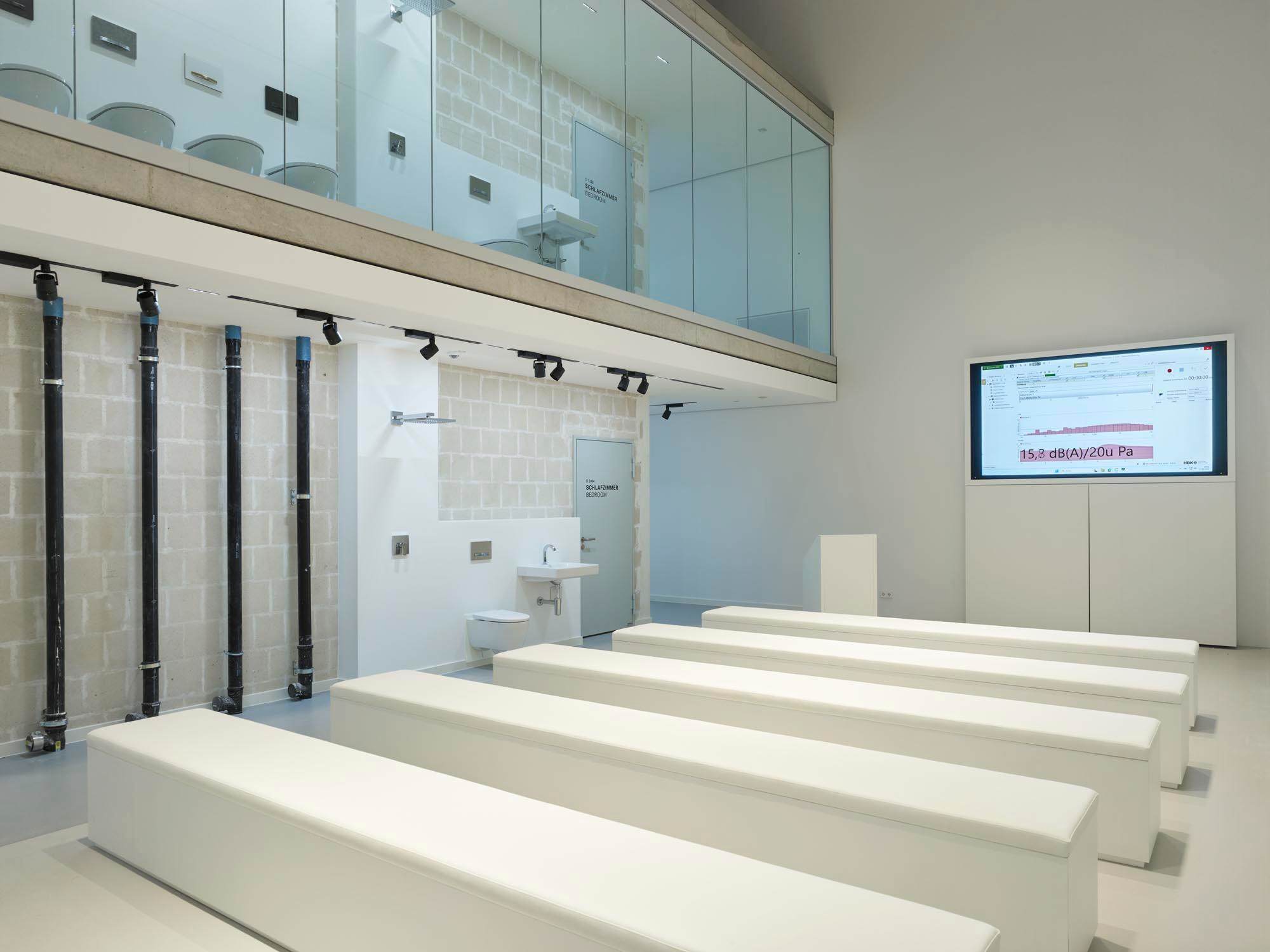
能力立方体是吉博力园区的虚拟知识空间 。在一个可步入的 3D 环境中,它生动说明了卫浴规划的复杂关联性,从饮用水卫生、废水水力学到使用 BIM 的数字规划 。在配备了齐全声学实验室的声学立方体中,模拟了两层楼的住宅建筑,使声音变得可测量和可听见 。在新的吉博力园区,学习是通过观察、比较和亲身体验来实现的 。
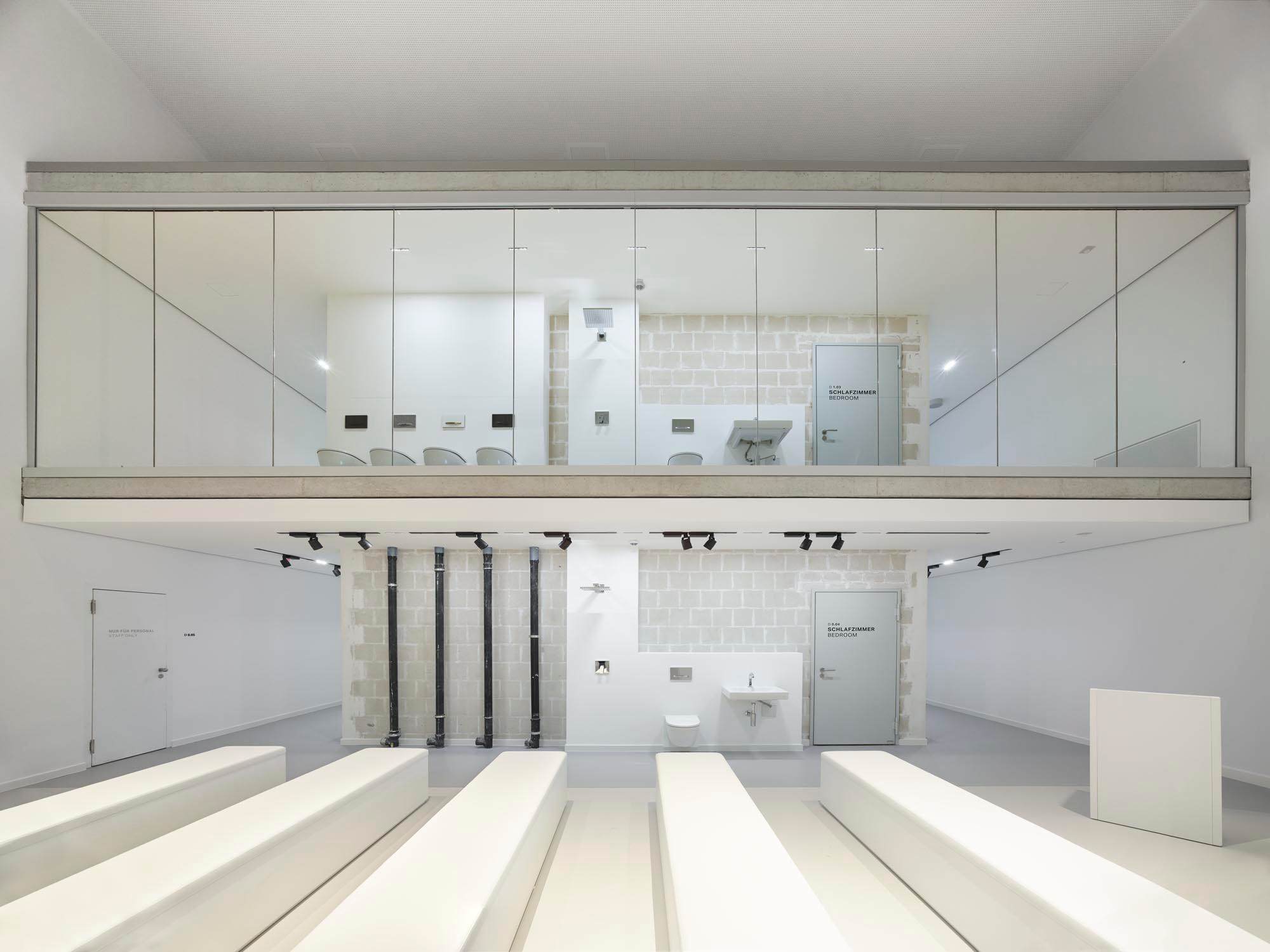
The competence cube is the virtual knowledge space of the Geberit Campus. In a walk-in 3D environment, it illustrates complex relationships in sanitary planning, from drinking water hygiene and wastewater hydraulics to digital planning with BIM. In the acoustics cube, which features a fully equipped acoustics laboratory, a two-story residential building is simulated to make sound measurable and audible. In the new Geberit Campus, learning takes place through observation, comparison, and personal experience.


吉博力园区是一个由建筑、景观设计、展览、教学和行政管理组成的深思熟虑的系统 。建筑和内容具有同等价值,相互协调,并始终如一地从品牌中发展而来 。该园区展示了如何将知识进行空间组织——清晰、实用且持久 。
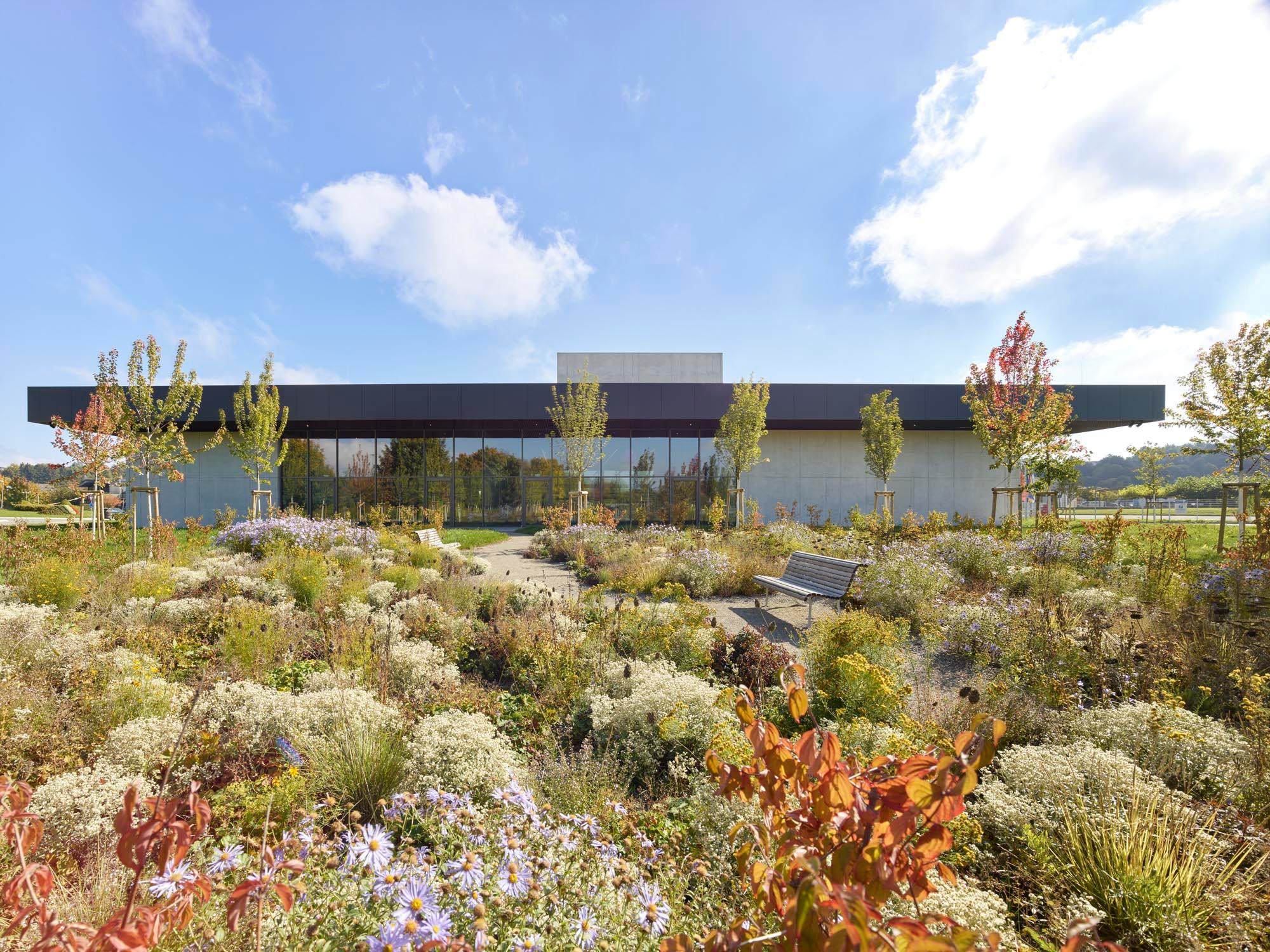
The Geberit Campus is a well-thought-out system comprising architecture, landscaping, exhibition, didactics, and administration. The building and its contents are of equal value, coordinated with one another, and consistently developed from the brand. The campus demonstrates how knowledge can be organized spatially—clearly, functionally, and durably.


总体规划、建筑设计、展览设计、场景设计、平面设计 / Overall planning, architectural design, exhibition design, scene design, graphic design:ATELIER BRÜCKNER
施工监督(建筑规划) / Construction Supervision (Architectural Planning):Ernst2 Architekten
景观设计 / Landscape Design:Koeber Landschaftsarchitektur, Stuttgart
建筑服务工程 / Building Services Engineering:Fact
灯光规划 / Light Planning:Belzner Holmes Light-Design
媒体策划(硬件) / Media Planning (Hardware):medienprojekt p2
摄影 / Photography:Roland Halbe
本文由WeHow经 ATELIER BRÜCKNER 授权编辑/整理发布,图片/视频版权归原作者所有。禁止以WeHow编辑版本进行任何形式转载。