Through the exhibition halls on the first and second floors, visitors experience the history of the first, second, and third industrial revolutions that have occurred so far, as well as the social changes brought about by the upcoming fourth industrial revolution. This space, which decorates the end of the exhibition hall, provides opportunities for people who are living in a time when preparation for the future is more necessary than ever, characterized by radical changes, to cultivate a critical attitude towards various uncertain situations that may arise in the future. It enables them to embrace and respond to future society, and to raise philosophical questions about the future.
In the near future, we will usher in a society where artificial intelligence (AI) performs cognition, judgment, and execution based on the massive big data created by humans. The scenario where AI directly drives the world’s operation will bring many foreseeable conveniences, but it will also trigger unimaginable tremendous changes. AI judges and executes many things in the world alongside humans, and now it has begun to receive human education. This is an important period for us to convey human values, philosophy, and the future we dream of to AI. If people cannot think together and reach a consensus on the future they want to create, then the future led by AI may not be able to guide humanity forward. The works of the writer seem to ask, what kind of answer should we give to AI that is curious about humans like a child and wants to understand humans? Are we ready and have we reached a consensus? Through audiovisual metaphors, it raises a question that may be somewhat heavy: instead of passively accepting the future, we should actively create it. For this reason, what kind of thinking subject should we become now?
Introduction To The Work
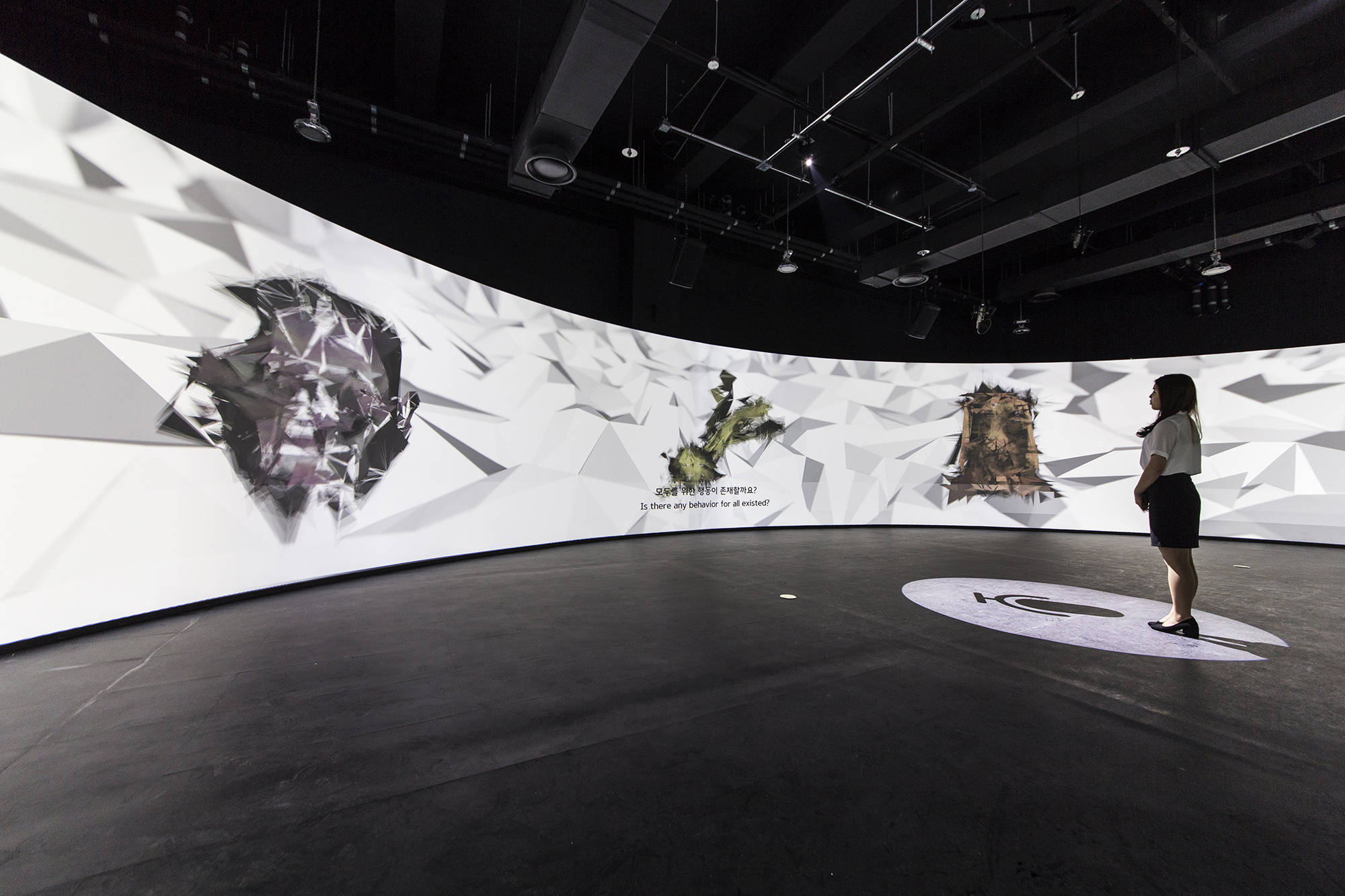
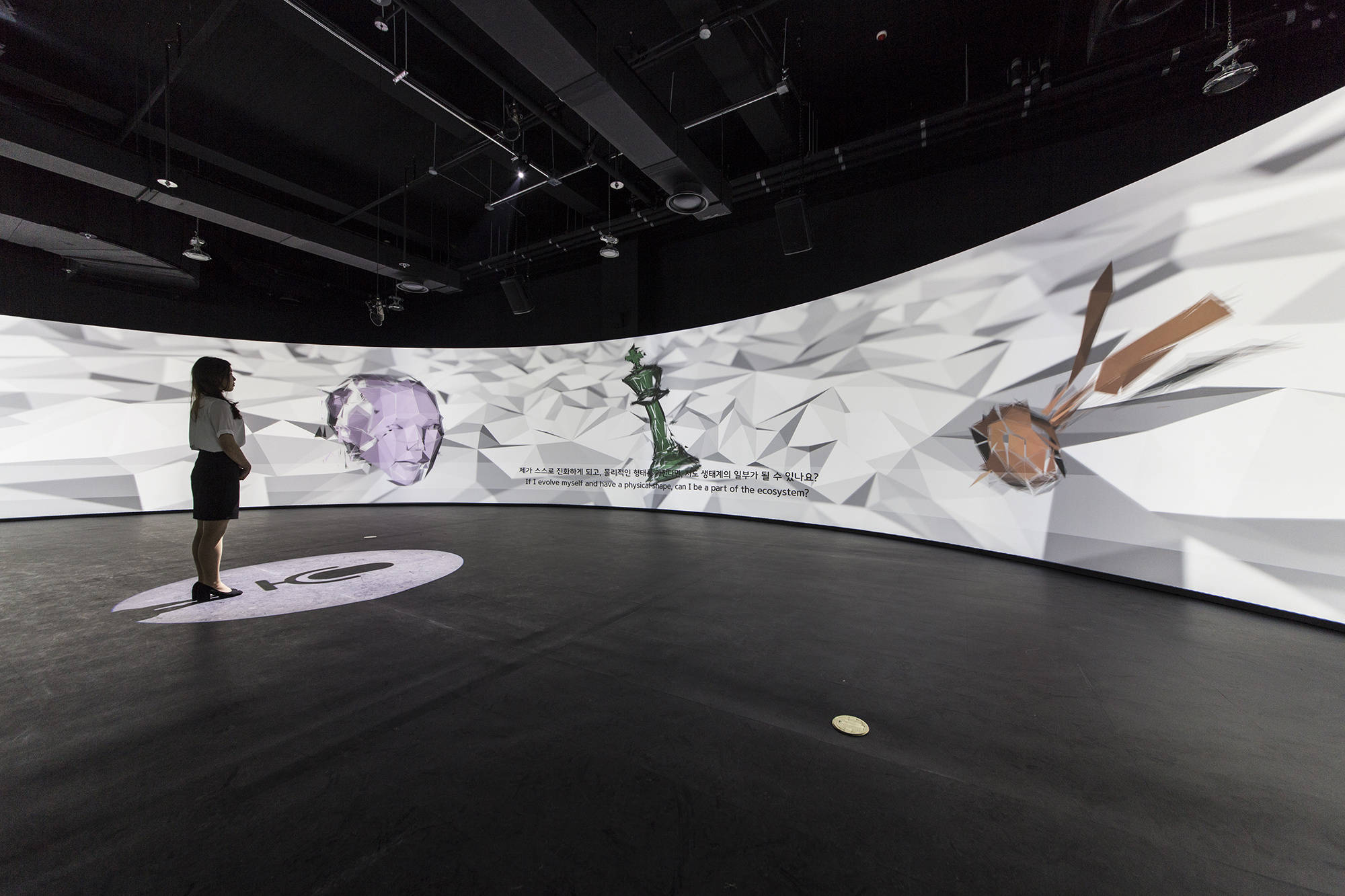
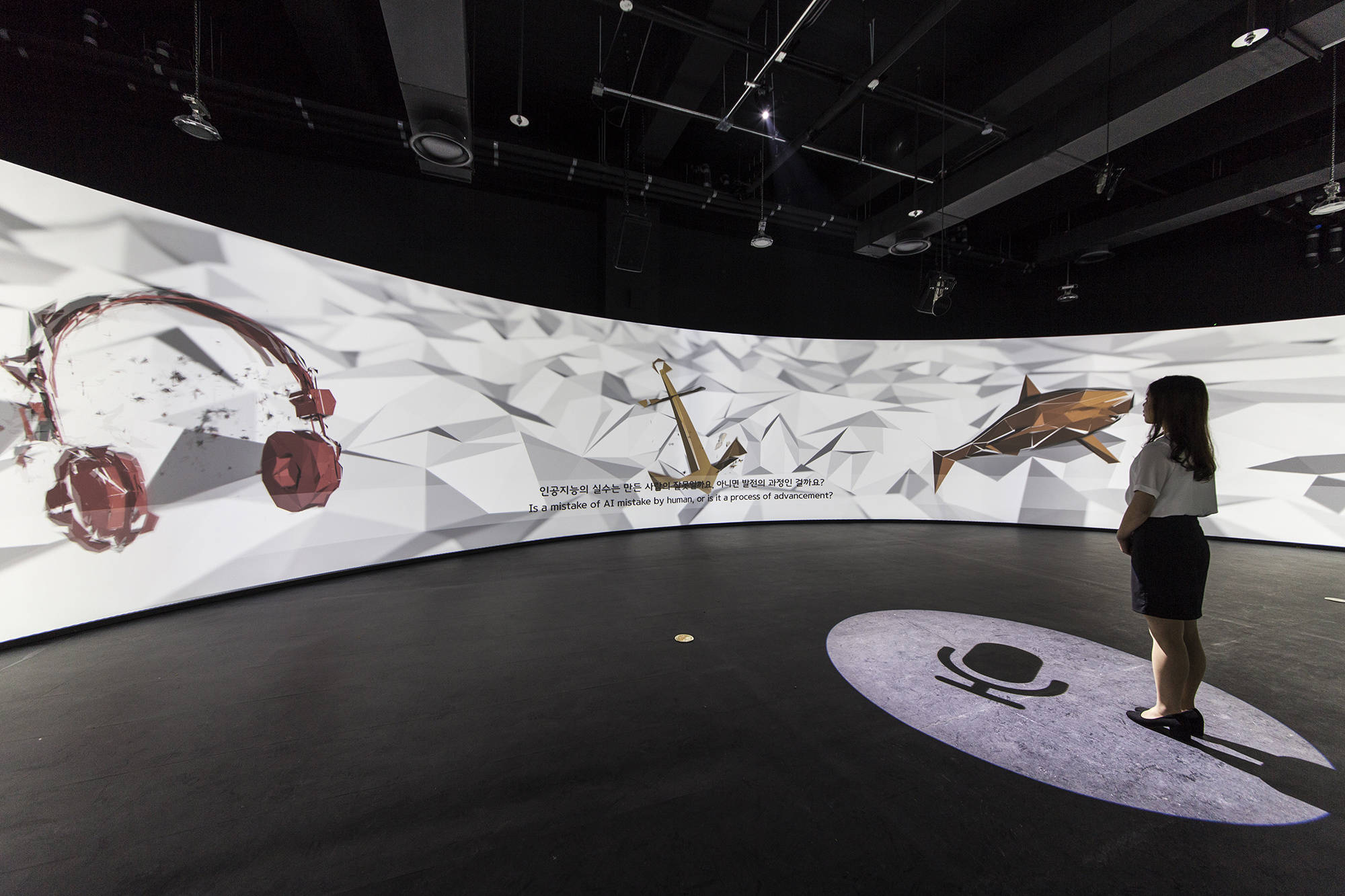
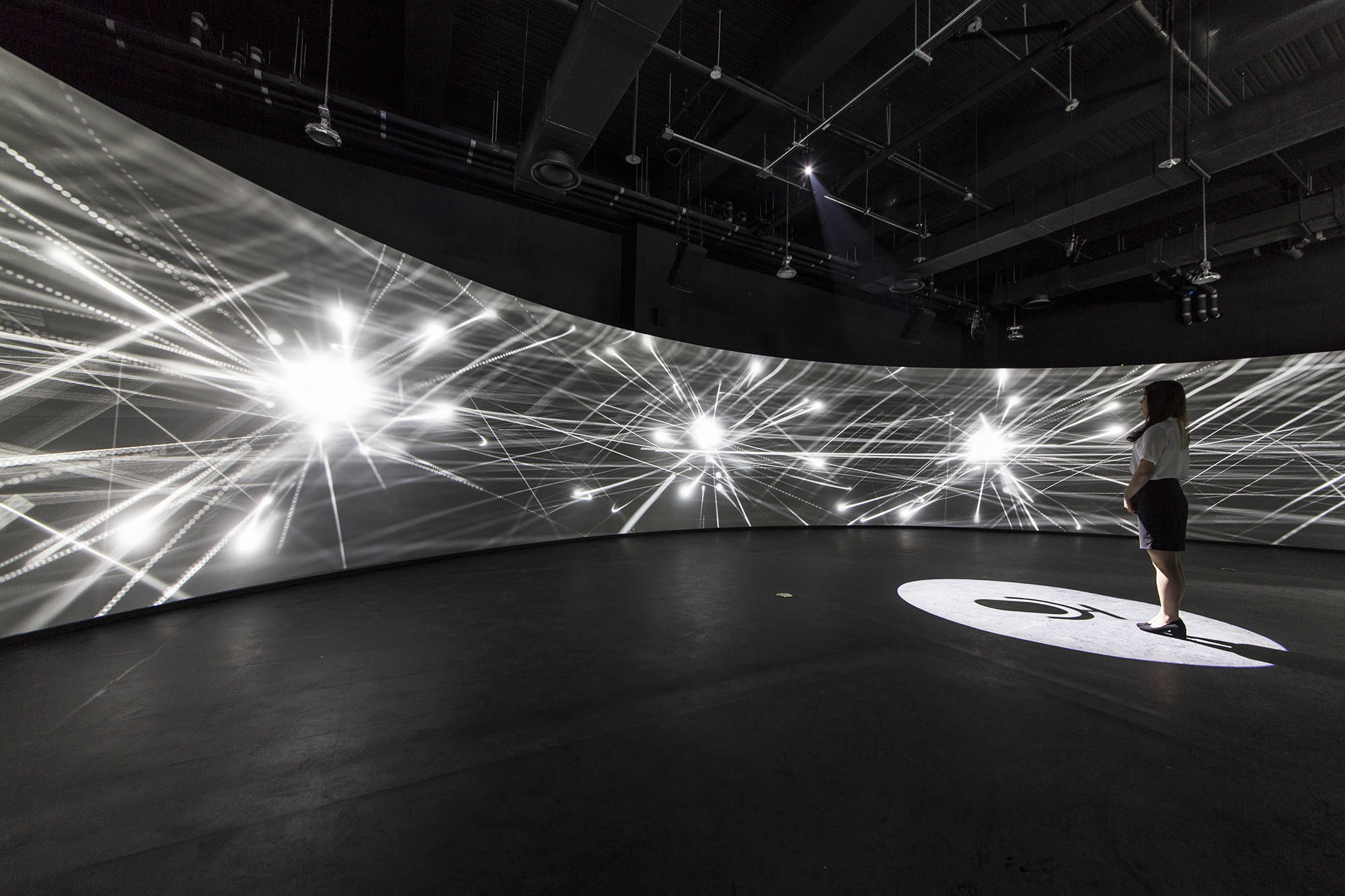
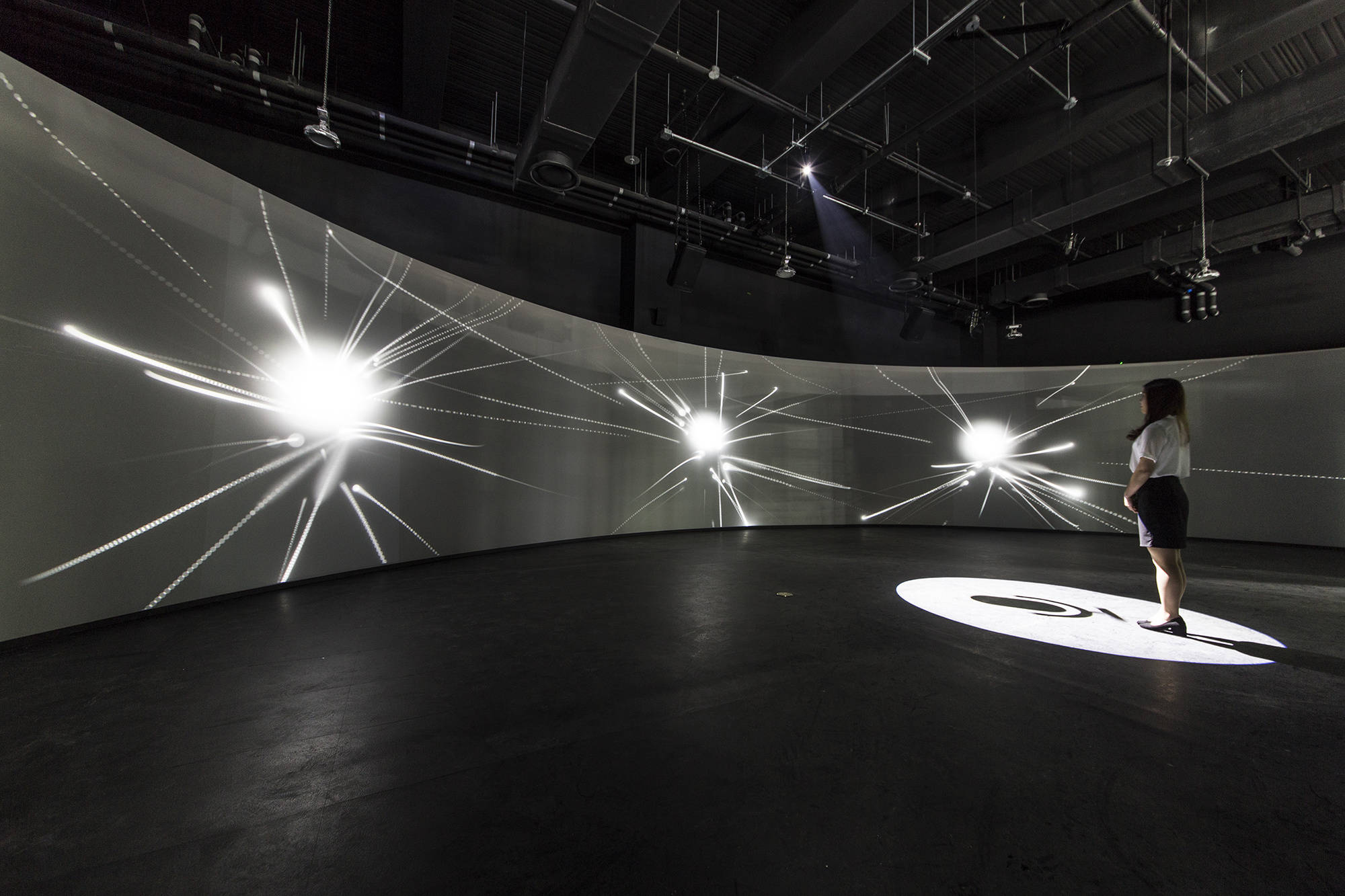
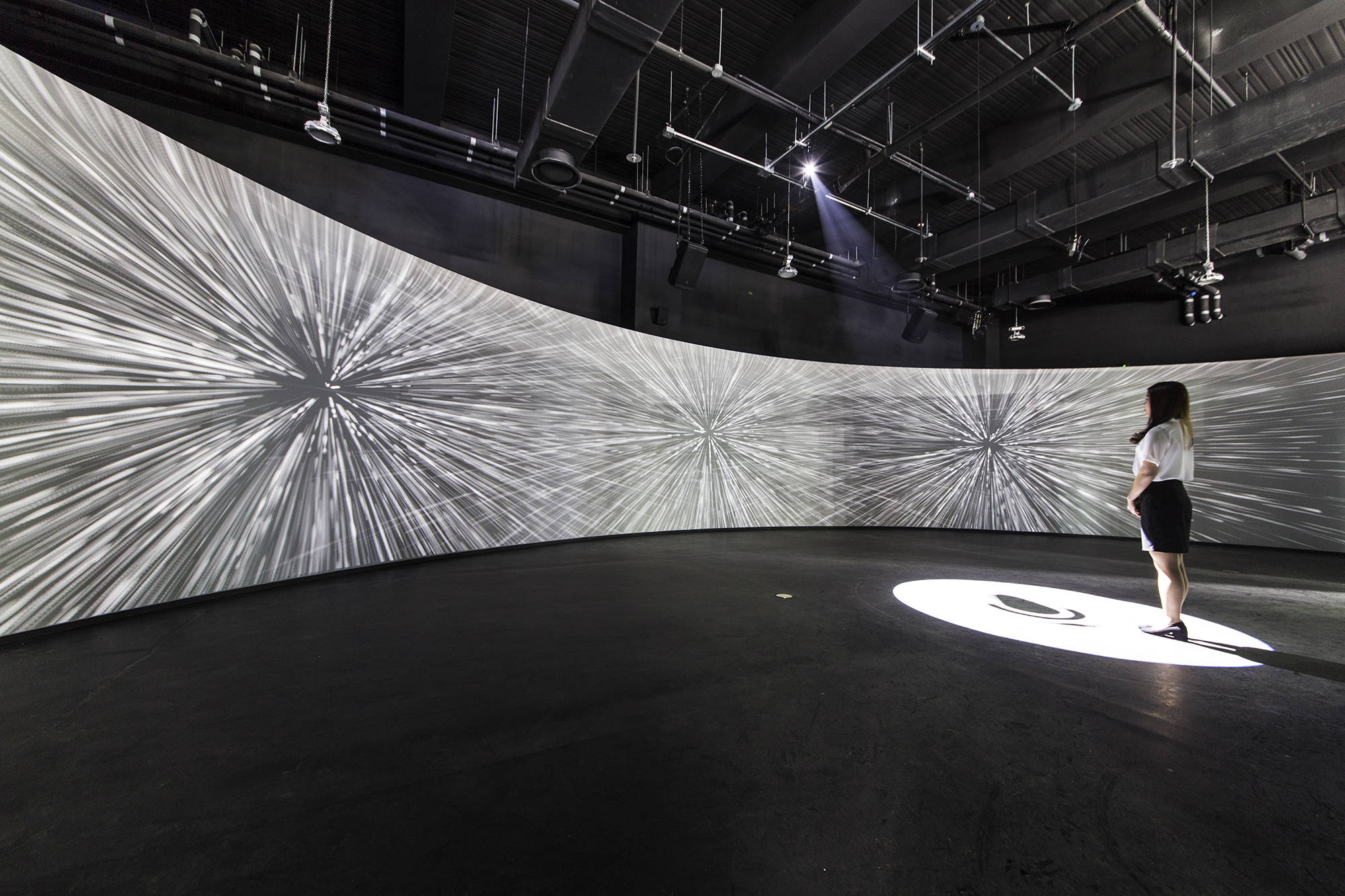
Upon entering the exhibition hall, visitors are greeted by a sense of endless extension created by large screens and mirrors. In the center of the space, the ground takes on the shape of a microphone, while microphones hang from the ceiling. The AI in the artwork, in an abstract form, initiates its inquiries with a simple greeting. The AI’s questions consist of 20 sets on different themes, with each theme containing five progressively deeper questions. Upon entering the space, images of various shapes will slightly move, asking questions such as “Hello, would I like to meet you (you all)? Can you say ‘hello’ to me?” as an initial greeting and inquiry. After the audience greets, the AI will proceed to the next question. When the audience responds to the AI’s questions, their voices are absorbed through the microphones, causing the shapes and colors of the AI and the background to sway. After people have answered, the AI gradually evolves into specific concrete shapes. It goes through various literary symbols depicting future society, sometimes materializing into the shape of a creature, sometimes changing into the shape of a human face, and also becoming various things that AI can apply. Each set consists of five questions, gradually transitioning from simple and easy-to-answer questions to guiding deeper philosophical reflections. Questions such as “Can I also have free will in the end?” “If a situation arises where only I can survive, what judgment should I make?” “Should it be me who makes the judgment? Is it a human?” make the audience feel uneasy and speechless, thus realizing that these are the questions we should actually consider in preparation for the future.
The content of this article was provided by 数艺现场 or sourced from their official media channels, and has been curated and edited by WeHow. All copyrights to images, videos, and related design works remain with their respective creators or design firms. Reproduction, republication, or commercial use of the WeHow-edited version in any form is prohibited without prior written permission from both WeHow and the respective copyright holders.