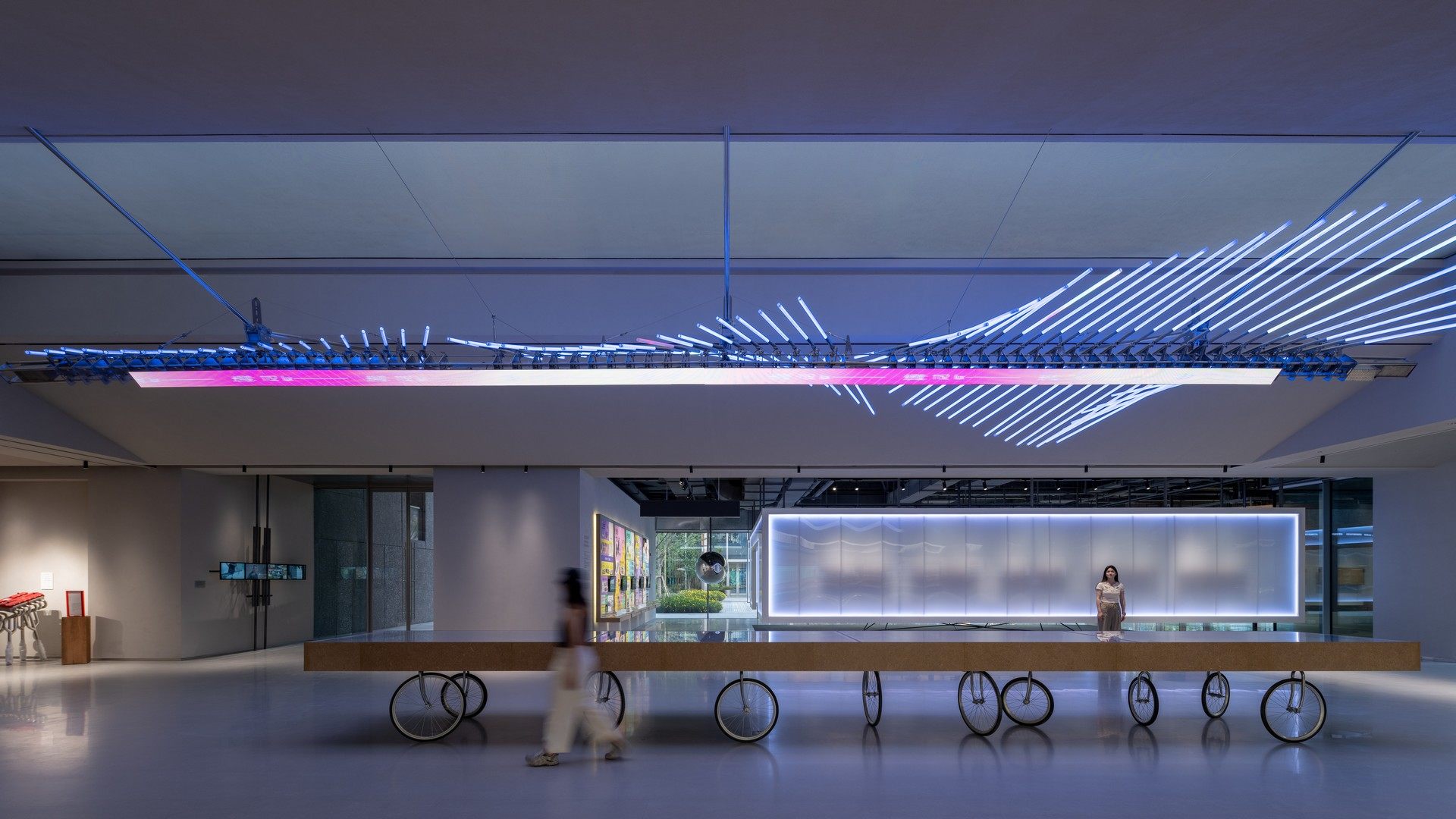
From 2020 to 2023, the Radugadesign studio was engaged in the design and creation of one of the six levels of a new multimedia museum commissioned by Rosatom called «Atom». Radugadesign developed both the architectural framework and creative conception for the “Modern Nuclear Industry”level.
For Radugadesign, this project became one of the most ambitious and complex. The sheer scale of the task, combined with the need to integrate multimedia content seamlessly into the architectural design, pushed the team to expand their expertise across multiple disciplines.
Studio designed over 20 installations across two key sections of the Modern Nuclear Industry level – Energy of the Future and Modern Nuclear Products – curating an immersive visitor journey that transform scientific advancements into engaging, interactive experience.

Exhibition Hall 1: Energy Of The Future
The Energy Future Hall features several installations that highlight the fundamentals of modern atomic energy. At the center of the hall there is a large installation called VVER-1200, which is an educational model of one of the most prominent nuclear reactors used worldwide.


VVER–1200
The operation of a nuclear reactor is a highly complex yet remarkably coordinated process, involving the simultaneous interaction of numerous components. The installation precisely illustrates the logic and functioning process of a nuclear reactor.
To be able visualise the magic and science behind the VVER-1200 — installation consists of the kinetic core installation, LED screen and two extra wide projection walls.

ATOMIC SYMPHONY
Atomic symphony is a five minute AV show based on VVER-1200 installation that compares the functioning of the VVER-1200 reactor to the performance of an orchestra. In show mode, the most significant elements of the reactor transform into screens, visualising the hidden processes.

The heart of the installation – the central reactor, equipped with a kinetic door. As the door opens, a volumetric LED display shows the loading process of the fuel rods (TVEL’s) and the start of a nuclear reaction itself. Each action is synchronised with music and visuals on multiple screens.


Using multimedia technologies, Atomic Symphony provides an educational explanation of how water is transformed to generate electricity, which powers cities.
Exhibition Hall 2:Modern Atomic Products

Nuclear Technology In Medicine
This installation explores nuclear technology’s role in medicine through 3D models, touchscreens, and illuminated displays, creating an engaging learning experience.It highlights Cobalt-60’s use in gamma-ray therapy, showing how targeted radiation converges on tumors via a spherical emitter model.The CyberKnife system is also featured, demonstrating its precision in delivering radiation guided by advanced imaging, minimizing damage to healthy tissue.


Control Center
A large-scale interactive map showcasing Rosatom’s global presence, emphasizing nuclear facilities and partnerships worldwide. Users navigate the map via touchscreens, exploring detailed data.


Nuclear Technology In Space
This exhibit showcases models of nuclear space batteries that power satellites, highlighting how nuclear energy offers long-lasting efficiency in space’s harsh environment.Screens with infographics provide detailed explanations of these technologies. Visitors learn about the vital role of nuclear energy in space exploration and satellite operations through interactive physical and digital elements.


Evolution Installation
The ‘Evolution’ installation traces the journey of human engineering from early civilization to modern advancements.

Robotic arms represent scientists and artists, capturing innovative ideas expanded upon through dynamic visuals on a hemispherical screen. This experience reflects the ongoing evolution of innovation, blending art, science, and technology to inspire future thinkers and creators.

The content of this article was provided by Radugadesign or sourced from their official media channels, and has been curated and edited by WeHow. All copyrights to images, videos, and related design works remain with their respective creators or design firms. Reproduction, republication, or commercial use of the WeHow-edited version in any form is prohibited without prior written permission from both WeHow and the respective copyright holders.