非常感谢 ATELIER BRÜCKNER 分享内容给 WeHow。
Thanks to ATELIER BRÜCKNER for sharing with WeHow.
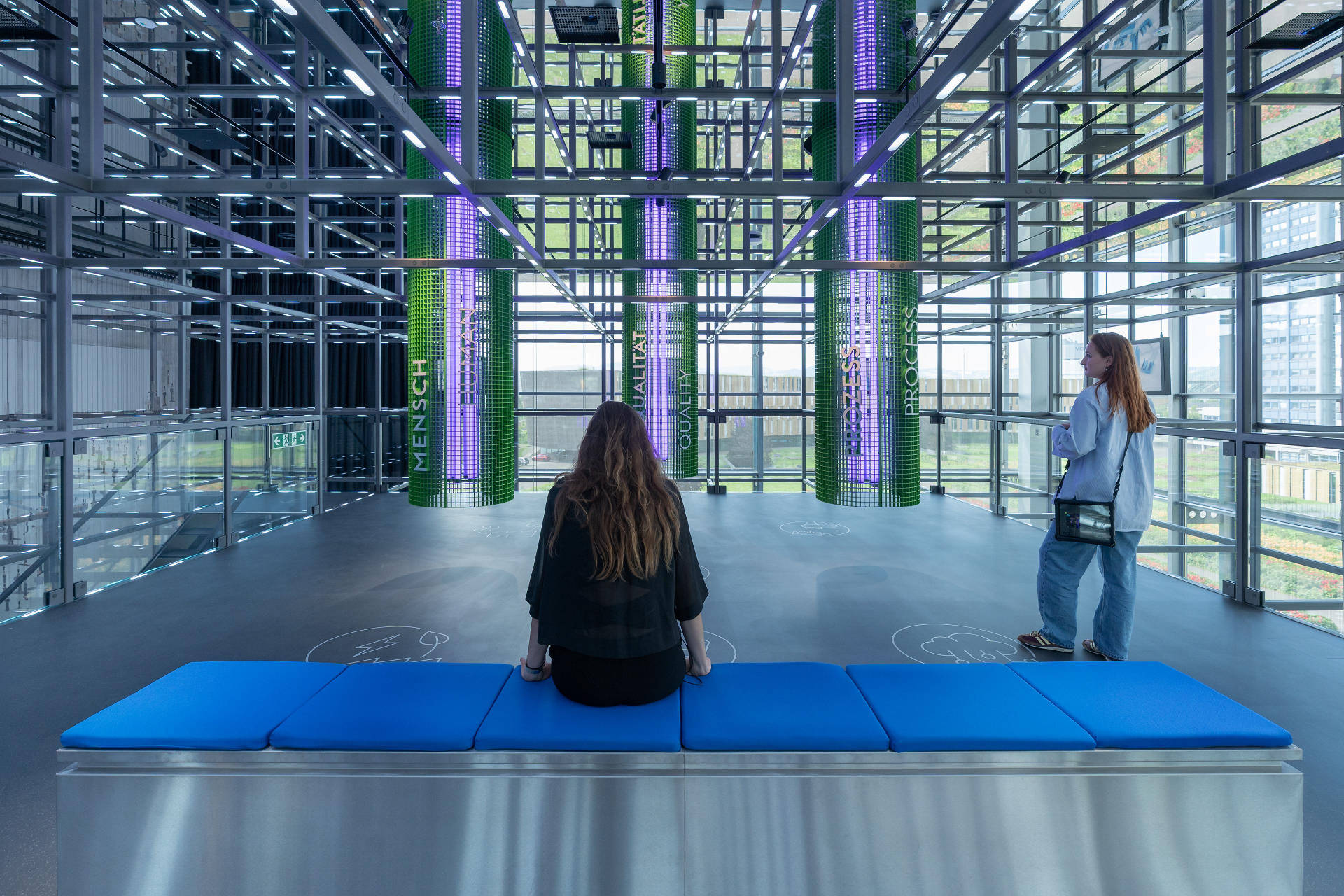
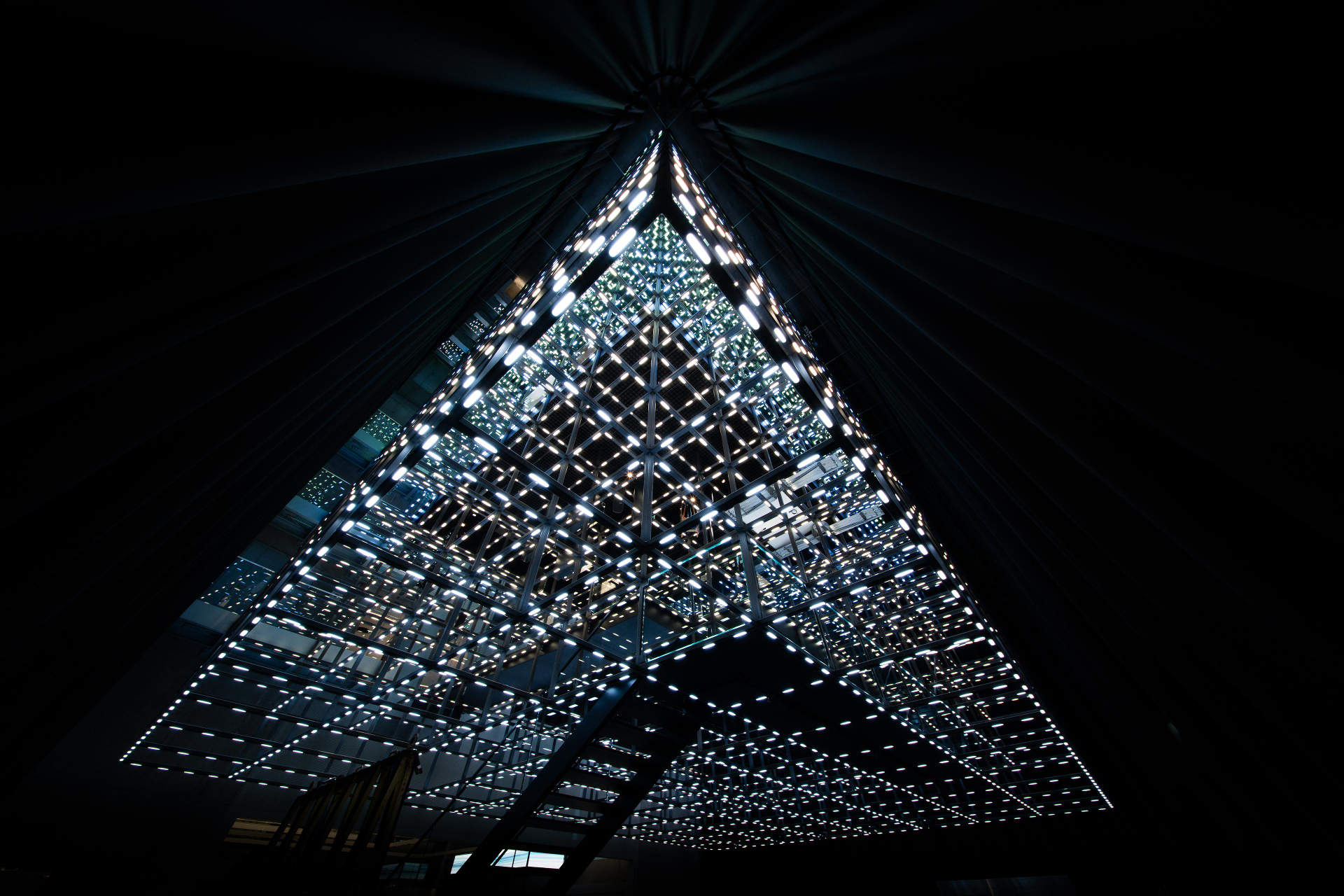
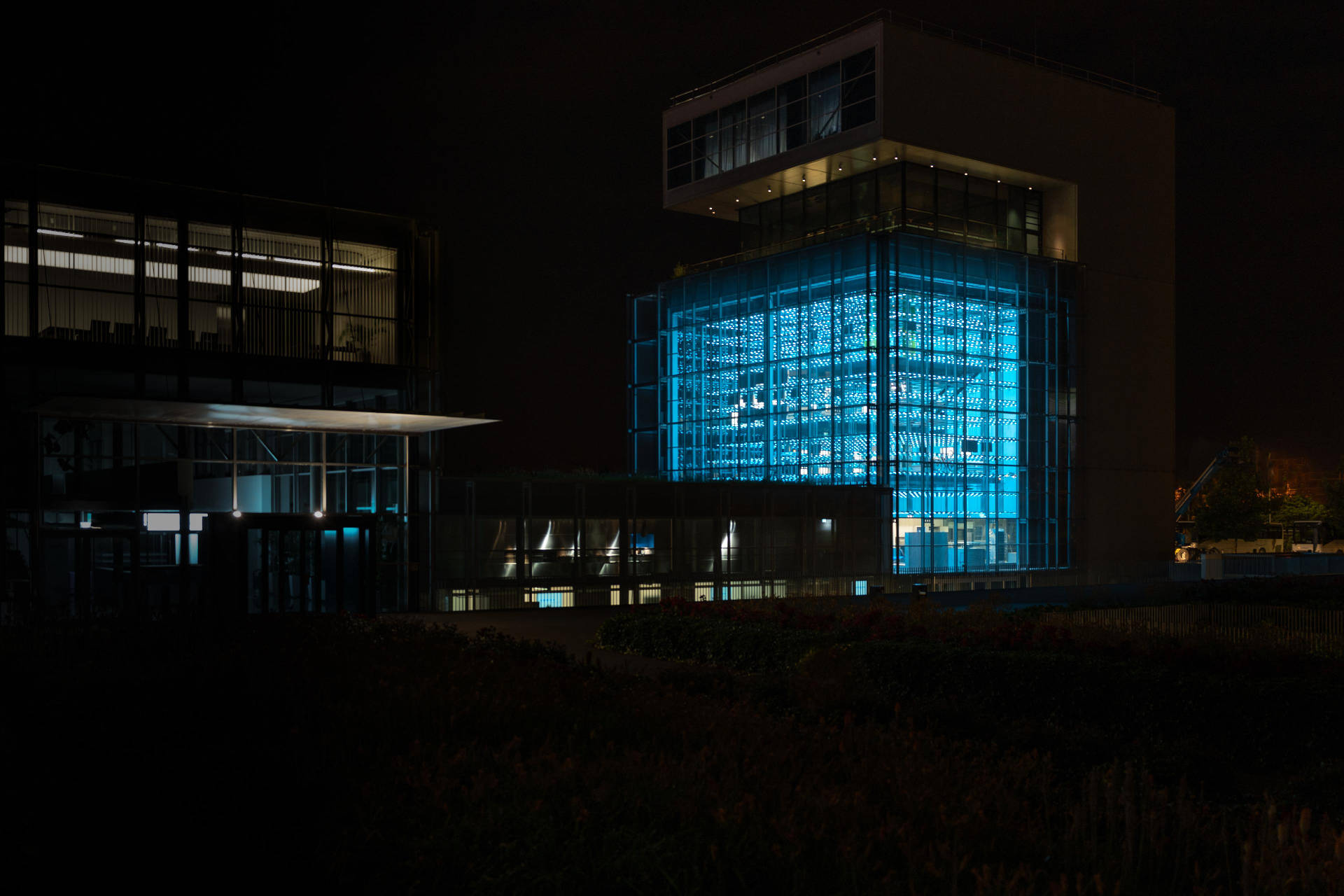
The new voestalpine Stahlwelt no longer shows only how steel is made; it tellsthe story of what steel can achieve today. The new exhibition space in Linz connects technology, people and the future. ATELIER BRÜCKNER has translated this new narrative into space. From the idea of connectivity, openness and precision emerged the Grid: a freely suspended, walkable steel structure that is architecture, exhibit and stage all at once. The structure evokes a smart grid: an open system of lines, nodes, connections and light. It makes visible what voestalpine stands for today: networked thinking, industrial expertise and innovative development. The Grid connects content and exhibits and shows that steel today is part of complex technological networks.
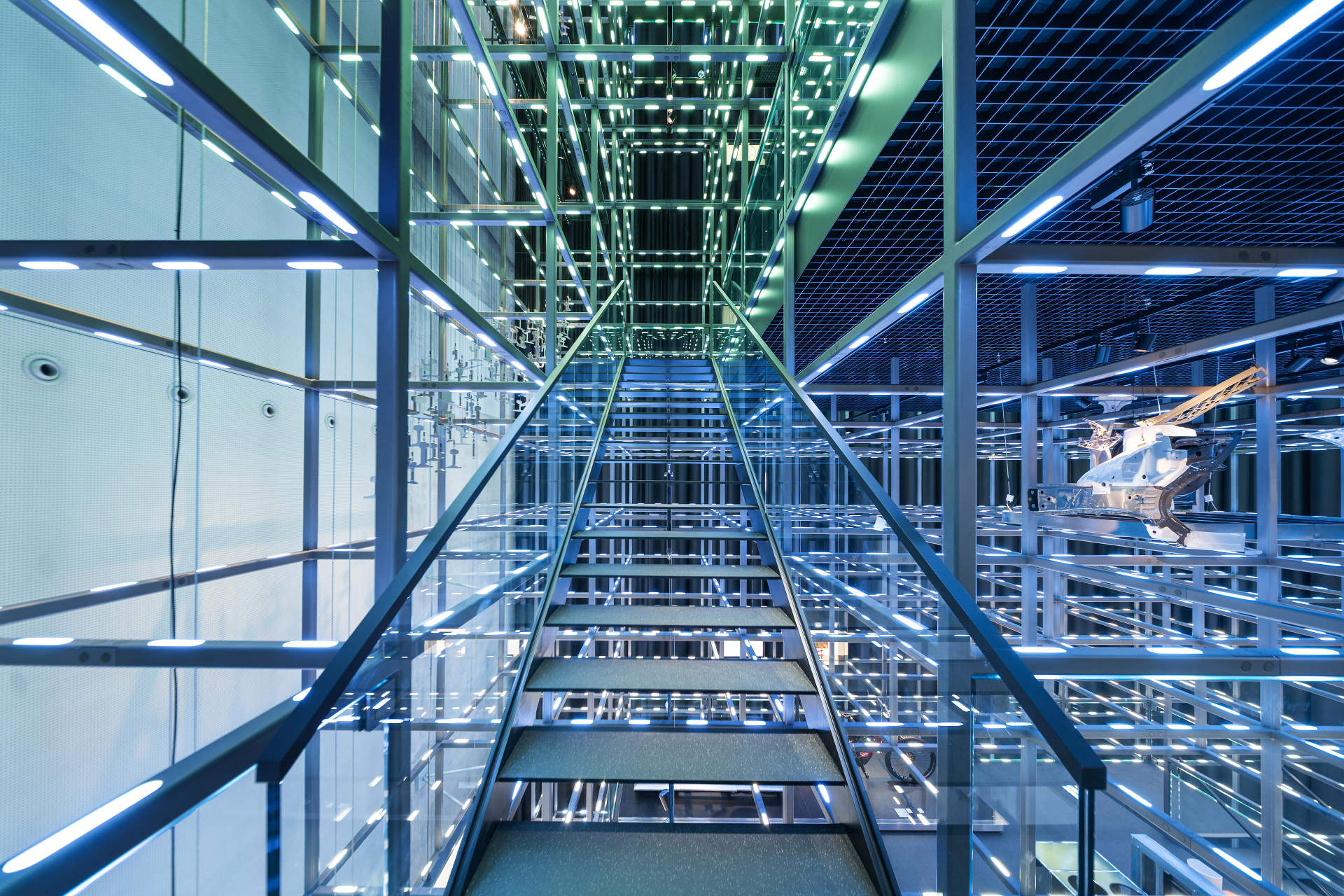
The 14-metre-high Grid is architecture and, at the same time, the largest exhibit in the exhibition. It hangs freely in space, does not touch the floor and can be read from all sides. Technically, the Grid is an enormous achievement: it appears light and delicate, yet it contains 4.4 kilometres – around 140 tonnes – of hollow steel sections. The profiles measure 60 by 60 millimetres, with a wall thickness of six millimetres. The material is high-strength steel, voestalpine greentec steel. The system is held together by 183 vertical tree structures, 1,176 welded nodes, around 16,000 countersunk screws and approximately 35,000 additional connecting parts. For one person alone, the welding work would have taken around 4,000 hours. Manufactured at the plant in Krems, the construction was delivered in 19 truckloads and installed with millimetre precision – a logistical and structural challenge within the existing building.
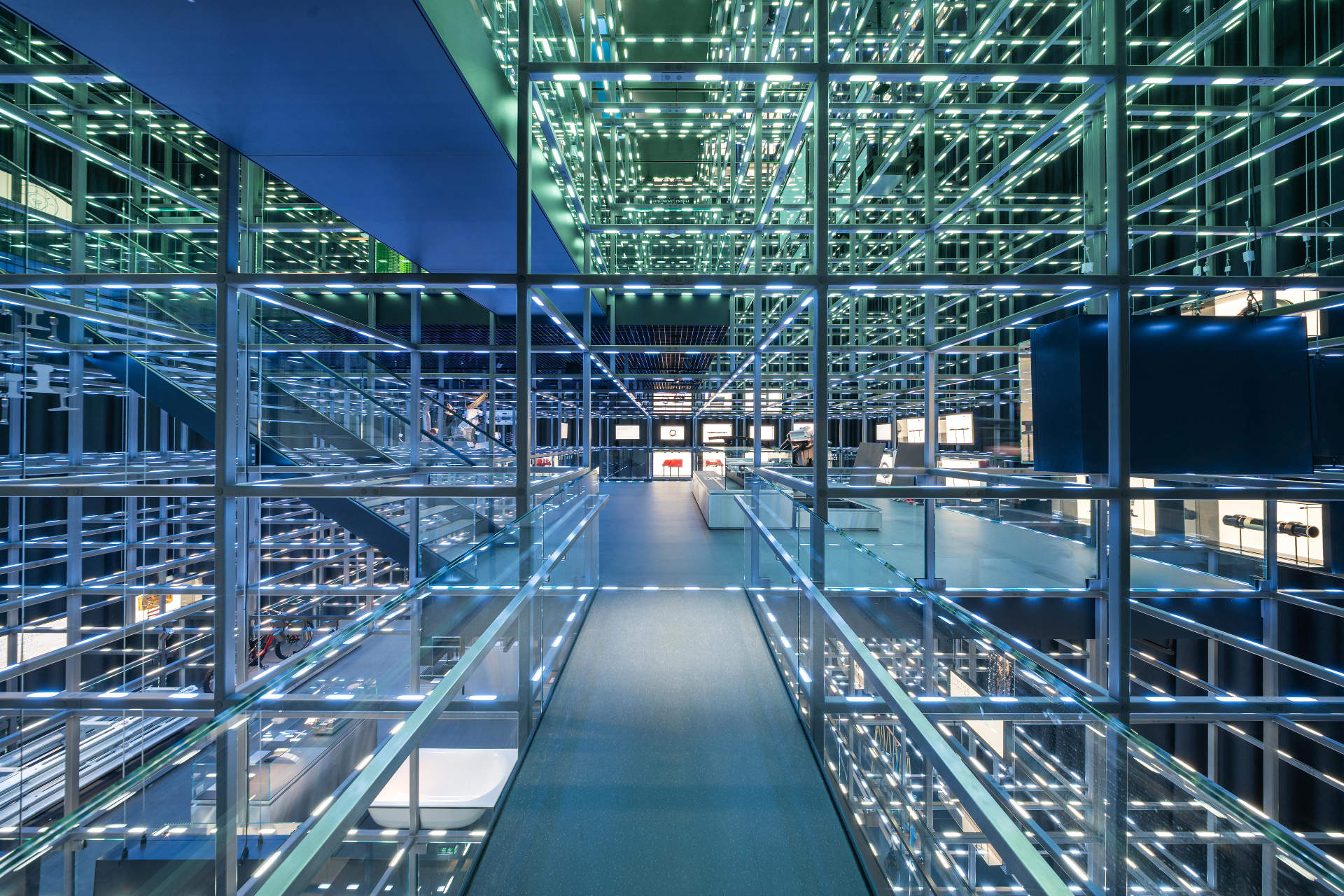
At the same time, the construction is also a technical medium: around 8,500 integrated lights transform the Grid into a spatial light sculpture. The immersive lighting installation reinforces the idea of the smart grid – an intelligent, interconnected system of steel, light and movement. The LED lights and around 29 kilometres of cables disappear into the profiles and platforms.
The design language of the new Stahlwelt is clear, precise and technically defined. Steel, dark surfaces and subtle shades of grey form the basis; blue, as the corporate colour, sets deliberate accents. The individually designed exhibition areas in the building core are strong scenographic gestures, while the Grid forms a uniform, linear and permeable spatial structure. Hard industrial materials meet soft textile elements, light and digital layers. Together, they create an atmosphere that is powerful, high-quality and open to futureoriented themes. Recurring forms such as circles and cylinders lend the exhibition a calm, connecting design layer. They pick up on motifs from production, material samples, tubes, rollers and technical components and translate them into a clear spatial language – a deliberate counterpoint to the linear grid of the Grid.
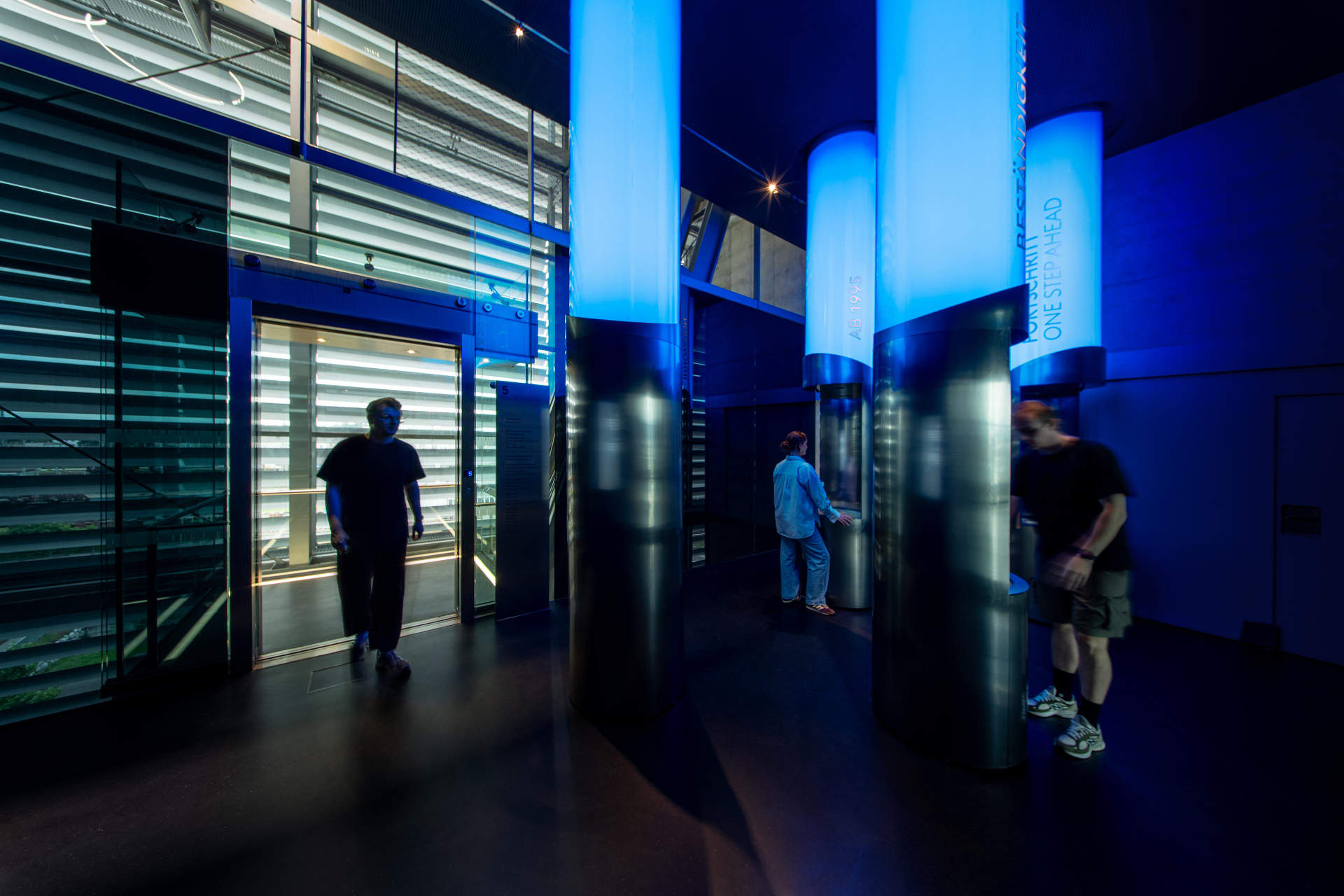
The exhibition follows a route from top to bottom, constantly alternating between the building and the Grid. In the core of the building are more strongly staged exhibition spaces. Here, content is condensed and conveyed through media. The Grid, by contrast, is open and permeable, allowing changing relationships and sightlines. Visitors look through the levels, discover suspended objects from shifting perspectives and experience the space as a walkable cloud of information. A tablet accompanies the visit and provides information on demand. When visitors scan an object, they receive digital extensions: an individual car part can be completed into an entire vehicle; a small component is placed in its larger context. In this way, the exhibition combines real exhibits with augmented reality.
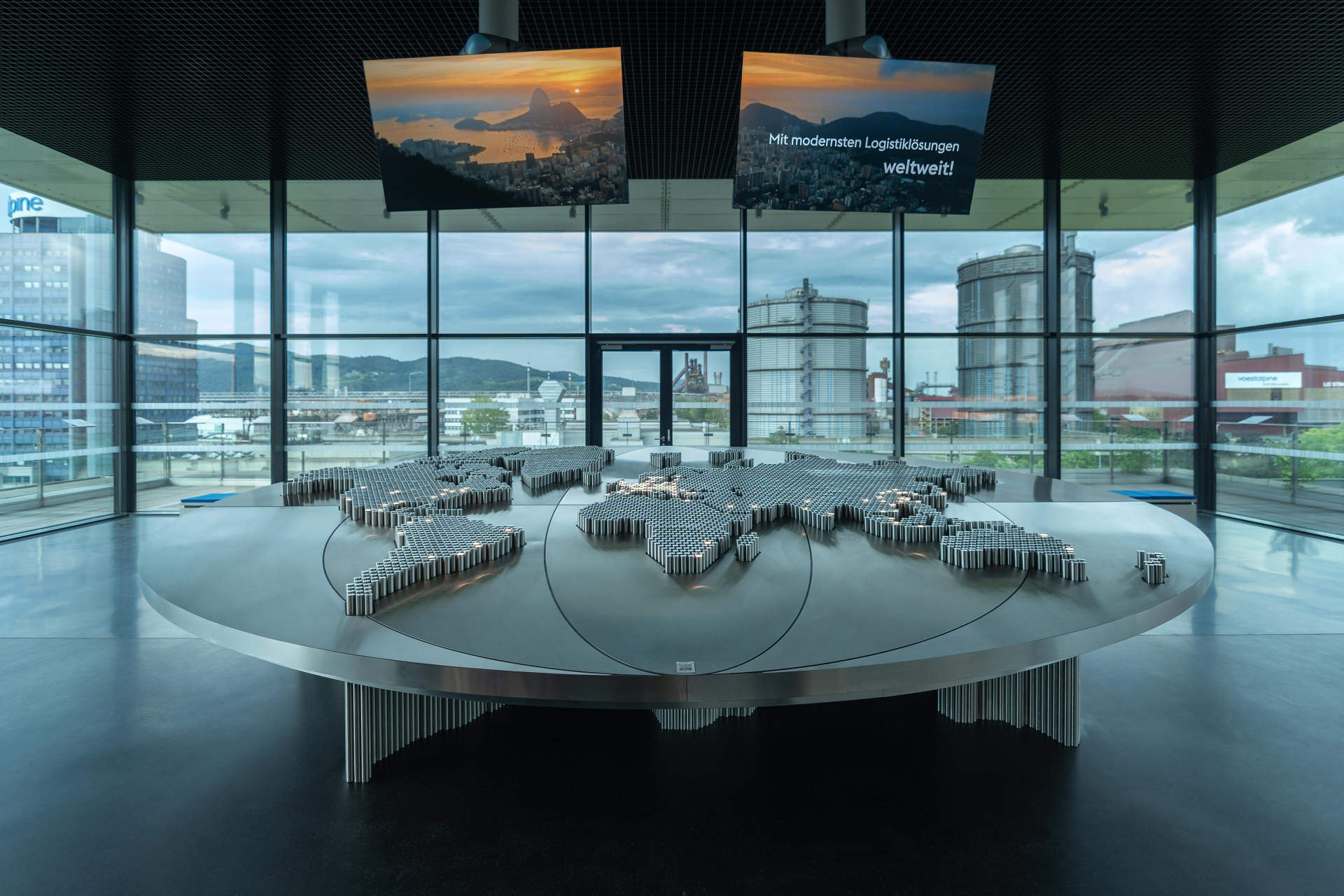
The tour begins at the top on Level 5 with “Corporate History and the Group Today”: central milestones, such as the signing of the Bergunion Agreement in 1784, provide a compact insight into the history of the company, presented on media screens integrated into open steel columns. In the Panorama Room, the view opens onto the company of today: a media-enhanced world map made of small steel cylinders shows how closely the company is connected to Linz and Austria, and how present it is worldwide in key industries. Two ceilingmounted screens guided by robotic arms show films about the selected location.
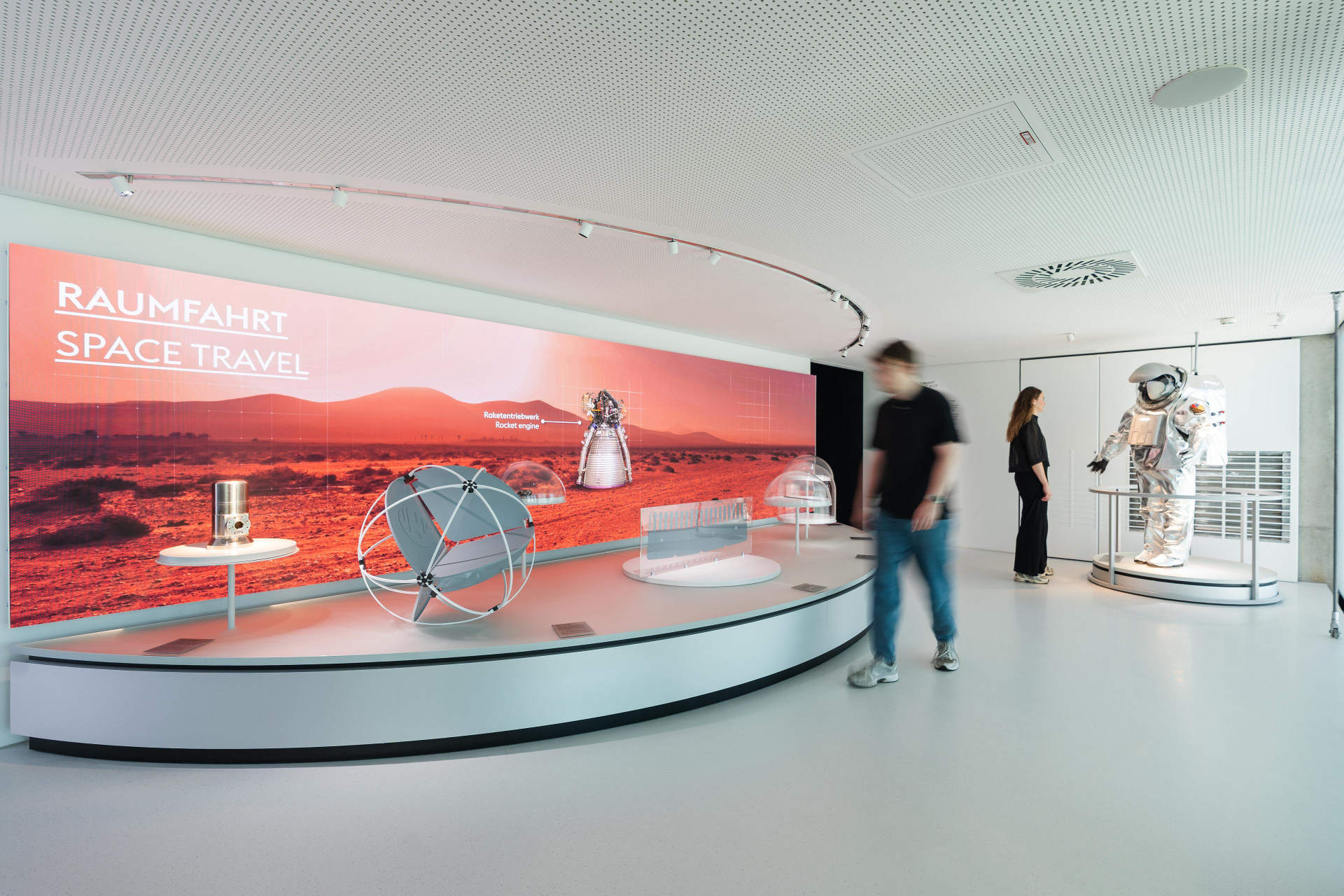
On Level 4, “Future Movements” focuses on the future potential of voestalpine. Applications are presented in which precision, resilience and high-tech materials are crucial – for example in space travel, energy and medical technology. The space is divided into three organic thematic areas that can be used flexibly. Large-format LED walls place the exhibits in context: in the space travel area, a research vehicle is positioned in the room and integrated into a Martian landscape via the LED wall.
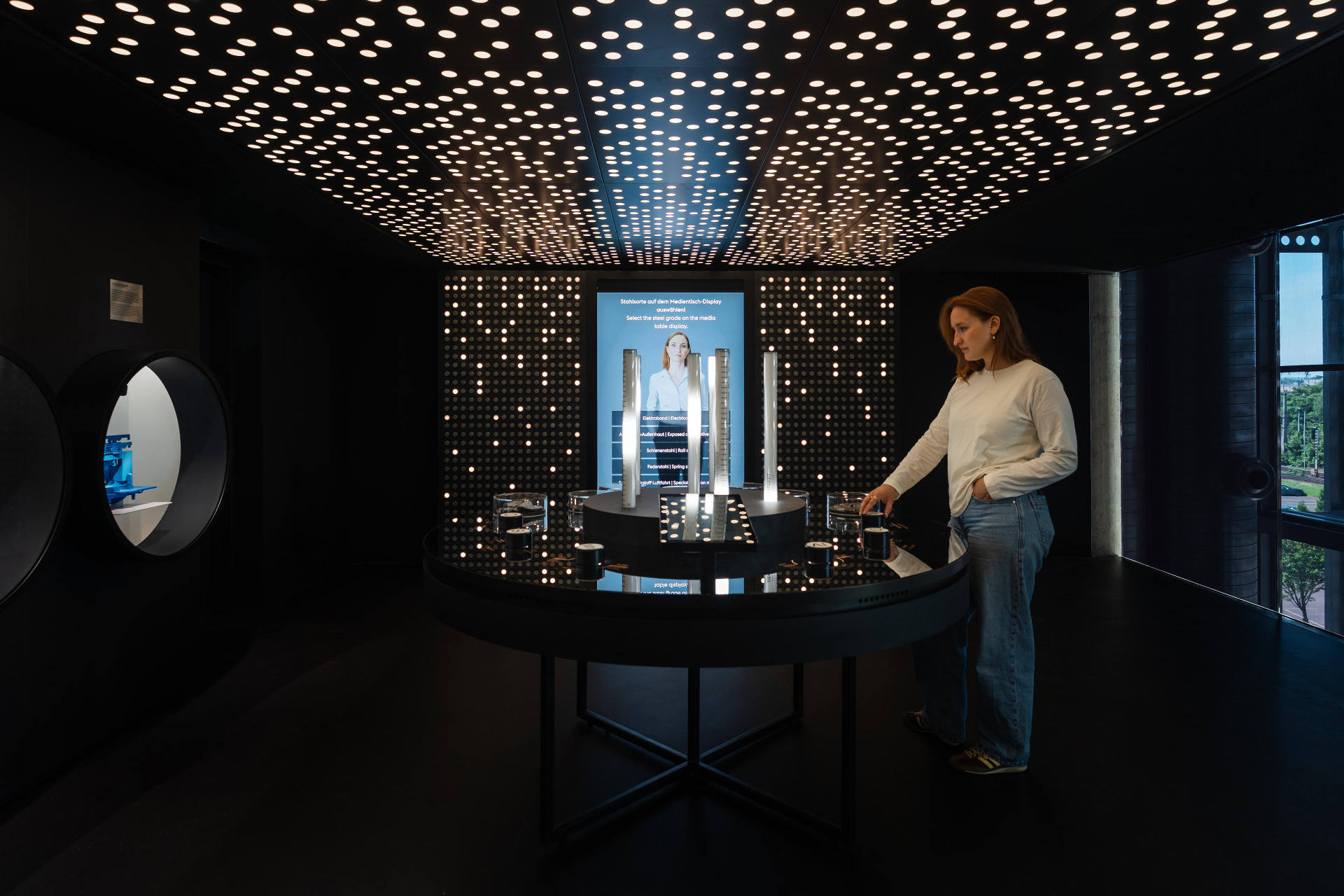
In the section “From Raw Material to Material” on Level 3, the material steel itself takes centre stage. Visitors learn how raw materials become steel, what role the blast furnace and LD process play, and how different steel grades are created. Two centrally positioned media tables convey the steelmaking process interactively, combining real exhibits with digital applications. Visitors discover the individual raw materials, can create their own alloys and see how the material properties change. In a lighting installation on the ceiling, points of light gradually become denser – analogous to the individual process steps in steel production. In the Grid, the focus shifts to greentec steel: to the transformation of steel production and the path towards more climate-friendly processes. Individual exhibits explain various research projects; with the tablet, the real exhibits are shown in their context within the research facility.
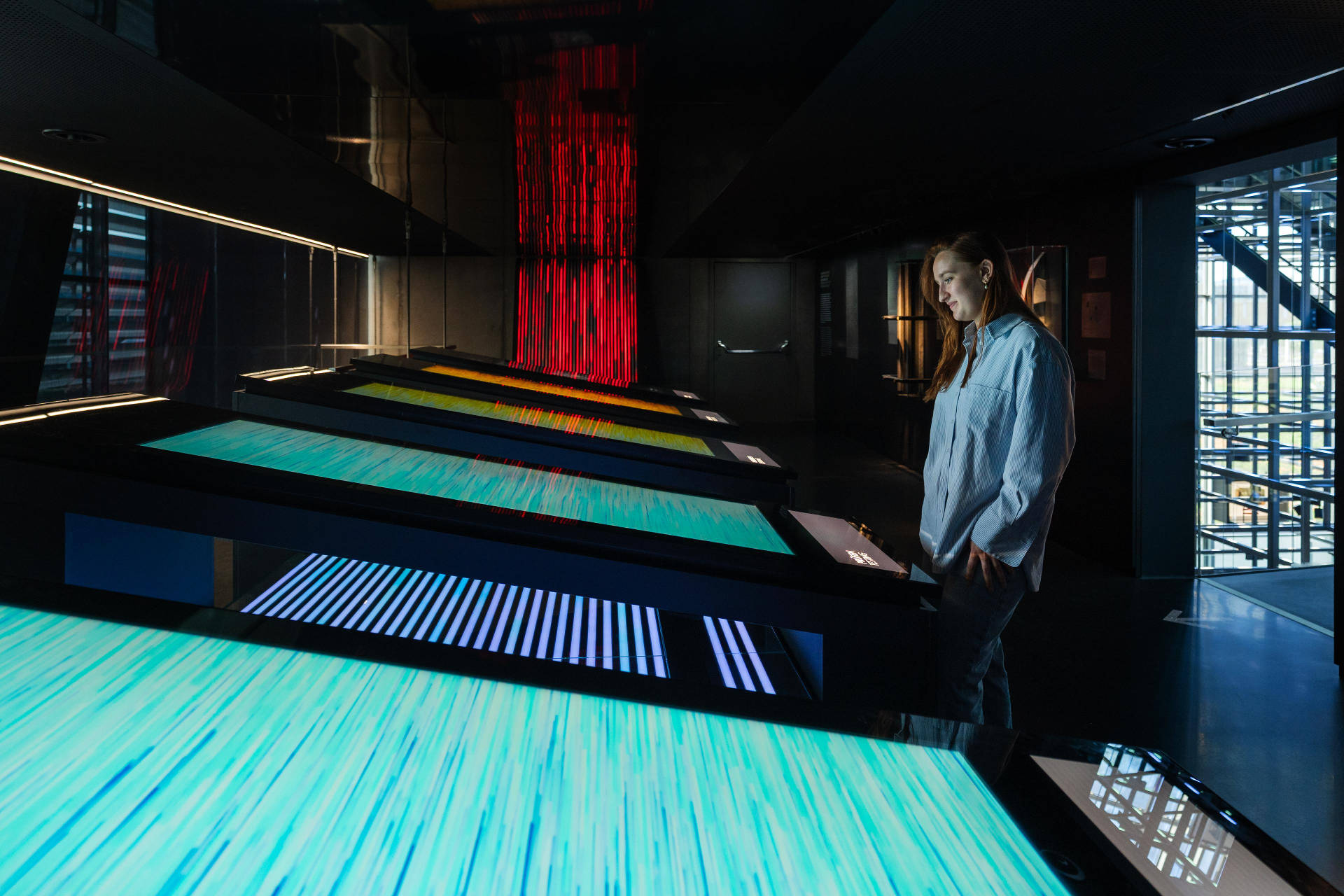
Level 2 is dedicated to “Processing Routes and Products”. It shows how steel is further processed after production. At a 13-metre-long LED conveyor-belt table — inspired by flowing, hot steel — visitors can select individual end products. On the integrated screens, they see how these products are created step by step: shaped, tested and tailored to specific applications. In the Grid, voestalpine products from the fields of rail, automotive, energy, mechanical engineering and infrastructure are displayed standing and suspended, including, for example, a model of the Hydrostar switch. Some of the large exhibits are enhanced with media content via tablet scan.
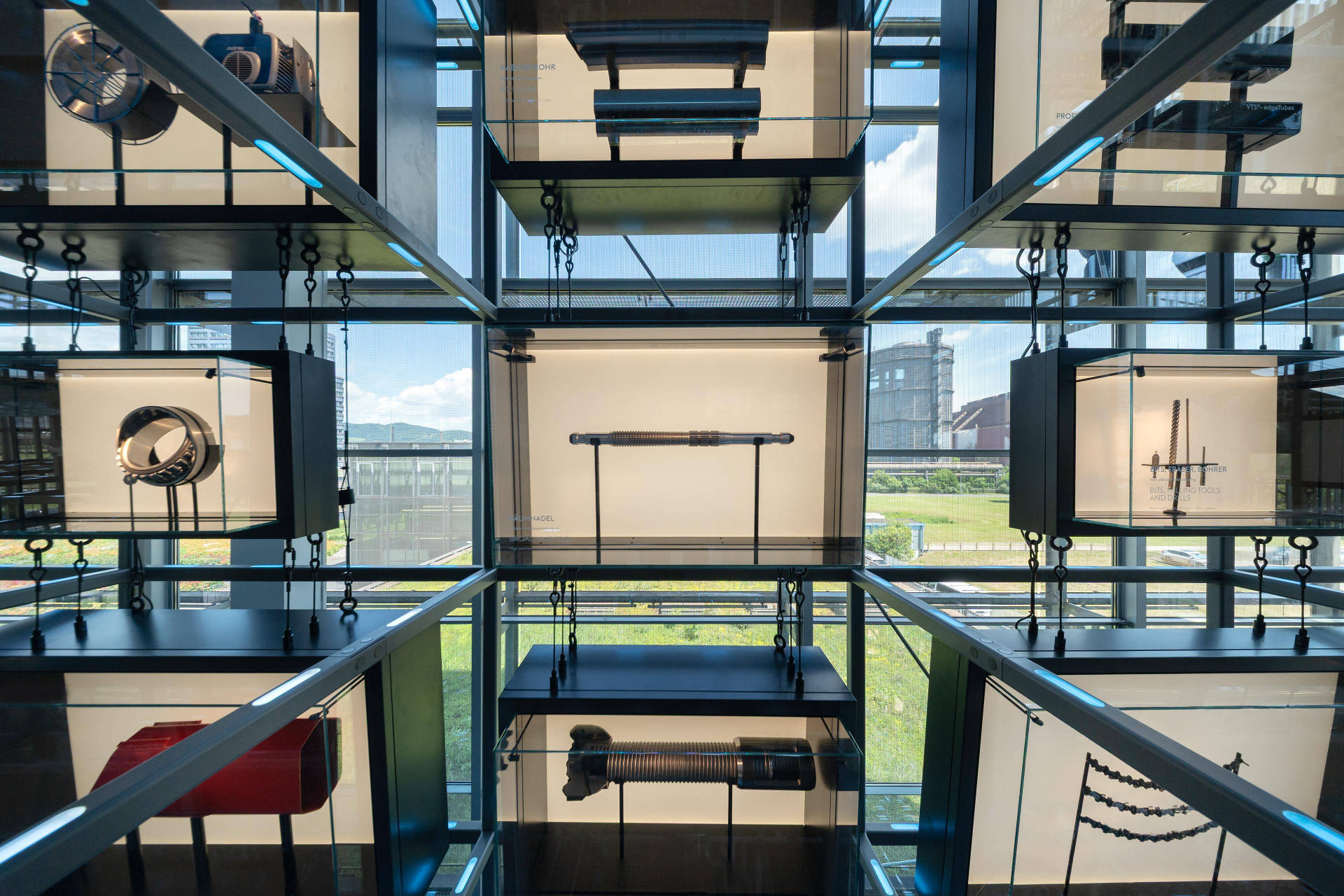
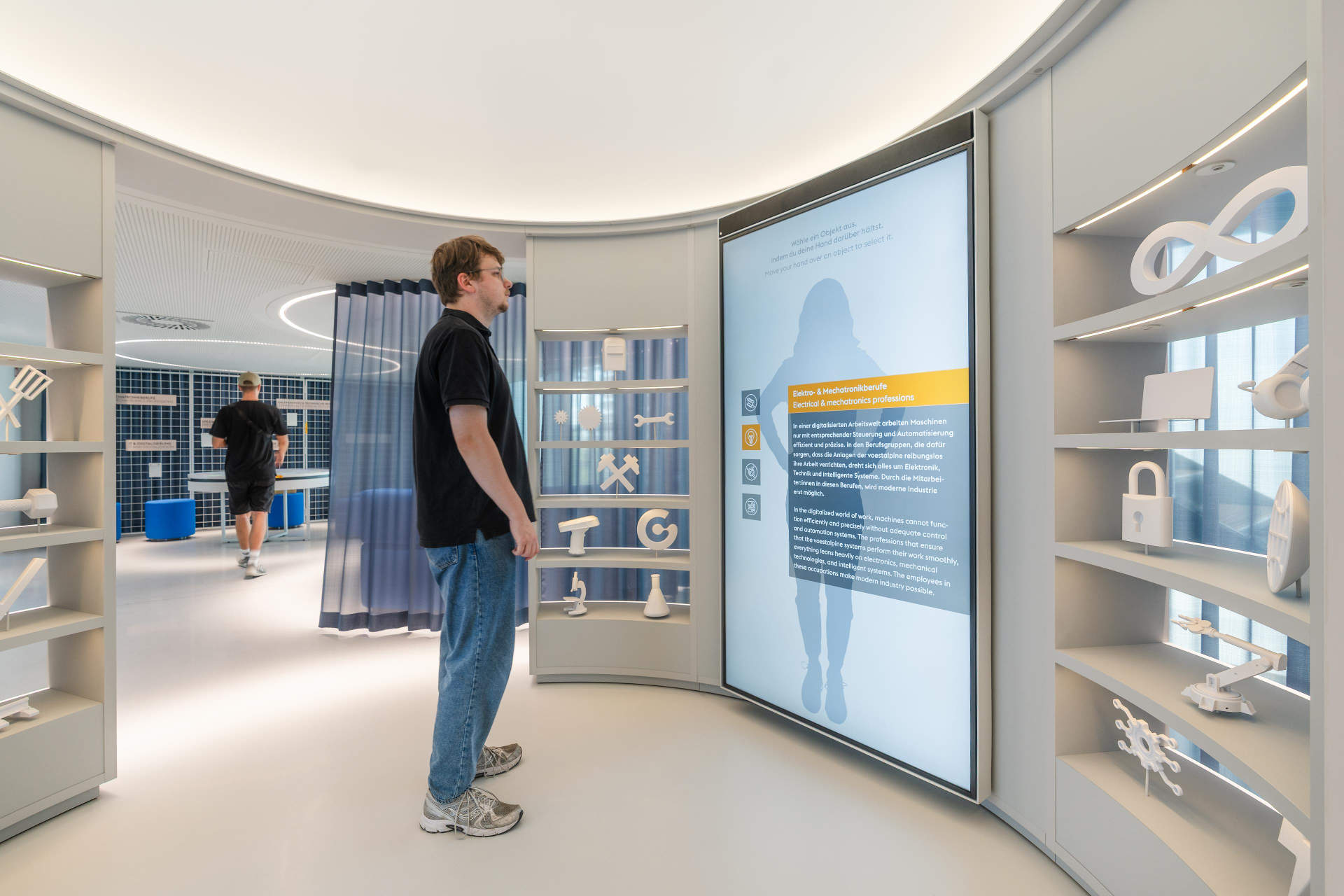
Level 1, “World of Work and Everyday Life”, places the people of voestalpine at the centre. The exhibition shows the diversity of professions within the company: they are represented by symbolic objects such as a paragraph sign or a cooking spoon. When visitors select one of them, employees talk about their field of work in a video. An interactive quiz offers visitors the opportunity to discover their own strengths and talents. In the Grid, the focus is on lifestyle, glamour and speed, showing how strongly steel shapes everyday life. Among the exhibits, either standing on the platform or suspended in the Grid itself, are a steel sequin dress and the ice skates of Dutch Olympic champion Xandra Velzeboer. The virtual reality application brings the exhibits to life.
Visitors reach the ground floor via a folding staircase that is lowered down; it forms the connection between the suspended Grid and the floor. The ground floor serves as both the beginning and the end of the visit. Here, guests are welcomed, introduced to the Stahlwelt and, at the end, guided back out of it. A shop and space for temporary exhibitions are also integrated.
The new voestalpine Stahlwelt combines brand communication, exhibition design and architecture into a holistic experience. It is aimed at visitors, school groups, specialist audiences, customers and future employees. It makes visible how closely steel is connected to the questions of the future: sustainable production, technological innovation and the demands of a connected world.
本文内容由 ATELIER BRÜCKNER 提供或来源于其官方媒体渠道,由 WeHow 整理编辑。图片、视频及相关设计作品的版权归原作者/设计方所有。未经 WeHow 及版权方书面许可,禁止以 WeHow 编辑版本进行任何形式的转载或商业使用。