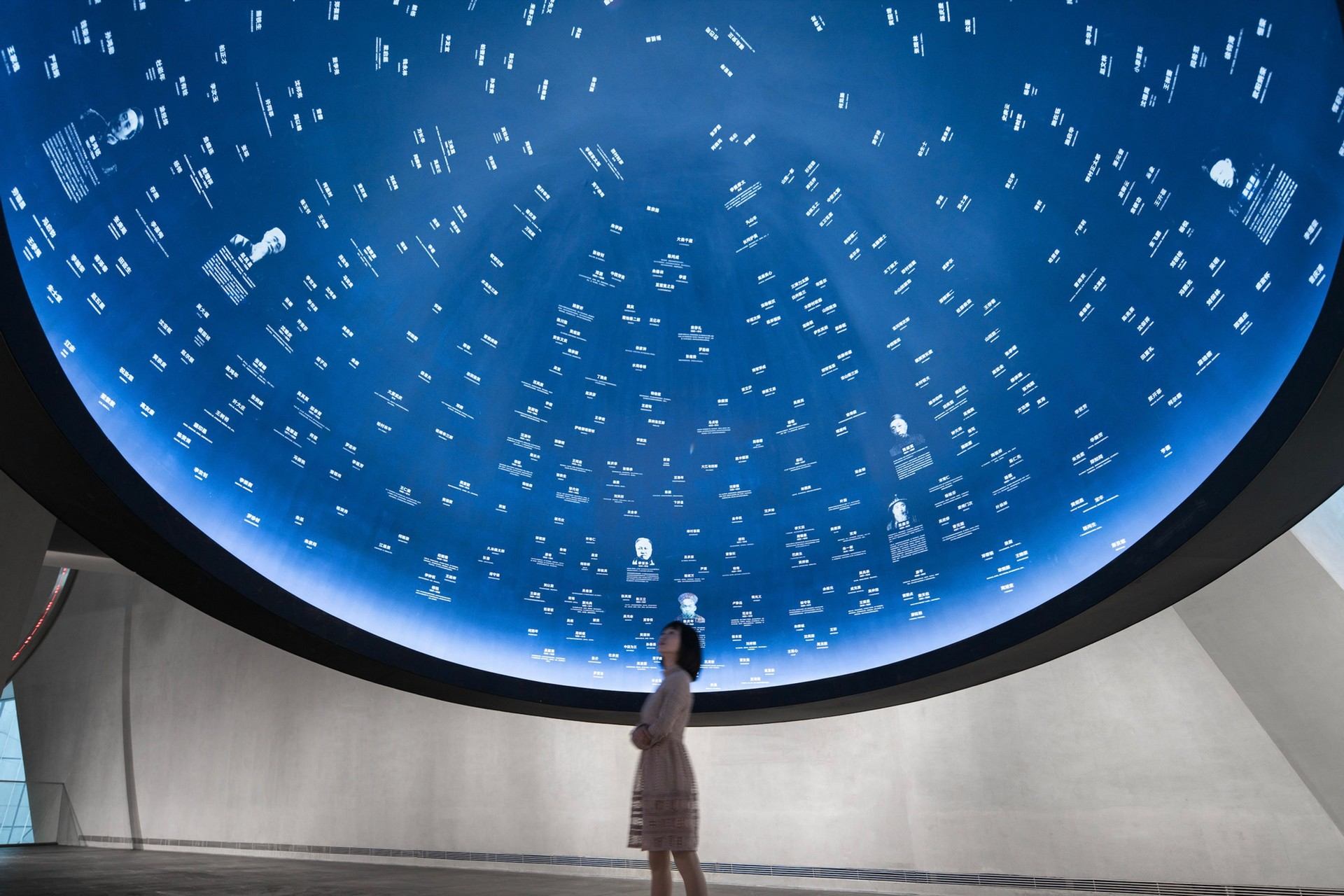
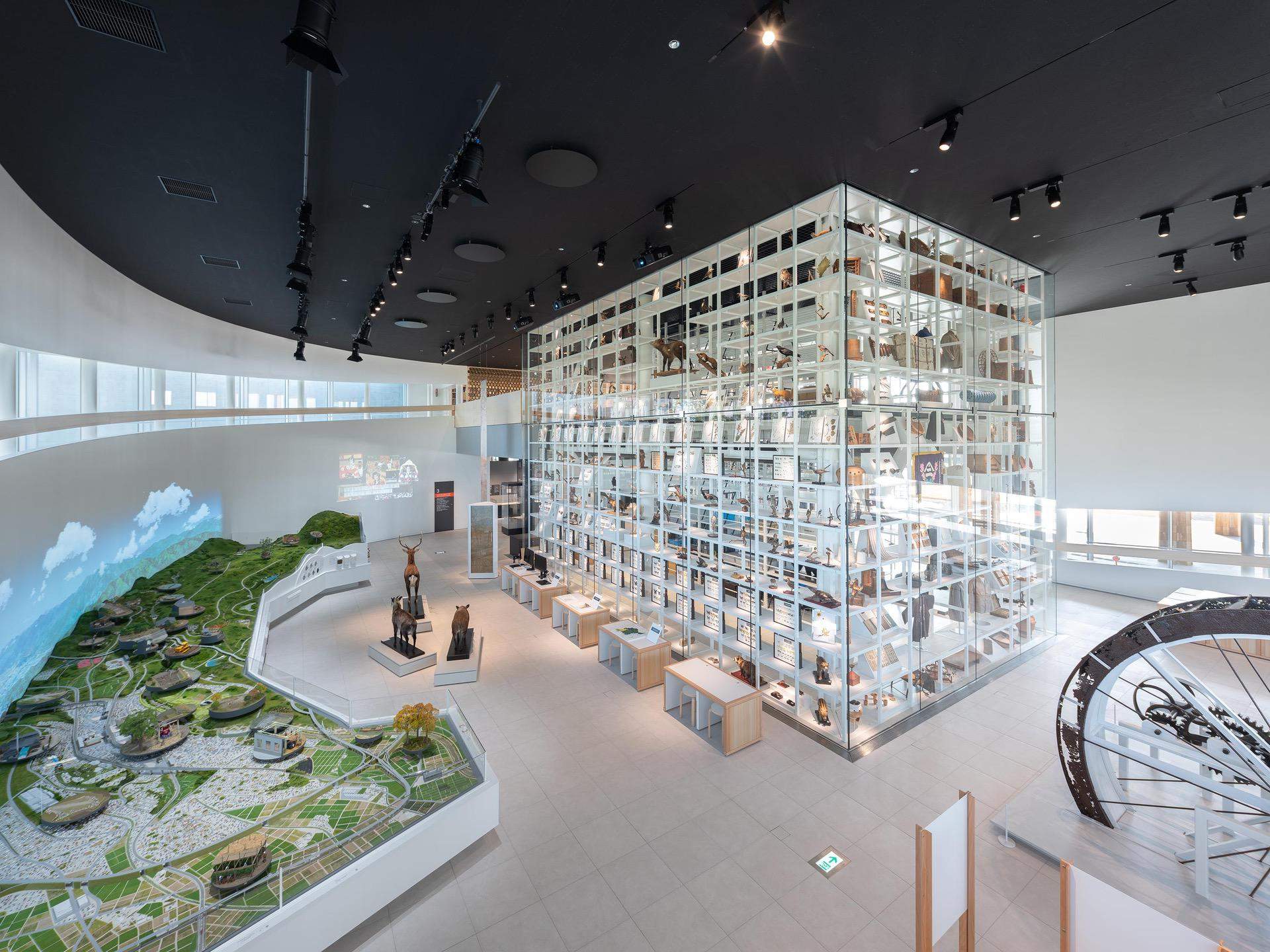
Taste Museum is located in Hongmei Cultural and Creative Park, Tiexi District, Shenyang. This Park is transformed from the old Hongmei Monosodium Glutamate factory. The museum is connected to the gate of factory, which is the first stop of the Cultural and Creative Park. In terms of the curatorial theme, Diameter Narrative Design has established the topic spanning from “Hongmei” to “MSG”, and “MSG” to “Taste”. The studio creatively interprets “Taste” from science, civilization and art, corresponding to the three exhibition halls of”Taste Lab”, “Taste Road” and “Taste Art Gallery” respectively. Using different narrative angles, design experiences and artistic expressions, we break through the usual impression about “taste” of audience.
Curatorial Concept
Taste is an individual memory, but behind it may be great changes of the whole era, which represents the social history variation. We put taste as a kind of medium language, which manifest the humanistic history of the world, and allow the audience to experience to achieve emotional as well as artistic appreciation. Through extending the narrative dimension of “taste”, people will comprehend that taste is an interesting and meaningful factor. In addition, except for historical objects and video materials, the most unique and exciting “exhibits” are several art installations specially designed in the museum. With supplemented by scientific-technology elements and spatial interaction, we will bring audience a totally different experience.
Experience Design

Overall Spatial Structure
Exhibition area of the museum is about 600 square meters, small and exquisite. The whole museum is divided into four parts, and main three exhibition halls are on the second floor, namely “Taste Lab”, “Taste Road” and “Taste Art Gallery”.

Entrance hall of the Taste Museum
There is an “Our Taste” spiral installation on the first floor and upstairs. Taste buds are the taste receptors of most animals, and more taste buds mean more sensitive taste perception. The double helix symbolizes genes and evolution, and inlaid on it are more than a dozen common animals and their taste buds, circling upwards from less to more.


Taste Lab
This exhibition hall corresponds to the “scientific” dimension of taste. Analyzing some principles of biology and other complex information, it leads everyone to understand taste deeply from academic angle.

A. My Sense of Taste: Neural Pathway Interactive Installation
When people eat something, taste on the tongue reaches taste cortex in the brain through the cranial nerves, then generates the perception of taste. This installation talks about personal taste pathway, which consists of a dynamic wall and three profile devices. There is also an embedded screen in the eye region of the device, forming a special perspective effect.

B. Taste Laboratory Bench
This long “information device” table based on the content is the core item of the exhibition hall. It respectively uses technology and vessels to analyze taste. Contents of the vessel talk about cookware and wine glass, through the 3D-printed wine glass profile and the animation to tell how to choose the wine glass and its influence on the taste of wine. The cookware section uses a multi-layer dynamic interface to analyze how different cookware materials affect the taste. During the part of technology, three sections according to time venation tell ancient fermentation technology, modern MSG production, and virtual taste symbolizing the future, which are the history of human making specific taste.


C. Science Wall
It consists of three exhibition items: report booklets, fermentation catalysts and taste roulettes. Each report booklet in the showcase is a small tip related to taste, the fermentation catalyst tells the classification map of Chinese “qu”, and the taste roulette tells the way to quantify as well as match tea, coffee, beer and wine.

The Journey Of Taste
The second exhibition hall corresponds to the “civilization” dimension of taste, inspired by the saying “civilization, moving forward with the smell”. Here, we broaden stereotype and vision, using salt, pepper and sugar as clues to connect the development of human civilization. “The benefits of salt is half of of the worldwide wealth.” Salt is indispensable, which is able to increase taxes, consolidate governance and safeguard the people’s standard of living. Therefore, Chinese monopoly system of salt lasted for more than two thousand years. Pepper, the representative of spices, once existed as treasure in Europe. The large voyage originated on Europeans’ intention to find spices, opened the prelude to the great geographical discovery. The part of sugar describes its relationship with the world trading system. As the earliest world commodity, the sugarcane plantation behind saccharose became an important destination of slave trade.


Taste Gallery
The third exhibition hall corresponds to the “art” dimension of taste, a lively, interesting and colorful corridor. Through the extension of image, we combine taste with art and senses, hoping to create a synaesthetic world.

A. Taste × Literature: Stories at the Table
A literary feast that spans time and space, showing how world-renowned writers use words to describe their taste experience.


B. Taste × Photography: Expressions of Taste
On twenty five screens, we used hyperaltitude photography to record the different five expressions of people who taste sweets and bitters of life.

C. Taste × Music: The Sound of Taste
We often use taste to express auditory impressions and describe life experiences. Four curved sound and light interactive installations express the ups and downs of life. Each music tube has a different classic movie soundtrack, telling the story of the characters in the movie. With the specially programmed artistic background light effects, it integrates the taste of life.


D. Forest of Taste
More than 30 silver birch create an indoor forest, which the tree hole with metal round have the smell of Northeast China. Here, we showed the local natural elements of Shenyang, such as fir, juniper berries, arborvitae tuberose… this poetic olfactory interaction allows the audience to realize a real “taste experience”. This is our last exhibition item.


The content of this article was provided by 直径叙事设计 or sourced from their official media channels, and has been curated and edited by WeHow. All copyrights to images, videos, and related design works remain with their respective creators or design firms. Reproduction, republication, or commercial use of the WeHow-edited version in any form is prohibited without prior written permission from both WeHow and the respective copyright holders.