A large-scale installation by radugadesign imagines a science-fiction perspective on the future of the underwater world in the Philippines.
Bioluminescent seahorses, turtles covered in coral, flying mantas, giant fluffy starfish, glowing jellyfish, blue-hued clownfish, and spiral-shelled nautiluses — all these creatures have evolved under environmental influences.
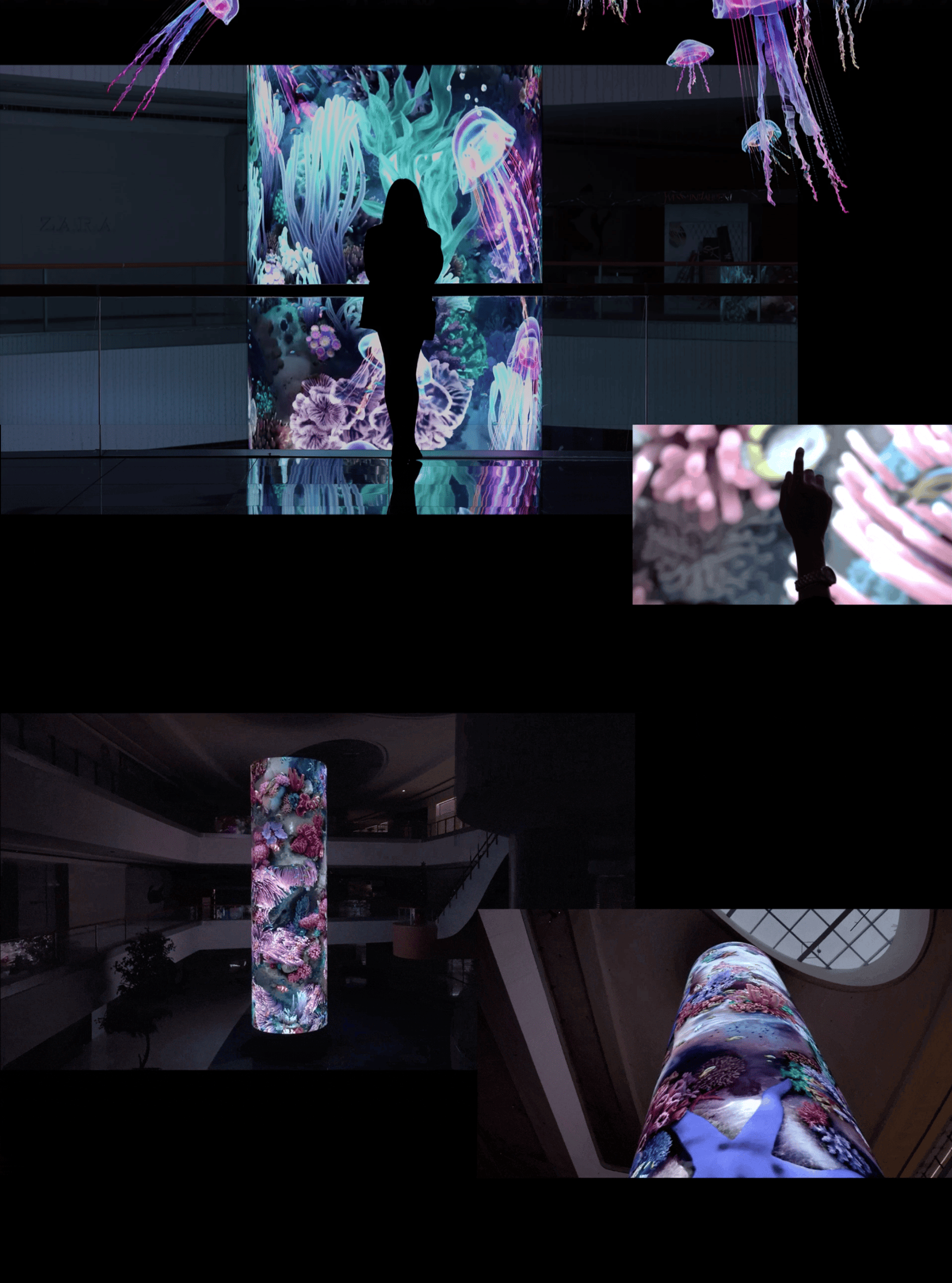
We assembled this biodiversity world in a massive digital “aquarium”, using a cylindrical screen several stories high in the middle of the mall. The installation combines scientifically grounded visual storytelling with artistic imagination to show how marine life might look millions of years from now.

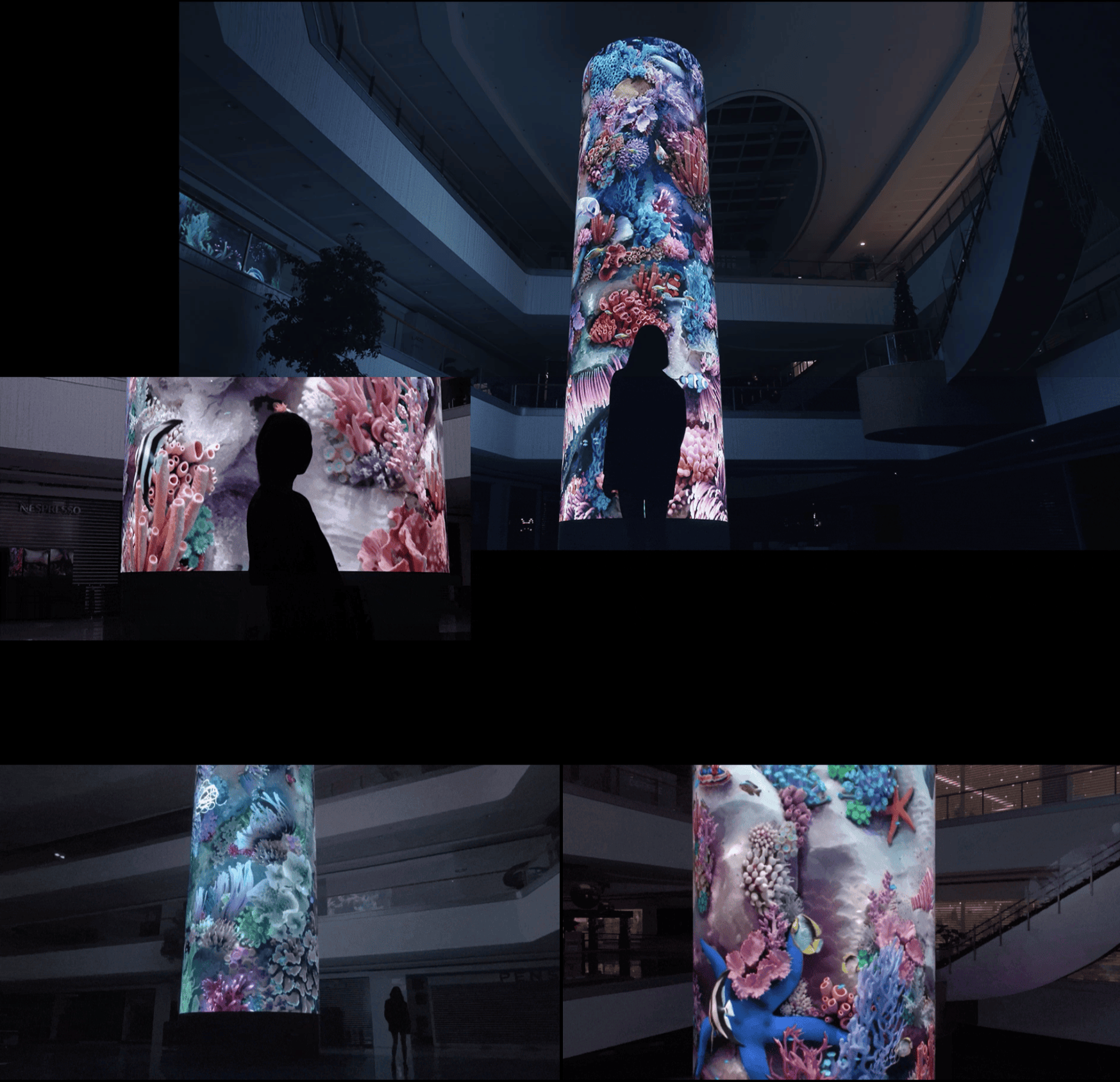

The Beauty of Nature, the Principles of Science and Inspired Imagination
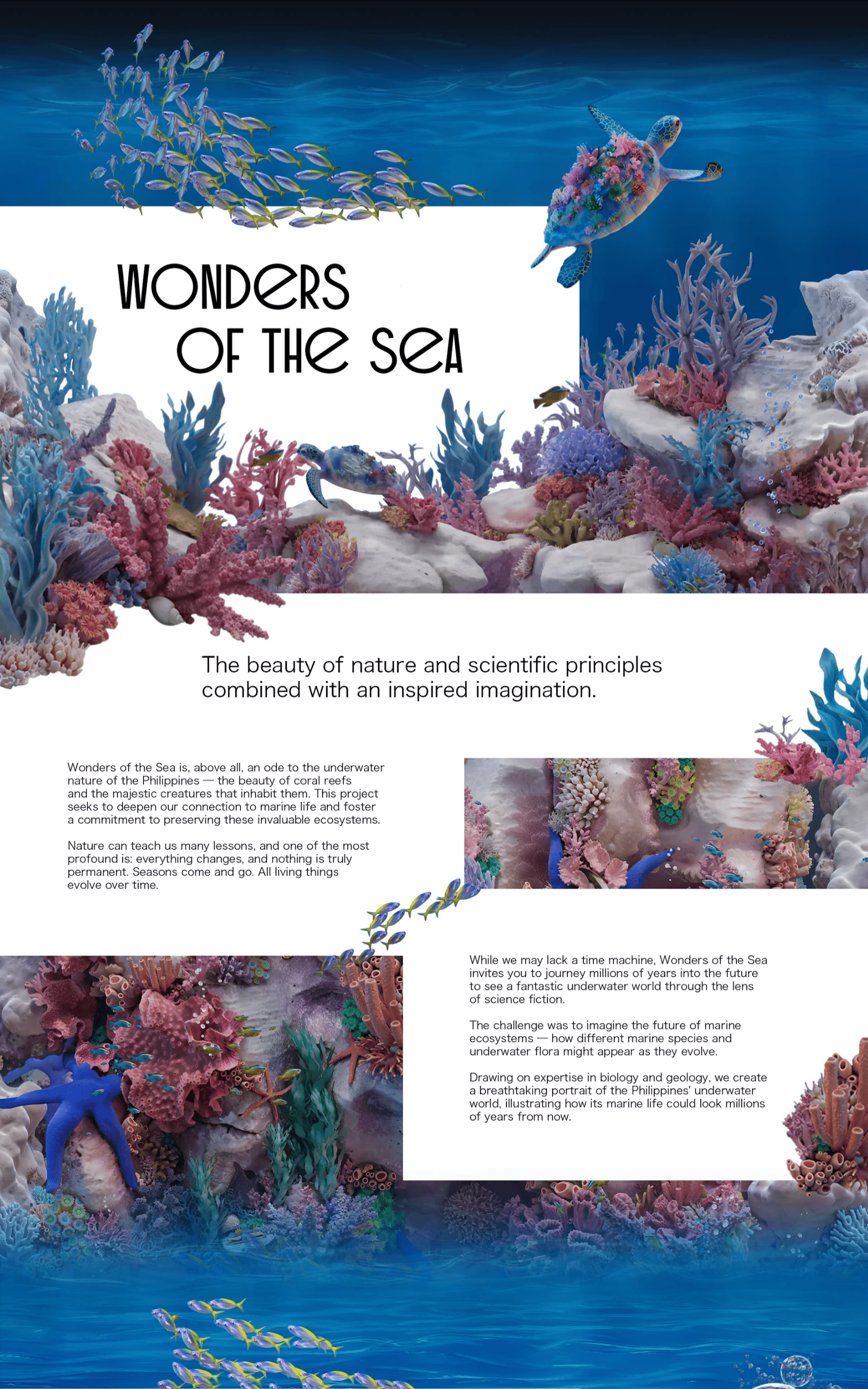
Wonders of the Sea is first and foremost a tribute to the Philippine underwater world: its coral reefs and the remarkable creatures that inhabit them. The project seeks to deepen our connection with marine life and encourage protection of these invaluable ecosystems.
Nature teaches us that nothing stays the same. Seasons change, and all living things evolve over time.
Without a time machine, Wonders of the Sea invites visitors to imagine the underwater world millions of years from now. Drawing on biology and geology, it envisages how marine species and plants in Philippine waters might evolve into unfamiliar forms.
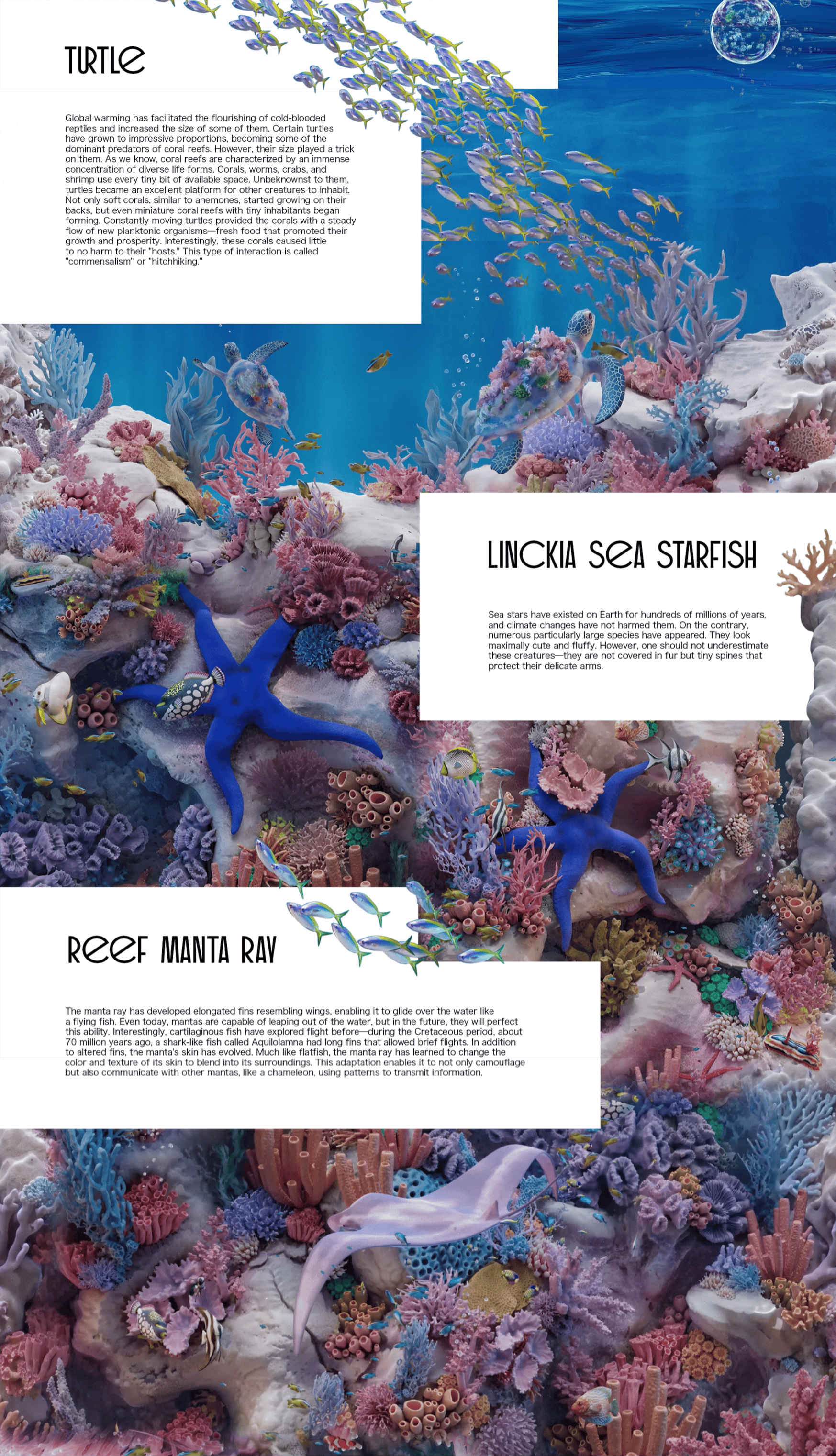
Turtle
In this imagined future, warming conditions favor cold-blooded reptiles, and some turtles grow large enough to become major predators on the reef. Their size also makes them moving habitats: soft corals and miniature reefs take hold on their shells, while a steady flow of plankton nourishes these hitchhikers. This largely harmless relationship resembles commensalism.
Linckia Sea Star
Sea stars have survived for hundreds of millions of years. Here, climate change gives rise to unusually large forms. They may look soft and furry, but their arms are protected by fine spines rather than fur.
Reef Manta Ray
The reef manta ray develops long, wing-like fins and can glide over the water. Its imagined evolution recalls Aquilolamna, a Cretaceous shark-like fish with elongated fins. The manta ray also changes the color and texture of its skin to blend into its surroundings and communicate through patterns.
Seahorse
The seahorse grows larger and moves into deep water where sunlight barely reaches. Luminous bacteria live in a specialized structure at the tip of its tail, forming a lure much like that of an anglerfish. It can bring this light close to its long snout and swiftly draw in prey attracted by the glow.
Clownfish
Clownfish continue their symbiosis with anemones. New algae arising under changing temperatures give the anemones a blue hue; the fish change color to blend with their transformed habitat.
Hairy Nautilus
A warmer climate allows nautiluses to diversify, producing ridged, raised, spiny and ram-horn-like shells alongside familiar forms. These variations help them occupy different habitats, even when they arise through random mutation. Similar shell diversity appeared among ancient relatives, including ammonites.
Jellyfish
Jellyfish change comparatively little and remain recognizable. Some deep-sea species produce their own light through proteins stored in specialized photophores, giving off an uncanny glow in darkness.
The content of this article was provided by Radugadesign or sourced from their official media channels, and has been curated and edited by WeHow. All copyrights to images, videos, and related design works remain with their respective creators or design firms. Reproduction, republication, or commercial use of the WeHow-edited version in any form is prohibited without prior written permission from both WeHow and the respective copyright holders.