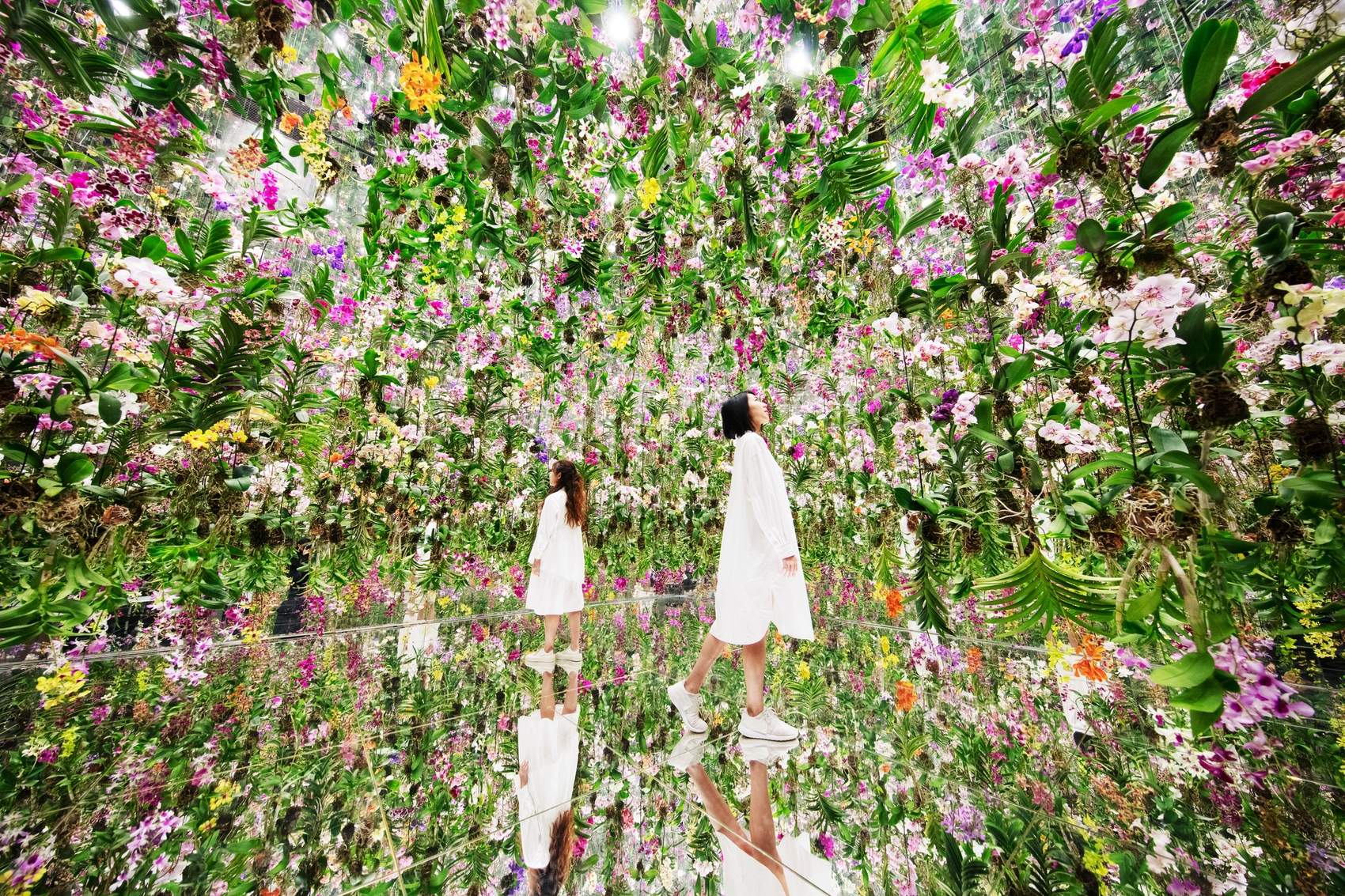
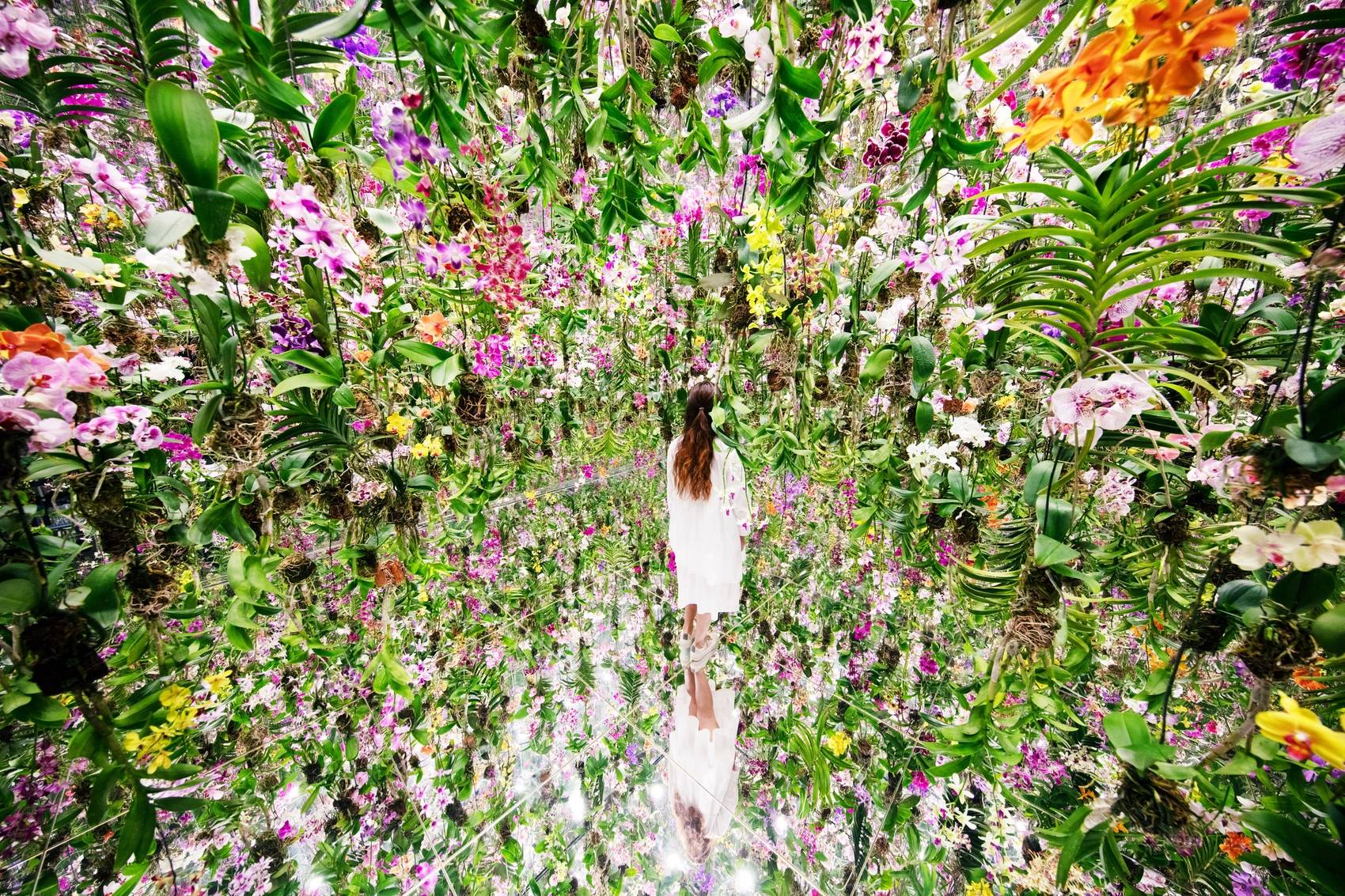
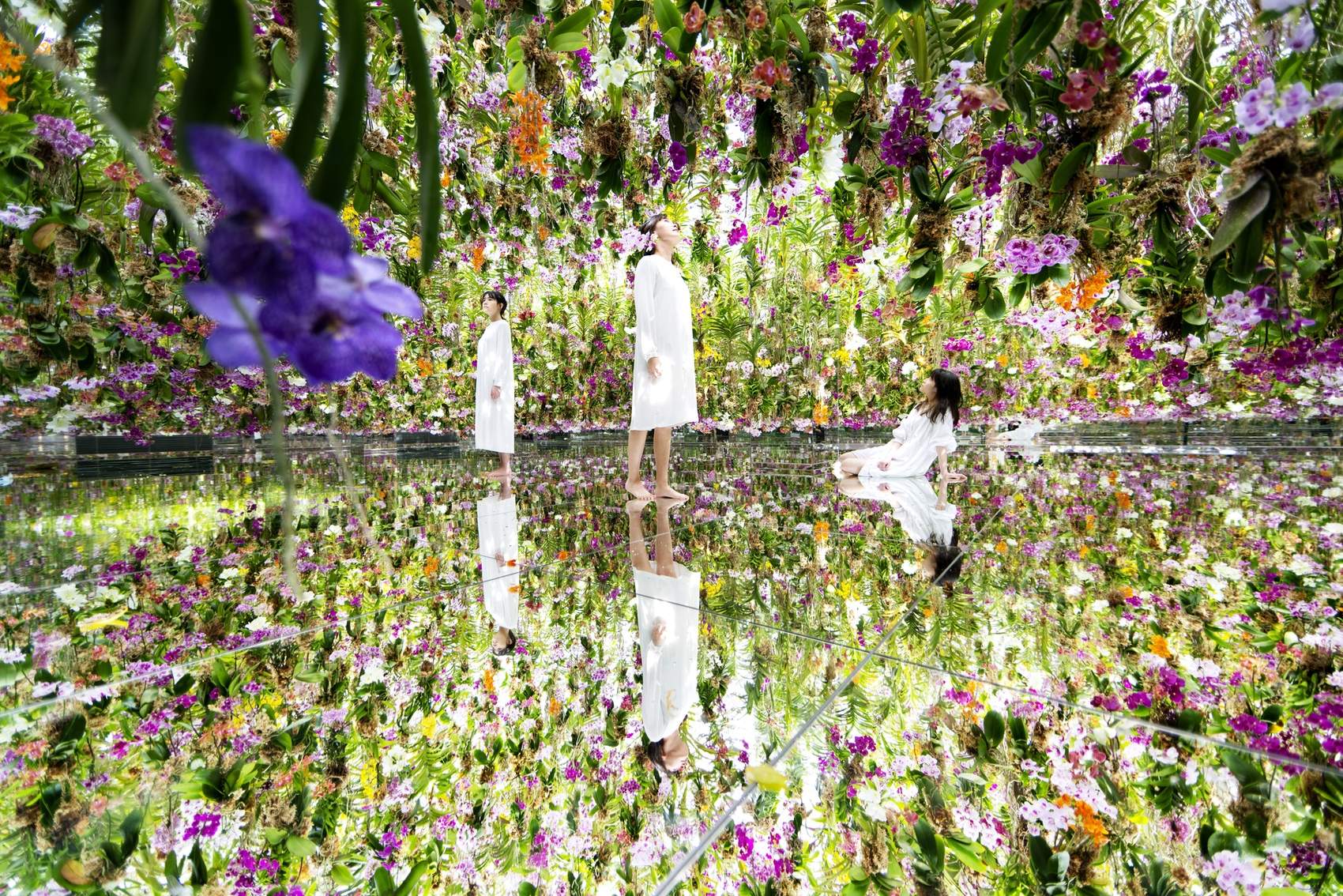
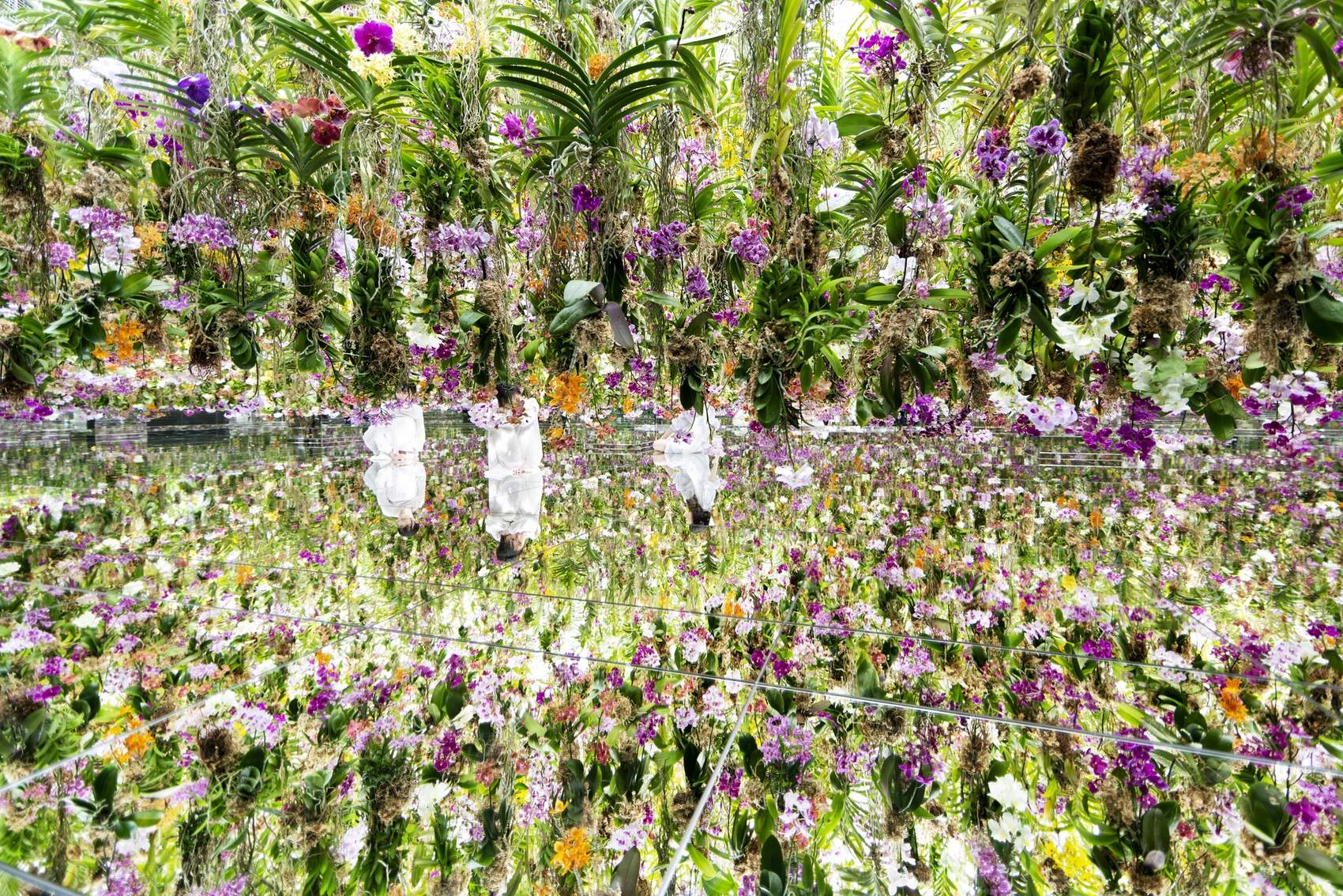
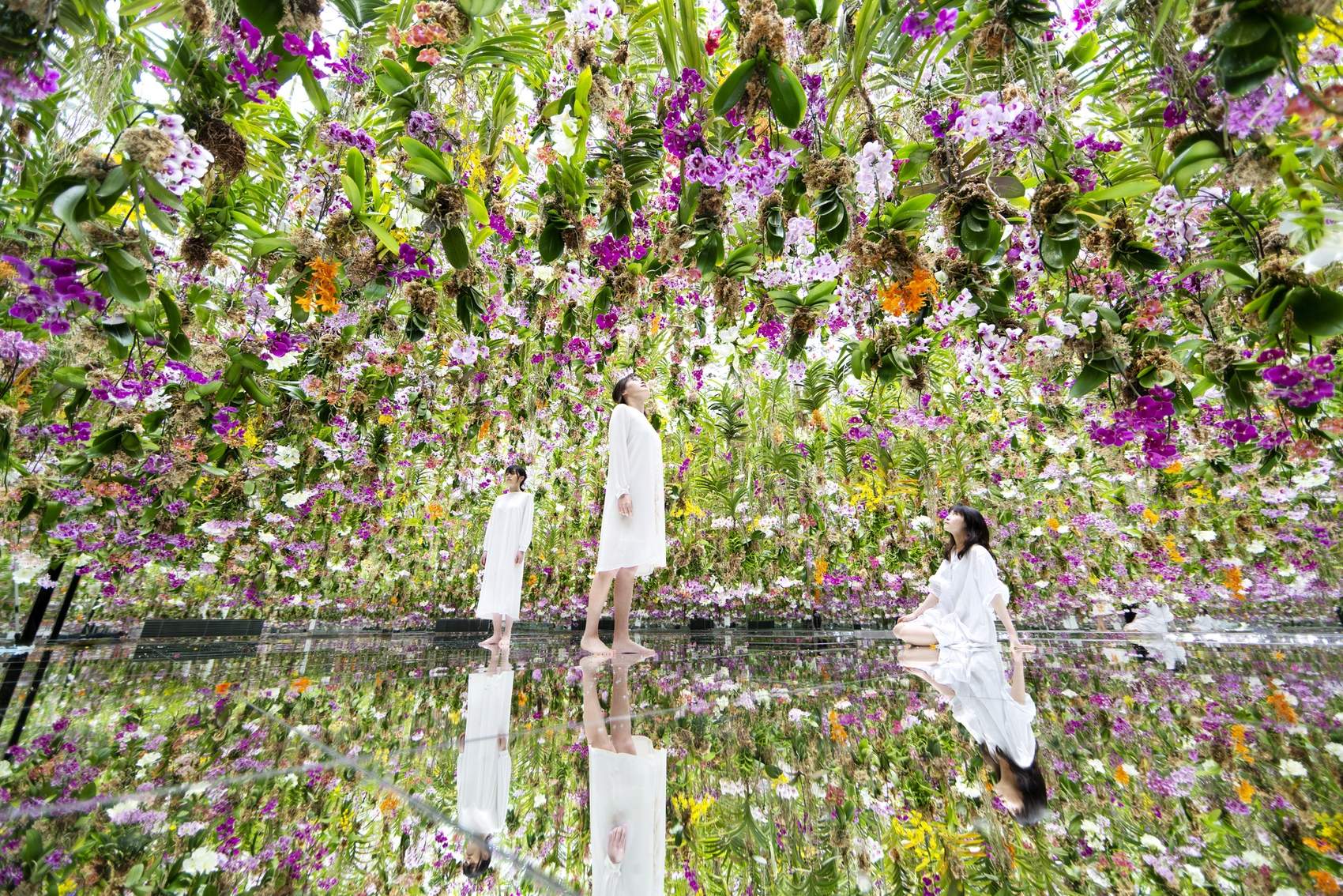
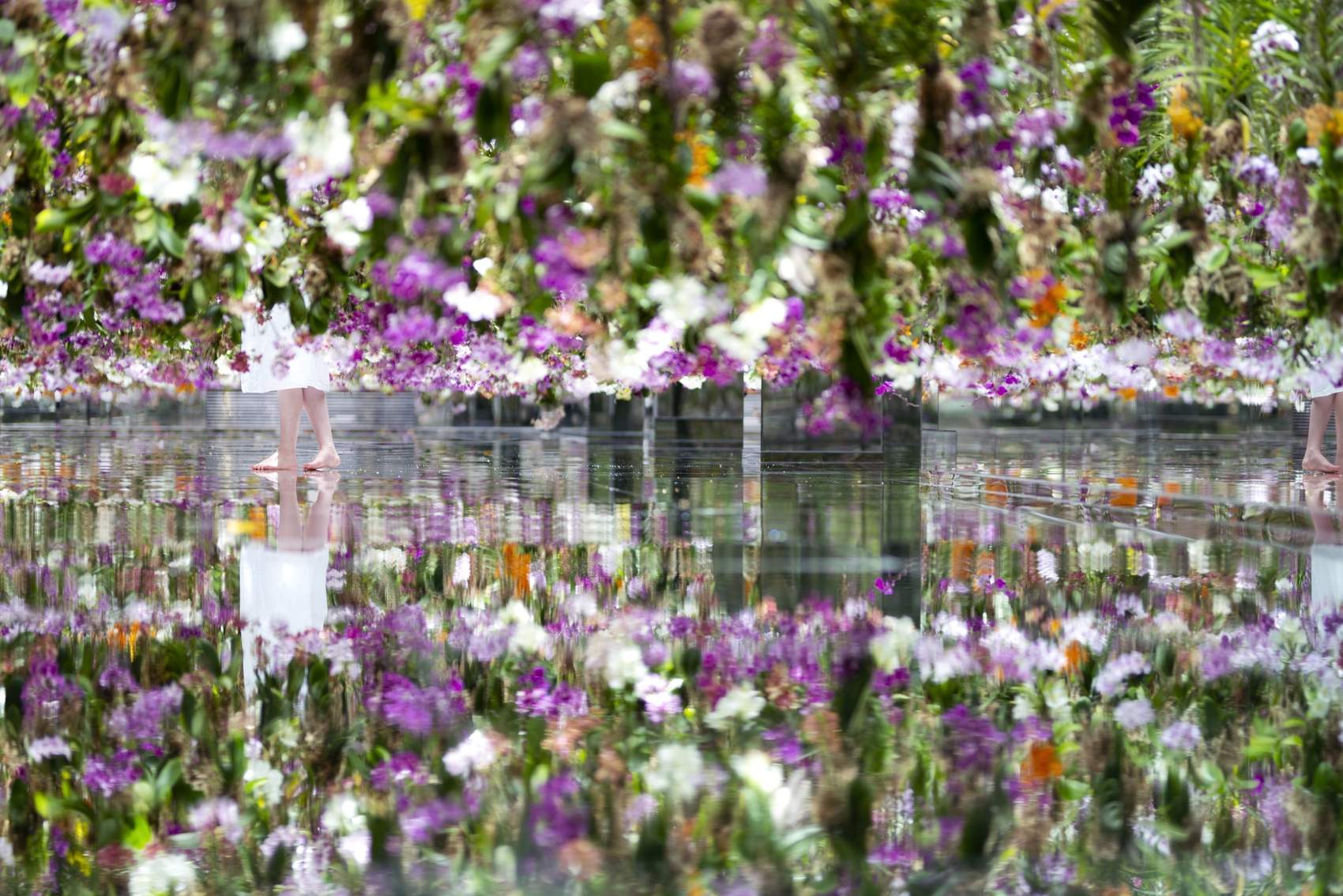
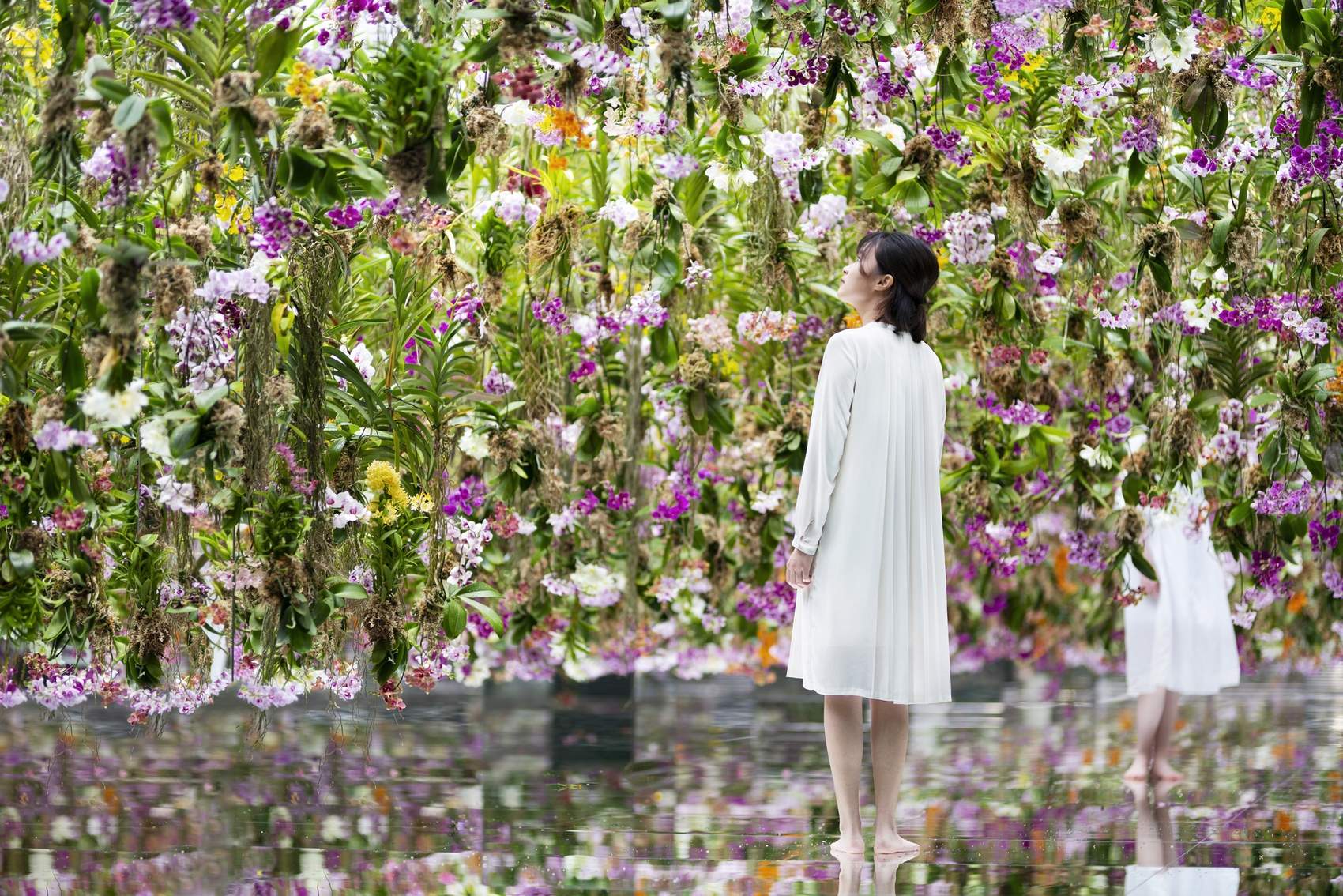
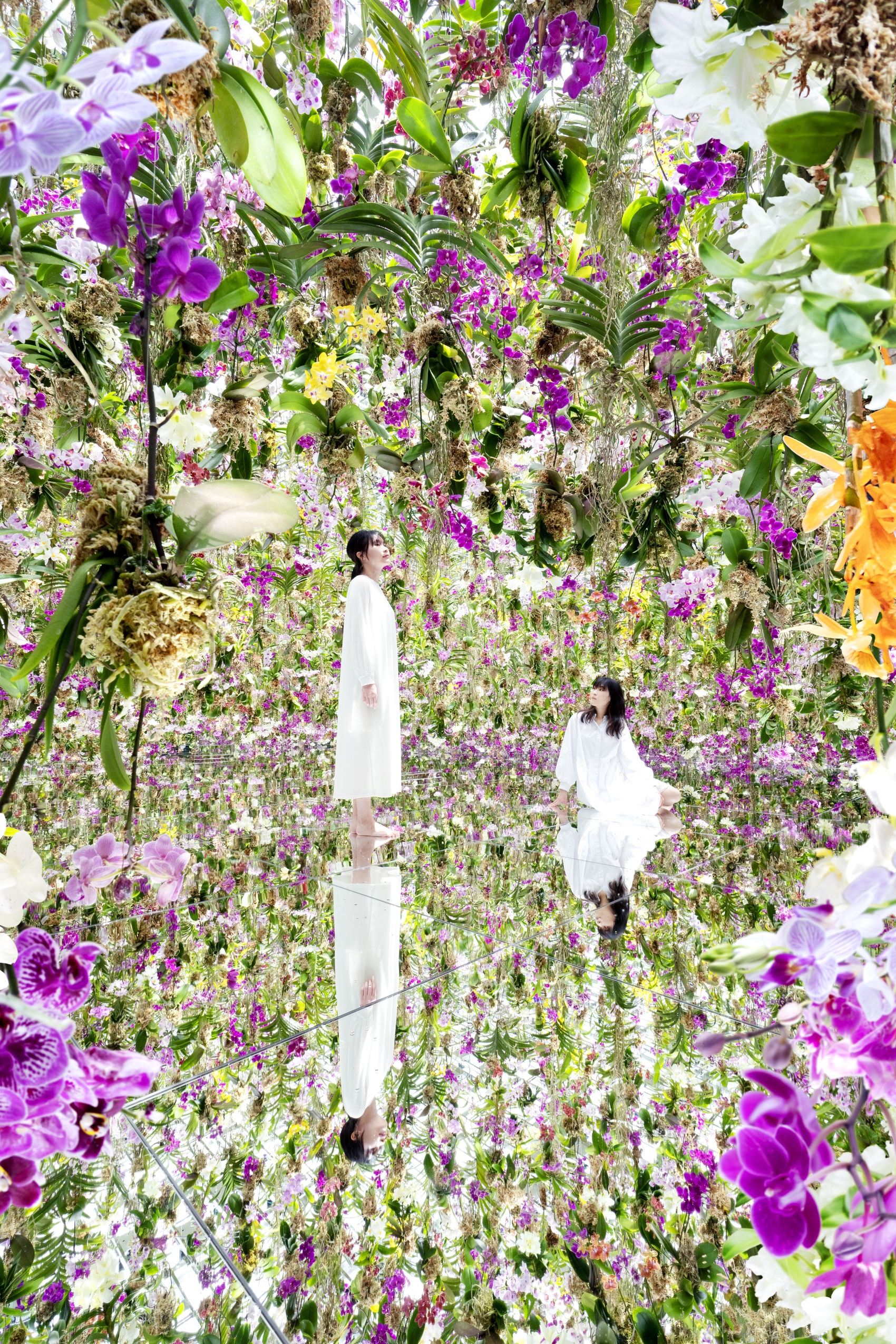
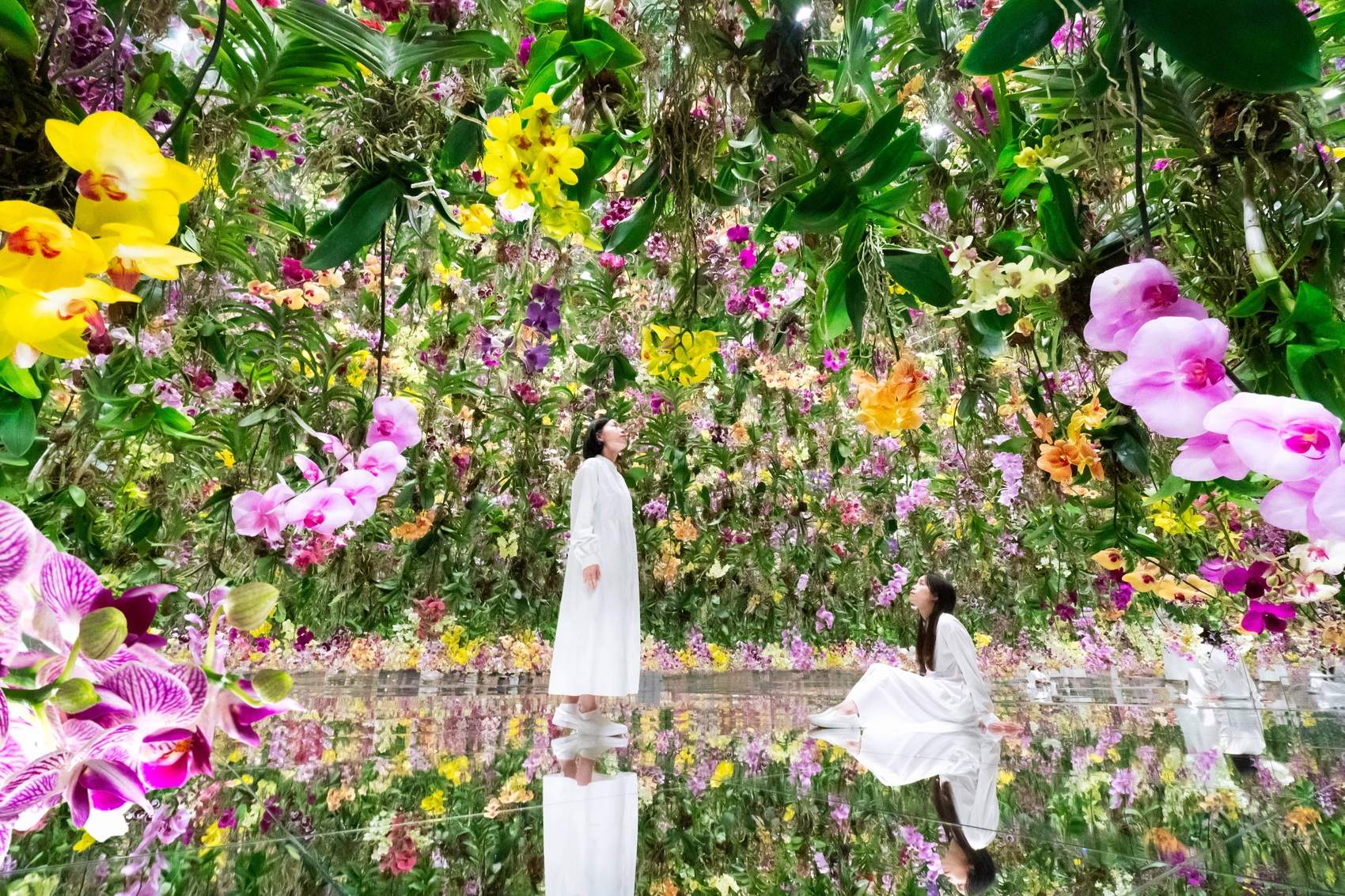
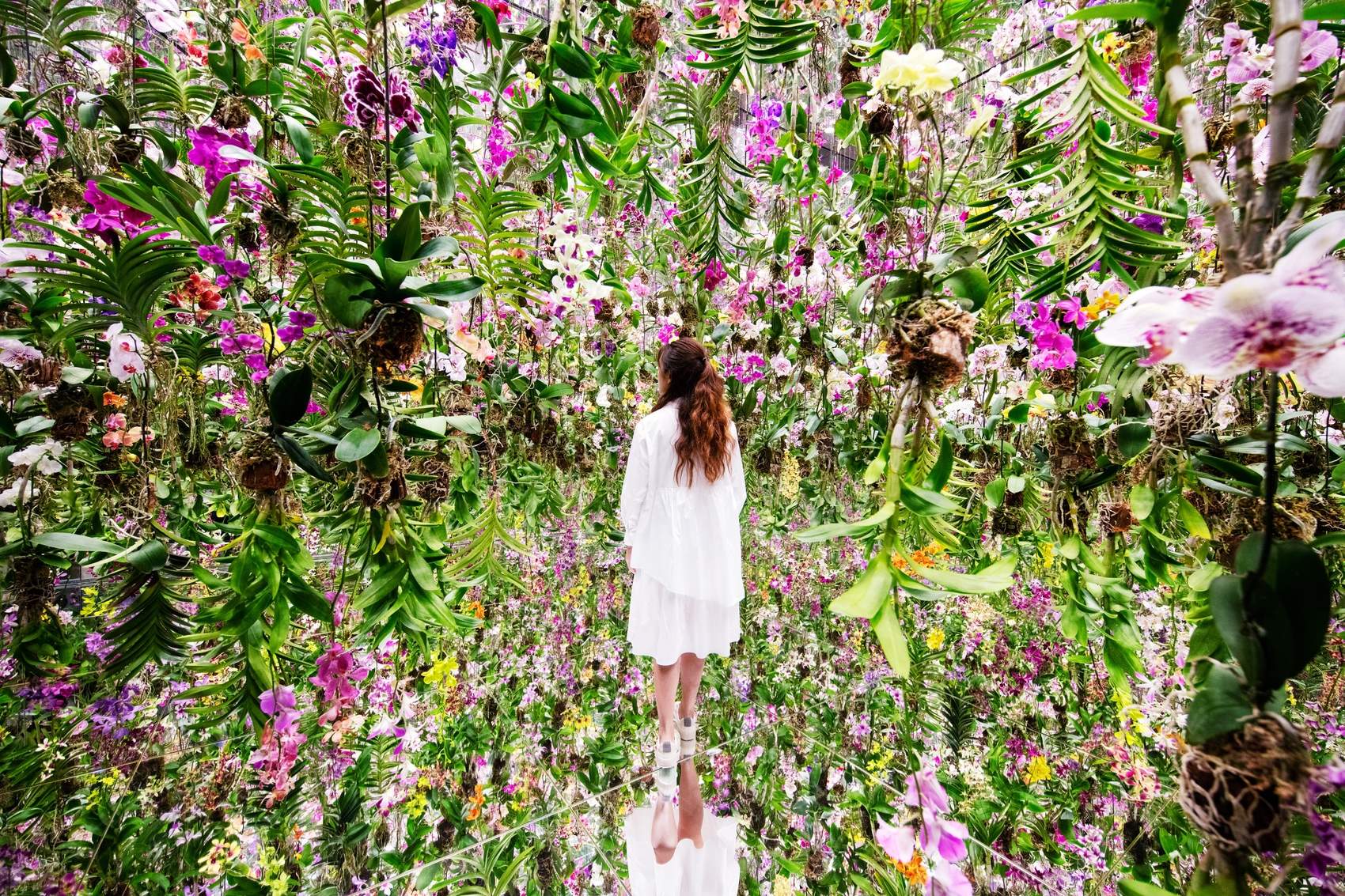
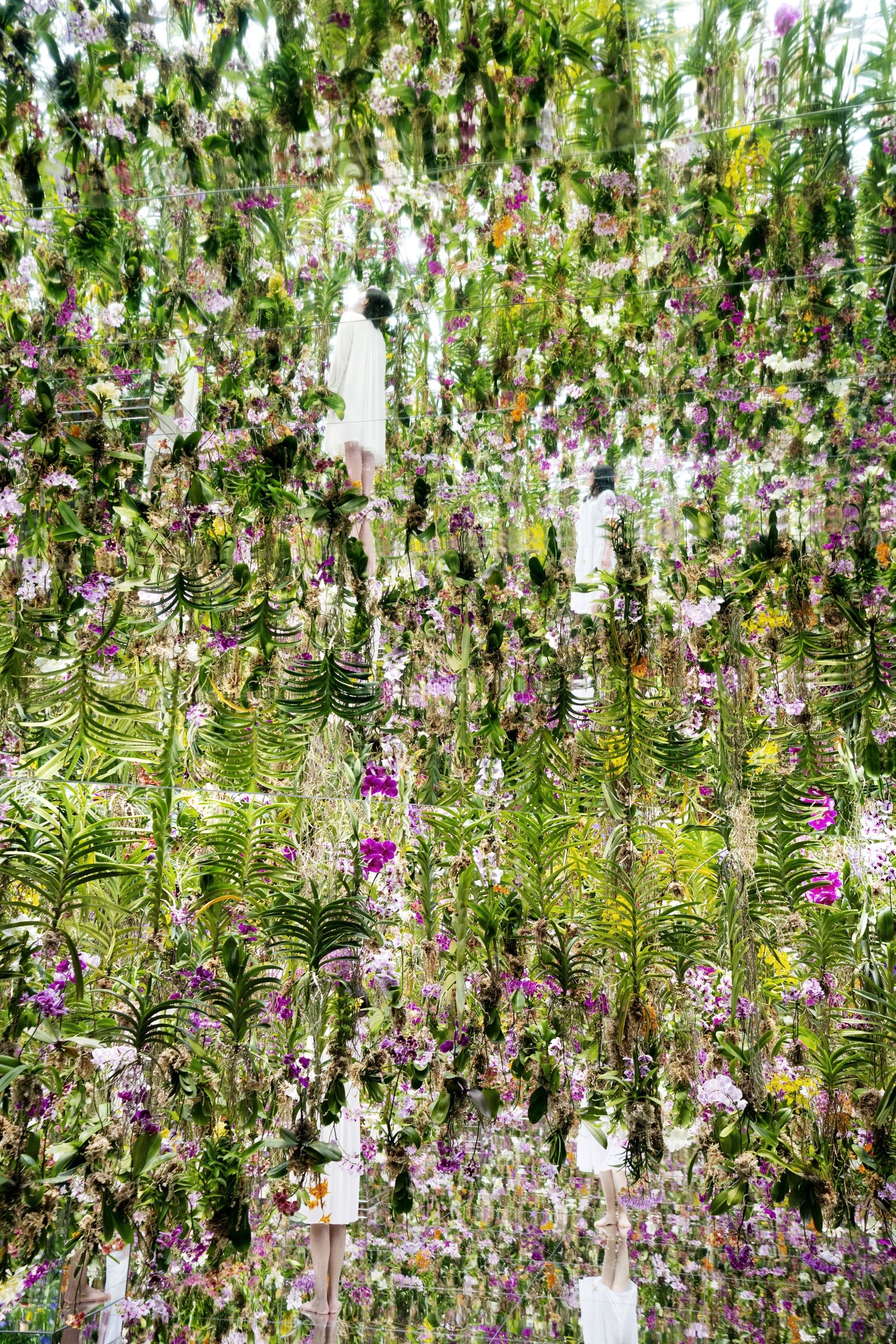
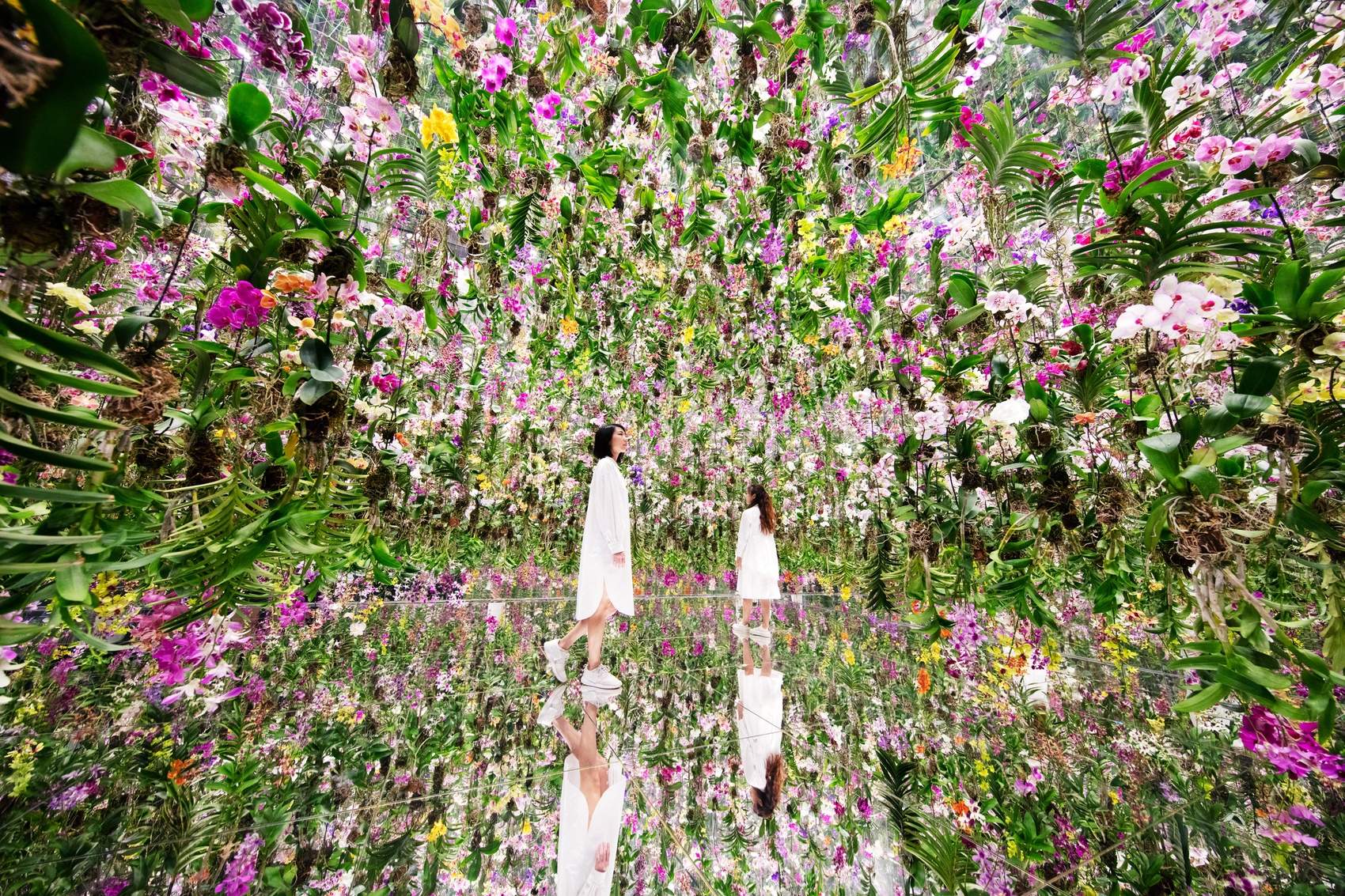
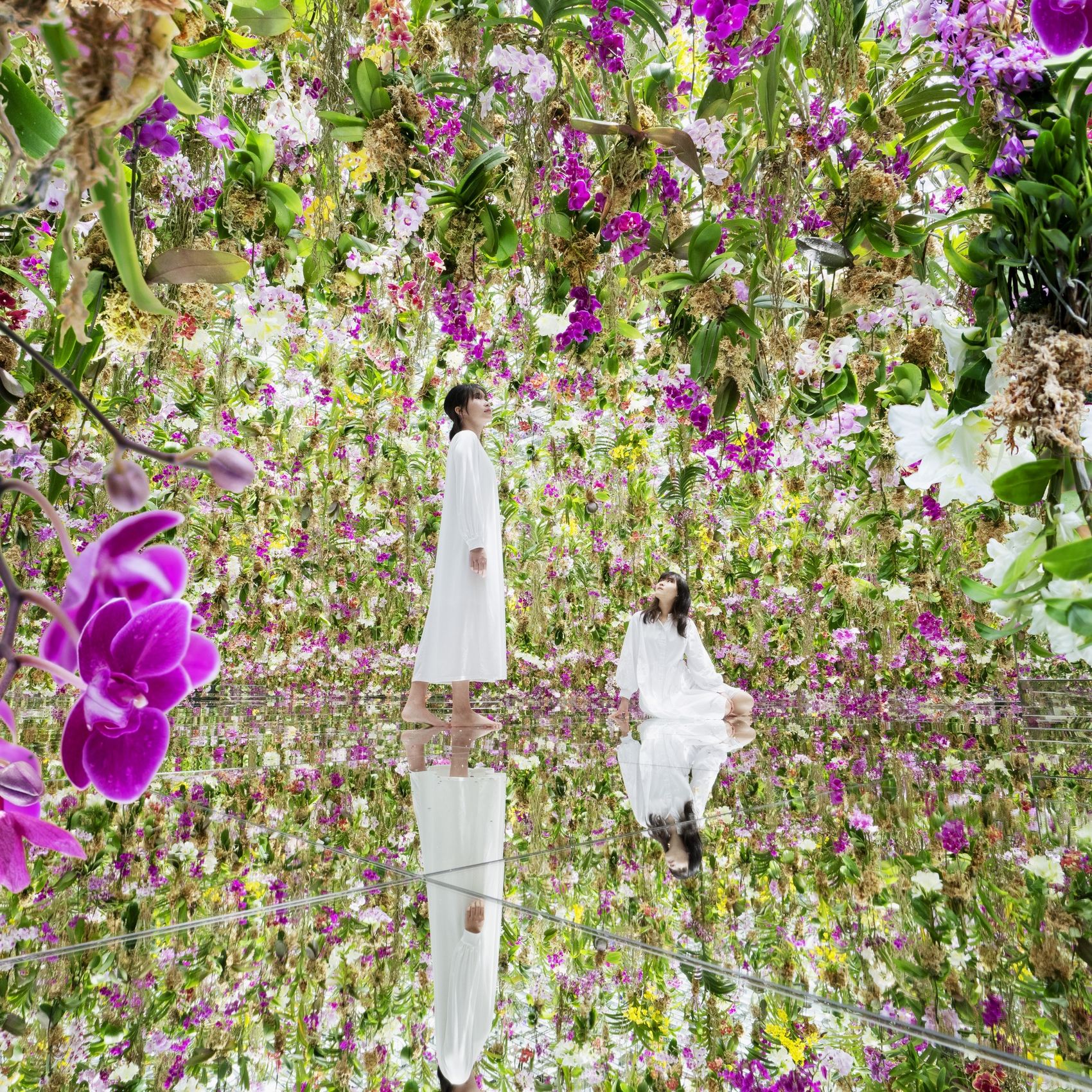
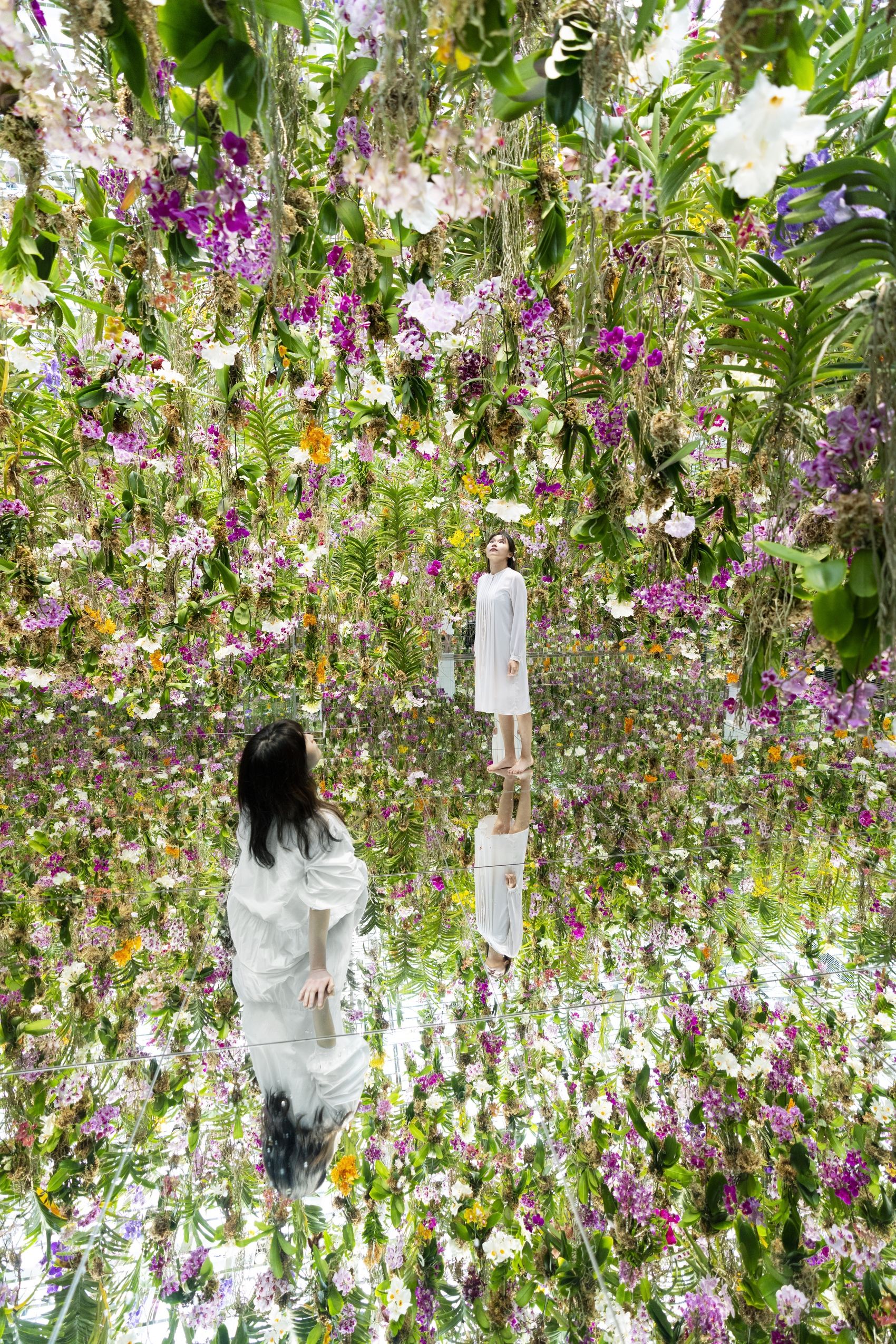
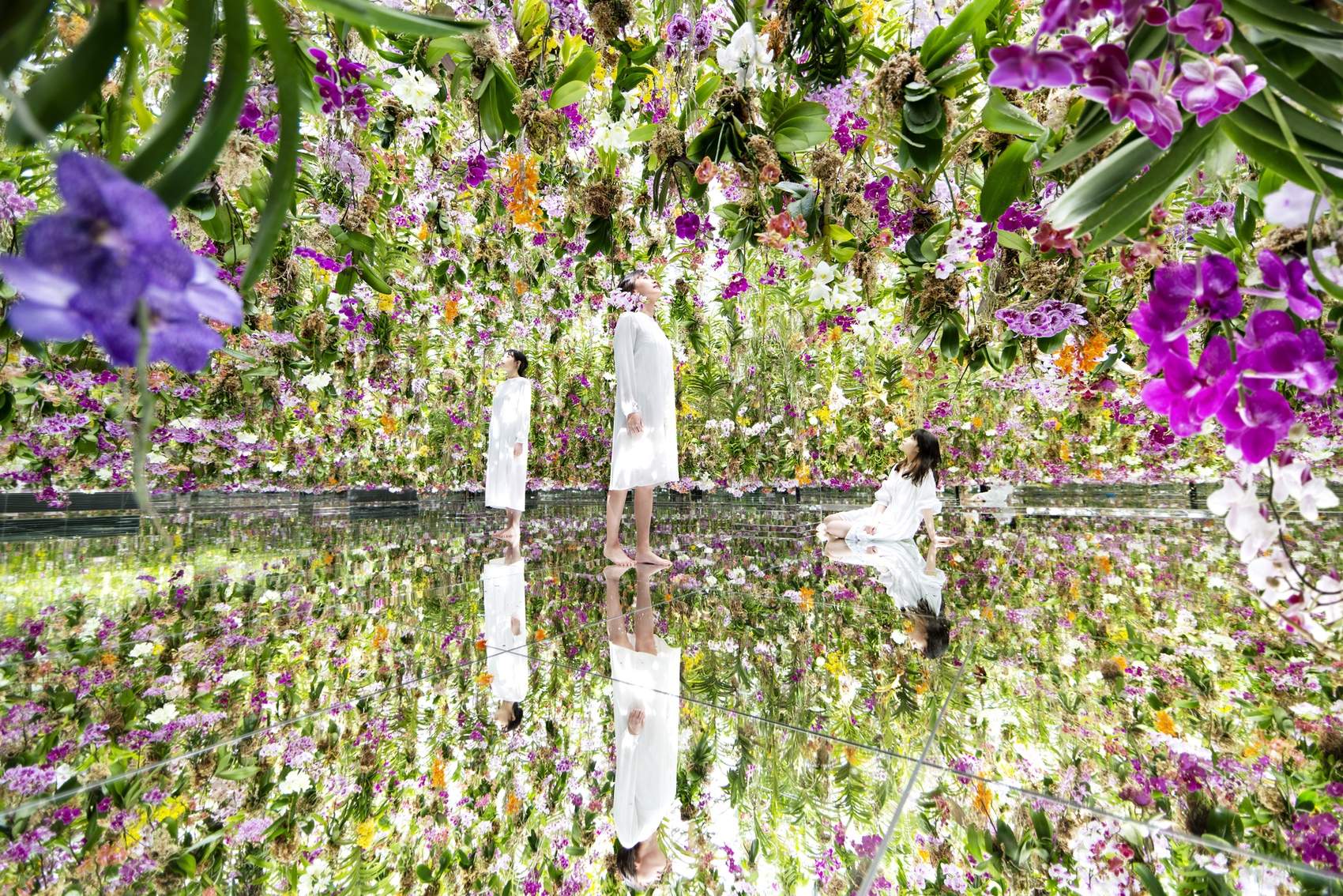
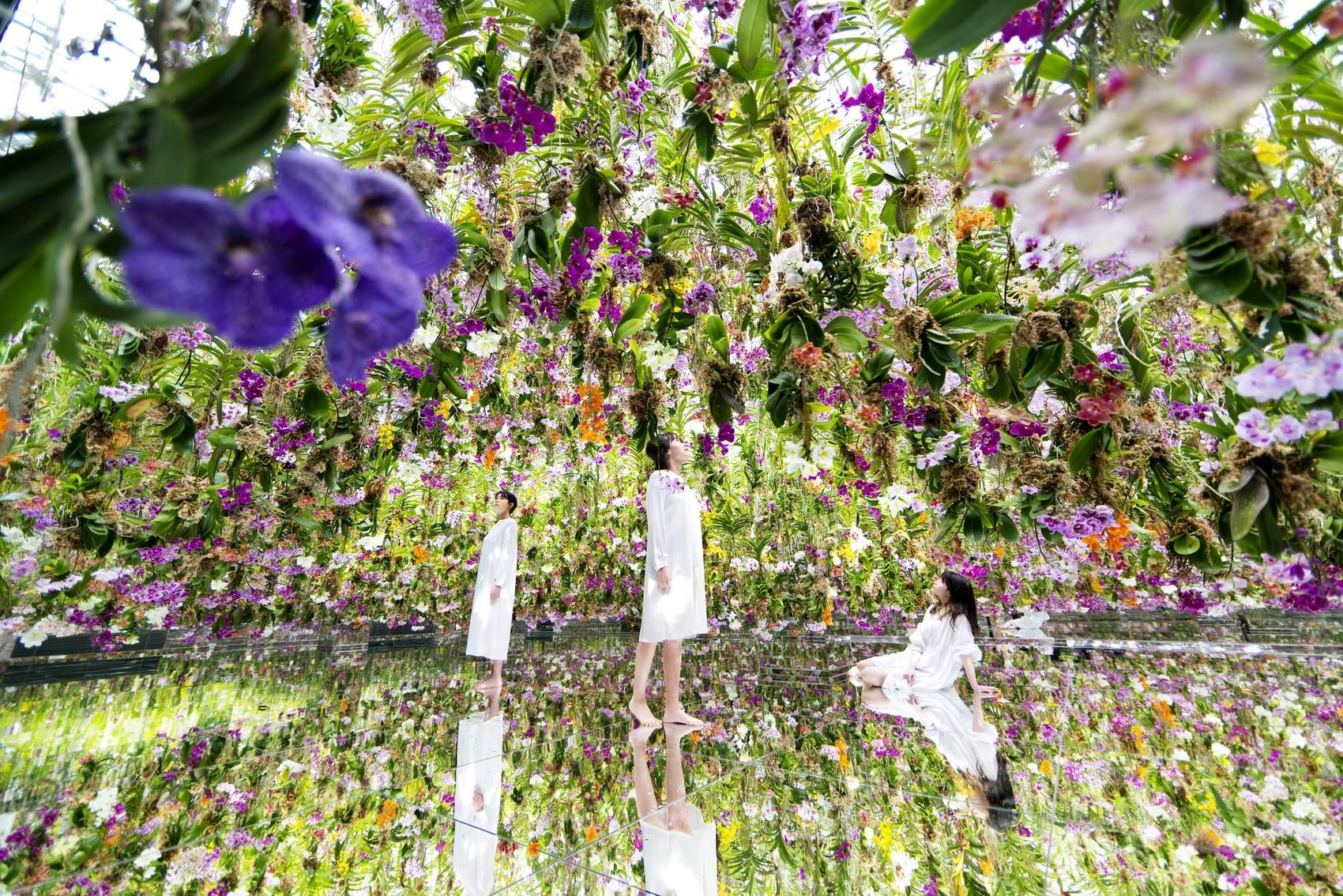
“Flowers, condensed into three-dimensional clusters, form a garden.
Though the space is densely filled with blossoms, the flowers float upward where people stand, creating hollows that allow visitors to wander freely through these floral masses. When encountering others within the installation, their individual spaces intertwine, merging into new shared realms.”
It is said that Zen gardens were created to allow monks to collectively practice in the mountains, merging themselves with the natural world.
In Zen literature, there is a reference to “Master Nansen’s single flower.” Someone once asked Master Nansen for guidance, finding the famous quote by Sengzhao — “Heaven and Earth share the same root as I do; all things are one with me” — quite strange. Master Nansen replied, “When people see this single flower, it is like a dream.”
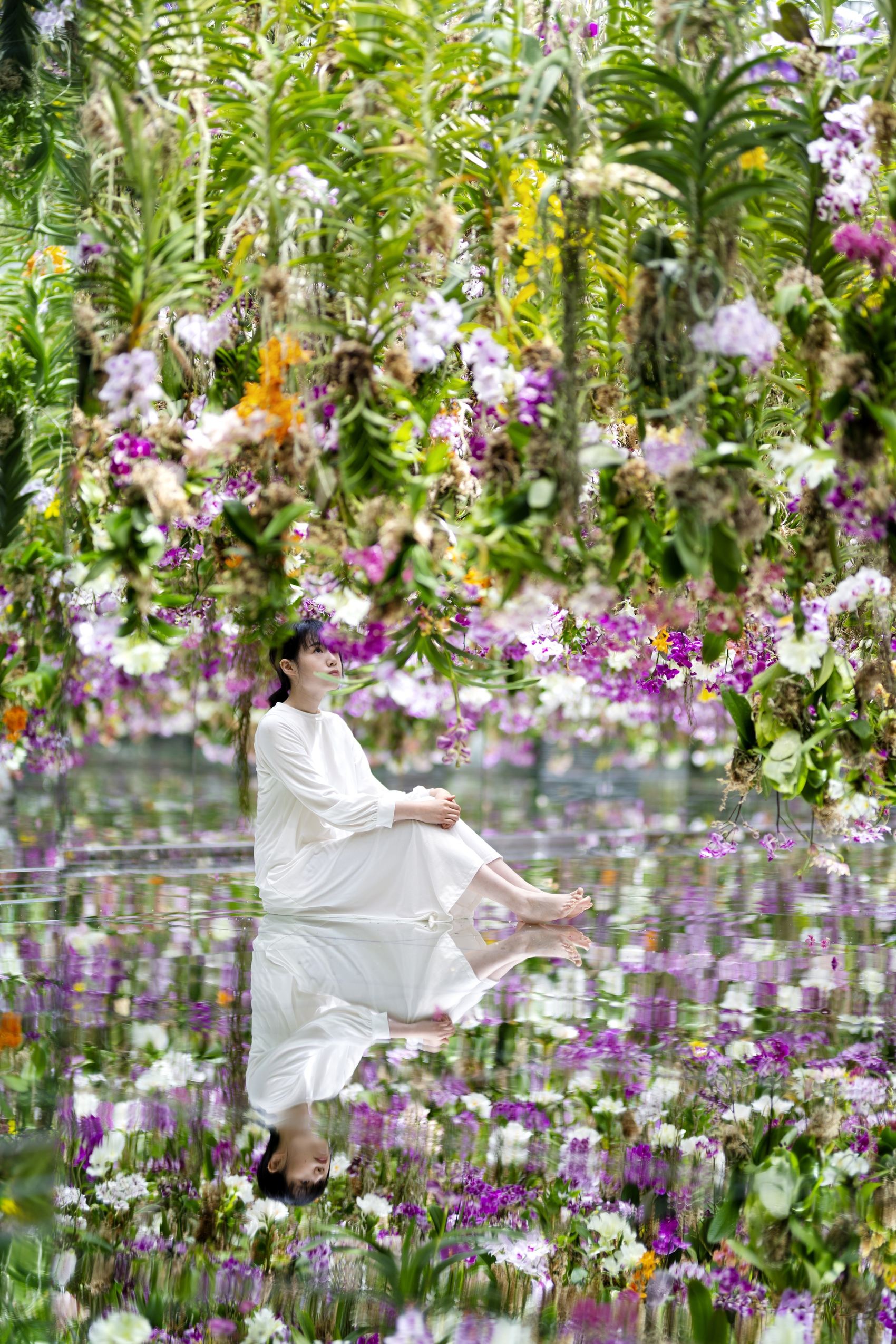
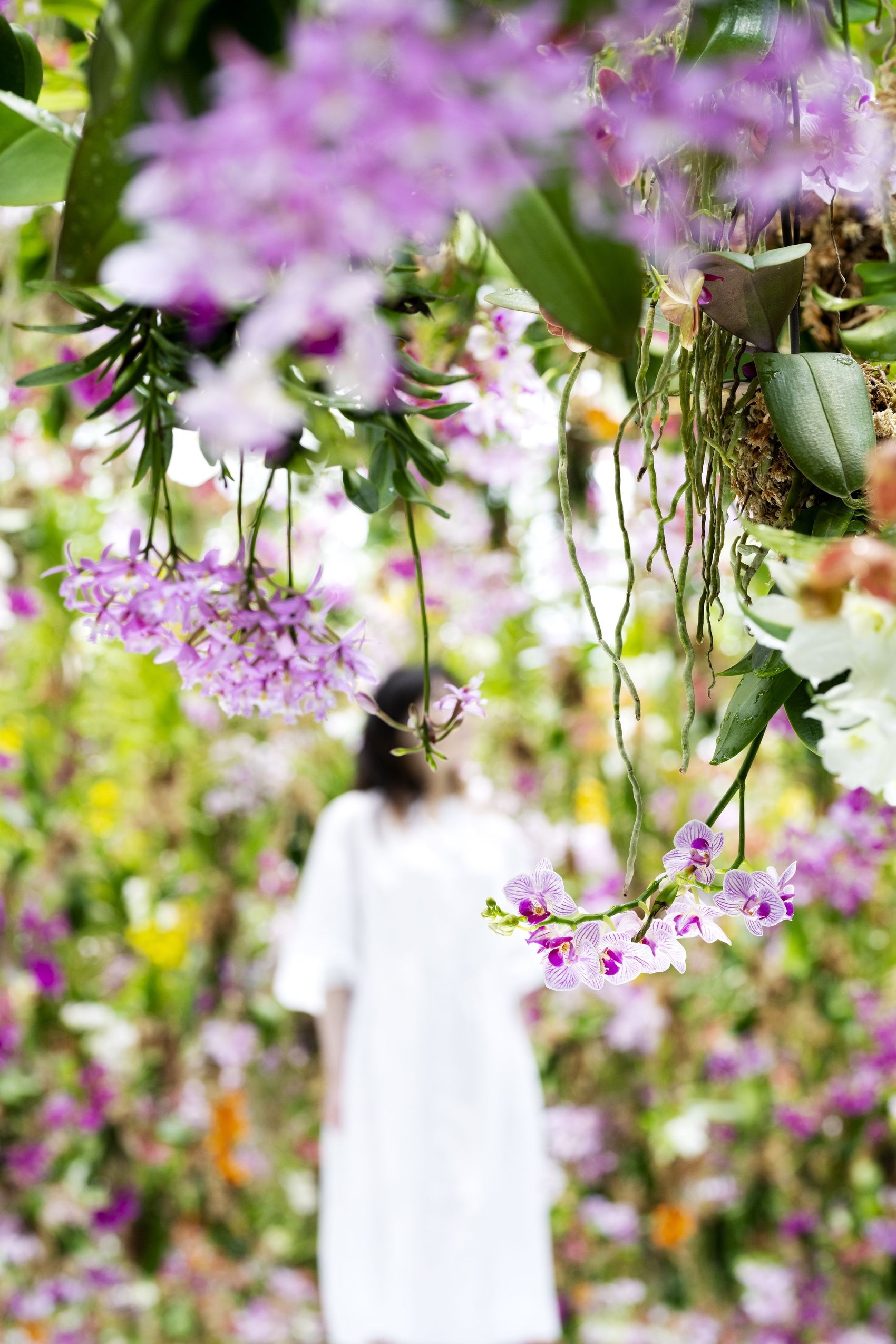
This work is a garden that allows people to immerse themselves in flowers and become one with them. When a person sees a flower, the flower also sees the person. At this moment, when human and flower merge into one, perhaps people can be said to be seeing the flower itself for the first time.
The flowers in this work belong to the orchid family. Most orchids grow without soil, surviving by absorbing moisture from the air. They grow day and night suspended in the air, budding and eventually blooming into flowers. One could say they live and flourish in midair.
Flowering plants emerged the latest among plant species. Yet, out of the 250,000 plant species on land, at least 220,000 are flowering plants. Evolution favors diversity—flowers were born to create it. Orchids are the ultimate connoisseurs of this diversity, accounting for approximately 10% of all terrestrial plants. Many orchids, rather than thriving in soil populated by other plants, evolved to flourish on barren rocks or tree branches, places inhospitable to most flora. By adapting to harsh, competition-free environments, orchids—a latecomer in evolution—continue to diversify relentlessly. Such is the intriguing paradox of evolution’s choices.
Orchids are widely known to co-evolve with their pollinating insects, adjusting the intensity of their fragrance to match the rhythms of their insect partners. Thus, the floral scent permeating the space shifts constantly—morning, noon, evening, night. Since this work features many orchids aligned with nocturnal insects, the essence lies in the dense, heady perfume of these blooms under the night sky.


The content of this article was provided by teamLab or sourced from their official media channels, and has been curated and edited by WeHow. All copyrights to images, videos, and related design works remain with their respective creators or design firms. Reproduction, republication, or commercial use of the WeHow-edited version in any form is prohibited without prior written permission from both WeHow and the respective copyright holders.