Understanding and experiencing democracy: The Demokratikum in the Austrian Parliament in Vienna welcomes its visitors with an informative, invitingly designed exhibition that conveys knowledge about Austrian democracy.
“Our aim is to convey democracy as the political foundation of our shared life. Through our design and interactive offerings, we make abstract knowledge tangible,” says René Walkenhorst, Partner at ATELIER BRÜCKNER. The exhibition presents the content in a clear and appealing way, inviting discovery and exploration. Combined with enjoyment and curiosity, democracy becomes accessible and comprehensible as a state and social system.
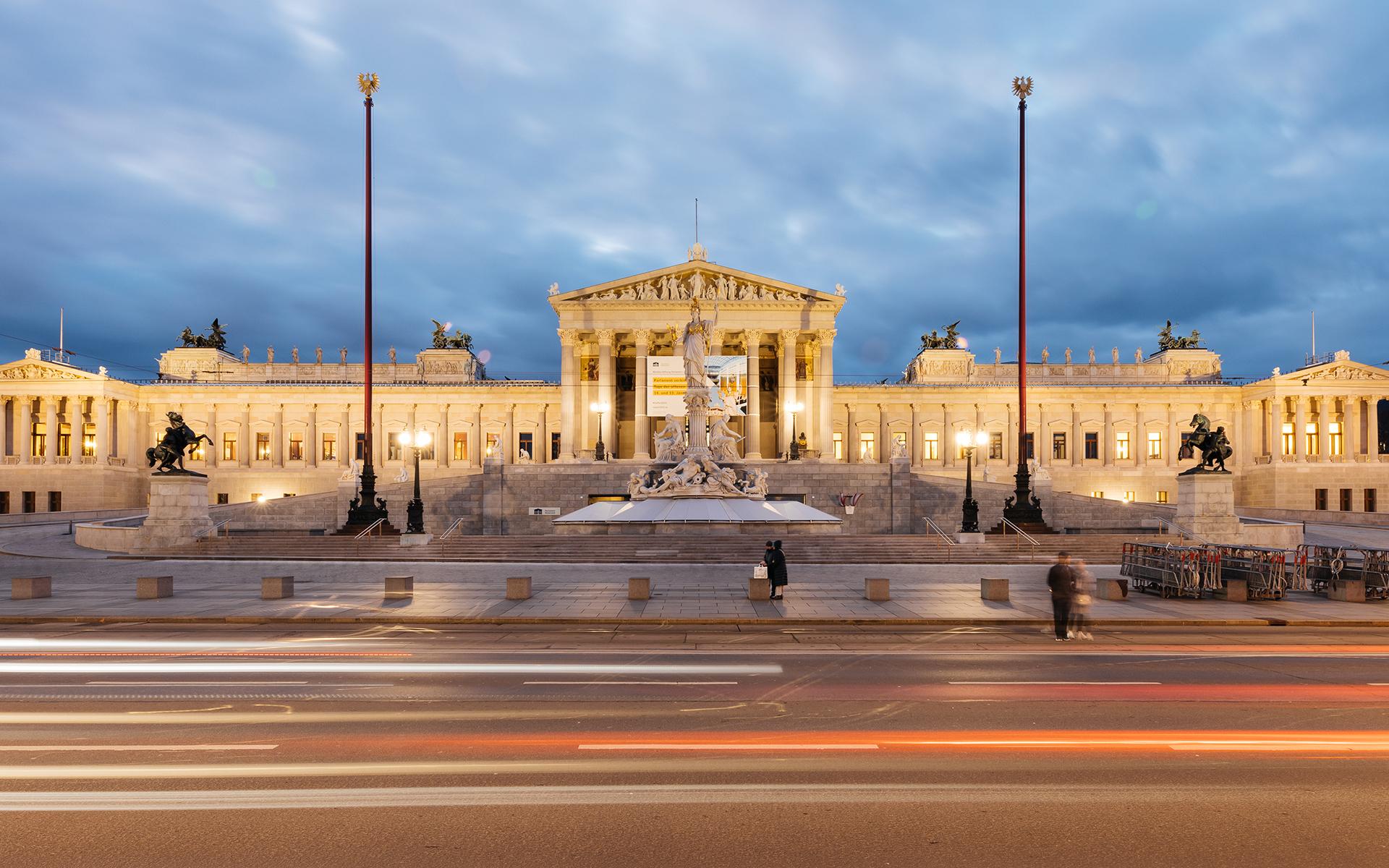
The neoclassical Parliament building by architect Theophil Hansen, constructed from 1874 onwards along Vienna’s Ringstraße, has undergone extensive renovation over the past five years and is now intended to open itself up to the public. A key element of this is the “Demokratikum – Experience Parliament”, a visitors’ centre located beneath the historic Columned Hall, covering 1,500 square metres. Visitors enter it at ground level from the Ringstraße, with the entrance situated directly behind the Pallas Athene Fountain.
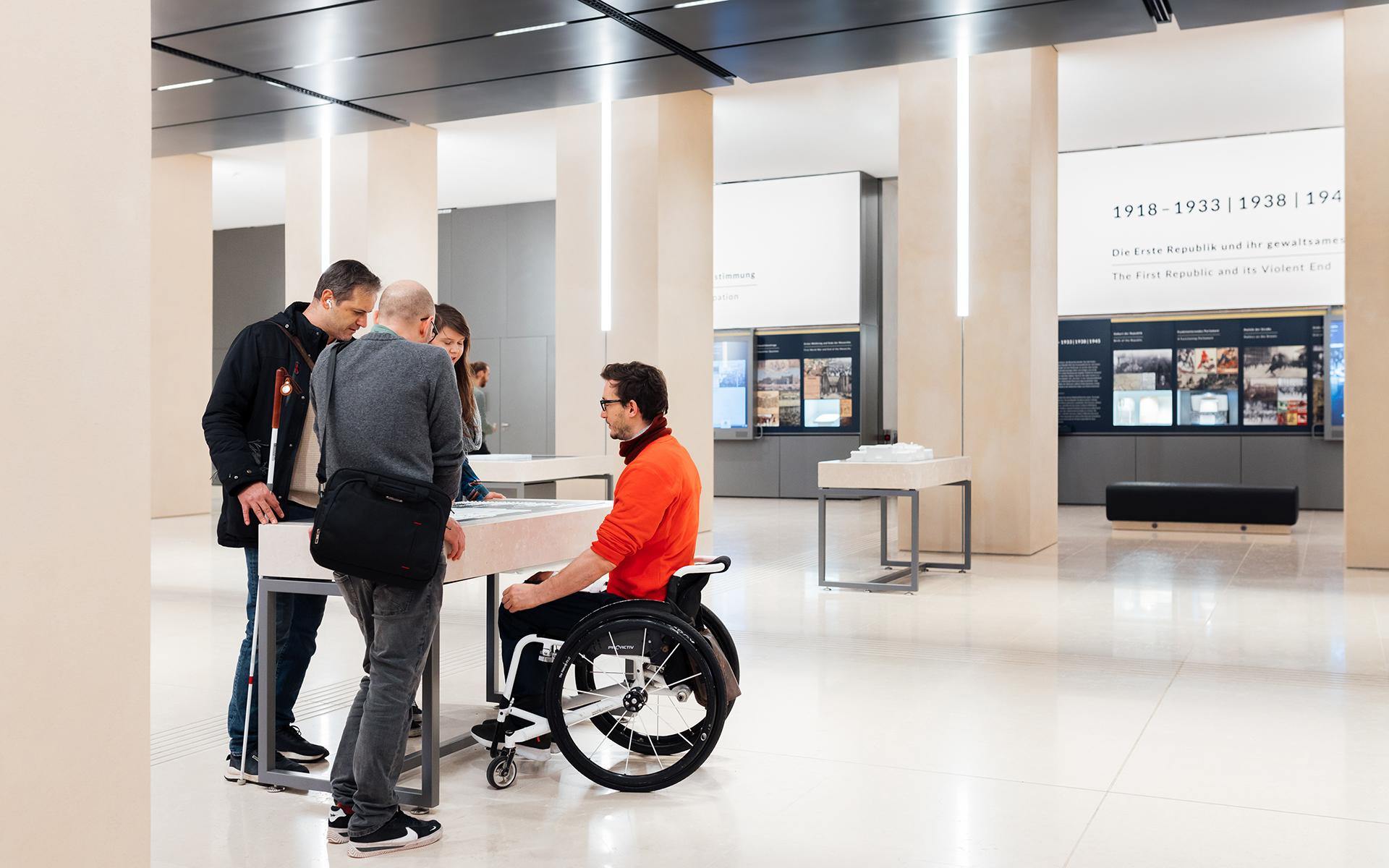
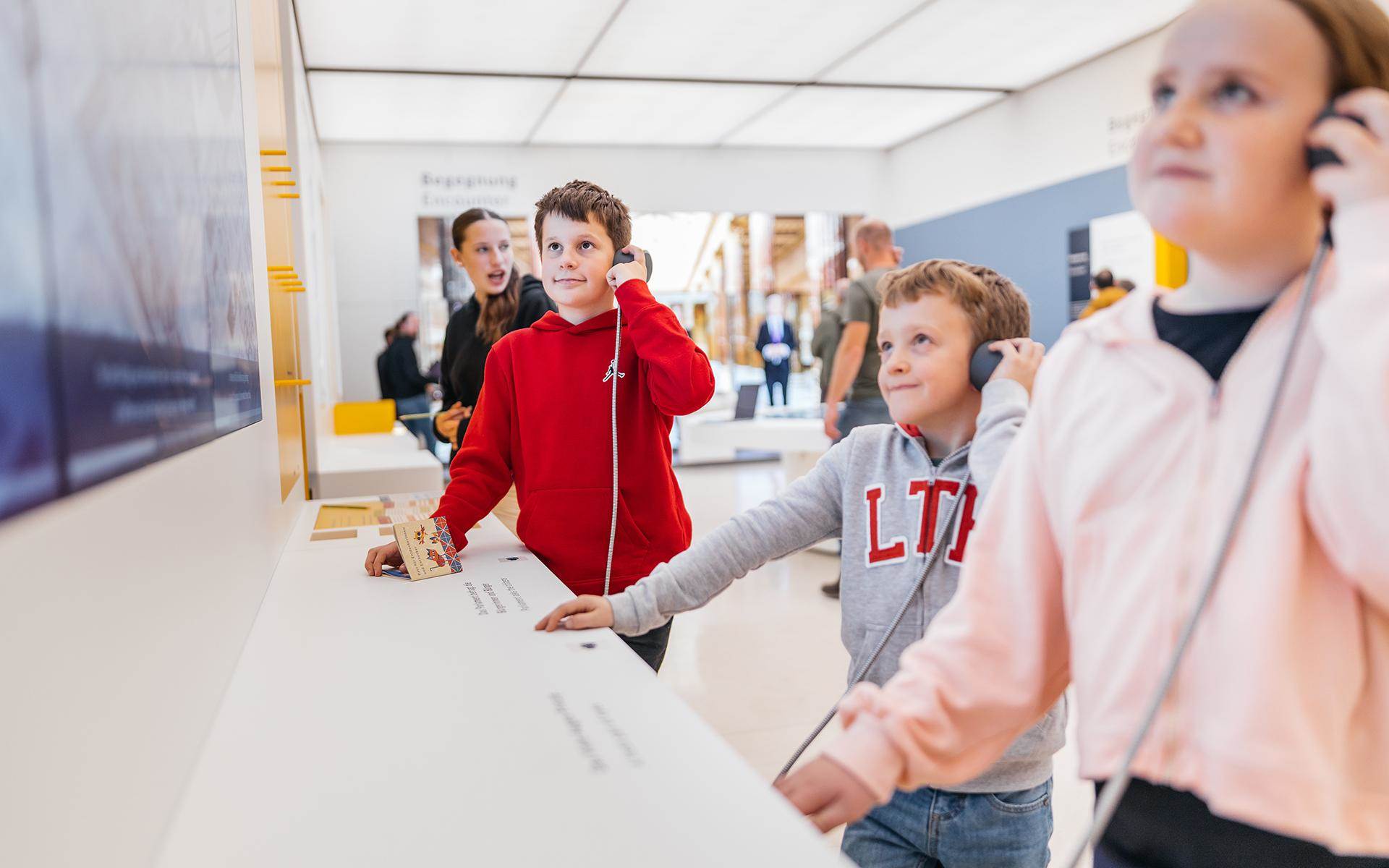
The Demokratikum is designed for visitors of all ages and educational backgrounds. It is barrier-free both architecturally and in terms of content. Twenty-seven interactive media stations offer an experience-oriented introduction to politics, history, and architecture. Tactile stations and audio texts are also provided, appealing to multiple senses.
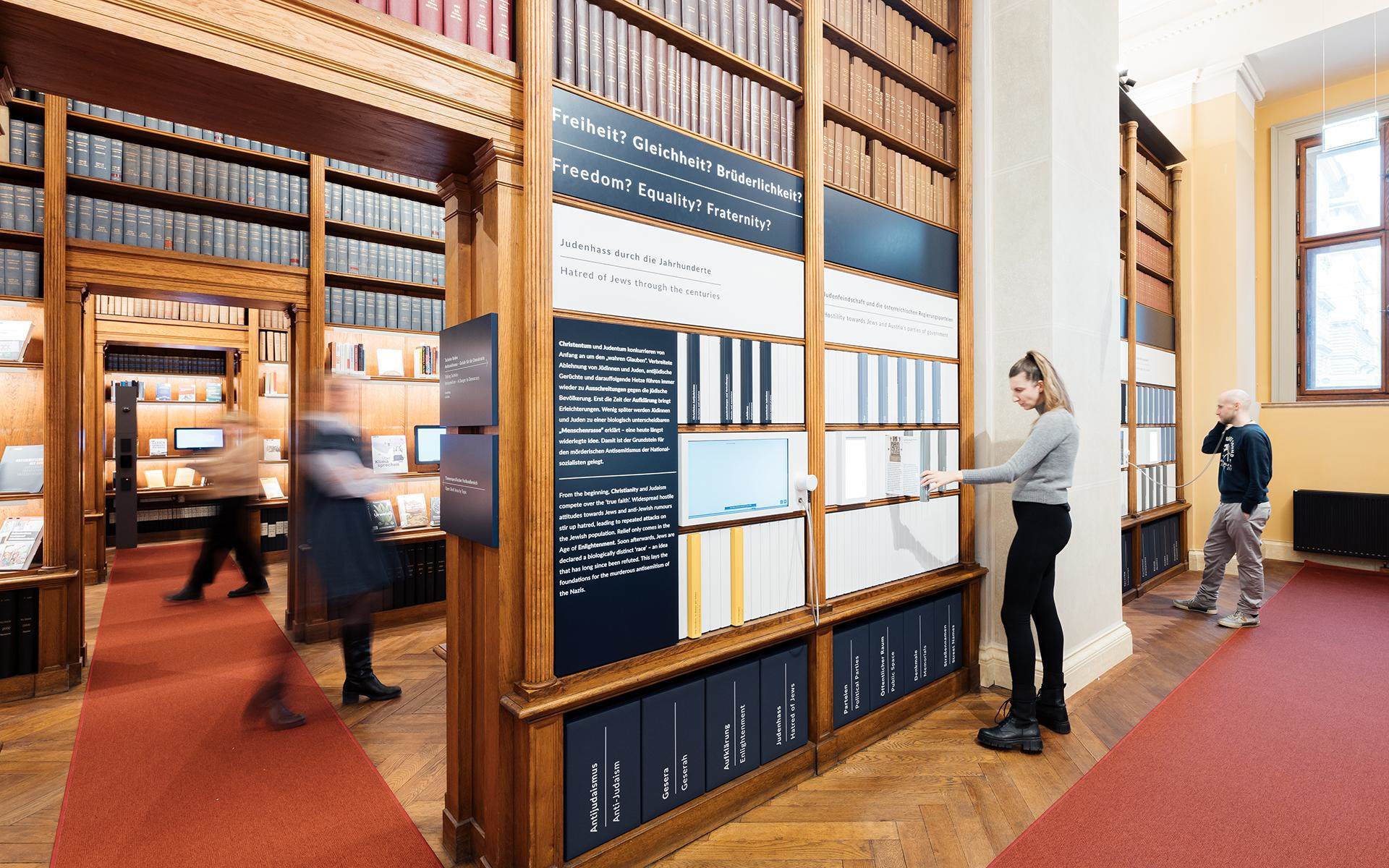
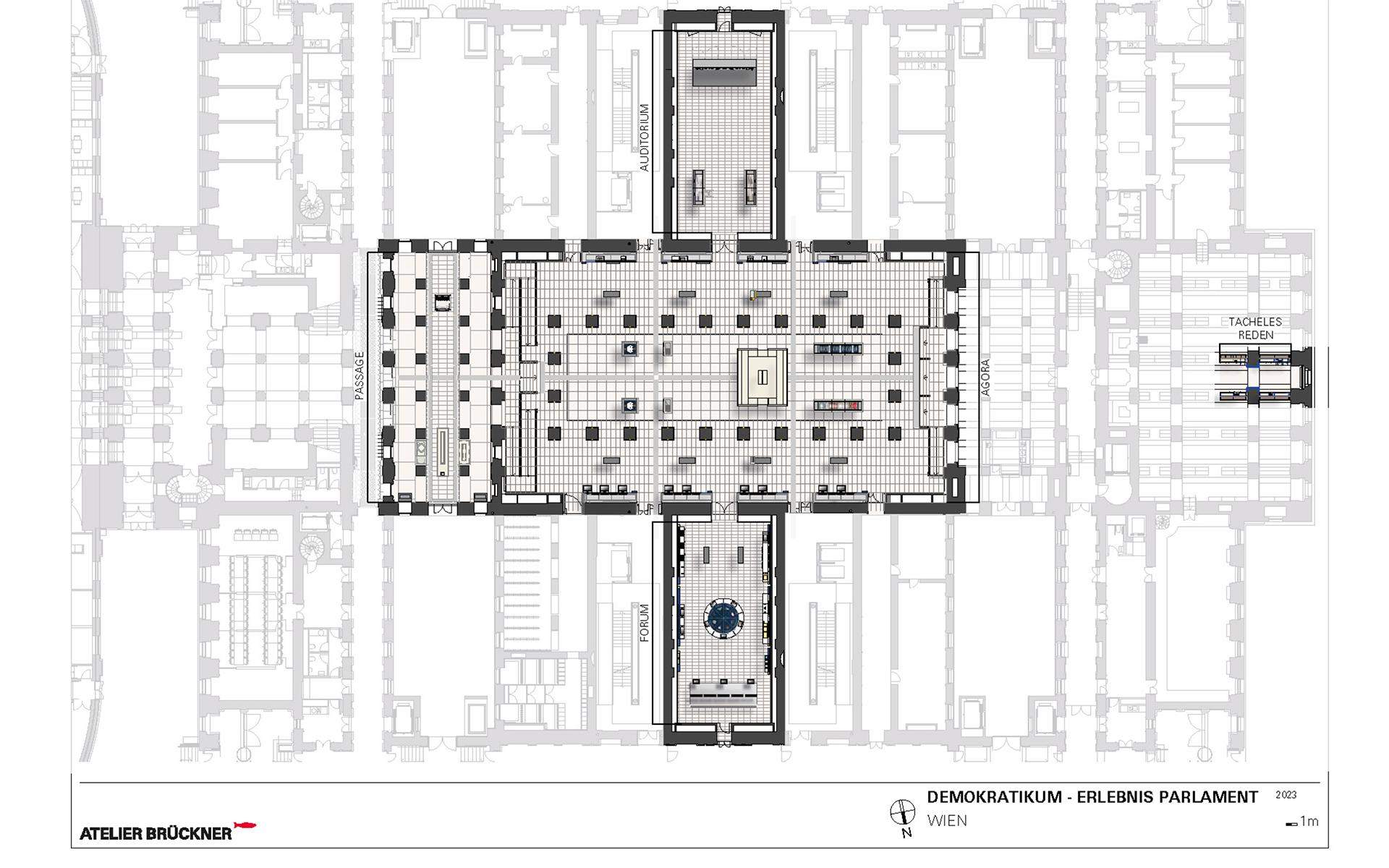
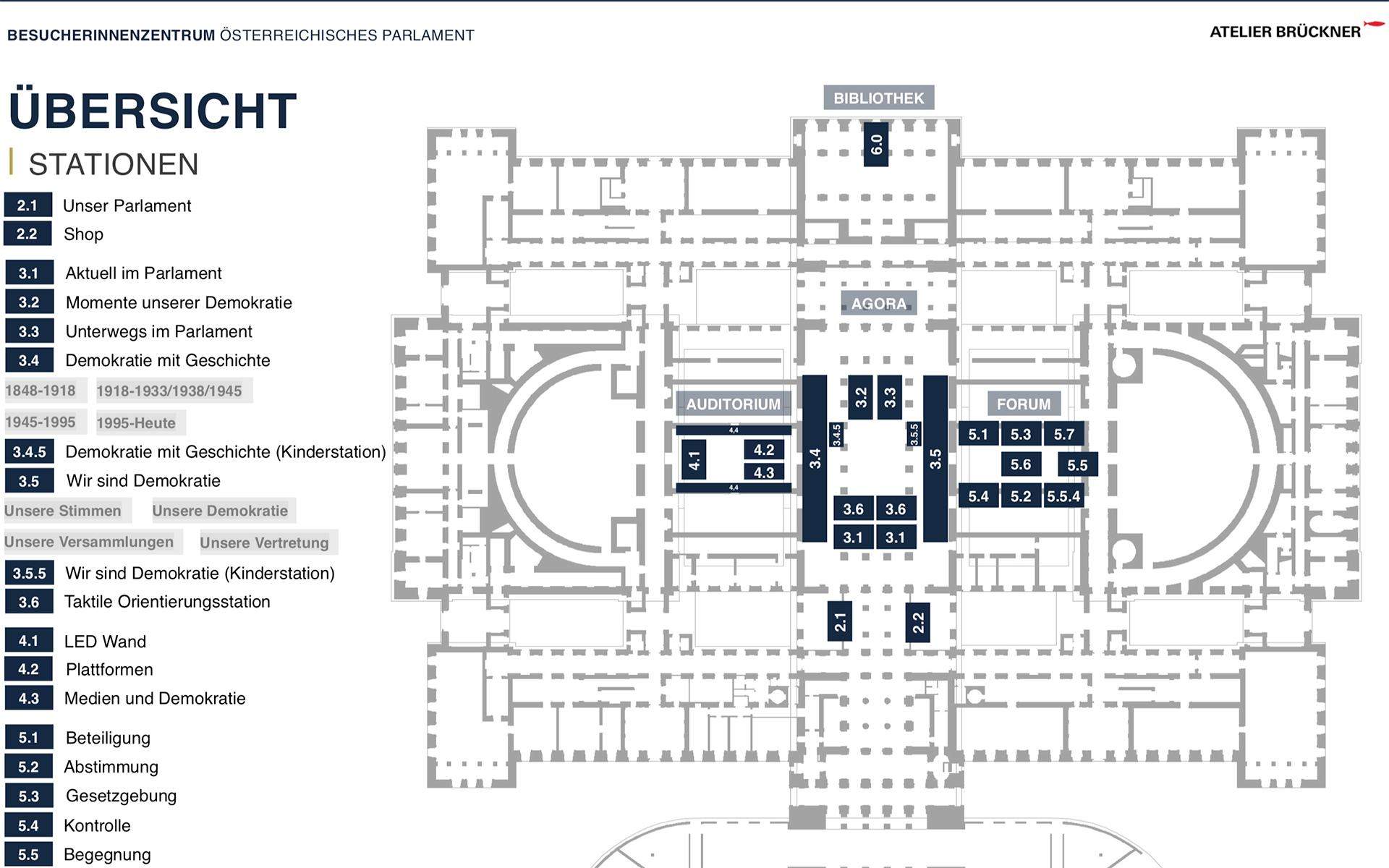
The exhibition by ATELIER BRÜCKNER is integrated into three spaces newly created by the renovation architects Jabornegg & Pálffy: the Agora as the main hall, the Forum, and the Auditorium. An additional exhibition area is located in the historic library directly behind the Agora, featuring the special exhibition “Tacheles reden”, which addresses antisemitism in Austria.
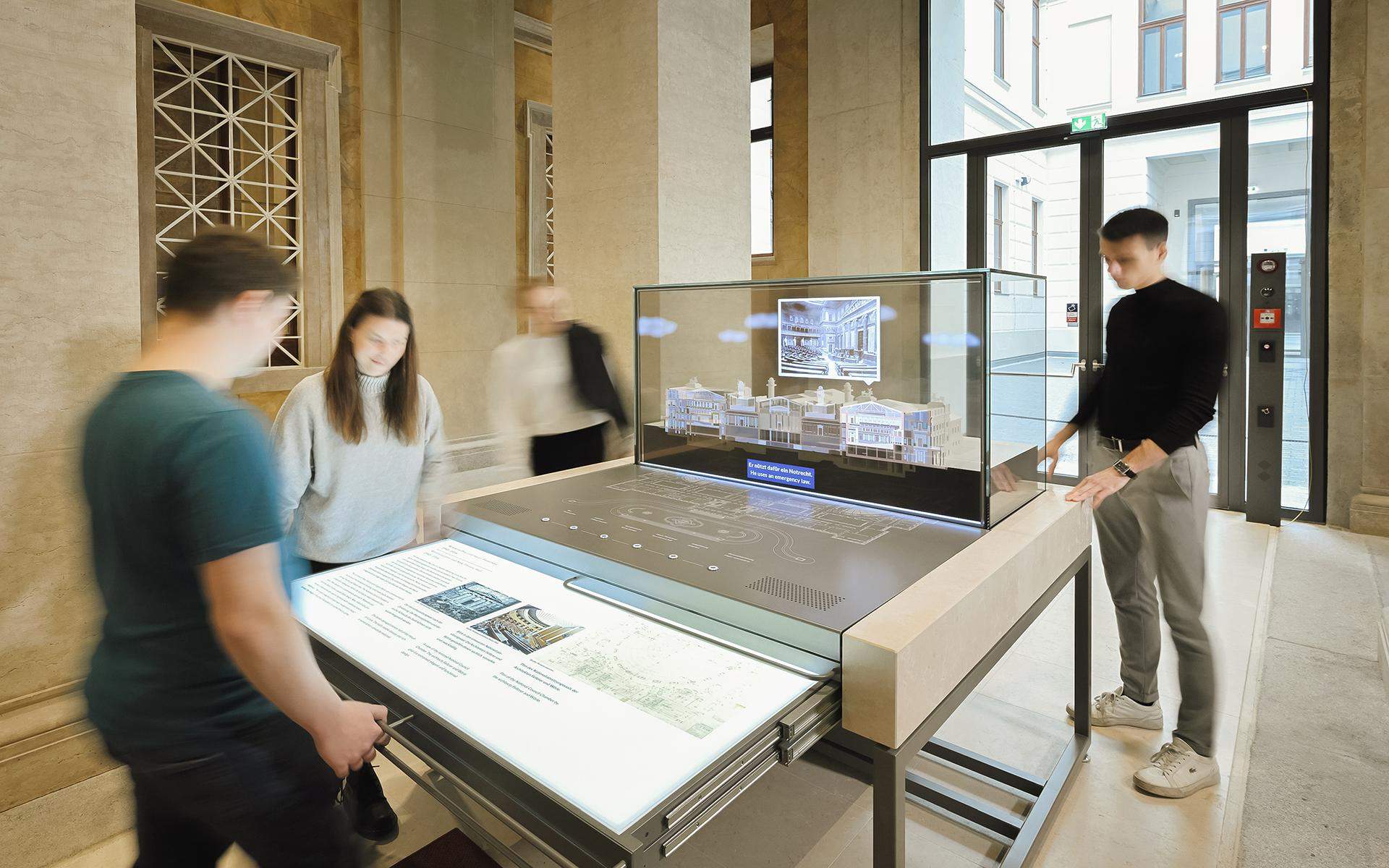
Already in the Passage, the access to the Demokratikum, a cross-sectional model of the building prepares visitors for their visit to Parliament. A transparent OLED screen positioned in front overlays the model with animations that convey the building’s history—from its construction between 1874 and 1883, to reconstruction after the Second World War, and finally the general renovation decided upon in 2014.
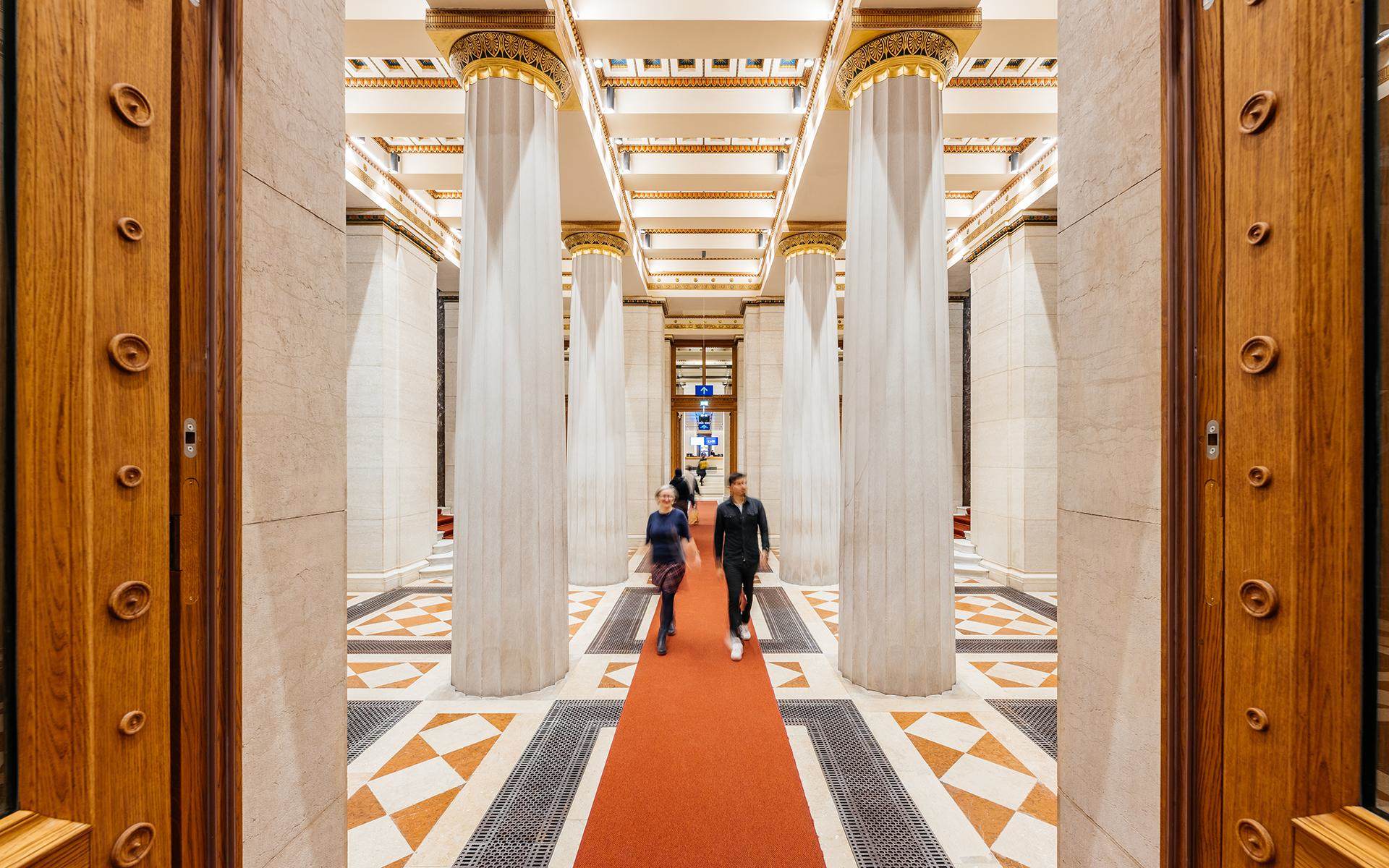
Agora (Main Gallery)
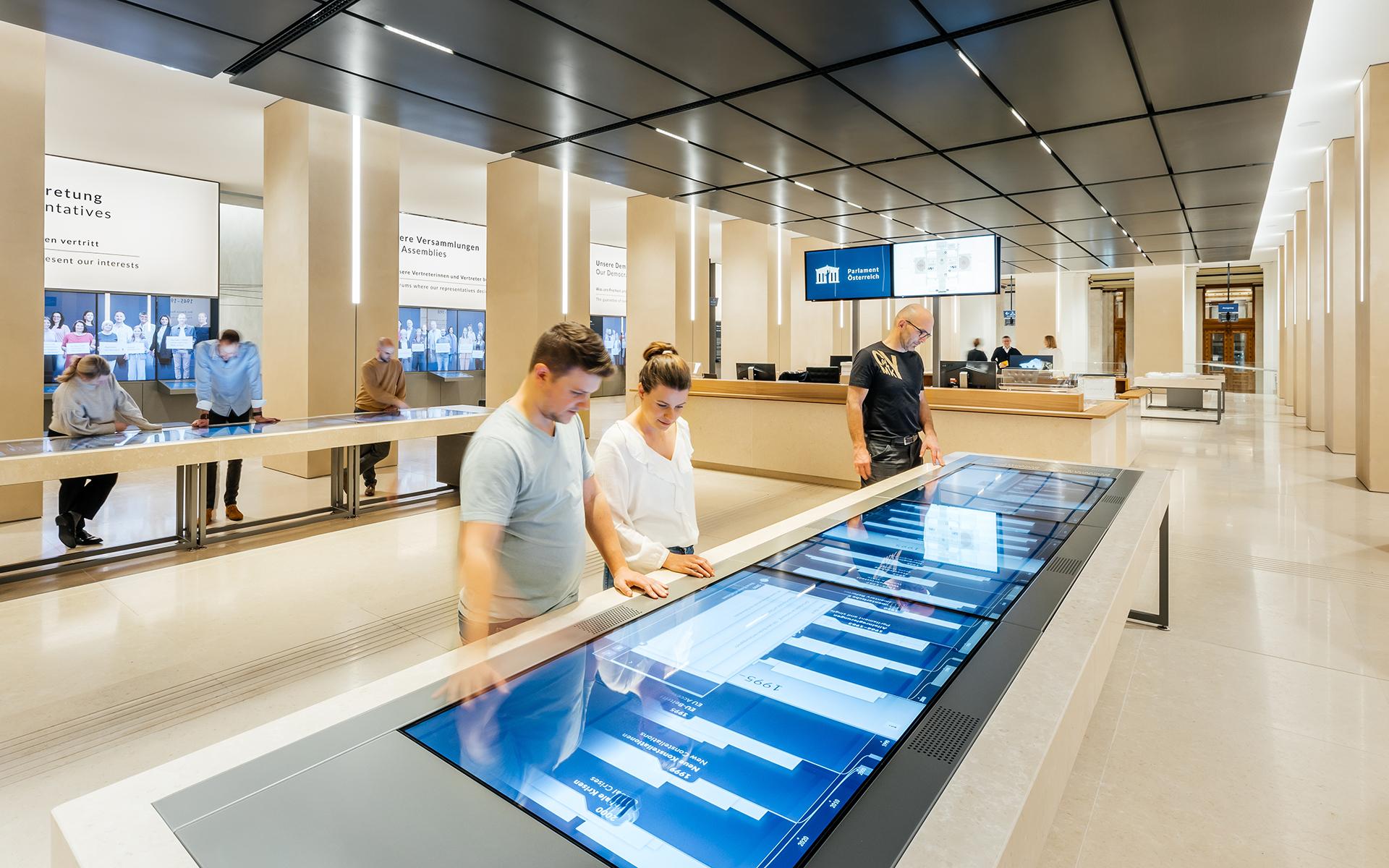
The main space of the Demokratikum is the Agora, a 900-square-metre hall structured lengthwise by two rows of columns. At its centre is the information station “Aktuell im Parlament”, where visitors can access updates on current sessions of the National Council and Federal Council, as well as decisions and other news from Parliament. Tactile information stations with floor plans and models complement the offering, providing an overview of the functions and spatial organisation of the building.
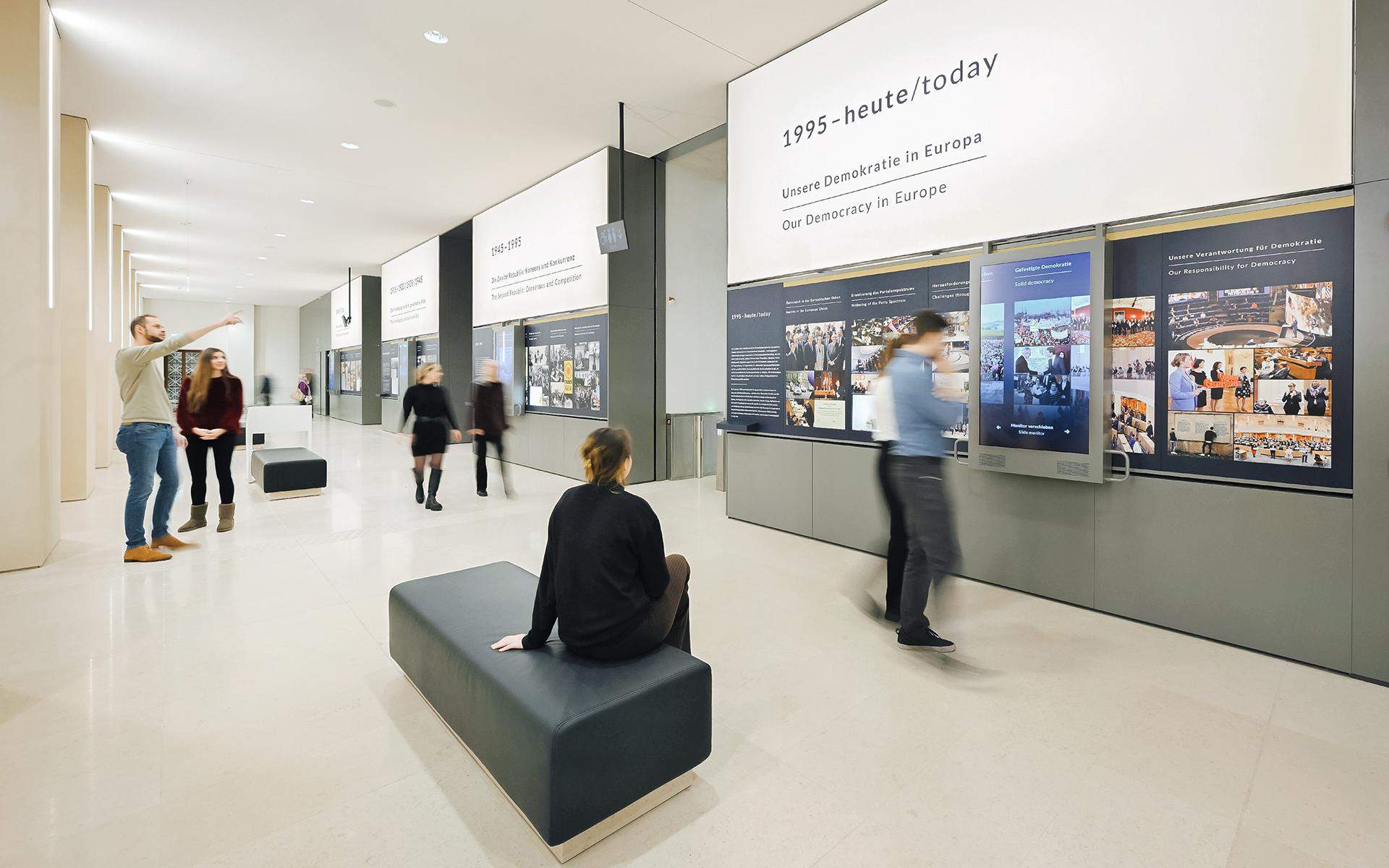
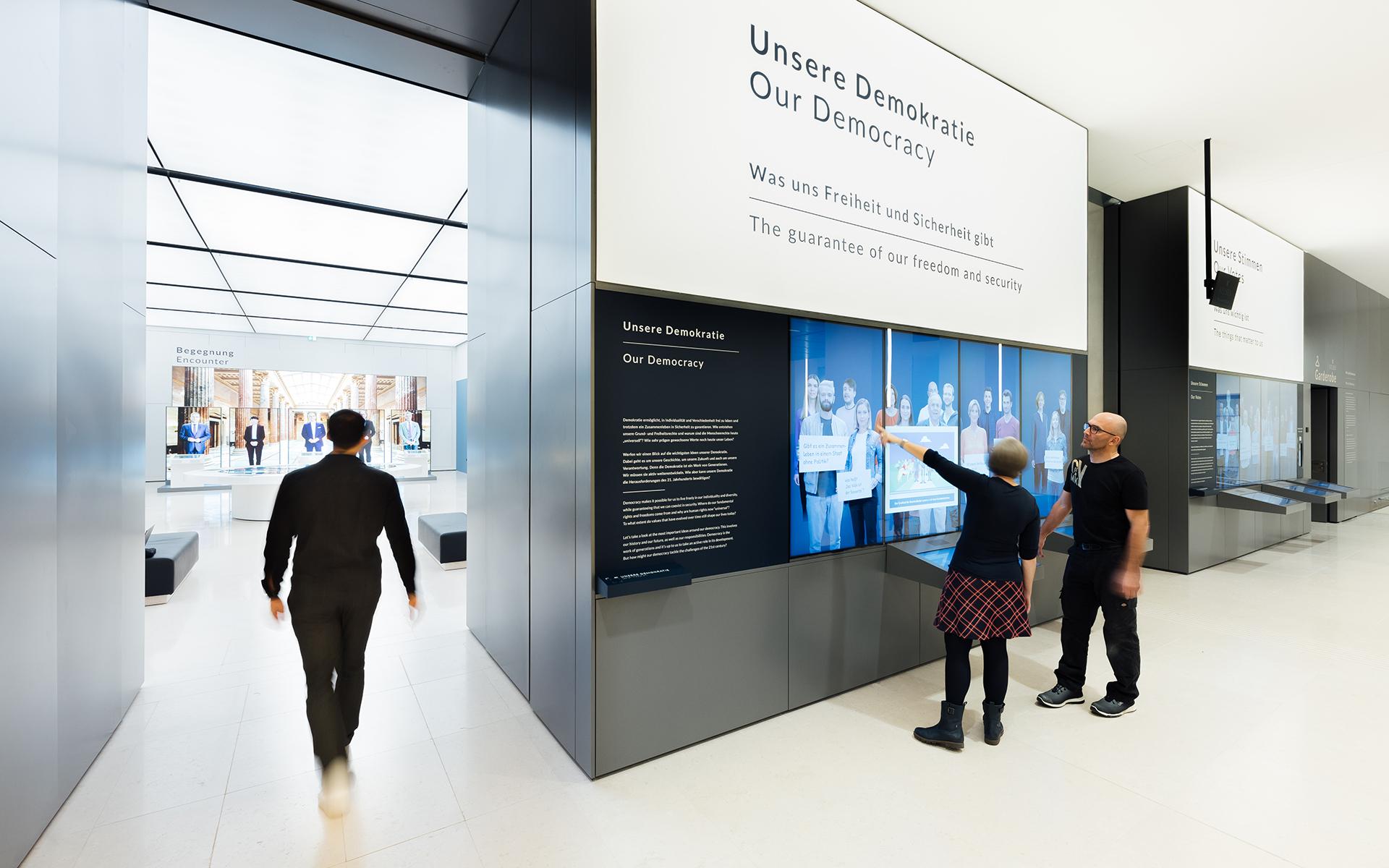
Along the left longitudinal wall of the Agora, an 18-metre installation presents the history of democracy in Austria. Four sliding monitors offer information about the photographs and objects on display, including a facsimile of the 1861 February Patent establishing the constitutional monarchy. By accessing explanatory films, texts, and animations, visitors bring the static images to life and immerse themselves in the history of Austrian parliamentarianism—from its beginnings in 1848 to the present day.
The right wall of the Agora is dedicated to the theme “We Are Democracy”, focusing on citizens and their representatives. At four stations, individual Austrians share their wishes and thoughts about democracy, politics, and the responsibilities of members of parliament in short video statements. Visitors can also take a photo of themselves and display it on the panoramic wall, becoming part of the installation.
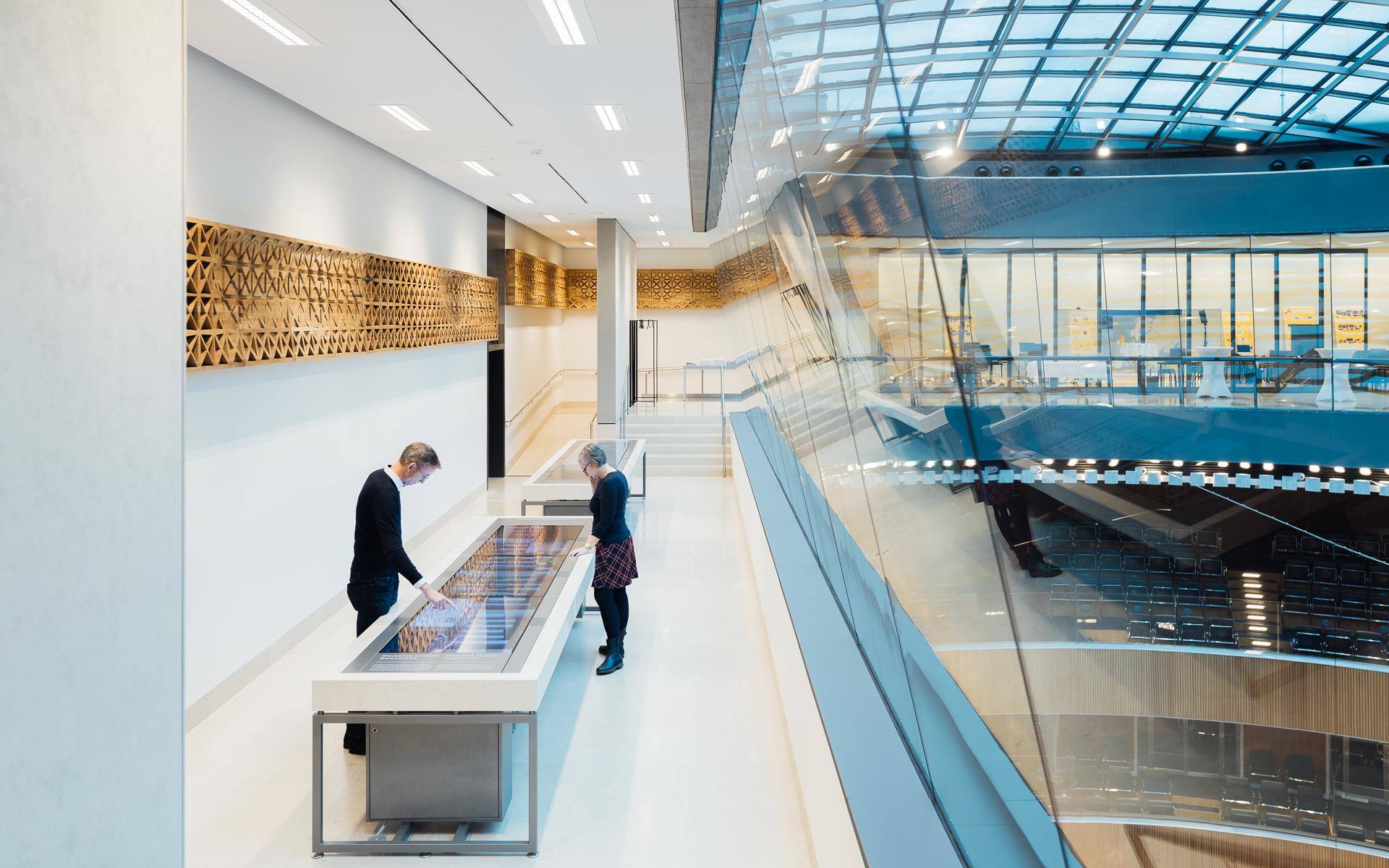
Two elongated media tables further deepen the themes presented on the walls:
- 第一张桌子展示过去 170 年民主发展中的关键历史时刻;
One table allows visitors to explore key moments from 170 years of democratic history; - 第二张桌子以游戏化方式介绍在议会大厦内的多种职业,每个角色(如全会顾问或技术人员)均可在其“日常工作路线”中被点击查看。
The second table playfully presents the diverse professional activities within the Parliament building, allowing visitors to follow characters—such as a plenary adviser or a technician—through their daily work routines.
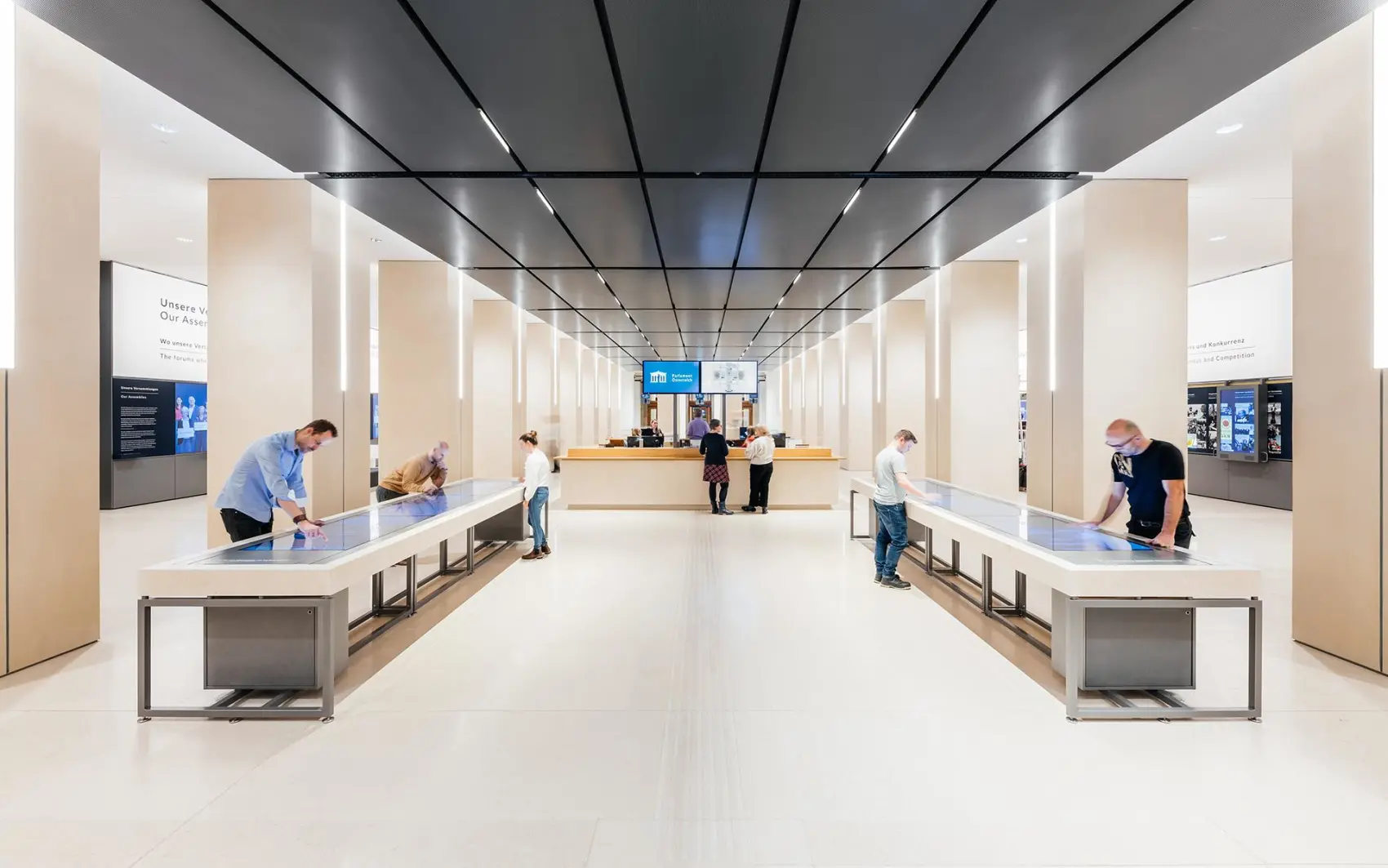
Two additional media tables with the same content are located in the Plenarium, a newly created, publicly accessible space situated above the National Council Chamber, where visitors can observe parliamentary proceedings from above.
Auditorium and Forum
Adjacent to the Agora is the Auditorium, used for press conferences. It is dedicated to the “fourth estate”—the media—addressing the interplay between politics and media, including both traditional media and social platforms. It examines their role and significance in democracy and how political discourse evolves in an increasingly digital world.
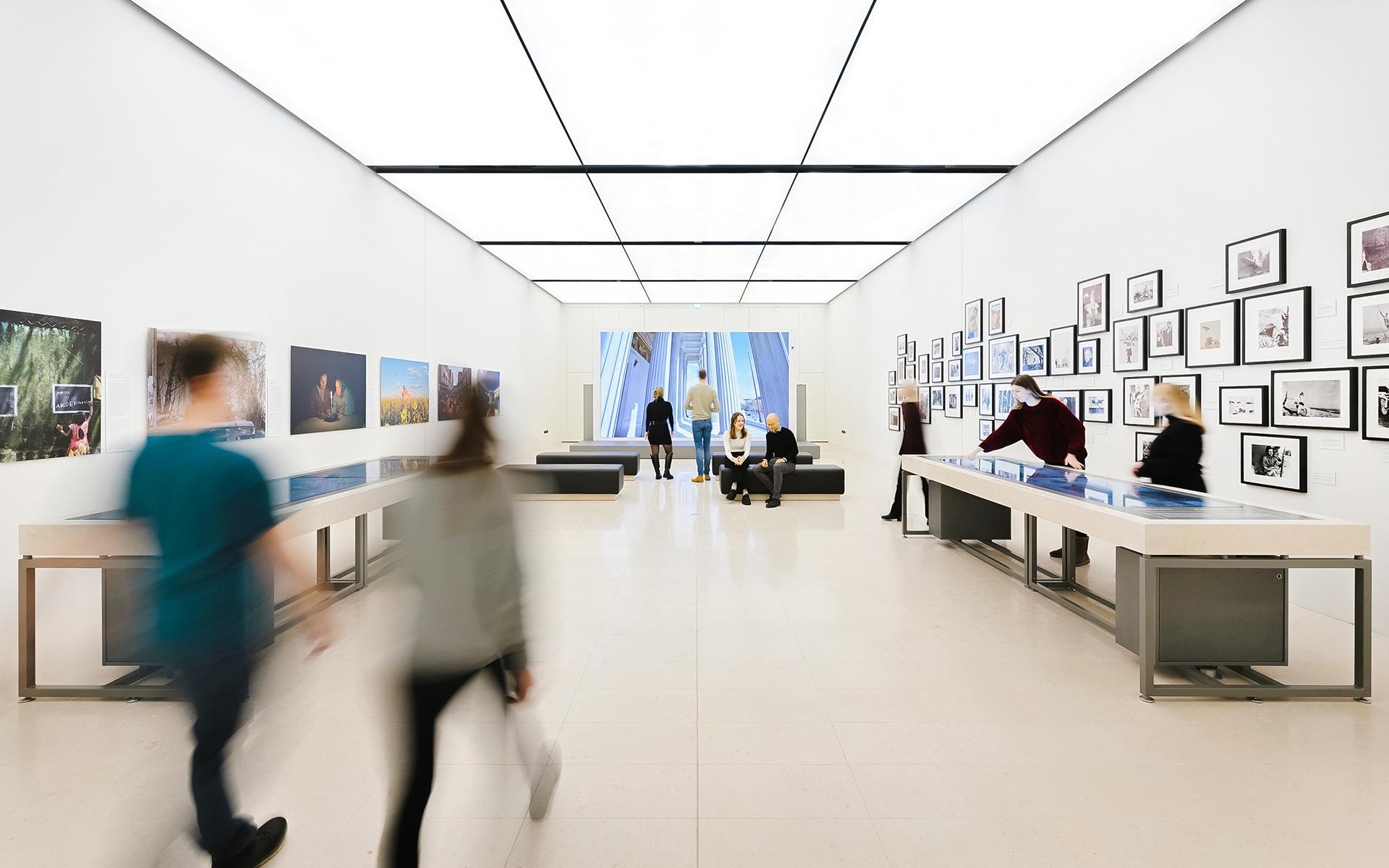
Changing photo exhibitions complement the room’s programme. A 13-square-metre LED wall at the front of the room displays live broadcasts of plenary sessions and offers insights into areas of the building normally inaccessible to the public.
Opposite the Agora lies the Forum, dominated by an impressive media installation that invites visitors to enter into dialogue with the Presidents of the National Council and the Federal Council, as well as parliamentary party leaders. They greet visitors and provide personal answers to selected questions—for example, why they entered politics and where they see Austria’s greatest achievements.
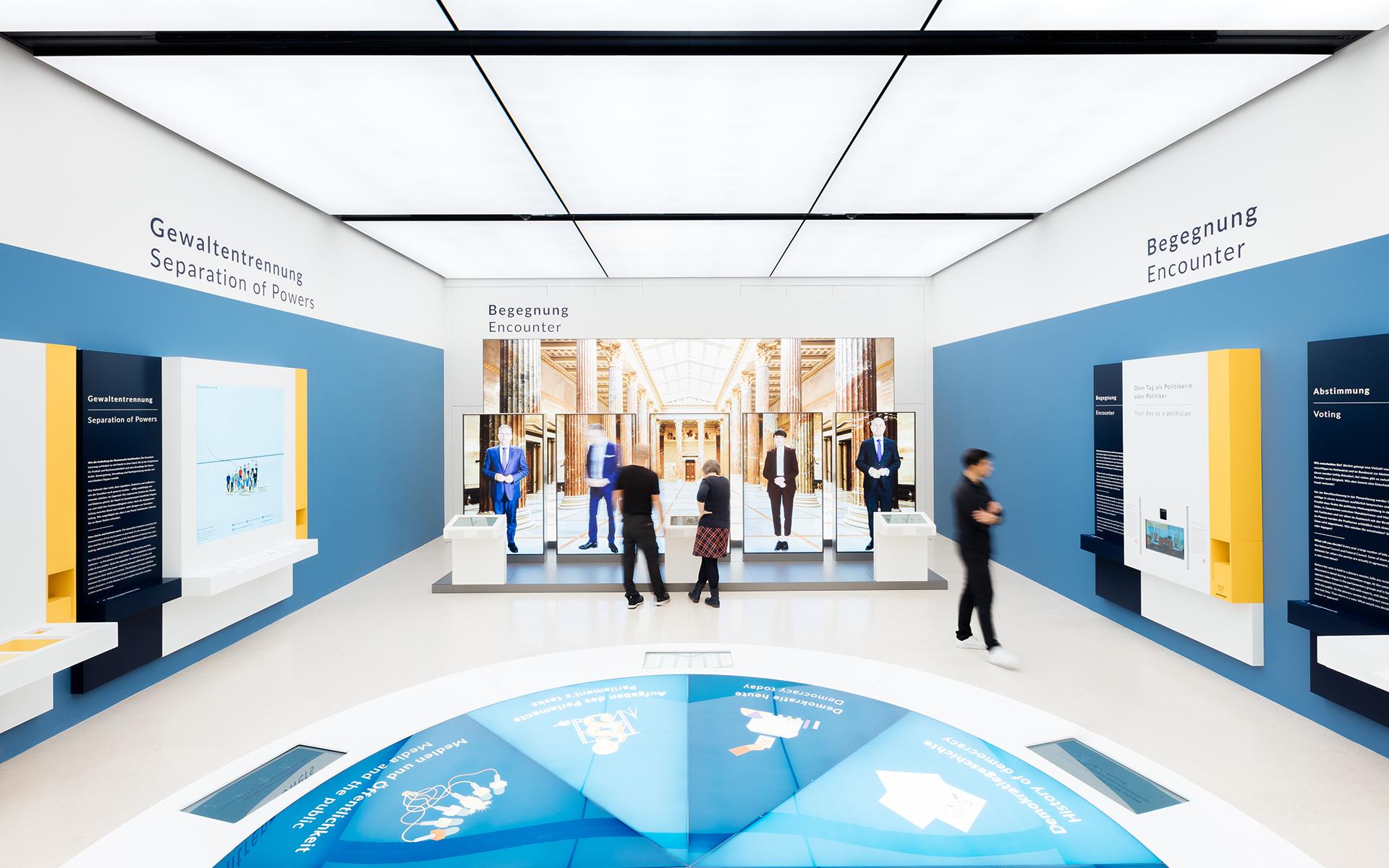
In the centre of the Forum, an interactive quiz table invites visitors of all ages to test and expand their knowledge of Parliament, elections, and legislation. Up to five people can participate simultaneously in this shared game, exploring topics such as the functions of Parliament, civic participation, the history of democracy, the Parliament building, the State and Constitution, media and the public, and democracy today.
The longitudinal walls address socially relevant issues on which members of parliament have already voted, such as:“Should assisted dying be permitted under strict conditions?”“Should party donations be generally prohibited?”Visitors cast their own votes on these topics, and their results are compared with those of the elected representatives.
Additional stations illustrate the legislative process, opportunities for civic participation, the principle of separation of powers, and the control instruments of Parliament. Children (and adults) can also simulate a politician’s daily routine on an interactive screen.
Additional stations for children are located in the Agora:
- 通过大型“寻宝图式插画”(Wimmelbild)学习奥地利民主史
A “hidden-object picture” allows them to explore the history of Austrian democracy - 了解写入法律的儿童权利,“探索者护照”(Pass für Entdeckerinnen und Entdecker)指引小访客前往标记为黄色的儿童站点,并可收集印章,将记忆带回家。
They can learn about their legally enshrined children’s rights - The “Pass for Young Explorers” guides them to the yellow-marked children’s stations. They can collect stamps in the booklet and take it home as a memory.
The Demokratikum is open daily except Sundays and public holidays. Through the visitors’ centre, guests gain access to the impressive historic building with its heritage-protected rooms, as well as the new rooftop restaurant. From the roof terrace, a spectacular view opens over Vienna’s city centre, the First District, including Heldenplatz and the Hofburg.
The content of this article was provided by ATELIER BRÜCKNER or sourced from their official media channels, and has been curated and edited by WeHow. All copyrights to images, videos, and related design works remain with their respective creators or design firms. Reproduction, republication, or commercial use of the WeHow-edited version in any form is prohibited without prior written permission from both WeHow and the respective copyright holders.