Nantou City is situated in the rapidly developing Nanshan District of Shenzhen City, on the east coast of the Pearl River Delta. Its roots trace back to the sixth year of the Xianhe Era in the Eastern Jin Dynasty (331 A.D.) when Dongguan Prefecture was established, boasting a rich history of nearly 1,700 years[1]. As Shenzhen continues its reform and opening up, the town has evolved into the city’s most distinctive “urban village”, preserving the spatial layout of historical villages while featuring diverse industries and a high-density population. In 2019, with the official launch of the Nantou City Protection and Utilization Project, the challenge emerged: how to unearth the historical context of the ancient town and make it alive amid urban renewal through innovative design? This prompted us (Diameter Narrative Design, DND) to start the curation of the Diverse Homology Pavilion and thus offer a novel historical and cultural experience to breathe new life into the town.
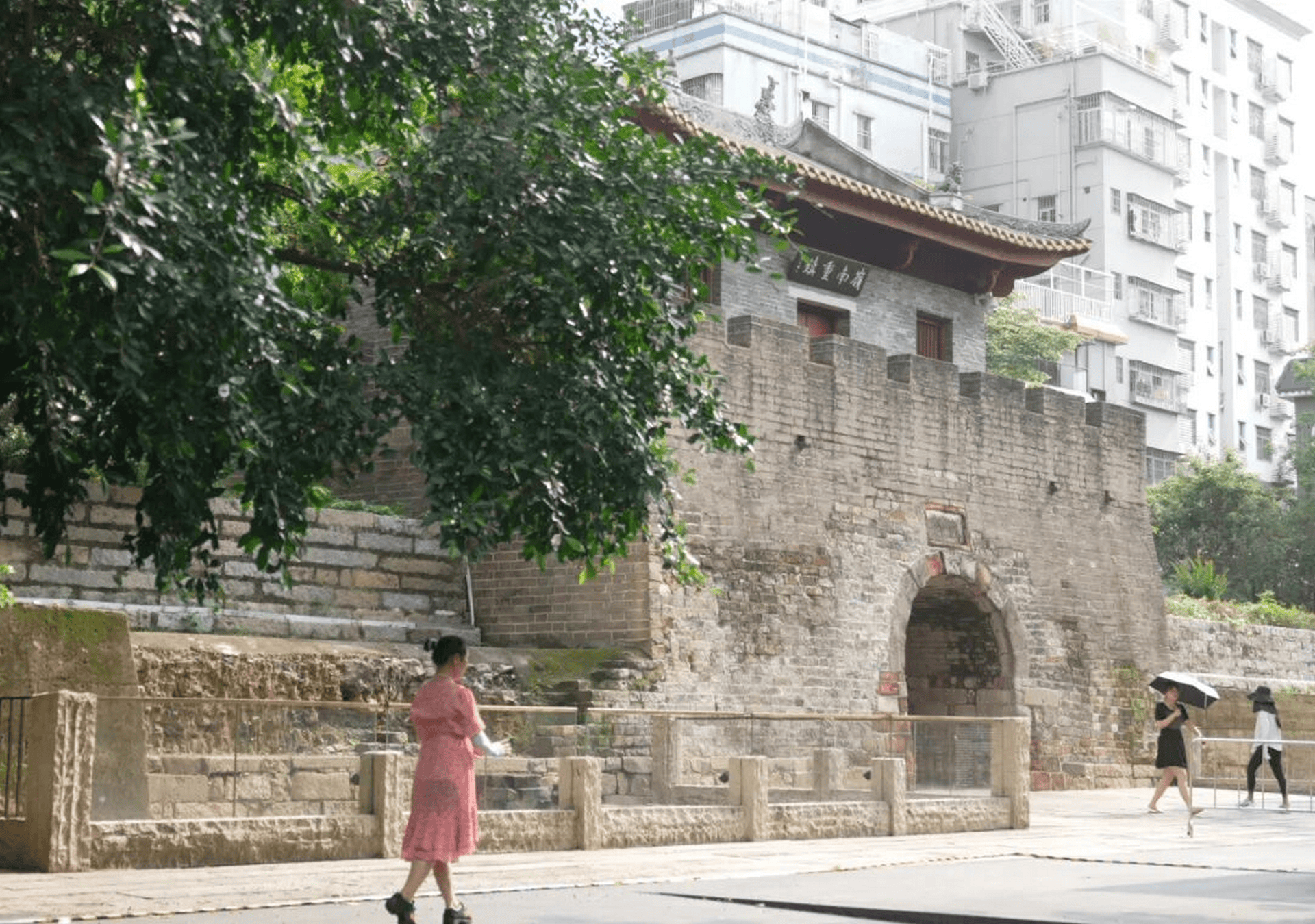
The history of Nantou dates back to 110 B.C. when the Han Dynasty government appointed the Panyu Salt Officer there to oversee salt production along the east coast of the Pearl River Delta. During the Eastern Jin Dynasty, Nantou served as the capital for both Dongguan Prefecture and Bao’an County. At that time, Dongguan Prefecture’s jurisdiction extended from the estuary’s east coast to present-day eastern Guangdong. Subsequently, Nantou hosted various political, economic, and military administrations established by central governments across dynasties. Nantou, therefore, stands as a witness not solely to the shared origins of Shenzhen and Hong Kong but is also a firsthand observer of the history of the Guangdong, Hong Kong, and Macao Greater Bay Area. While Nantou has been envisioned as a cultural landmark for the humanistic Bay Area from the project’s inception, the Diverse Homology Pavilion is designed to symbolize the historical and cultural value of the town, serving as a platform for community-based public cultural services.
Theme and Design
The first curatorial challenge is to comprehend “Homology”. In the case of the Pearl River Delta, the concept of “Homology” may diverge from what we usually perceive. The word doesn’t denote the geographical homogeneity of rivers or basins; quite the opposite, the region is known for having three rivers and eight estuaries. Moreover, “Homology” doesn’t allude to the shared origin of ethnic groups or cultures. The ethnic and cultural landscape here is remarkably intricate. Guangfu, Hakka, Southern Fujian-chaoshan, the Boat People, and a diverse array of ethnicities live here together; oceanic and continental cultures blend here; and traders from China, Southeast Asia, and Western countries engage in bustling commerce here. The history has thus endowed the region with a culture that is open, inclusive, and diverse. Hence, the term “Homology” in the Diverse Homology Pavilion refers to viewing this culture as our shared source when reflecting on history. Meanwhile, we try to tell the story of Nantou in a new way, by interpreting the theme “Homology” from four perspectives – “The Inherited and Shared Administration”, “The Inherited and Shared Culture”, “The Integral Bond of Economy”, and “The Continuous Sight of Nature”.
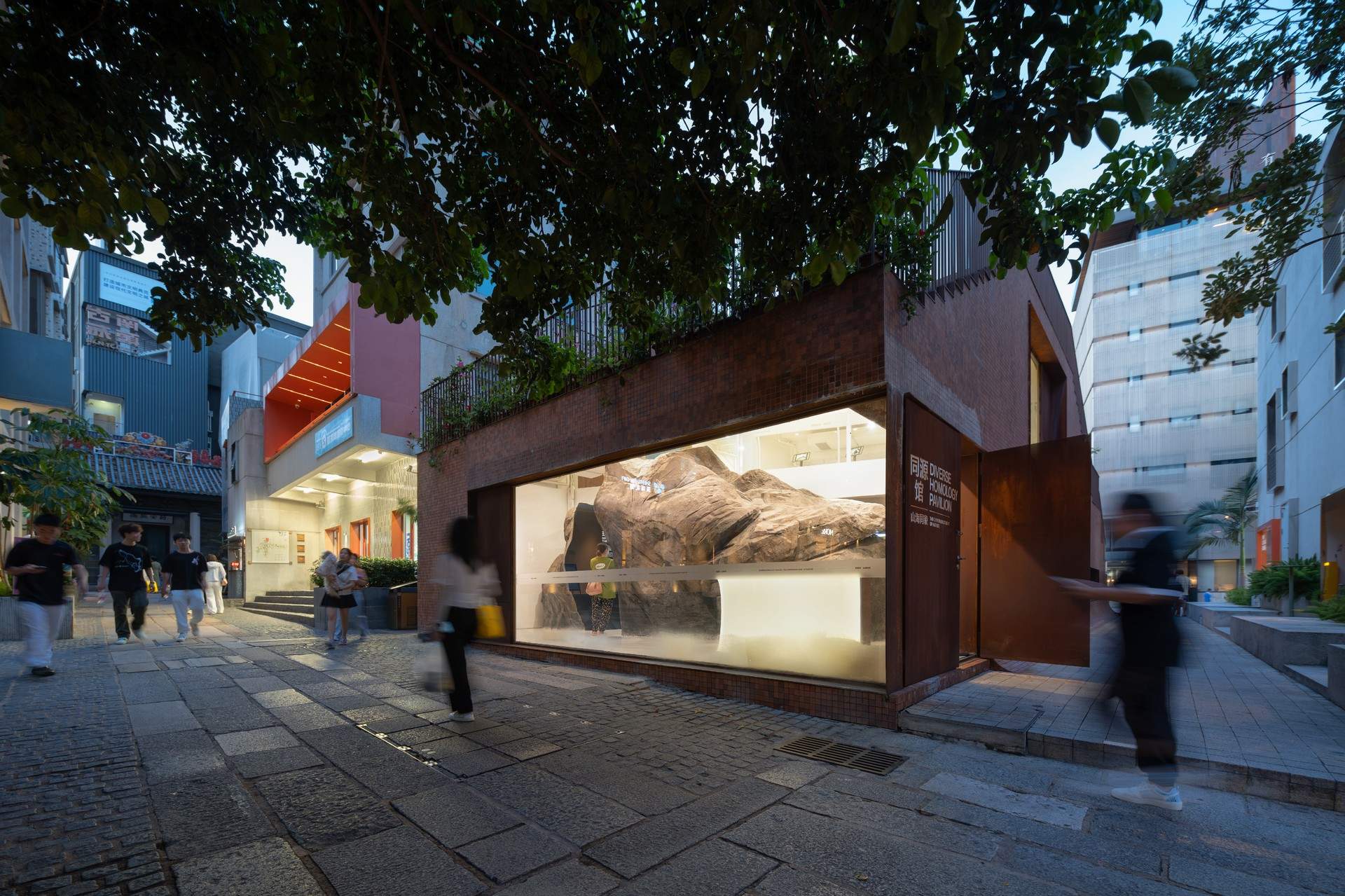
Our Pavilion: A Spectacle in the Commercial District, a Museum Complex in the Historical Quarter
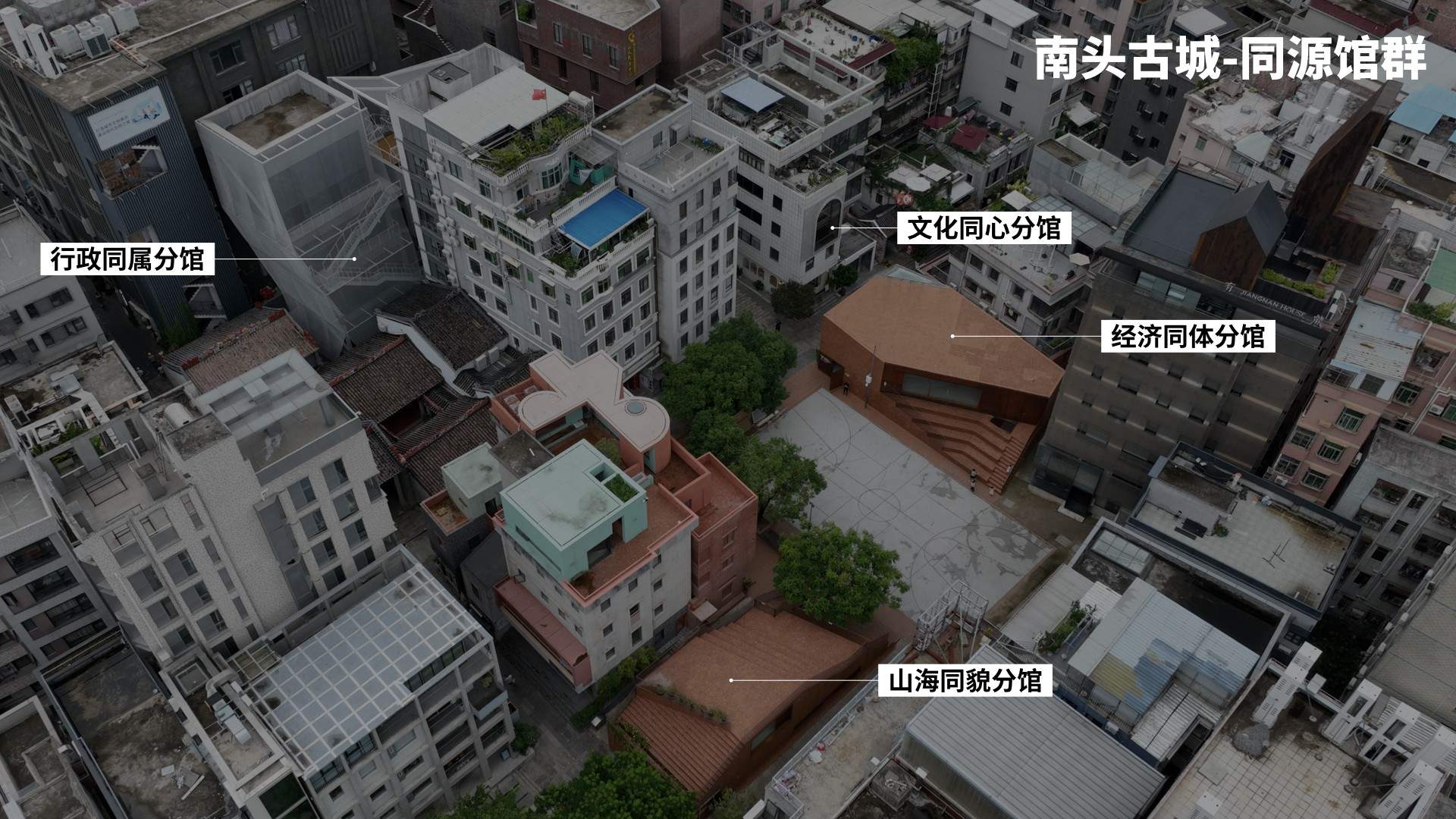
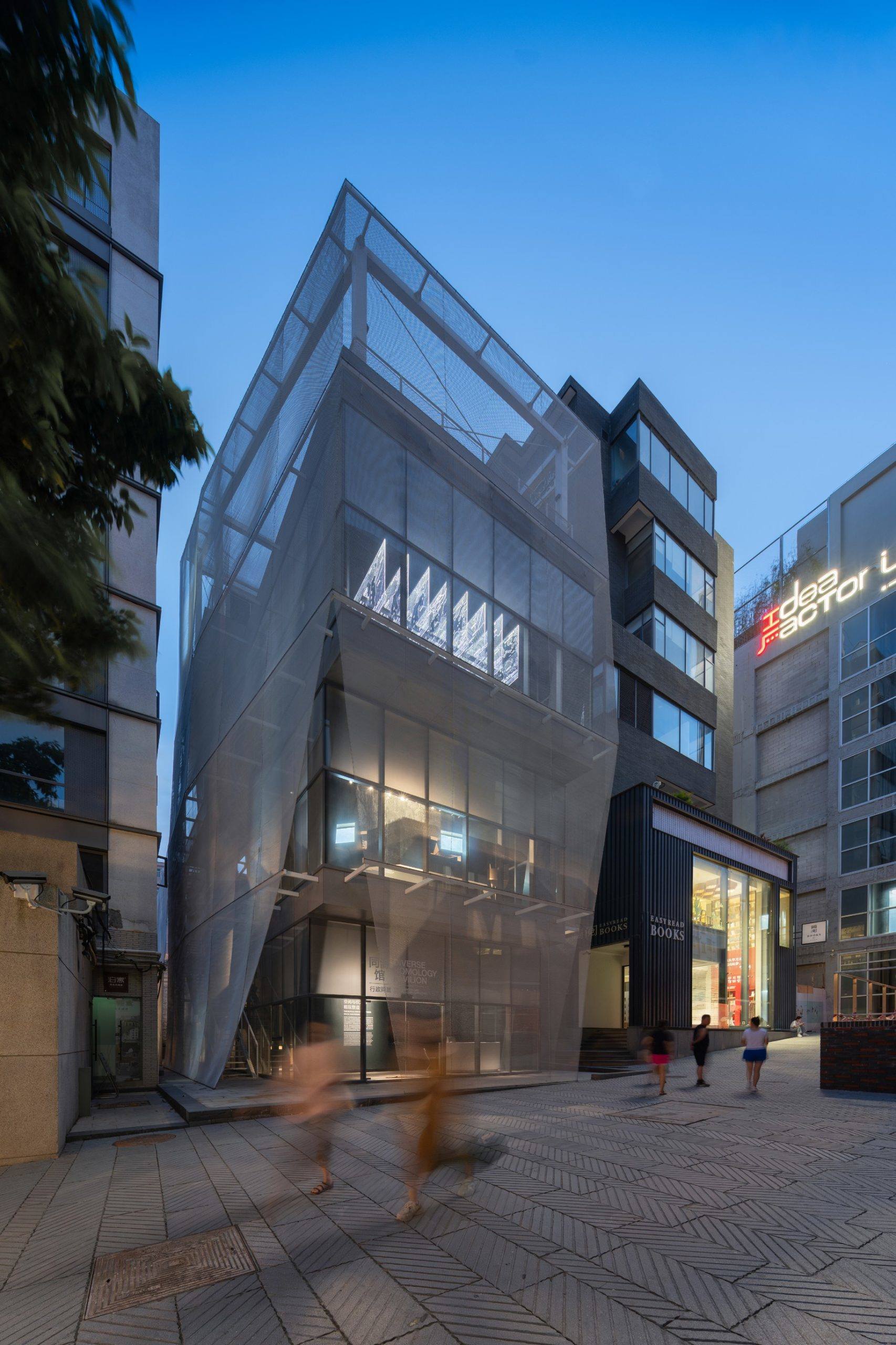
“The Diverse Homology Pavilion” is located within four adjacent street buildings in the core area of Nantou City. Unlike the neighboring commercial streets, where facades have been transformed, these buildings, designed by three renowned architects in China, seamlessly blend their exteriors with the surrounding streetscape while preserving their unique individuality. Among them, “The Continuous Sight of Nature” and “The Integral Bond of Economy” buildings, adjacent to the main street and Baode Square, are the creations of Meng Yan, the principal architect of URBANUS Architecture and Design Inc., during the 2017 Shenzhen – Hong Kong Bi-city Biennale of Urbanism / Architecture (UABB). “The Inherited and Shared Culture”, a renovation of urban village houses on the north side of Baode Square and facing East Street, is designed by Liu Heng, the Principal Architect of NODE Architecture & Urbanism. Just ten meters north of it, “The Inherited and Shared Administration” building is the work of Hua Li, the principal architect of TAO (Trace Architecture Office).
Can a museum cluster nestled within a neighborhood, strategically positioned along the street, and fostering cultural connections through its architectural design, transmute historical narratives into an inspiring and immersive experience? Is it capable of crafting a cultural landscape that enhances the lives of both residents and visitors? These questions were highlighted by Li Degeng, the chief curator of the Diverse Homology Pavilion, at the beginning of the project.
Our Exhibition: Narrative Structure and Experience
The Diverse Homology Pavilion unfolds a cultural story composed of various narratives, while each narrative is progressively linked to convey the core theme. When it comes to the content of experience, the Diverse Homology Pavilion, like many museums situated in historic locales, does not exhibit artifacts and collections. In addressing this challenge, we collaborated with experts and scholars from various fields, conducting thorough content research and meticulously collecting historical documents related to the theme. The textual materials were subsequently transformed into an artistic and panoramic experience as well as concrete exhibits.
Speaking of spatial experience, the Diverse Homology Pavilion faces constraints in both area and height to align with the residential pattern of Nantou Ancient Town. Furthermore, as the four buildings vary in architectural structure and location, the spatial experience strategy for each pavilion requires careful consideration. “The Continuous Sight of Nature” and “The Integral Bond of Economy” are two small two-story buildings situated next to Baode Square. One faces Zhongshan South Street, a prominent thoroughfare in the town, while the other is oriented towards the community plaza. Large floor-to-ceiling windows establish a connection between the buildings and the community, the virtual and reality, while highly recognizable art installations allow visitors to immerse themselves in grand tales. These pavilions thus stand as a captivating “wonder” in the bustling heart of the town. “The Inherited and Shared Culture” spans the third to fifth floors of two residential buildings, featuring its exhibition across eight distinct rooms. Visitors can initiate their journey through a modest entrance on the first floor facing the street. While each floor introduces unique themes, the stories in every room remain interconnected. Consequently, the exhibition avoids fragmentation caused by spatial separation and allows visitors to embrace the entire narrative seamlessly. “The Inherited and Shared Administration”, serving as the center of the Diverse Homology Pavilion, is a lofty standalone structure comprising ten square-box spaces distributed across four floors. Given the inherent homogeneity of the internal spaces, the primary challenge lies in crafting a differentiated experience.
DIVERSE HOMOLOGY PAVILION · THE CONTINUOUS SIGHT OF NATURE
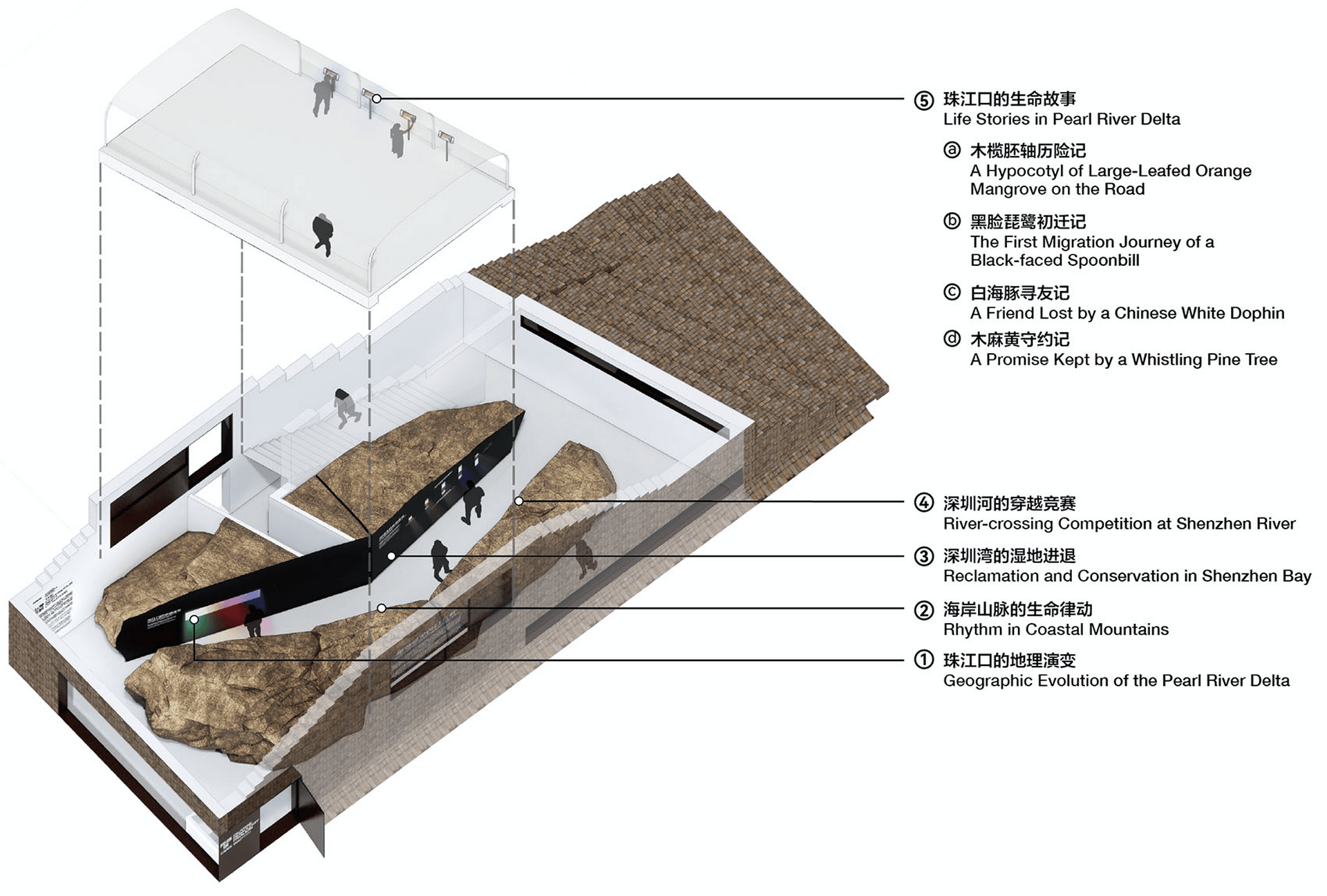
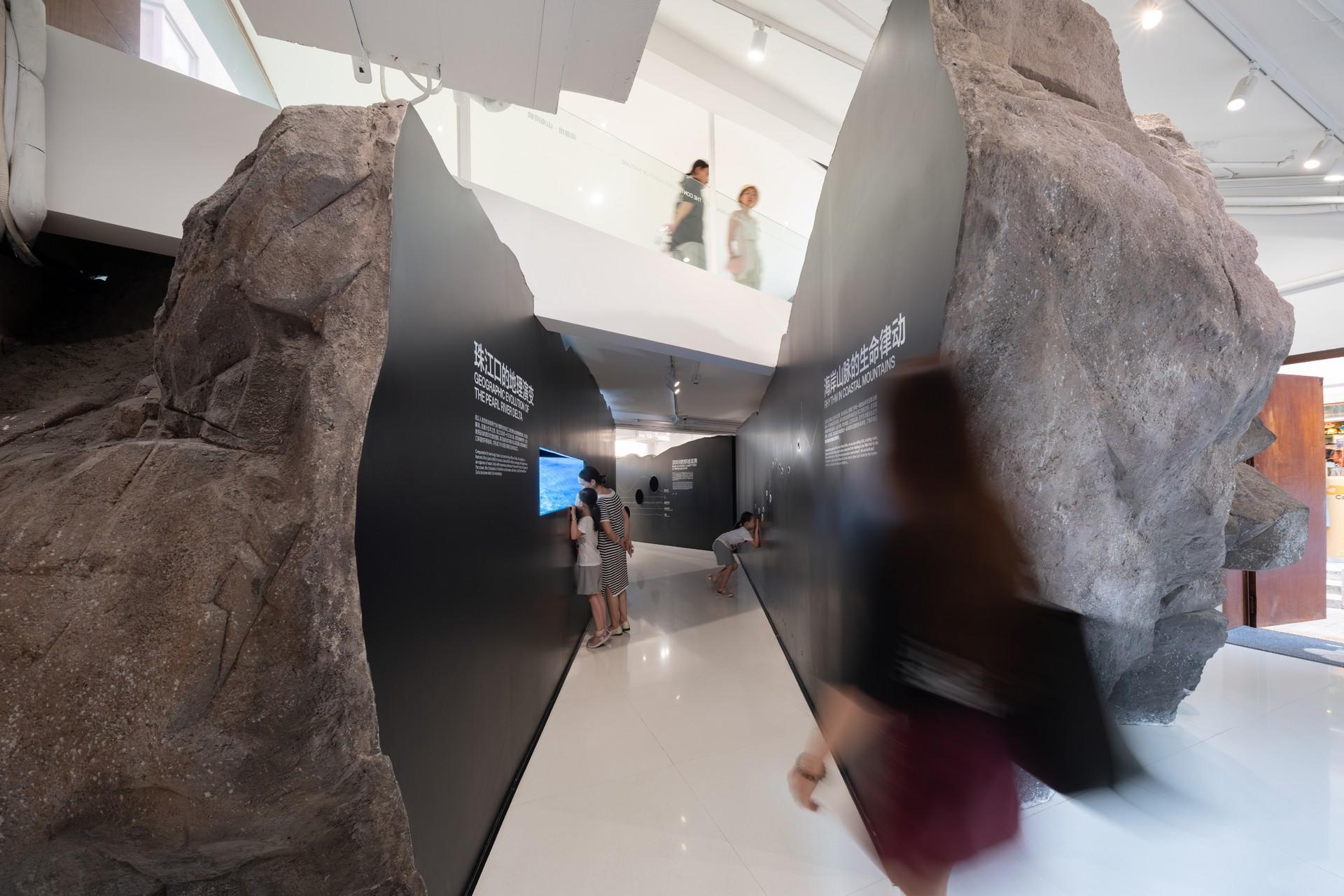
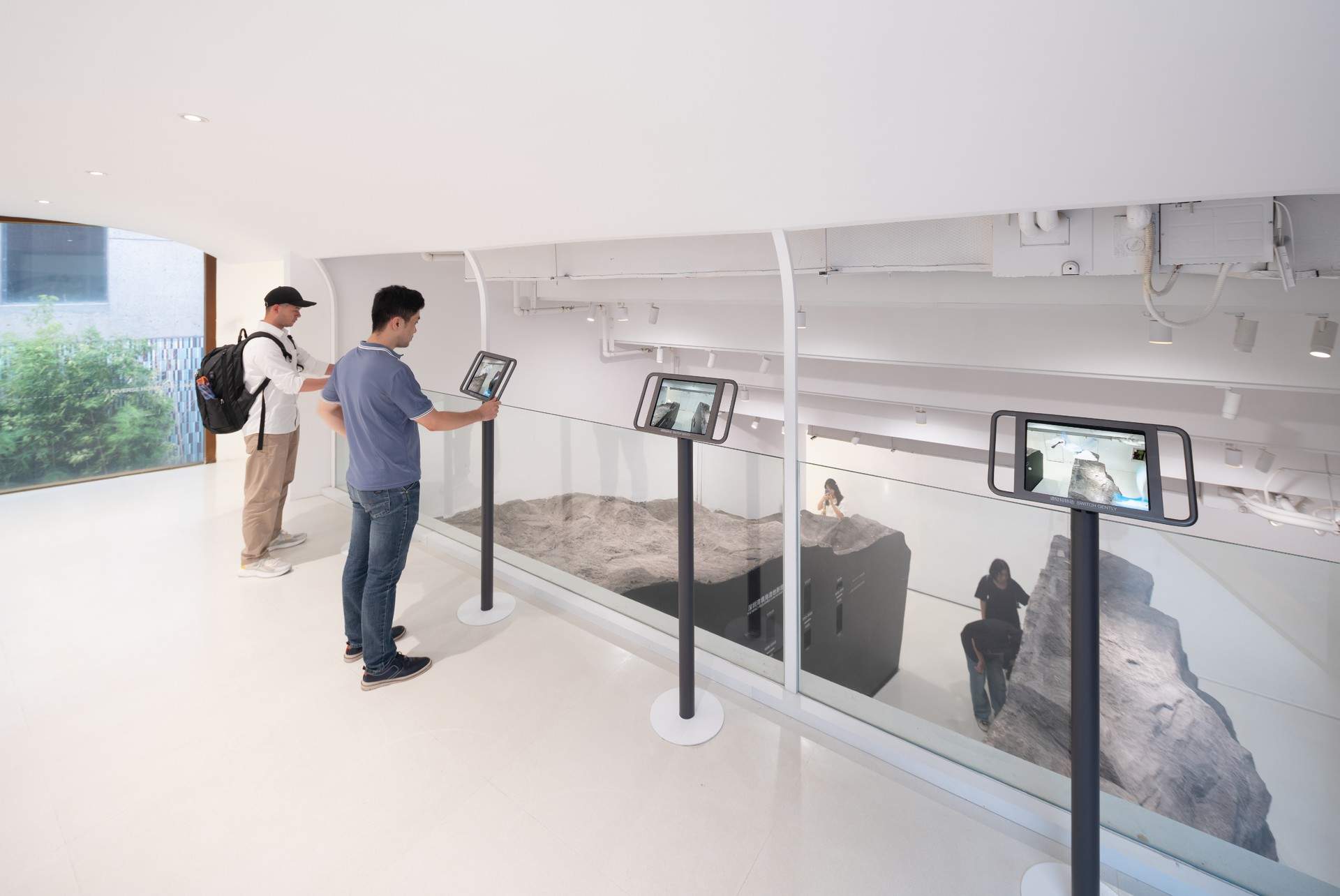
“The Continuous Sight of Nature” illuminates the homogeneity of the natural geography in the Pearl River Delta through the lens of ecological civilization. The first floor is dedicated to “Natural Geography”, while the second floor explores “Natural Life”. Situated on the south street of Nantou City and adjacent to Baode Square, “The Continuous Sight of Nature” seamlessly integrates with the town’s bustling street through a vast window on its front facade. The exhibition journey commences on the first floor with a representation of a reef from the Pearl River Delta’s coast. Stepping into this massive stone structure, visitors are enveloped in a narrative unfolding through time and space. The narrative includes four parts: the geological evolution of the Pearl River Delta’s landscape over billions of years, the life rhythm of Lotus Hill along the coast, the transformative dynamics of the wetlands in Shenzhen Bay, and the spatial-temporal distances on both sides of the Shenzhen River. Visitors can catch glimpses of this narrative through small observation holes on the reef’s wall. On the second floor, the narratives of representative plants and animals inhabiting the region unfold from a first-person perspective, presented on the giant stone through augmented reality (AR). These natural inhabitants include mangrove seeds drifting with the sea, black-faced spoonbills migrating southward from Liaoning province with their parents in winter, Chinese white dolphins gracefully navigating the confluence of fresh and saltwater, and whistling pine trees firmly rooted in the coastal area. Through their stories, the exhibition mirrors the natural ecology of the estuary where land and sea converge, birds embark on migrations, rivers flow into the ocean, and shorelines continuously evolve. These natural inhabitants play a role in safeguarding the common home of the estuary, much like humans do.
All life in the estuary can only thrive through mutual respect. The exhibition, in its response to “Homology”, seeks to pose a crucial question: How can we navigate future economic and social development while maintaining harmonious coexistence with nature and other inhabitants? This question holds particular significance in the new era of development.
DIVERSE HOMOLOGY PAVILION · THE INTEGRAL BOND OF ECONOMY
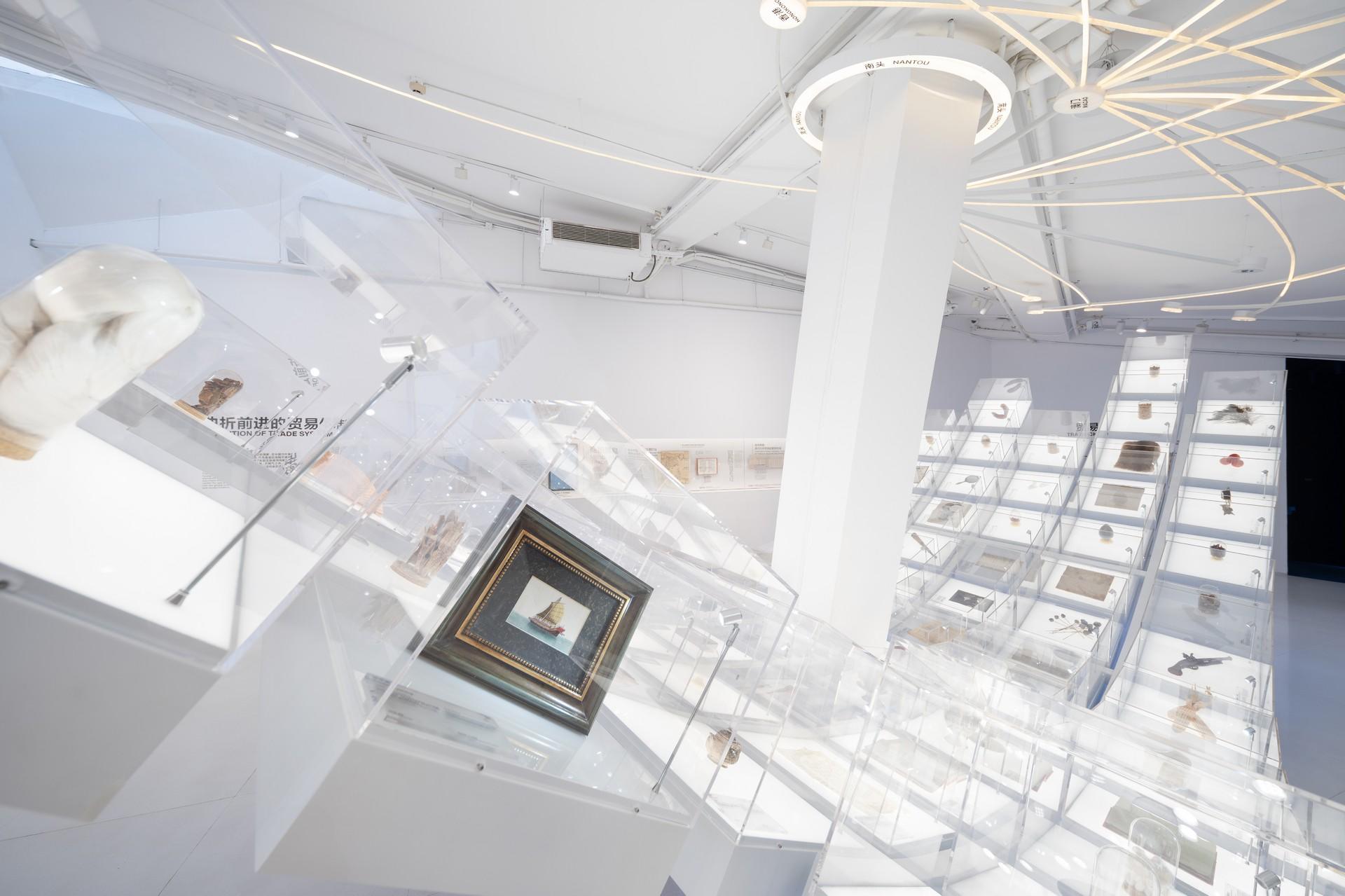
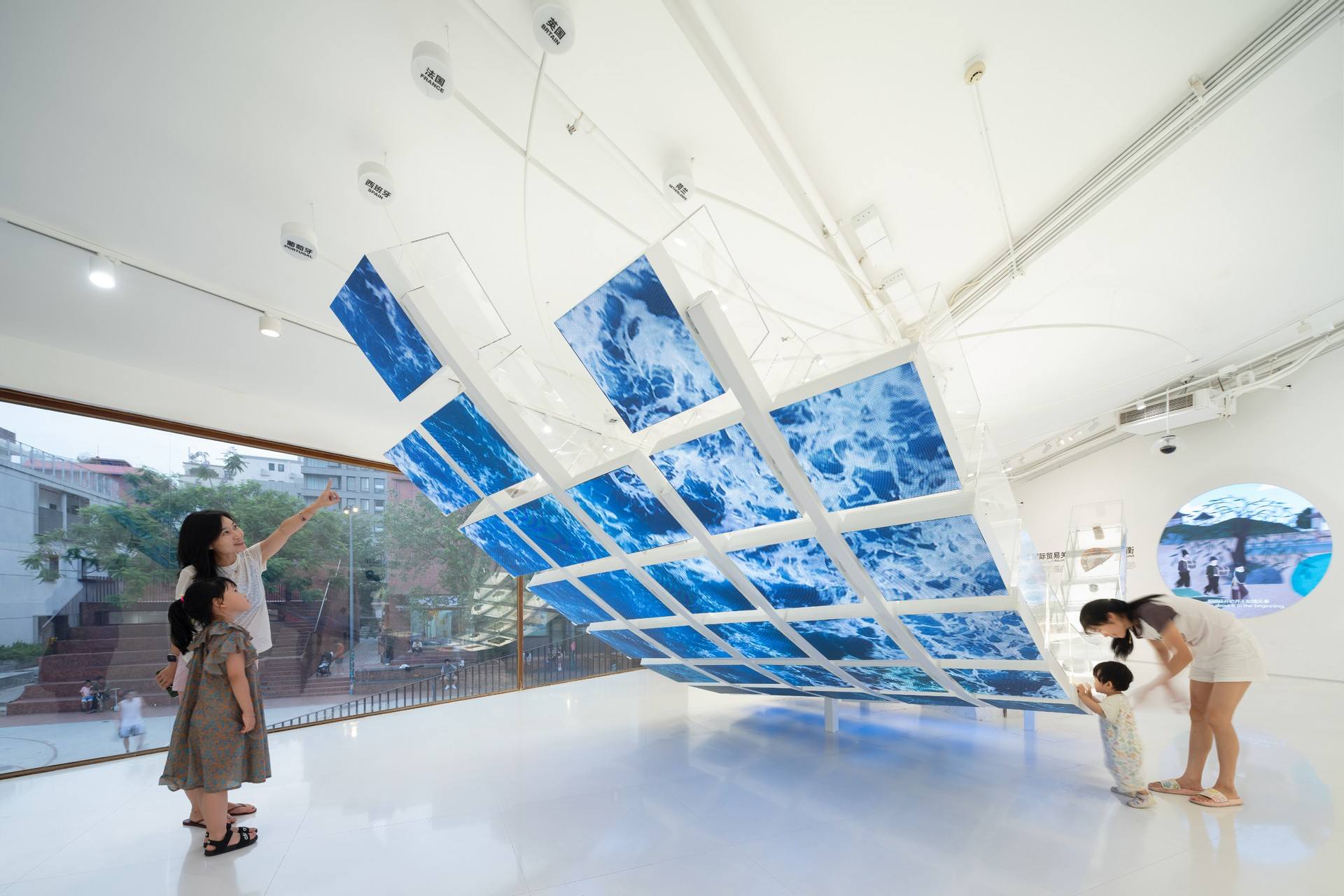
With a focus on material civilization, “The Integral Bond of Economy” delves into the economic and cultural narrative of the region, unfolding from land to sea. The first-floor centers on traditional marine agriculture, while the second-floor sheds light on maritime trade. In terms of experiential content, the region is geographically unique, as it witnesses the convergence of three rivers and eight estuaries, where rivers, sea, and land intricately intertwine. This distinctive characteristic has given rise to a traditional social economy with pronounced maritime features and an open Lingnan commercial culture. Regarding spatial design, the pavilion is positioned next to Baode Square. The first floor has low ceilings and dim lighting, creating a specific ambiance. In contrast, the second-floor features tall ceilings and ample brightness, complemented by a large window that opens onto the bustling plaza. The narrative within the pavilion unfolds sequentially, starting from the land, progressing to the sea, and ultimately reaching the depths of the ocean.
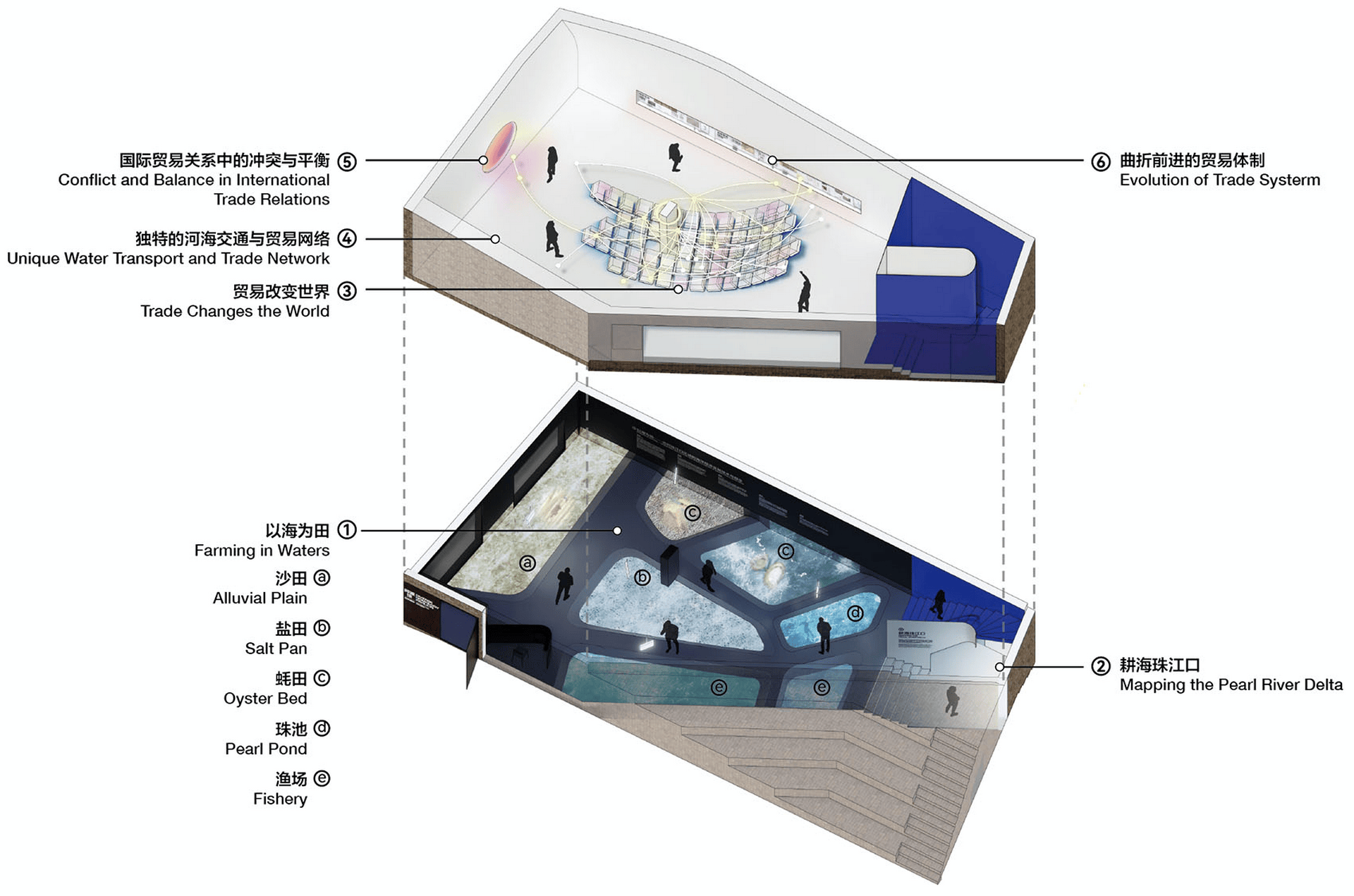
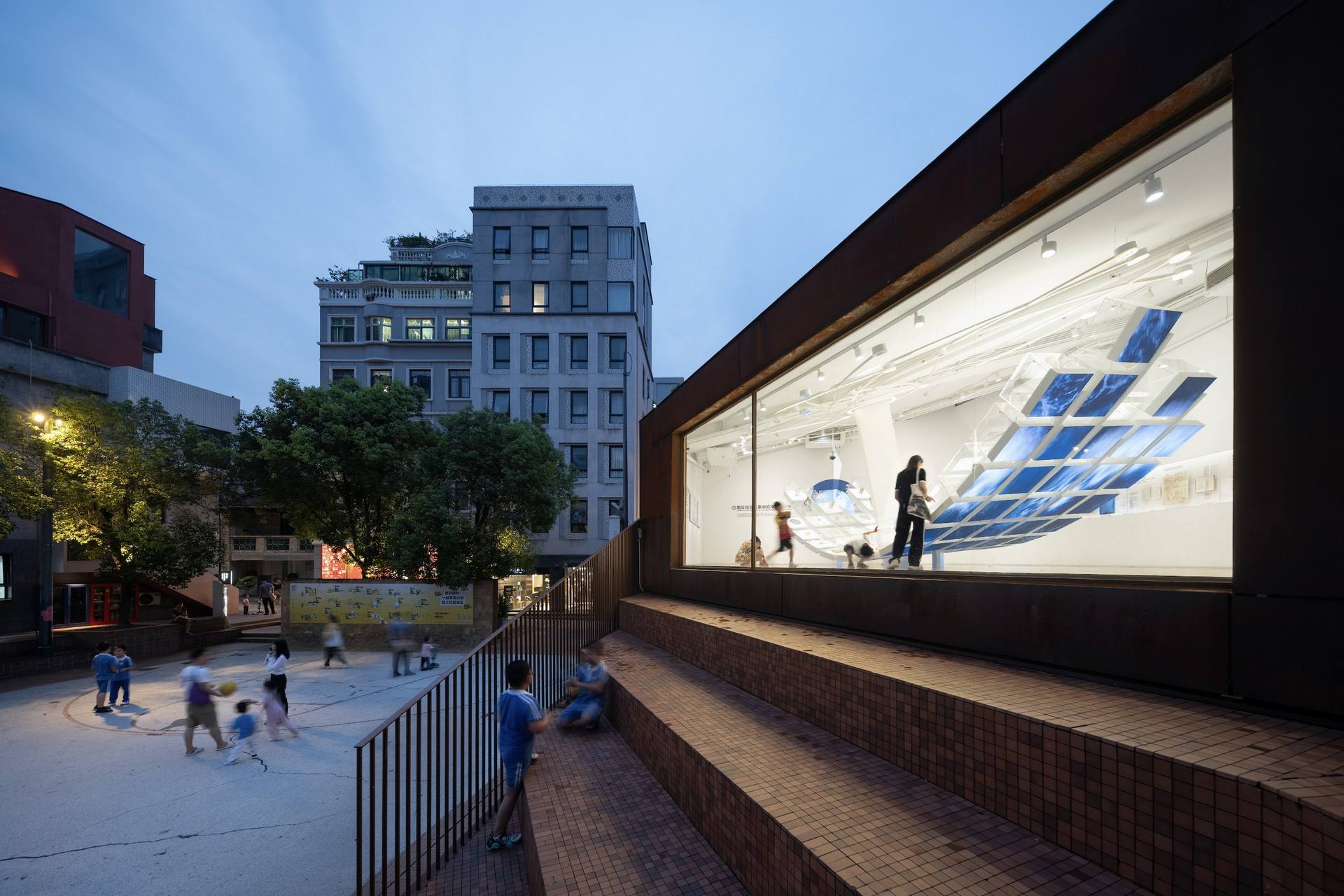
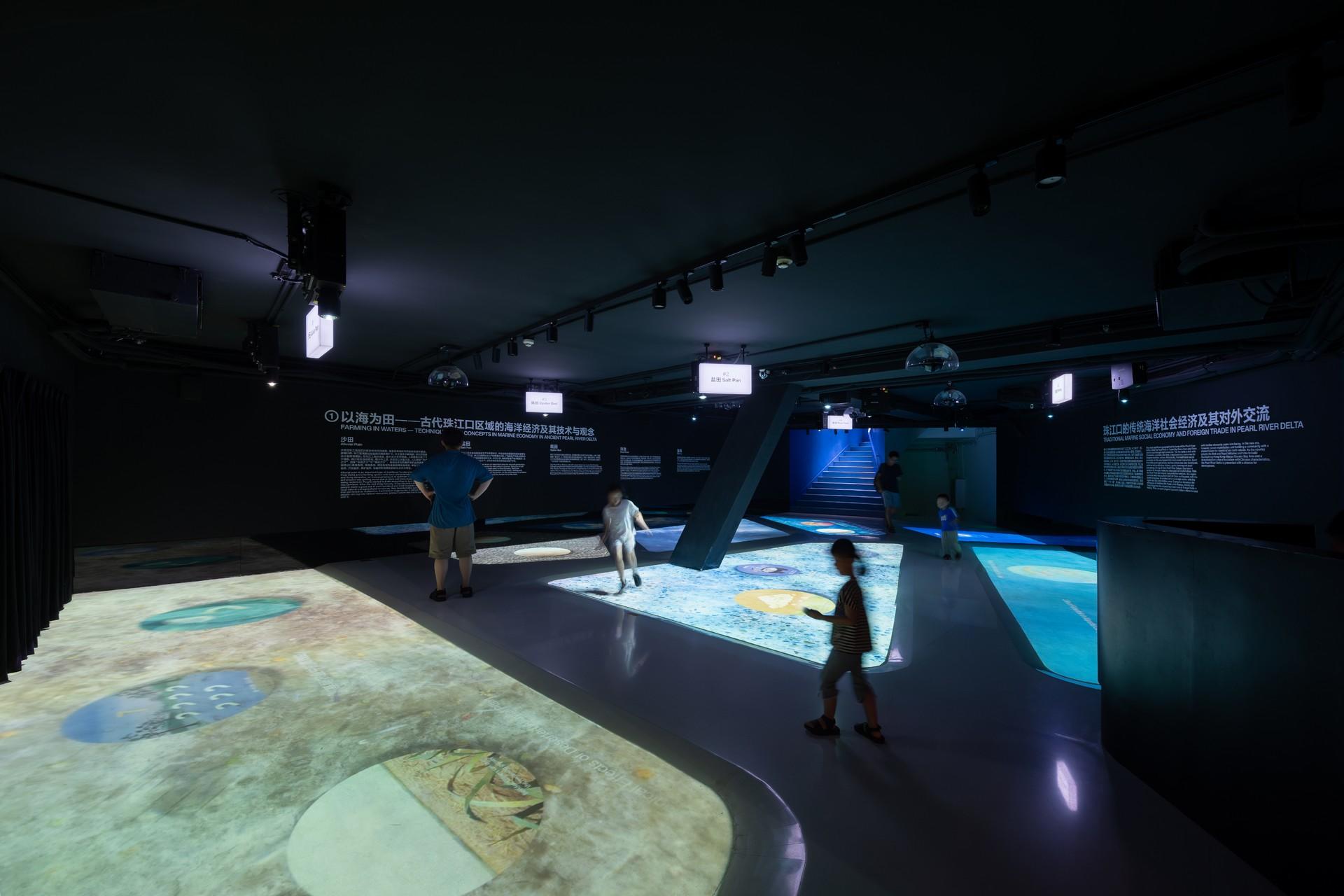
The first floor of the pavilion replicates the appearance of a field ridge in the estuary region. As the audience stands on this “ridge” and gazes at the ground, they are immediately transported into the shoes of ancient farmers in the region. The exhibition is centered around traditional marine agriculture, where people farm in waters, encompassing its techniques and values. The narrative unfolds progressively from the land to the sea, showcasing five typical forms of local marine agriculture: alluvial plains, salt pans, oyster beds, pearl ponds, and fisheries. The production methods and characteristics of each form are vividly presented through immersive projections. Ascending the blue staircase, we reach the second floor-the depths of the sea. Here, a “big ship” sailing on the wind and waves guides visitors through a history of economic and trade exchanges, in which the region connects the ancient Pearl River Delta and the world. The exhibition unveils the region’s pivotal role as a nexus between land and sea and explains how international trade here evolves over time. Throughout the transformation of the trade system, the exhibition places particular emphasis on the significant roles played by Nantou, Macao, and Hong Kong as hubs for foreign trade activities in different historical periods. Through the large glass window on the second floor, people in the square can look into the interior of the building, which connects the crowd and the exhibition effectively. The dynamic “Big Ship Installation” inside also brings the cultural exhibition into people’s lives in the Nantou City.
DIVERSE HOMOLOGY PAVILION · THE INHERITED AND SHARED CULTURE
Culturally, the Pearl River Delta is like a multicultural melting pot. Located at the confluence of many rivers and the South China Sea, the region not only embraces the Central Plains culture but also is influenced by Nanyang and even Western cultures, possessing an open cultural character and rich cultures. Numerous Han Chinese subgroups, such as Guangfu, Hakka, and Southern Fujian-chaoshan, and the Boat People, meet here, while cultures from China, Nanyang, and Western countries mix. With the passage of time, a distinctive and blended culture featured by the integration of land and sea has come into being gradually. From the perspective of spiritual civilization, “The Inherited and Shared Culture” depicts the diverse and integrated “Living Culture” in the Pearl River Delta through aspects of Food and Residence, narrates the inherited and flowing “Multi-Ethnic Culture” from the convergence and migration of Han Chinese subgroups, and observes the different but harmonious “Spiritual Culture” in the region through aspects of language and beliefs. From the perspective of narrative experience, in addition to the progression from living culture to spiritual culture in terms of content, the exhibition hall is relatively small, and it is easy to get lost as visitors have to walk through various rooms, since the exhibition is based on the interior layout of people’s dwellings in the community. Therefore, we connect all the exhibits into one concrete whole with a “line” to guide visitors to complete the tour.
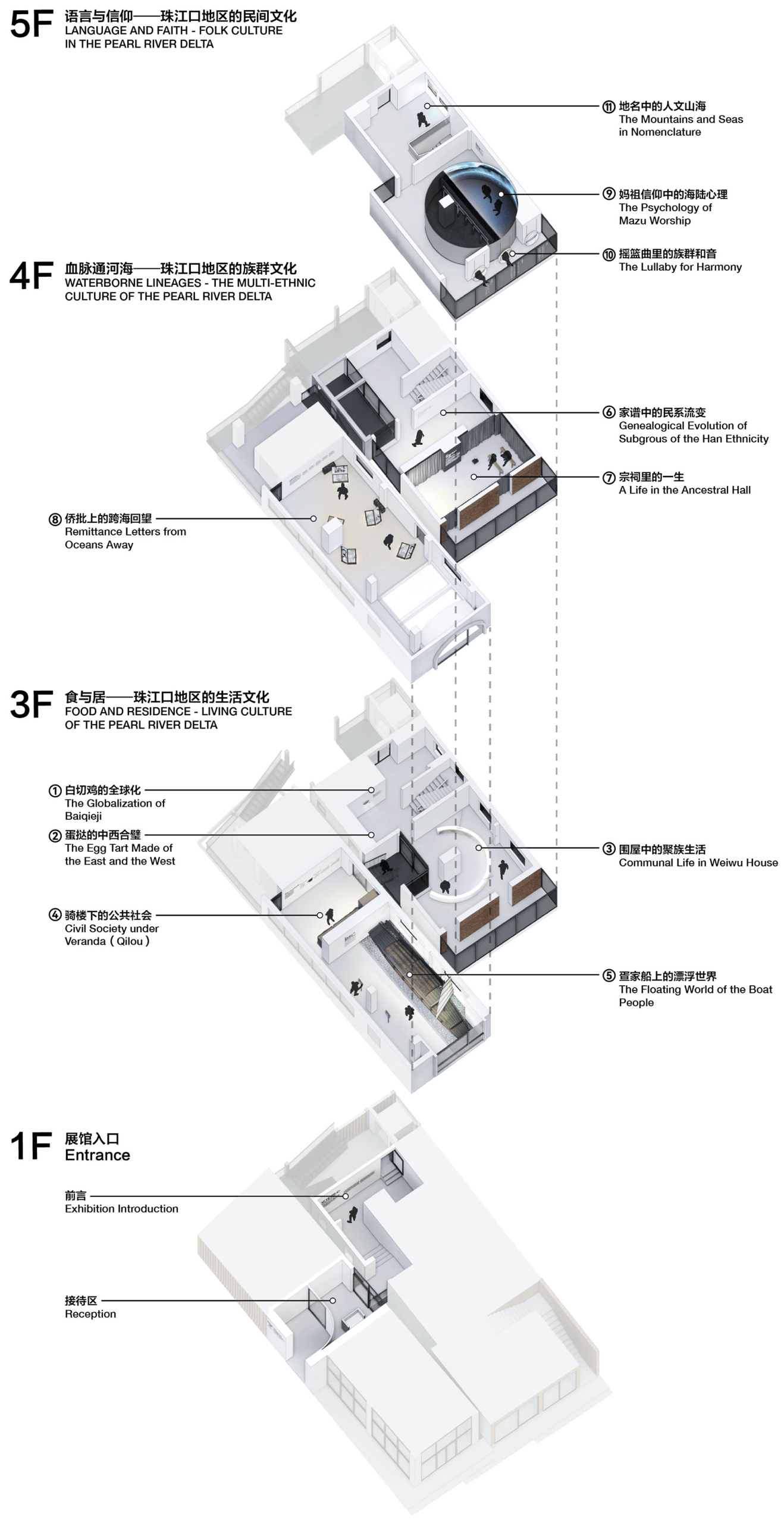
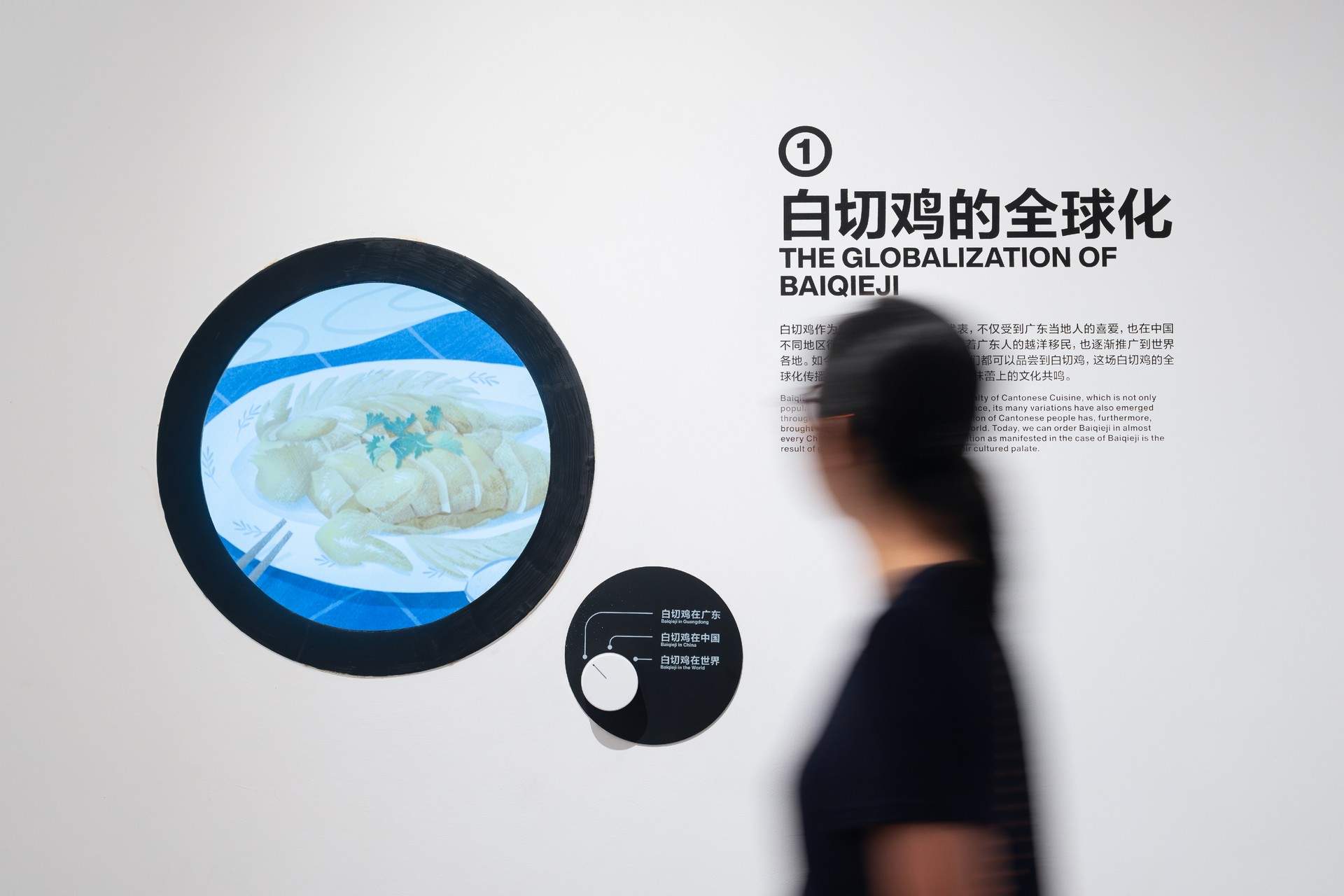
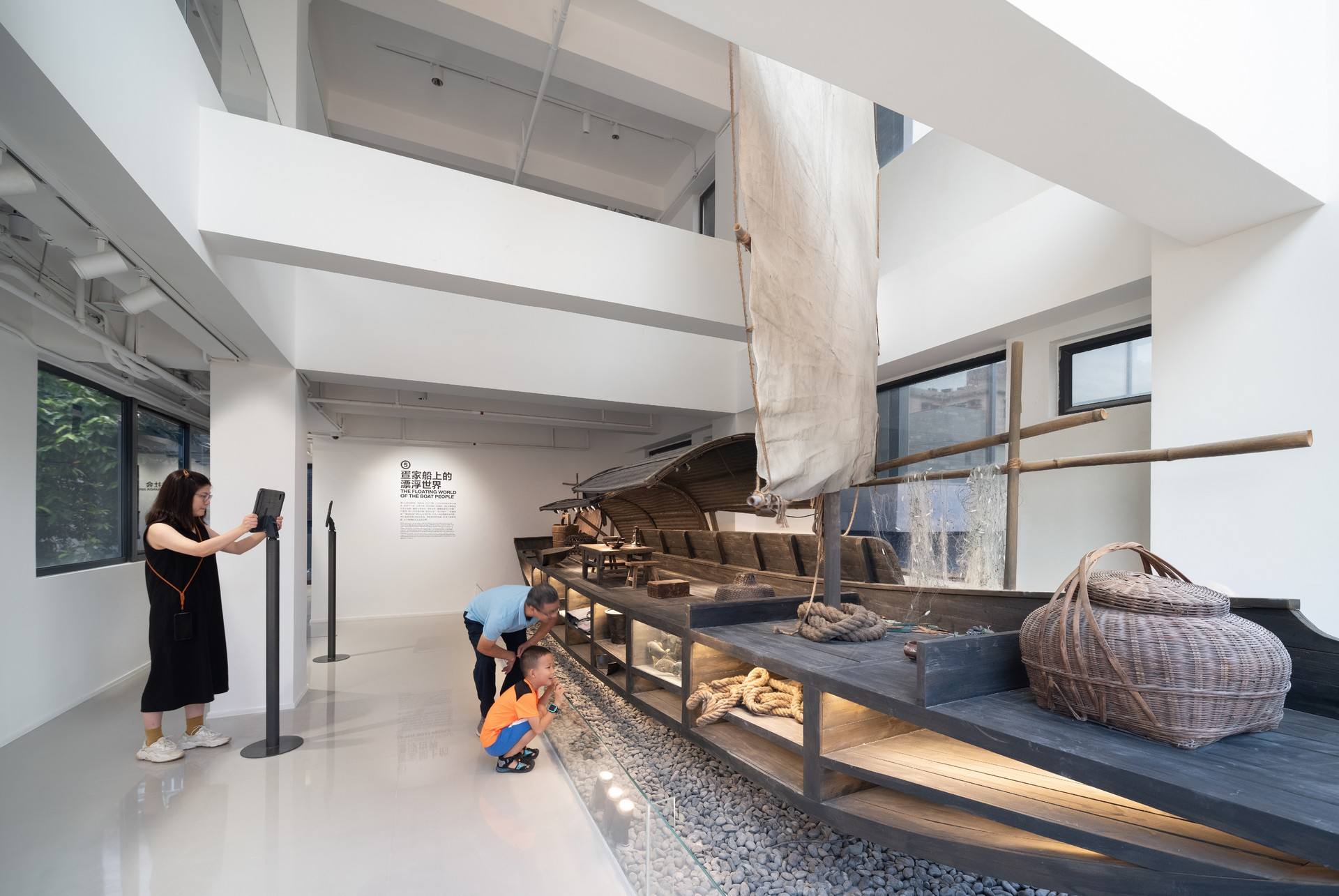
Beginning on the third floor of the exhibition, we explore the rich and diverse living culture of the Pearl River Delta from the perspective of “Food and Residence”. Food is our first stop. The first food is the traditional Cantonese dish “Baiqieji”, which went global from the Pearl River Delta, and the second food is the western dessert “Egg Tart”, which integrated the East and West in the Pearl River Delta. We are going to narrate the widespread of food across different places and the evolution of food forms through interactive experiences to realize similar taste buds in the Pearl River Delta and to understand the interconnection and integration of Chinese and Western cultures in the region. The diverse form of people’s dwellings is another characteristic of the Pearl River Delta, where the “Weiwu house featured by communal life”, “veranda with public space”, and “the Boat People’s boats floating on the sea” reflect the different ethnic groups that share the Pearl River Delta, as well as their lifestyles and concepts, respectively.
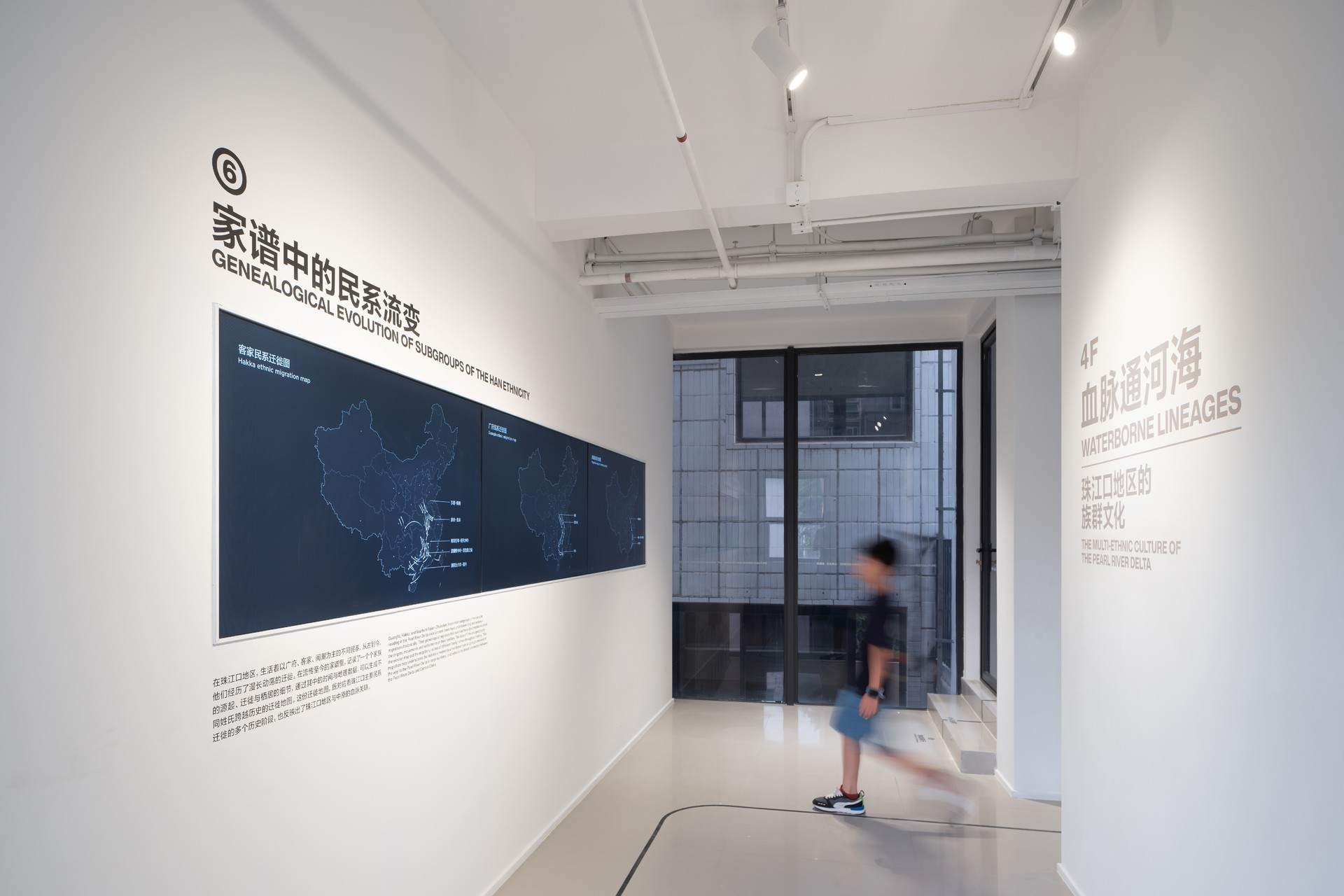
The exhibition on the fourth floor focuses on the “Multi-Ethnic Culture” of the Pearl River Delta. The hall to the east of the exhibition displays a visual film generated by genealogical information, which has recorded the migration of Han Chinese subgroups, represented by Cantonese, Hakka, and Southern Fujian-chaoshan from the north to the Pearl River Delta since ancient times, according to different times and places. Additionally, in the form of documentary films, we also detail the “Ancestral Hall”, an important carrier that witnessed common memories of individuals and families, and its evolving role in contemporary life. The hall to the west of the exhibition concentrates on the history of overseas migrants from the Pearl River Delta and the emotional bonds between overseas Chinese and their hometowns and loved ones, all of which, called “suitcase installations”, seem to freeze the moments that these stories took place.
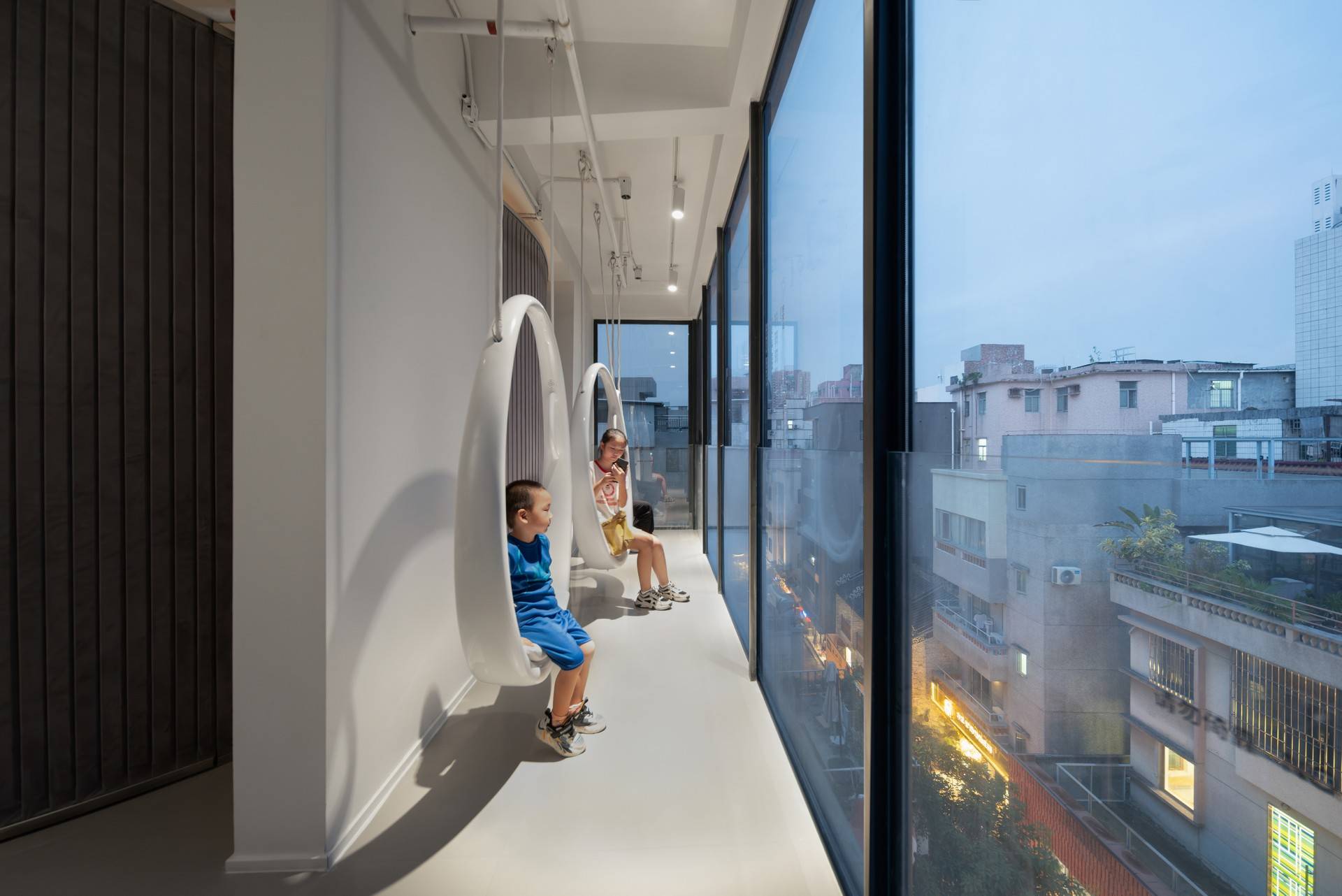
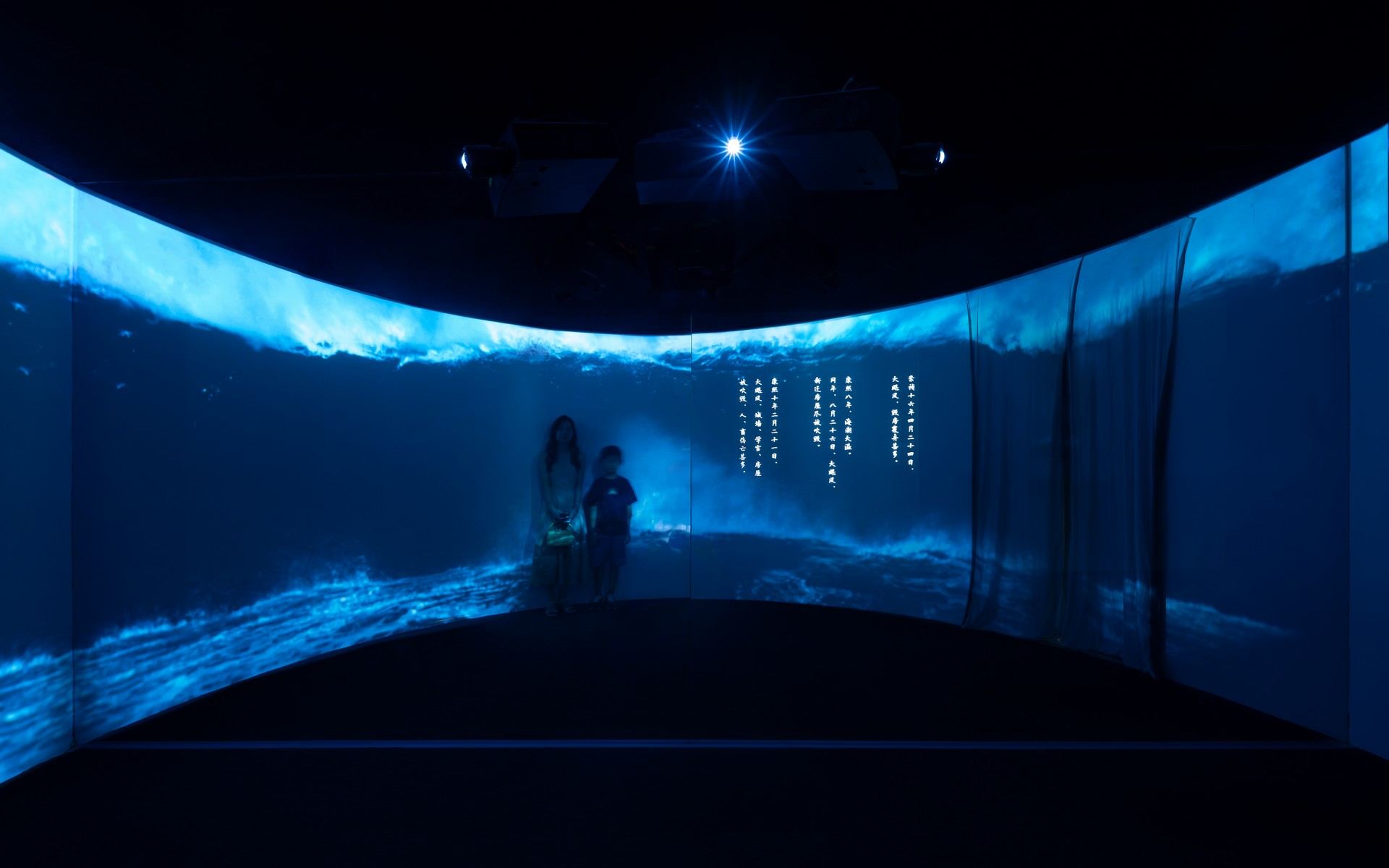
Moreover, the exhibition on the fifth floor primarily talks about the “Spiritual Culture” characterized by the integration of land and sea in the Pearl River Delta. At first, we introduce the origin and evolution of Mazu Worship, born between land and sea, to the audience through an immersive experience. The exhibition mainly explains man’s fear of the unpredictable ocean and the peace of mind provided by Mazu. Then, we use the cradle installation to trigger the singing of the common song “The Moonlight”, which is sung among different Han Chinese subgroups in the Pearl River Delta, bringing us back to our childhood. Finally, the exhibition ends up with a set of mutually contrasting screen installations, including a video imaging of the same place names in Shenzhen and Hong Kong, and the cultural and geographical analysis behind them.
DIVERSE HOMOLOGY PAVILION · THE INHERITED AND SHARED ADMINISTRATION
From the perspective of political civilization, “The Inherited and Shared Administration” narrates the governing bodies established in the Nantou City in history through aspects of space and power. To be concrete, the exhibition explores the historical evolution of the administrative, coastal defense, or economic jurisdictions (within the Pearl River Delta), as well as the relationship shaped by the mutual influence between changes in the political jurisdiction and the complexity of the geographic space. As the main building of the Diverse Homology Pavilion, The Inherited and Shared Administration, located on the north side of Baode Square, holds a tall and separate building. The narrative experience of the exhibition is a gradual progression from the tangible local history of Nantou City to the abstract historical spirit. In Room 1 on the first floor, we start the narration by contrasting ancient and contemporary Xin’an County Yamen adjacent to the building, which is the important embodiment of political power in the history of the Nantou City. Furthermore, a set of transparent architectural models made of solid materials shows the county yamen with rigorous layout in the Ming and Qing dynasties and its counterpart at the present, reproducing the solemnity of the history. In Room 2, we expand the narrative scope from the county yamen to the entire Nantou area with Nantou City as the core. According to the ruins and historical documents within the Nantou City, we delve into the governing bodies in terms of economy, administration, and military affairs established by royal courts in Nantou, presenting the history spanning over 2,000 years through the Nantou map installation.
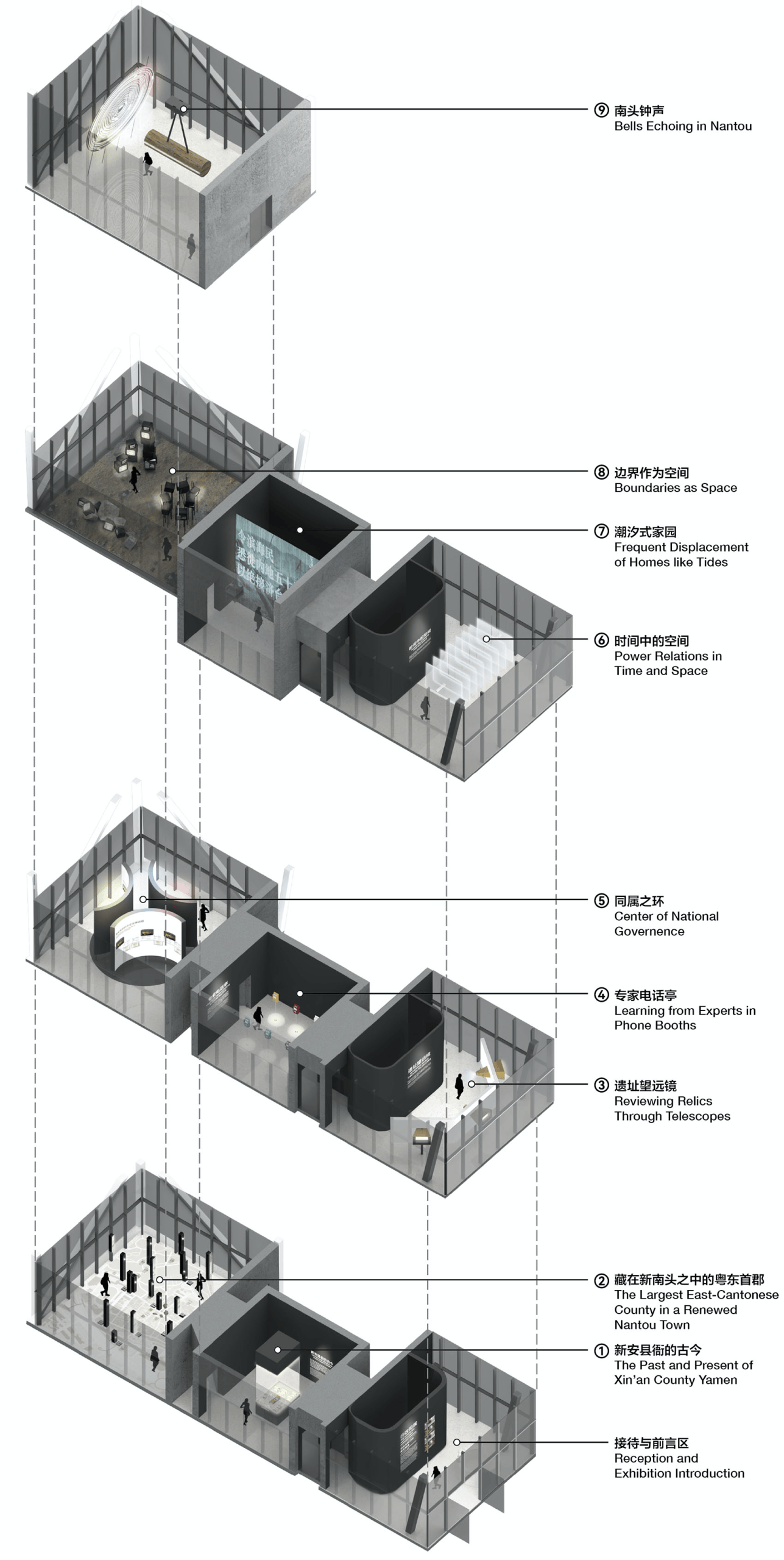
On the second floor, the scope of the exhibition gradually expands from the Nantou area to the entire Pearl River Delta, focusing on the governing bodies established in the Nantou Ancient Town in the past and the jurisdictions they covered: salt industry, administration, and coastal defense management, which are displayed through three sets of installations. The installation in Room 3 is the telescope for reviewing relics. Through the interaction with visitors, panoramic video imaging can be triggered, linking historical sites inside and outside the exhibition to view the sites that still exist widely in the Pearl River Delta (Guangdong-Hong Kong-Macao Greater Bay Area: Shenzhen, Hong Kong, Macao, Dongguan, Guangzhou, Zhuhai, Huizhou, etc.) All of that embodies the governance of royal courts over the region. To be specific, the salt production and marketing system, the distribution and system of local administration, and the spatial layout of coastal military defense in the Pearl River Delta are covered in the exhibition. The installation in Room 4 is the phone booths for experts, through which visitors can talk with experts and scholars and listen to them narrating the characteristics of ancient salt jurisdiction, administration, and coastal defense construction in the Pearl River Delta, along with their insights and revelation to the present. The Room 5 is composed of three sets of historical events. We unfold the evolution and history of the governing bodies established by royal courts in the Nantou region from three aspects including economy, administration, and coastal defense. The exhibition is supposed to provide a multi-faceted understanding of the jurisdiction history in the Pearl River Delta for the audience.
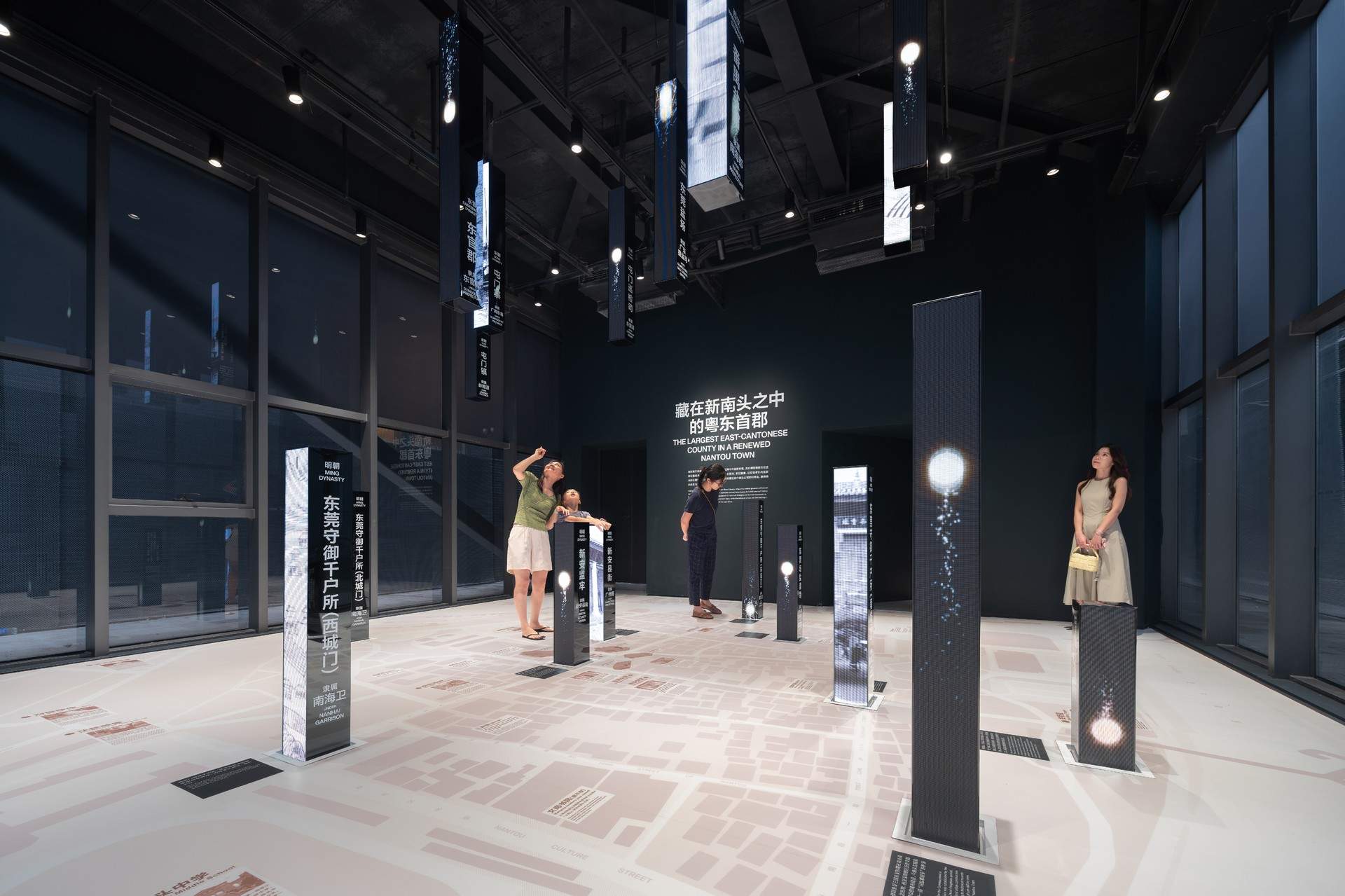
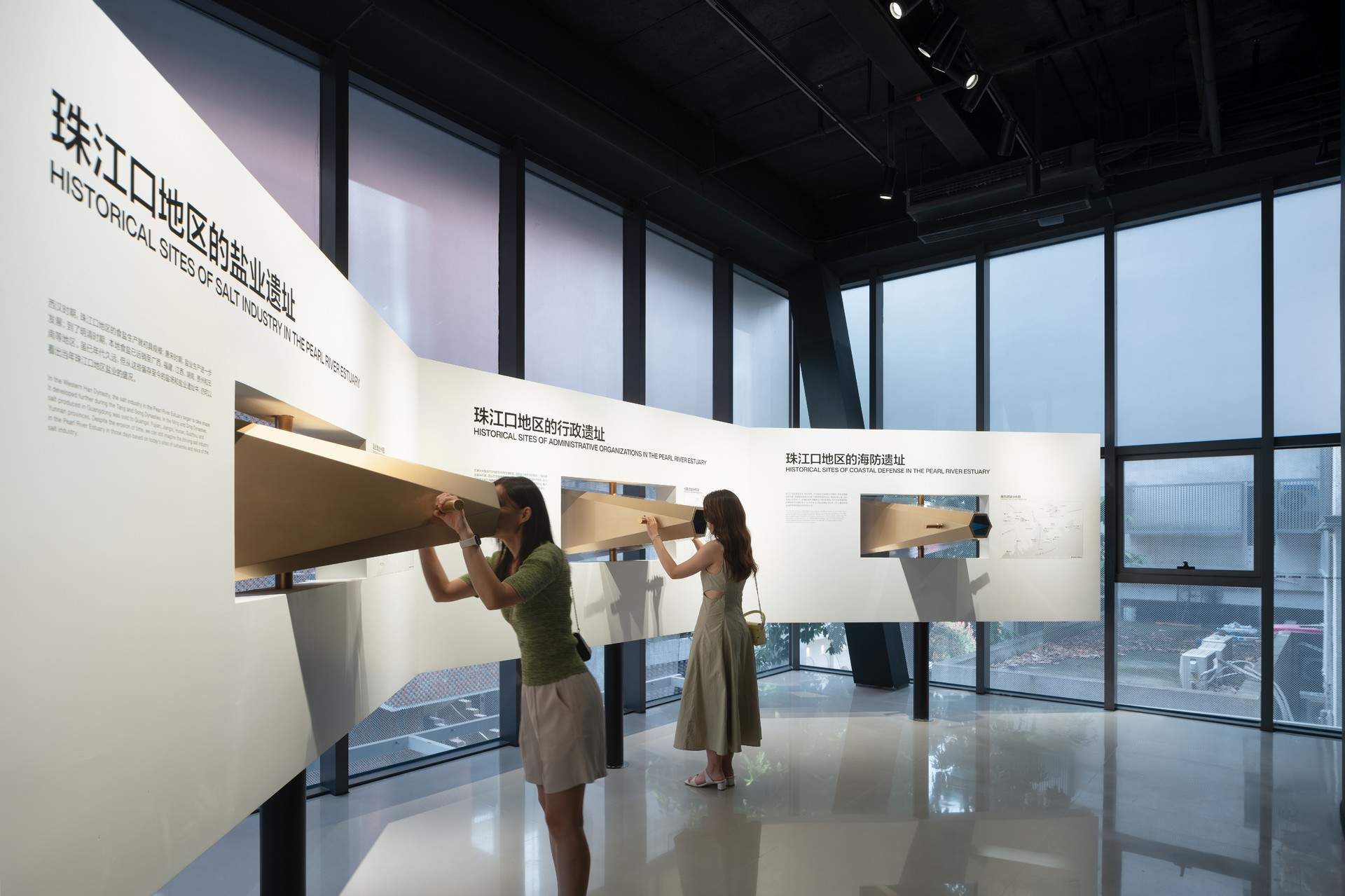
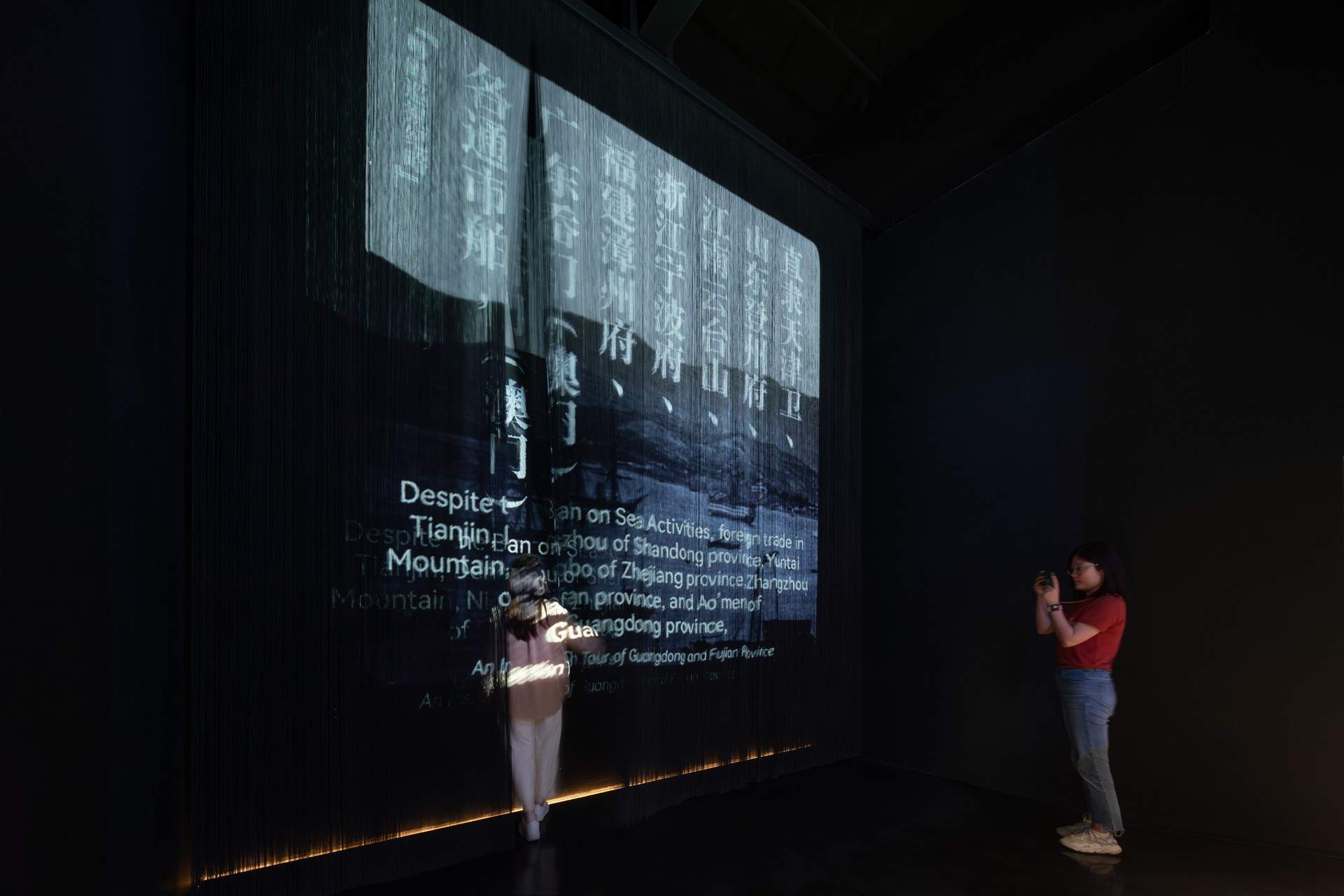
On the third floor of the exhibition, the narration focuses on the spatial and boundary topics that occurred in the history of the Pearl River Delta due to the administrative jurisdiction, which includes the ever-changing boundaries of the Nantou jurisdiction and unique topics on boundary space. The Room 6, we use the Nantou City as an anchor point, exploring the authorities established by royal courts here and their jurisdictional boundaries, and reconstructing a spatial panorama of the Nantou jurisdictional area that bridges the ancient and contemporary in accordance with different times and spaces. Room 7 concentrates on the administrative policies on the sea and land borders of the Nantou area (Xin’an County) during the Ming and Qing dynasties, depicting the easing and tightening of the border regulations, akin to the ebb and flow of tides. A combination of dynamic installations and the video integrates the ever-changing regulations with spatial demonstrations, objectively reflecting the relationship shaped by the mutual influence between the complex geographic space and the changing jurisdiction in the region. In Room 8, the narration is developed into people’s lives under the influence of evolving regulations and the character of the Pearl River Delta. We use three sets of screen installations to abstractly and artistically tell the story of how farmers, the Boat People, officials, merchants on the sea, and pirates respond to the capricious policies with a flexible attitude towards life in the border zone constantly shaped by power.
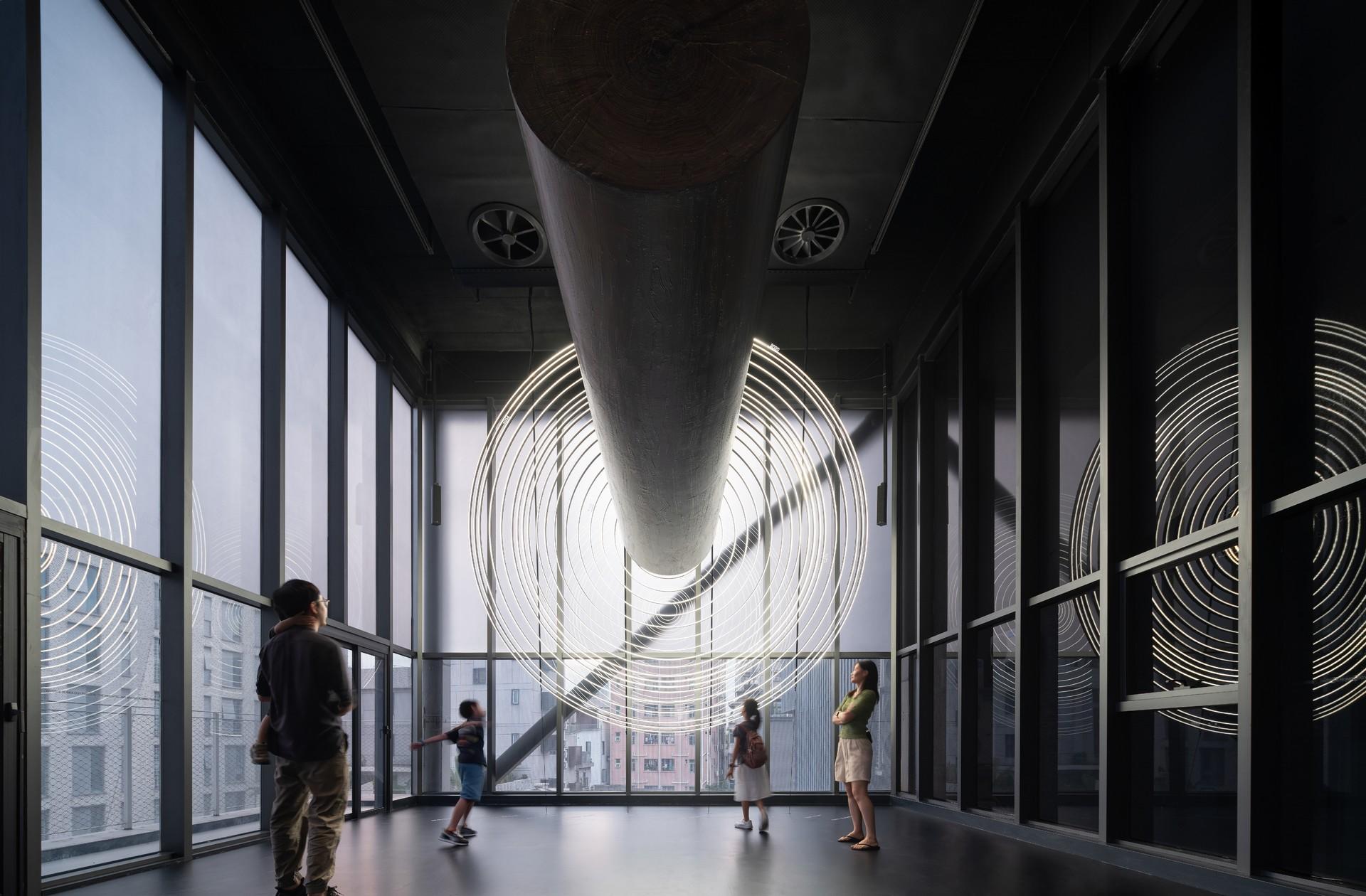
The exhibition concludes on the fourth floor, which also happens to be the building’s highest point, after taking visitors on a captivating journey through over 2,000 years of political history in the Nantou region. Here, we can not only experience the historic leap with the bell of time and space in the exhibition hall but also overlook today’s Nantou City to witness the advance of time.
In “The Inherited and Shared Administration”, we attempt to make the spatial experience of each exhibition hall distinctly different, creating a montage of continuously switching scenes for the audience with a combination of content narrative and interactive experience. “Diverse Homology Pavilion”, a building complex nestled in the historical and cultural streets of the renewed Nantou City, is looking forward to your arrival with cordiality and friendliness.
[1] Nantou Ancient Town in Shenzhen: One Step, a thousand years of history; Nine Streets, the timeless splendor of Nantou Ancient Town, Yangcheng Evening News, March 22, 2023
The content of this article was provided by 直径叙事设计 or sourced from their official media channels, and has been curated and edited by WeHow. All copyrights to images, videos, and related design works remain with their respective creators or design firms. Reproduction, republication, or commercial use of the WeHow-edited version in any form is prohibited without prior written permission from both WeHow and the respective copyright holders.