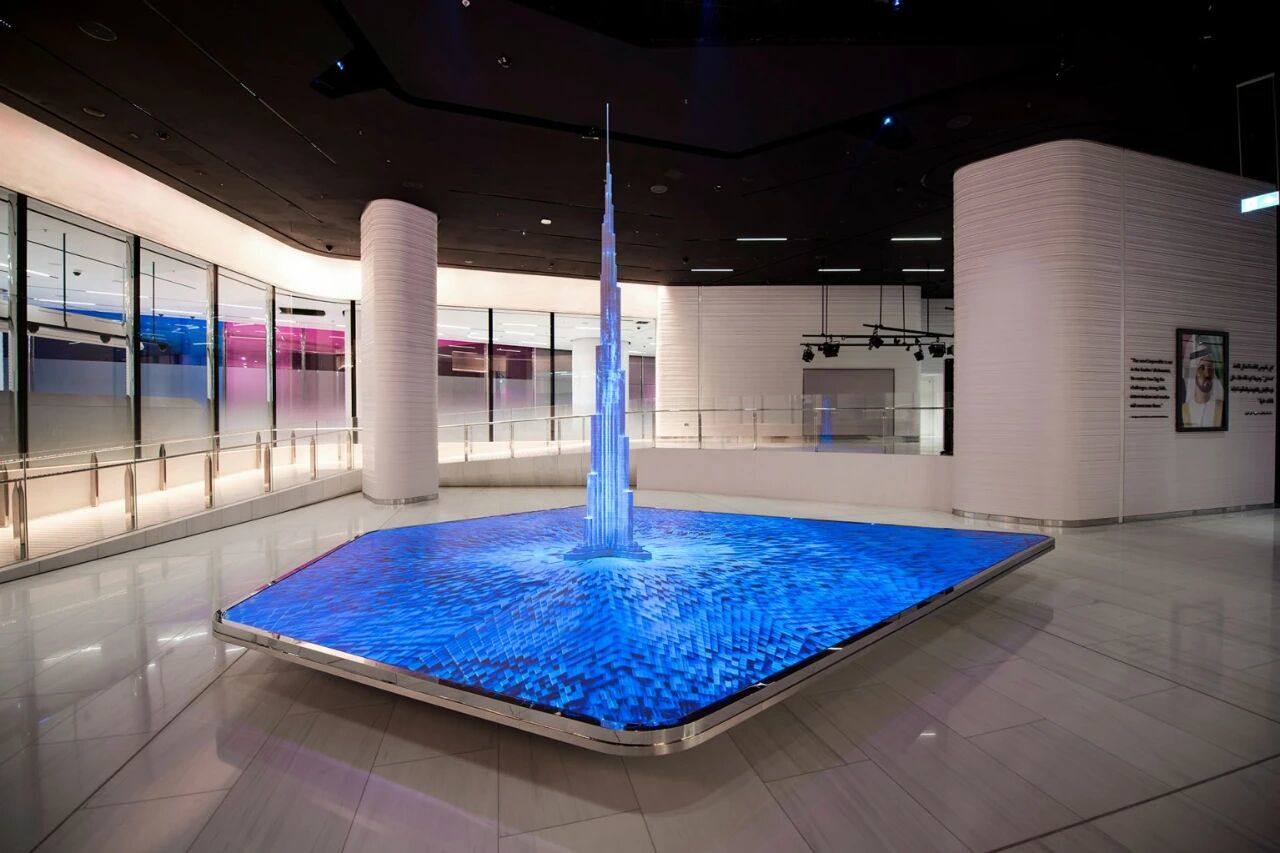
ATELIER BRÜCKNER, headquartered in Stuttgart, Germany, is internationally acclaimed as one of the most innovative and narrative-driven design studios. Guided by its philosophy of “Narrative Space,” the firm transforms architecture and exhibitions into immersive storytelling environments. From world-class museums and Expo pavilions to groundbreaking brand showcases, ATELIER BRÜCKNER is celebrated for seamlessly merging design, technology, and human experience to create spaces that captivate audiences worldwide.
WeHow has selected four of ATELIER BRÜCKNER ’s most iconic projects to showcase how the studio uses exhibition spaces to reshape the relationship between audiences, brands, cities, and the future.
1. Shenzhen Planning Exhibition
Within this culturally iconic “twin-venue institution” blending contemporary art and urban planning, ATELIER BRÜCKNER was responsible for the design of the Urban Planning Pavilion, which spans an area of 8,500 square meters.

The exhibition’s theme is “Shenzhen is Vitality”, structured around three narrative sections:
City Co-Existence: Using augmented reality and digital models, this section showcases Shenzhen’s unique landscape of mountains and sea, highlighting the symbiotic relationship between people and the environment.
City Co-Construction: Large-scale digital floor projections illustrate Shenzhen’s urban planning process since 1979, complemented by interactive installations that allow visitors to simulate “building” the city themselves.
City Co-Wish: Combining real-time data, lighting algorithms, and skyline installations, this section inspires visitors to imagine and express visions for the city’s future.


At the heart of the exhibition is the “Shenzhen Lens,” a 15-meter-diameter installation in the central atrium. It consists of three layers:
Natural geography and ecosystems
The integration of urban form with nature
Visitors’ visions and real-time urban dynamics
Through this “lens,” visitors gradually gain an understanding of Shenzhen’s ecological logic and development vision as they move through the space. ATELIER BRÜCKNER transforms the complexity of urban planning into a tangible and participatory spatial narrative, allowing the audience to truly become part of the city.

2. Museum of the Future – Journey of the Pioneers
As one of Dubai’s most iconic cultural landmarks, the Museum of the Future is renowned worldwide for its silver torus-shaped structure and facade adorned with Arabic calligraphy. The permanent exhibition, “Journey of the Pioneers”, designed by ATELIER BRÜCKNER, spans three floors across 3,000 square meters, offering visitors an immersive journey into the future.

The exhibition is divided into three narrative chapters:
1. Space and Energy – OSS Hope
Visitors board a “time pod” to enter OSS Hope, a space station set in the year 2071, where they are recruited as “Future Pioneers”. Their mission is to harness solar energy and transmit it to Earth via the Moon. From the command cabin, they can look down upon a more sustainable future Earth—featuring examples such as a greening transformation in Cairo and the Amazon rainforest under threat from wildfires.


2. Earth Ecological Restoration – HEAL Institute
After returning to Earth, visitors enter the HEAL Institute to participate in ecological restoration through bioengineering. This area includes:
Rainforest Experience Hall: A grand kapok tree intertwines with virtual rain scenery, while point cloud animations reveal the hidden rhythms of Amazonian life.
Species Library: Housing genetic material of both living and extinct species in 2,400 crystal jars.
Laboratory and Observation Room: Visitors can use the “Biosynth” device to create new species and observe future scientific achievements in incubators—such as fire-resistant trees, seed bombs, and lipid-rich quinoa.


3. ALWAHA
The final stop, Alwaha, is a sensory healing space. Visitors pass through a fountain to enter a warm, earthy-toned environment and experience a variety of therapies:
Movement Therapy: Immersive projections allow visitors to dance with the wind and ocean waves.
Touch and Connection Therapy: Electromagnetic waves gently stimulate the palms, while an interactive choral installation projects shimmering light gems.
Meditation and Mindfulness: Water and light interweave across the dome, creating an atmosphere of inner peace and renewal.
Additionally, the first floor features Future Heroes, a children’s pavilion (1,200 sqm) designed for kids under 12, offering interactive and educational exploration spaces.


As the master planner and designer, ATELIER BRÜCKNER was responsible not only for the overall spatial narrative, immersive technology, and material design, but also collaborated with over 20 experts and scientists in the development process. This ensured the exhibition is grounded in the latest scientific research and forward-looking concepts.
3. UAE Pavilion at Expo 2025 Osaka
At Expo 2025 Osaka Japan, ATELIER BRÜCKNER has created an immersive multi-sensory narrative exhibition for the UAE Pavilion, themed “Earth to Ether.” Covering an area of 2,013 square meters, the pavilion integrates the UAE’s cultural roots with its future vision through natural and recycled materials, interactive installations, and digital media—presenting a nation that is deeply rooted in tradition while boldly forging ahead into the future.
The central symbol of the pavilion is the date palm—a plant that represents life and resilience in the Arab world—seamlessly integrated into the pavilion’s design: its wood, fronds, and fibers are used in the exhibition hall’s columns, display furniture, and wayfinding systems. When visitors step into the pavilion, they are greeted by Al-Haseer carpets woven from date palm waste fibers; this traditional symbol has been given a new sustainable meaning, conveying the continuity and innovation of Emirati culture.

Three Themed Exhibition Zones
1. Catalysts of Healthcare
Traditional Al Sadu textiles are juxtaposed with interactive screens, showcasing the latest advancements in genomic research, precision medicine, and AI-driven medical applications. Visitors can step into the role of a doctor to experience diagnosis, gaining an intuitive understanding of the close connection between medical innovation and culture.

2. Stewards of Sustainability
A dynamic solar panel installation that simulates the sun’s movement, symbolizing the symbiosis between humans and nature. Interactive displays shed light on innovations such as AI-powered smart cooling, waste-to-energy conversion, and nature-inspired technologies. Children can also take on the role of “future urban planners” to design their own sustainable cities.

3. Explorers of Space
Standing at 7 meters tall, the rocket sculpture is woven from palm fibers. Digital interactive screens bridge the traditional practice of ancient celestial navigation (where sailors relied on stars to navigate) and modern space exploration. Visitors can participate in space mission training, gaining a sense of the United Arab Emirates’ (UAE) ambitious aspirations in the aerospace sector.

The emotional highlight of the exhibition is the video installation Woven Legacies — a lyrical documentary presented across three 3.5-meter-high circular screens, depicting how the people of the UAE are shaping the future through the dialogue between tradition and modernity. The narrative not only showcases the integration of technology and culture, but also emphasizes the symbiotic relationship between humanity, nature, and the urban environment.

4. Hyundai’s ‘Design Your Own World’ CES 2019
At CES 2019 in Las Vegas—the world’s largest technology exhibition—ATELIER BRÜCKNER created a roughly 575-square-meter exhibition stand for Hyundai Motor (South Korea), centered on the theme “Design Your Own World” to present a comprehensive vision of the future of smart mobility.
360° Immersive Circular Screen
The core of the exhibition stand is a massive 360° LED surround screen. Visitors are immersed in dynamically generated visions of a future city, experiencing multi-dimensional scenarios of smart mobility.

Cocoon-shaped Cockpit
The central “cockpit” resembles a multi-functional “crystal sphere”: once inside, visitors can switch between various lifestyle modes—including sports, work, shopping, and leisure—simulating how future cars will integrate into people’s daily lives.

Through interactive installations and digital projections, the exhibition stand transforms visitors from mere spectators into participants in the future of mobility, allowing them to intuitively experience the scenario-based applications of autonomous driving and intelligent transportation.
This exhibition stand is more than just an automobile display—it serves as a future living laboratory. It integrates smart mobility with digital life, redefining the possibilities of cars as personal mobile spaces.

Whether it is an urban planning museum, a museum of the future, a national pavilion at the World Expo, or a brand exhibition stand, ATELIER BRÜCKNER has always adhered to creating immersive experiences through narrative spatial design. Their works are not merely combinations of spaces and exhibits, but rather artistic expressions that integrate architecture, technology, and humanistic stories into a cohesive whole. These four cases also demonstrate how ATELIER BRÜCKNER uses space as a medium to engage audiences in dialogues about cities, nature, technology, and the future.
This article is original content published by WeHow. Unauthorized reproduction, republication, excerpting, or use of any part of this content is prohibited. For reprint permissions, licensing, or collaboration inquiries, please contact service@wehow.cn to obtain formal authorization.