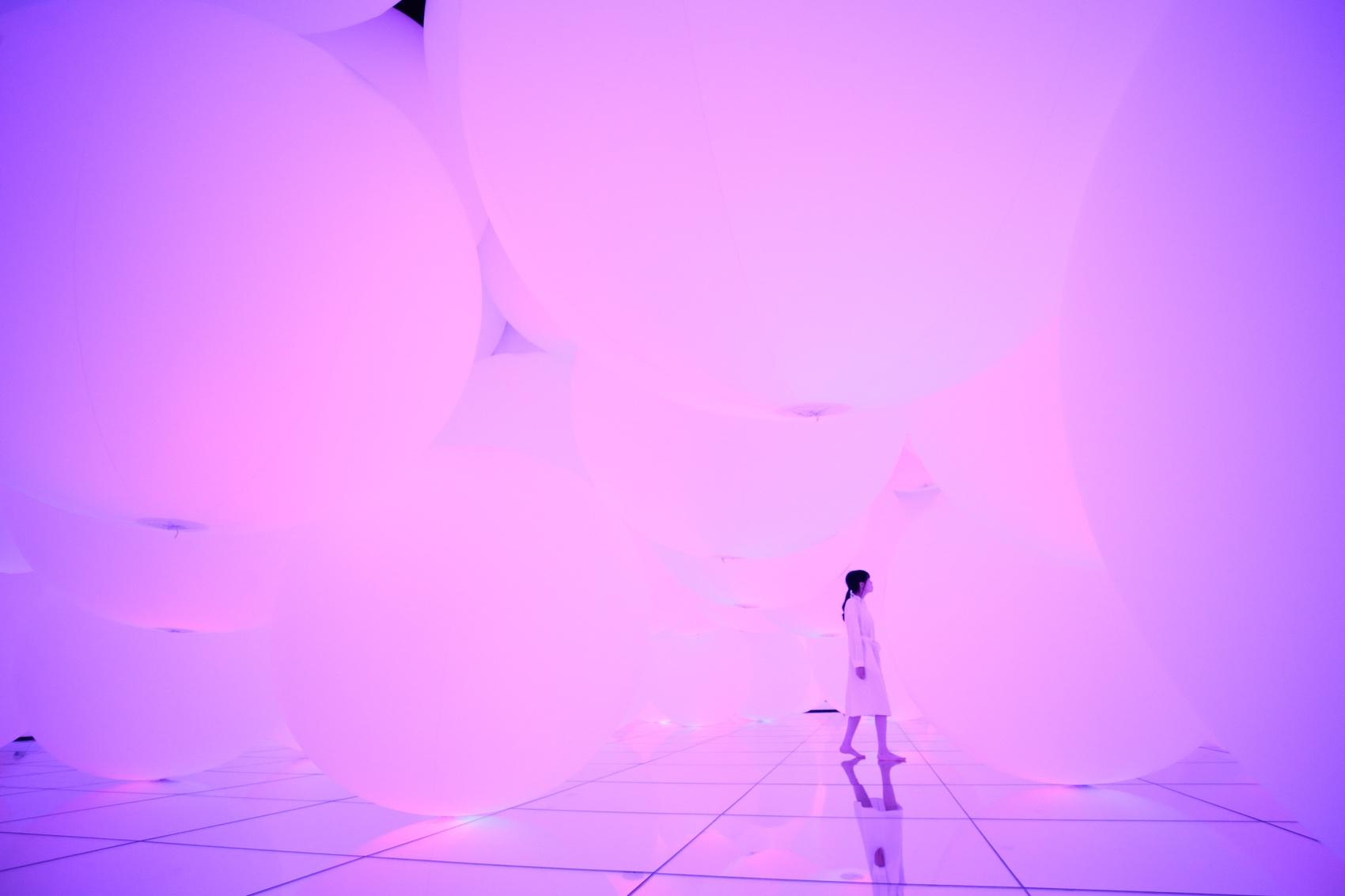
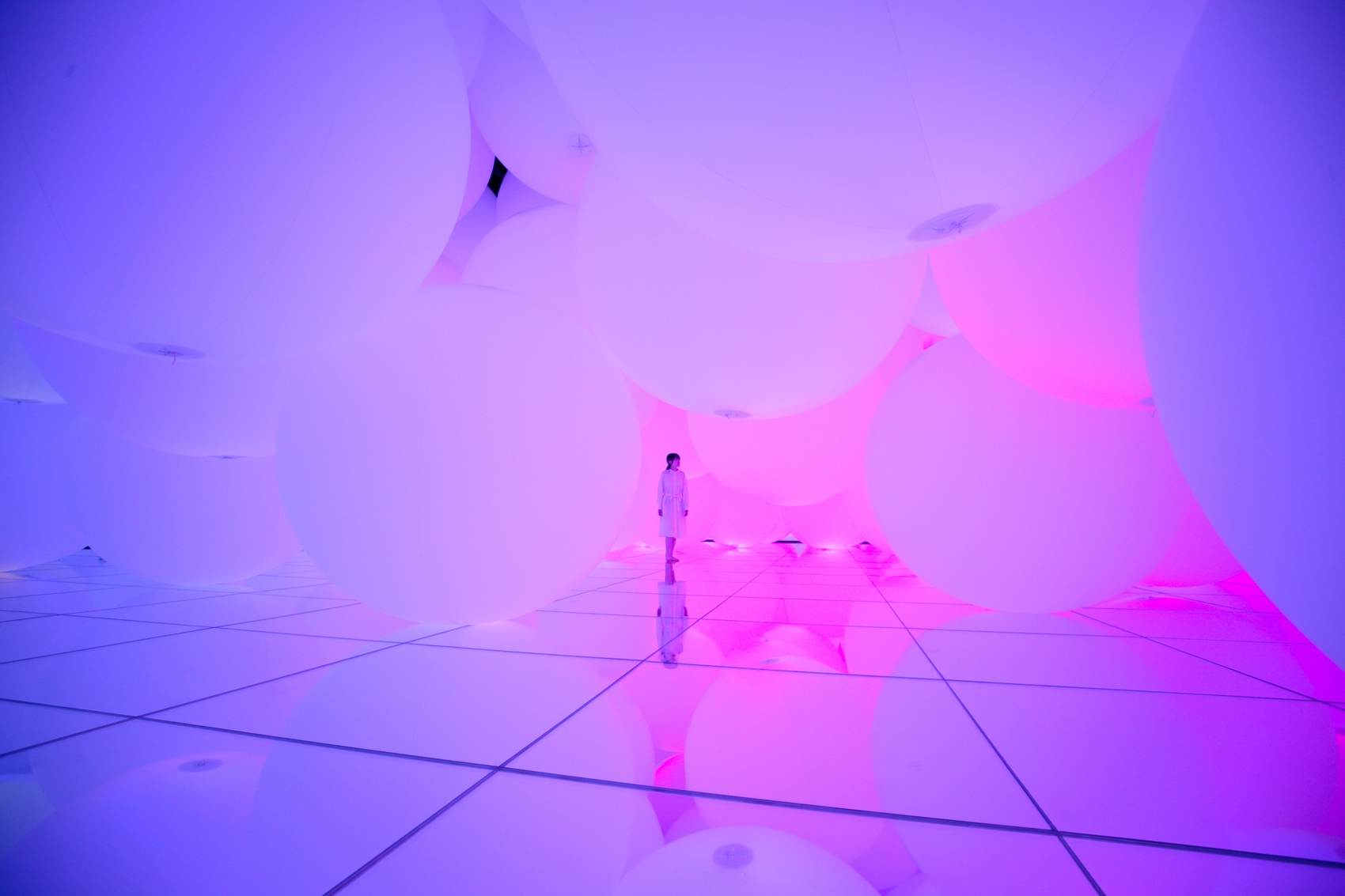
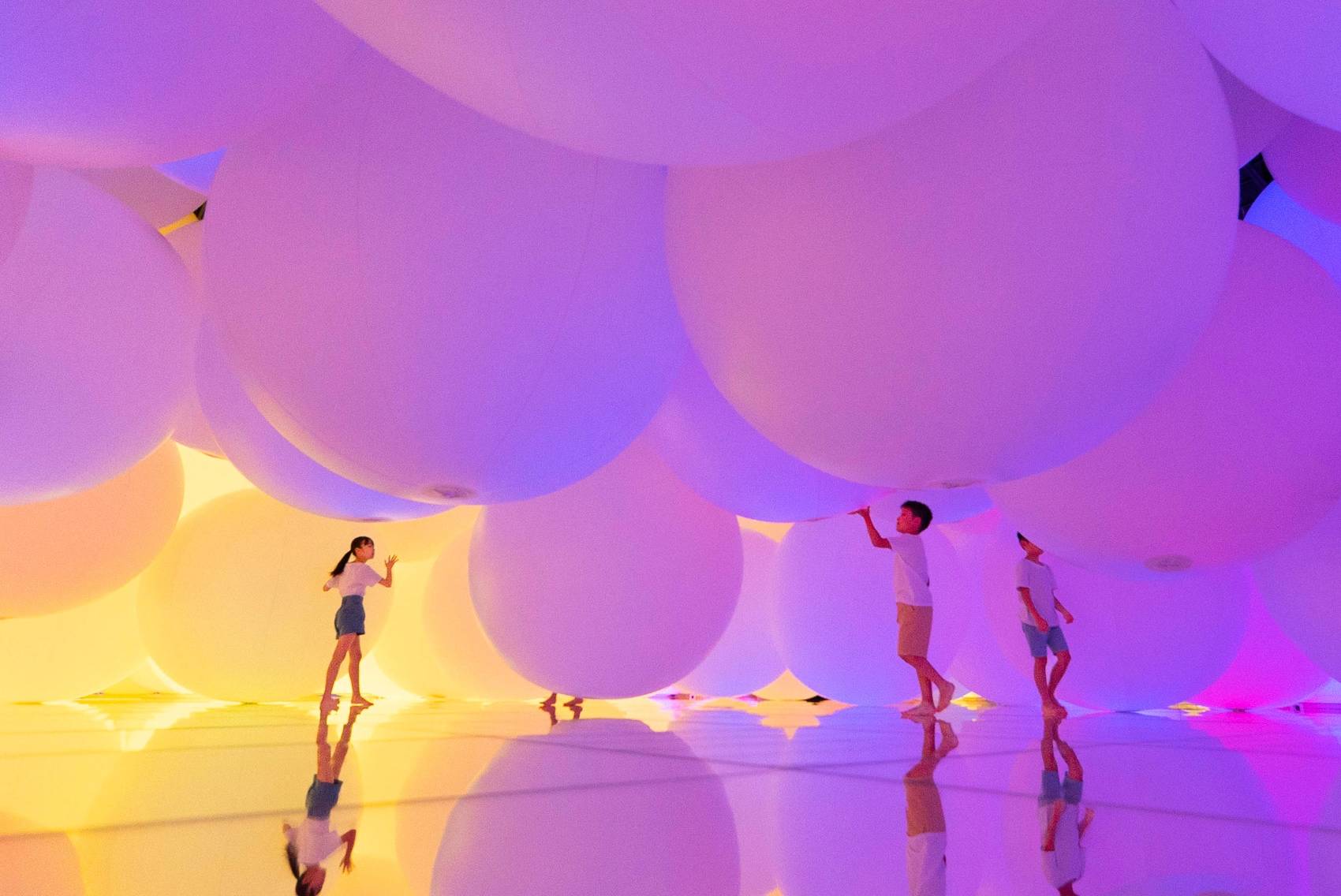
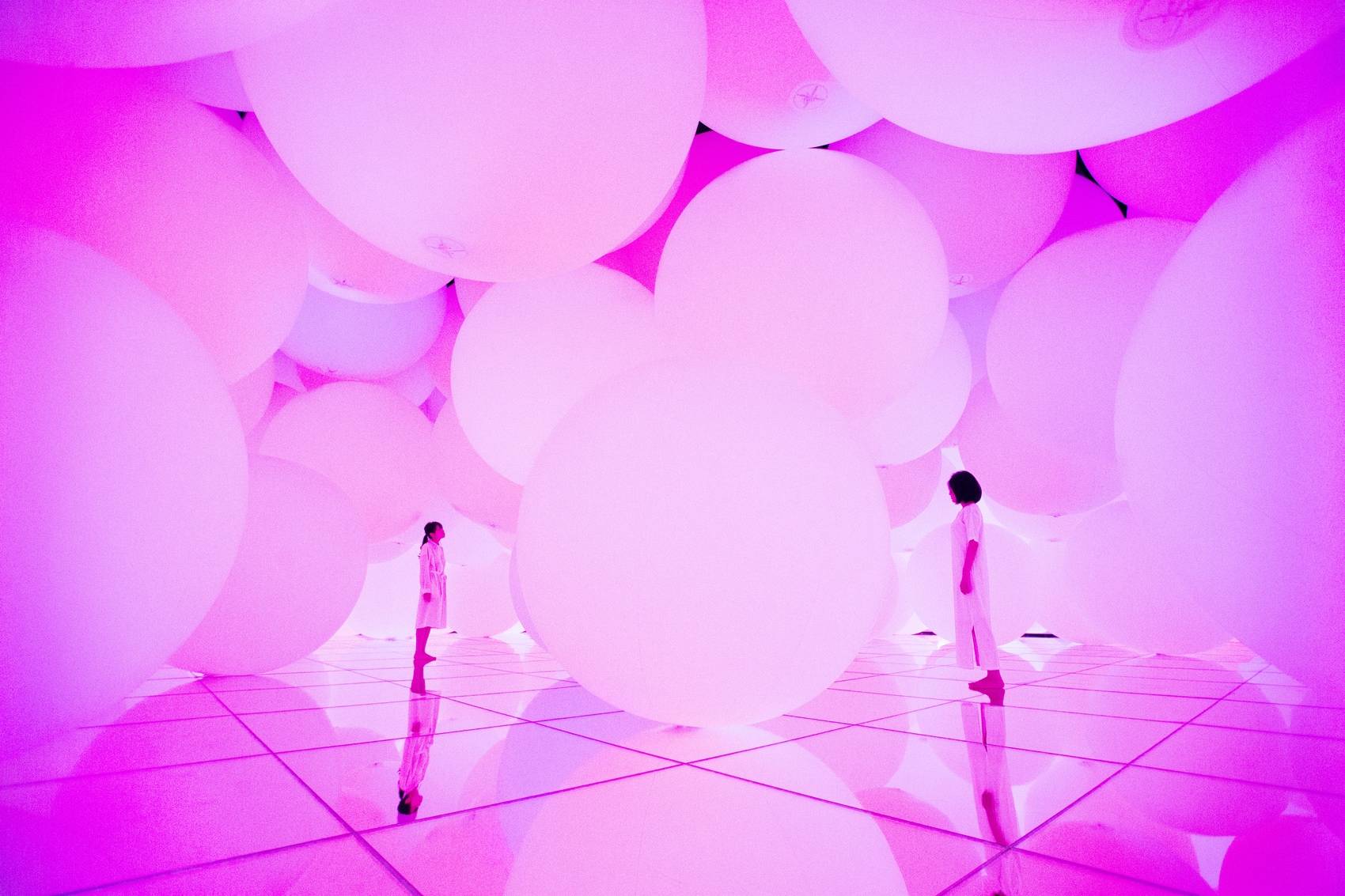
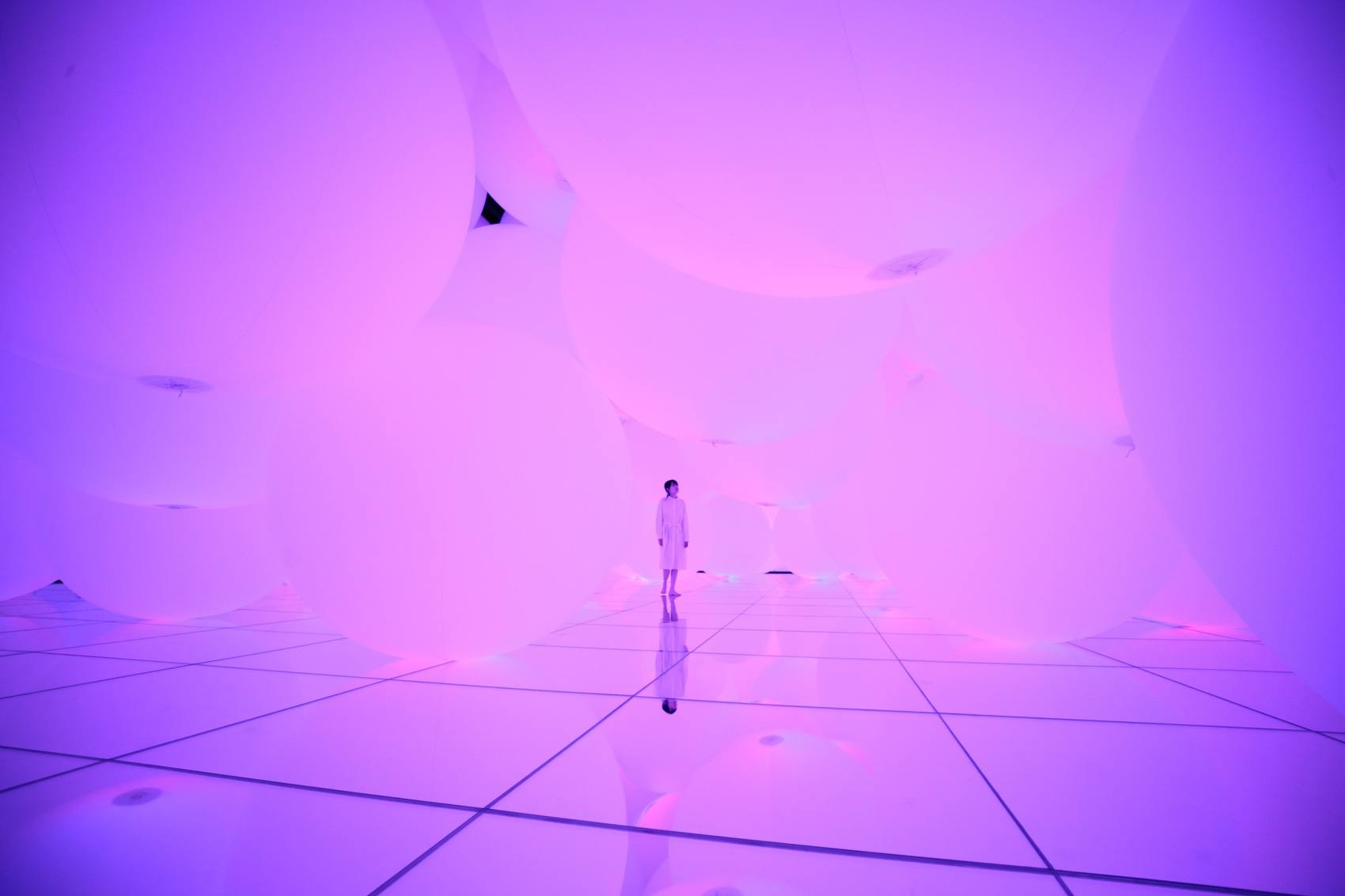
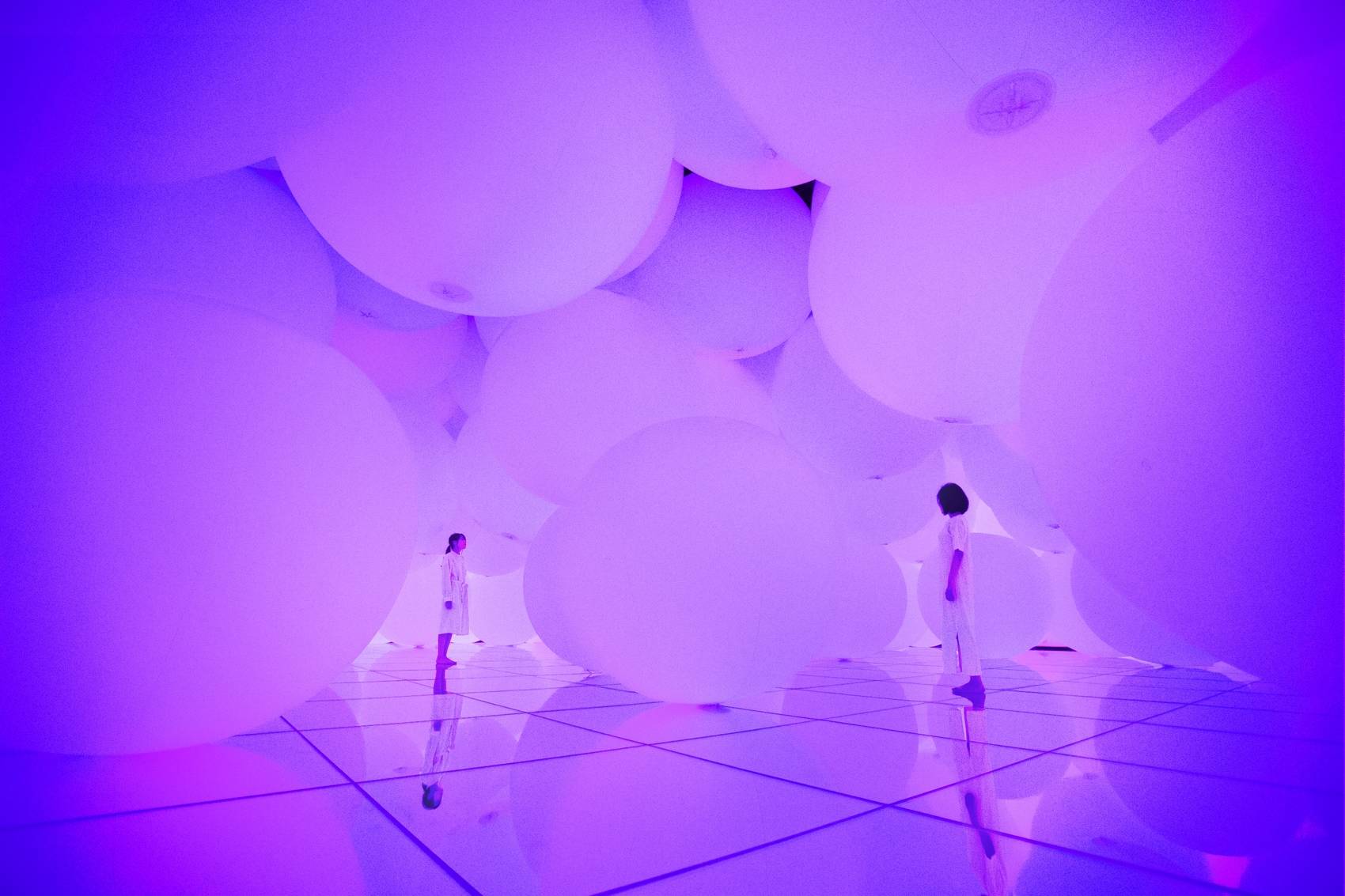
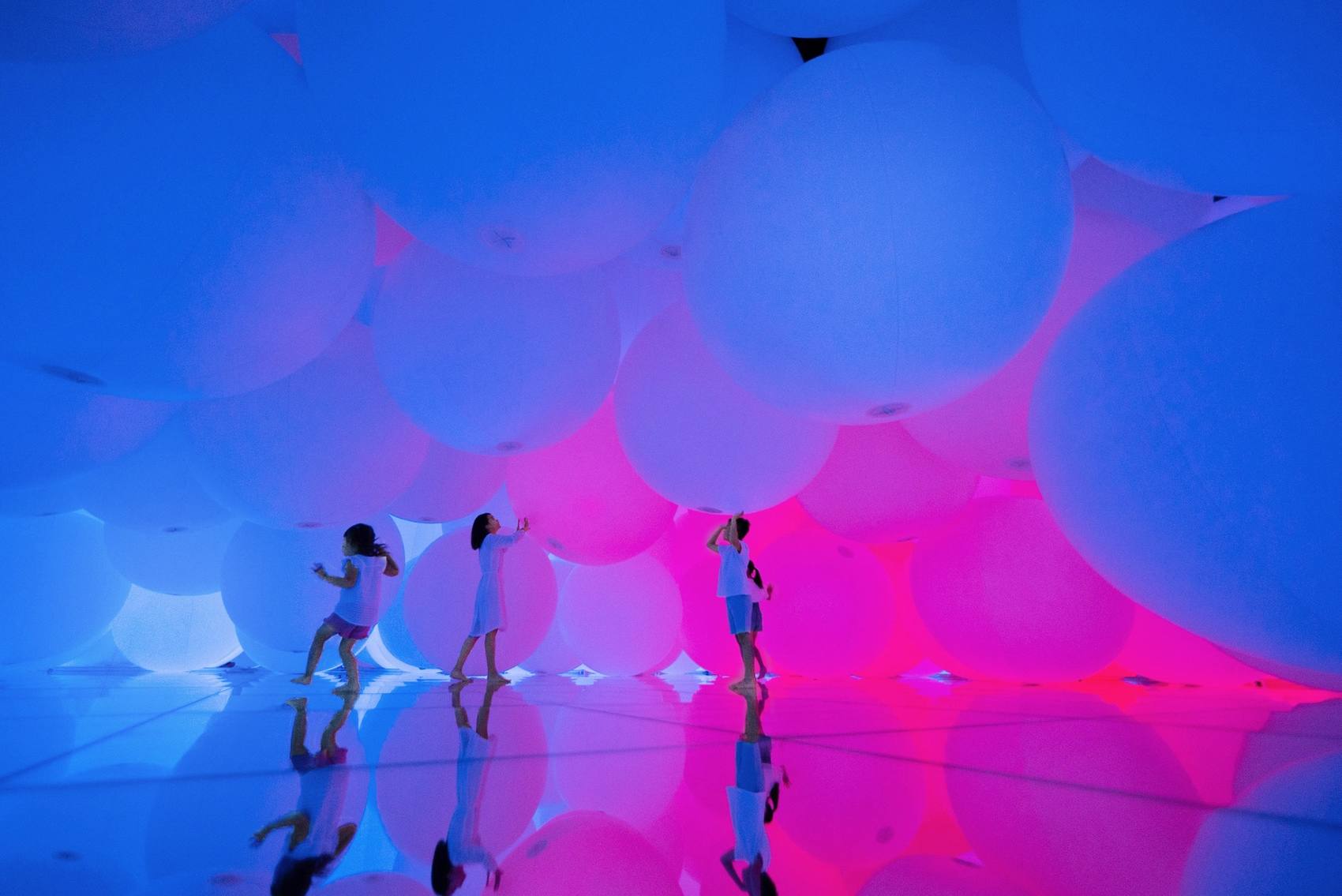
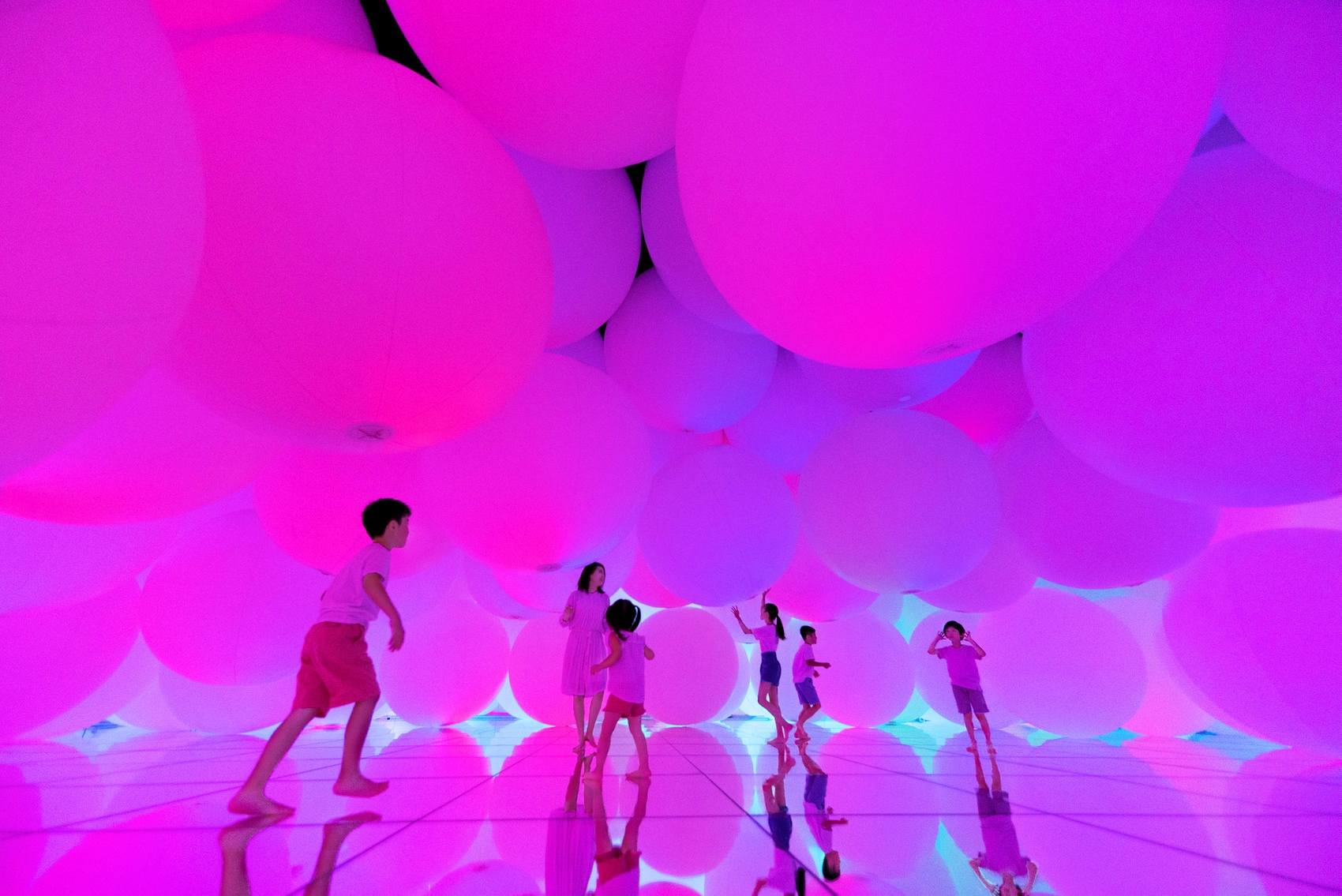
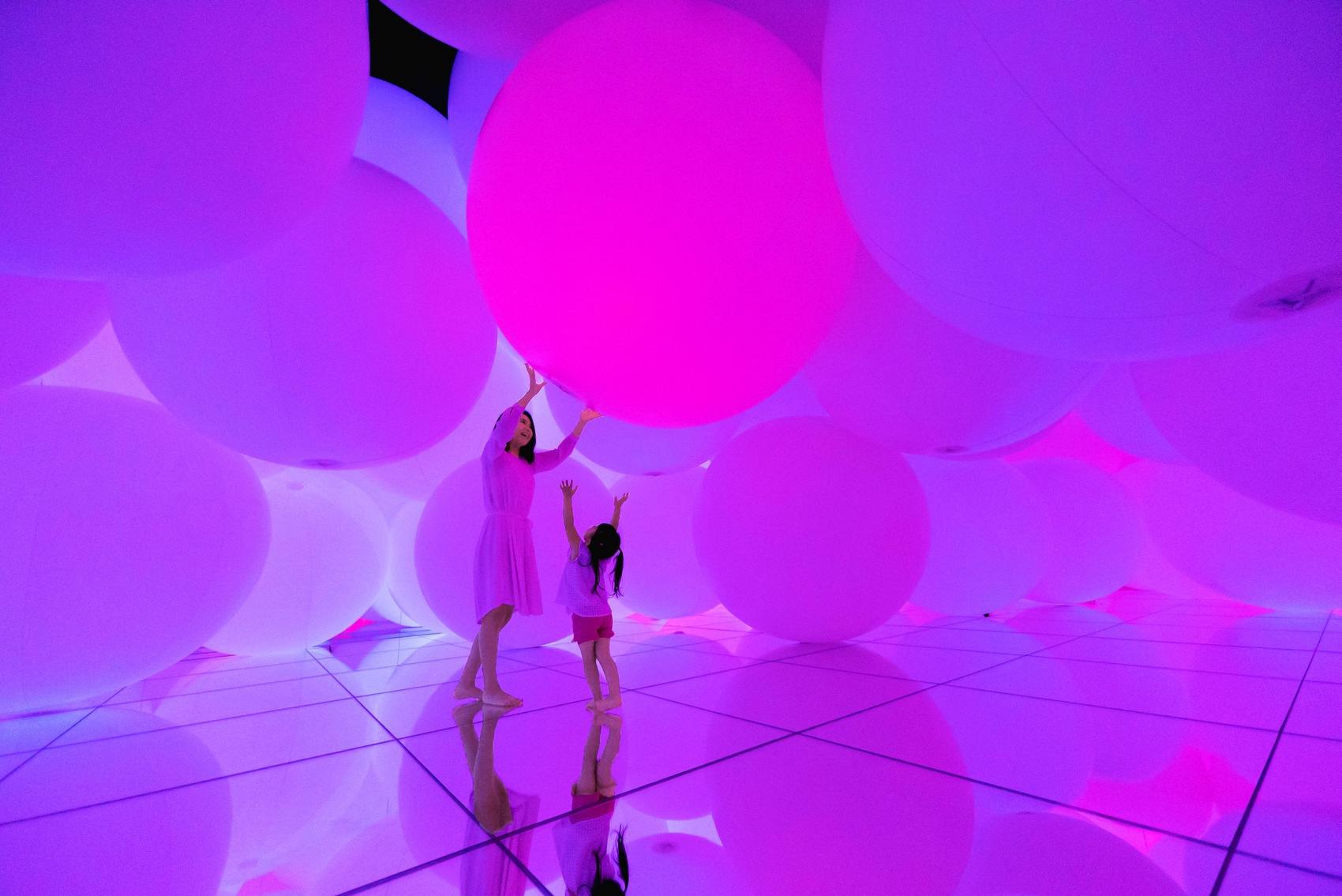
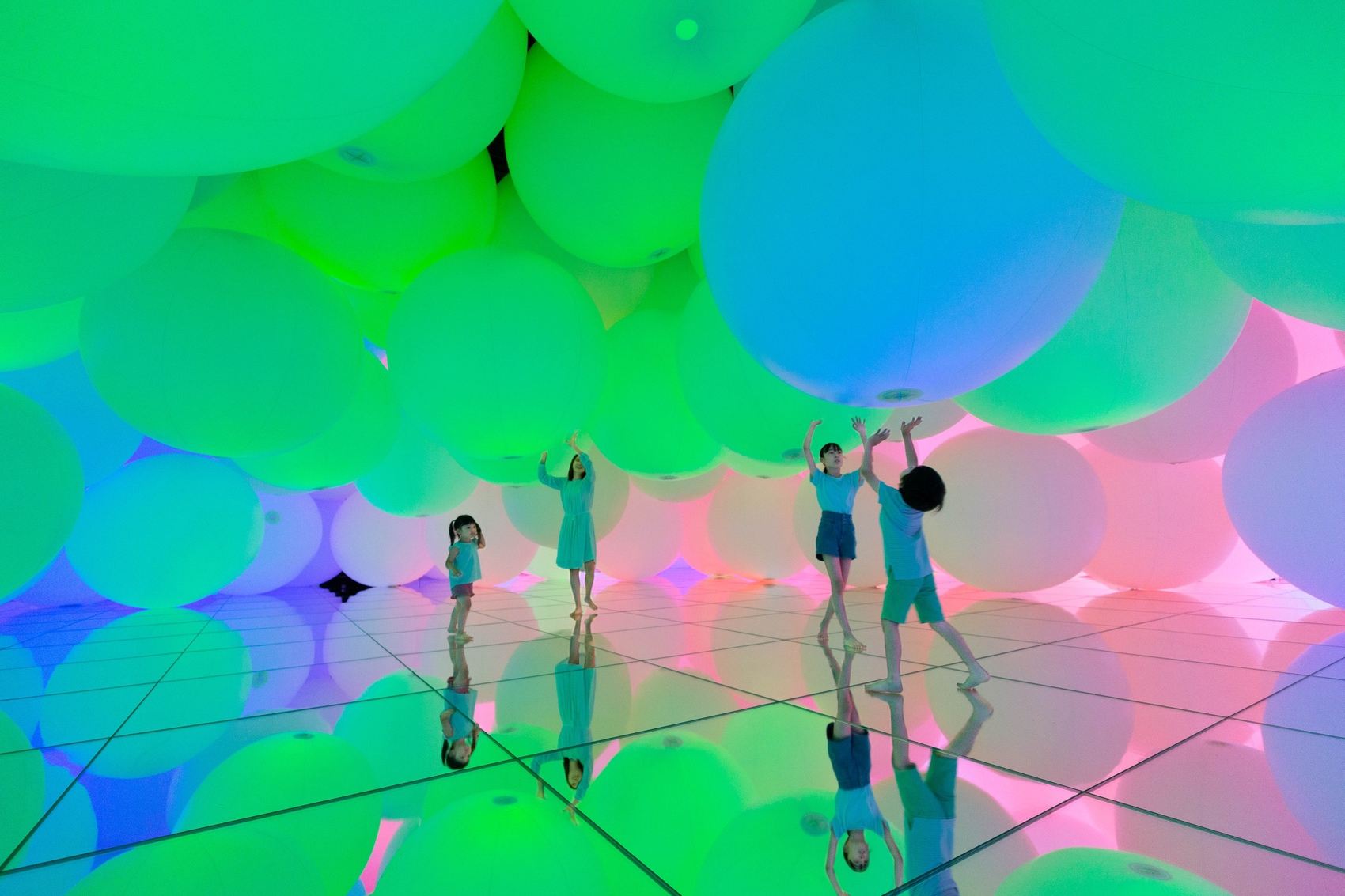
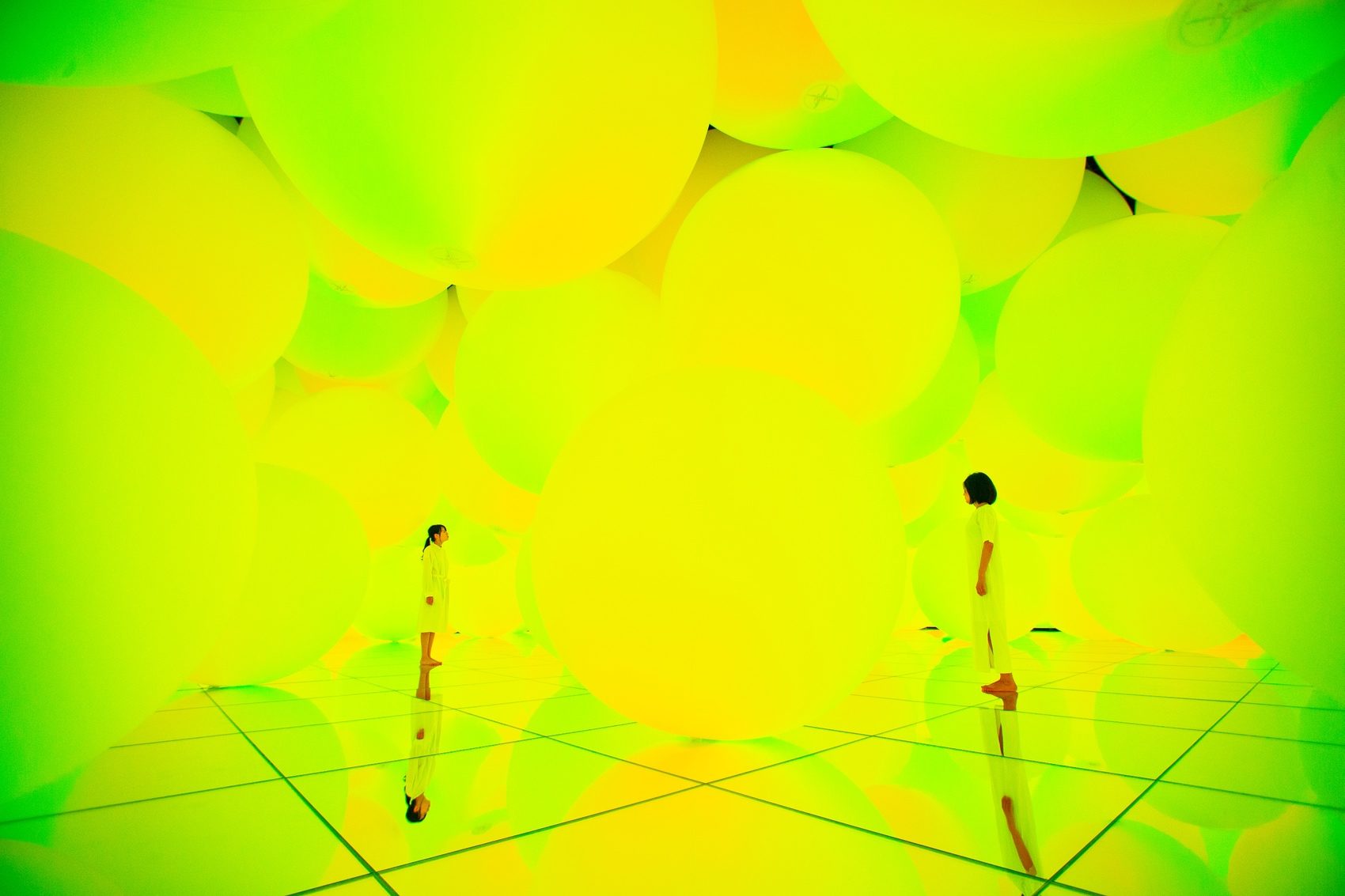
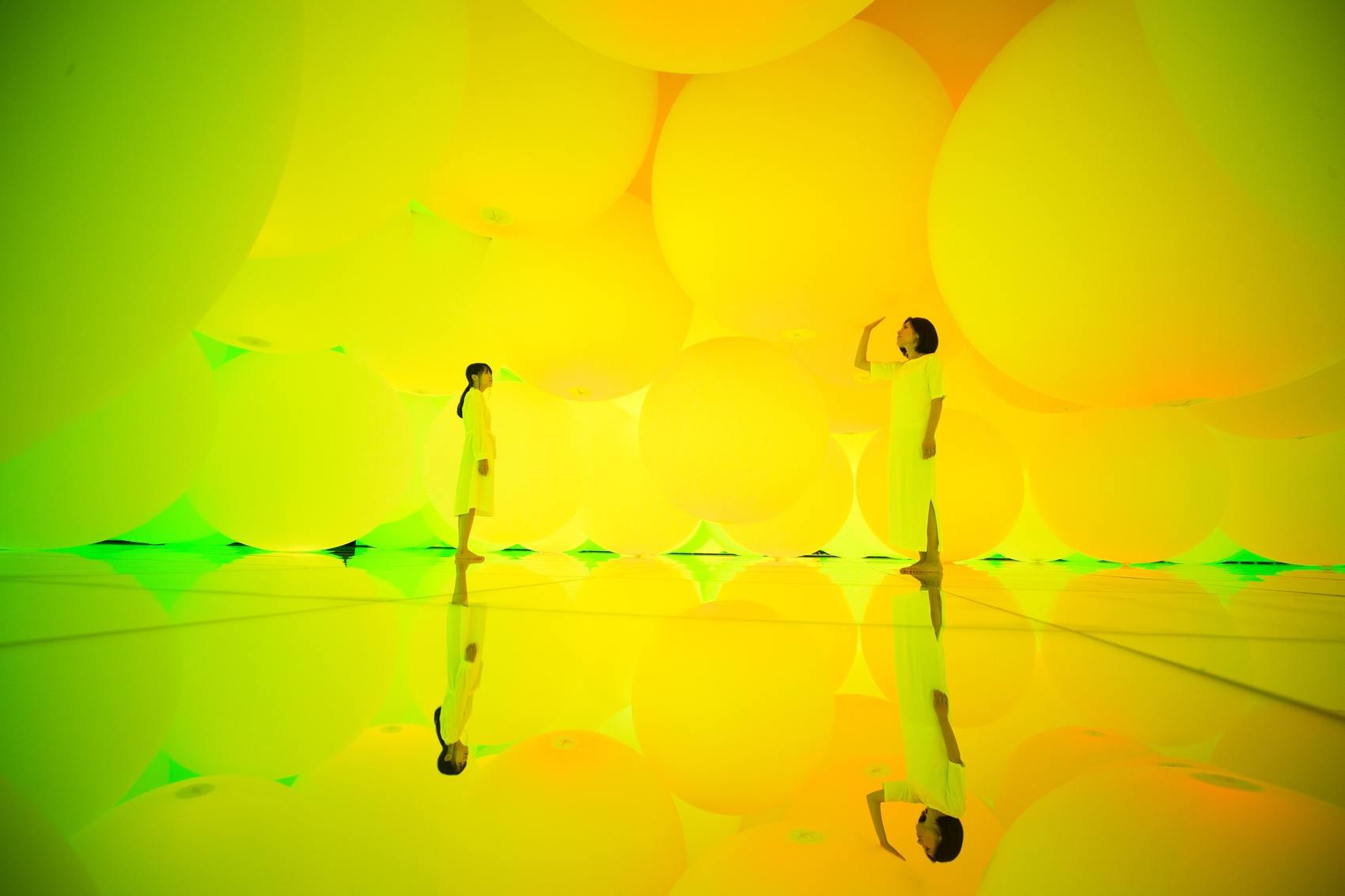
The space is filled with freely floating spheres. People part their way through them and step inside.
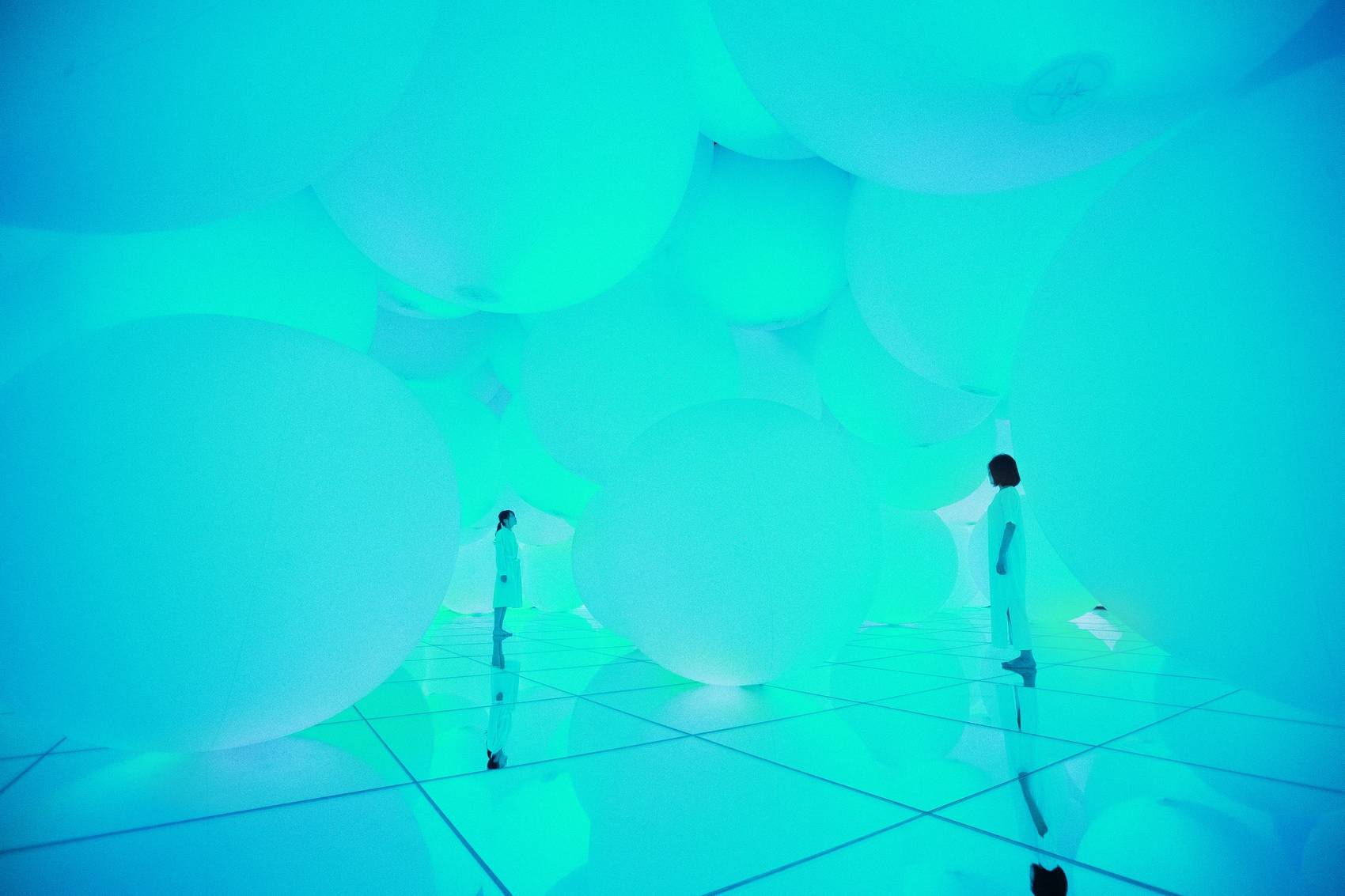
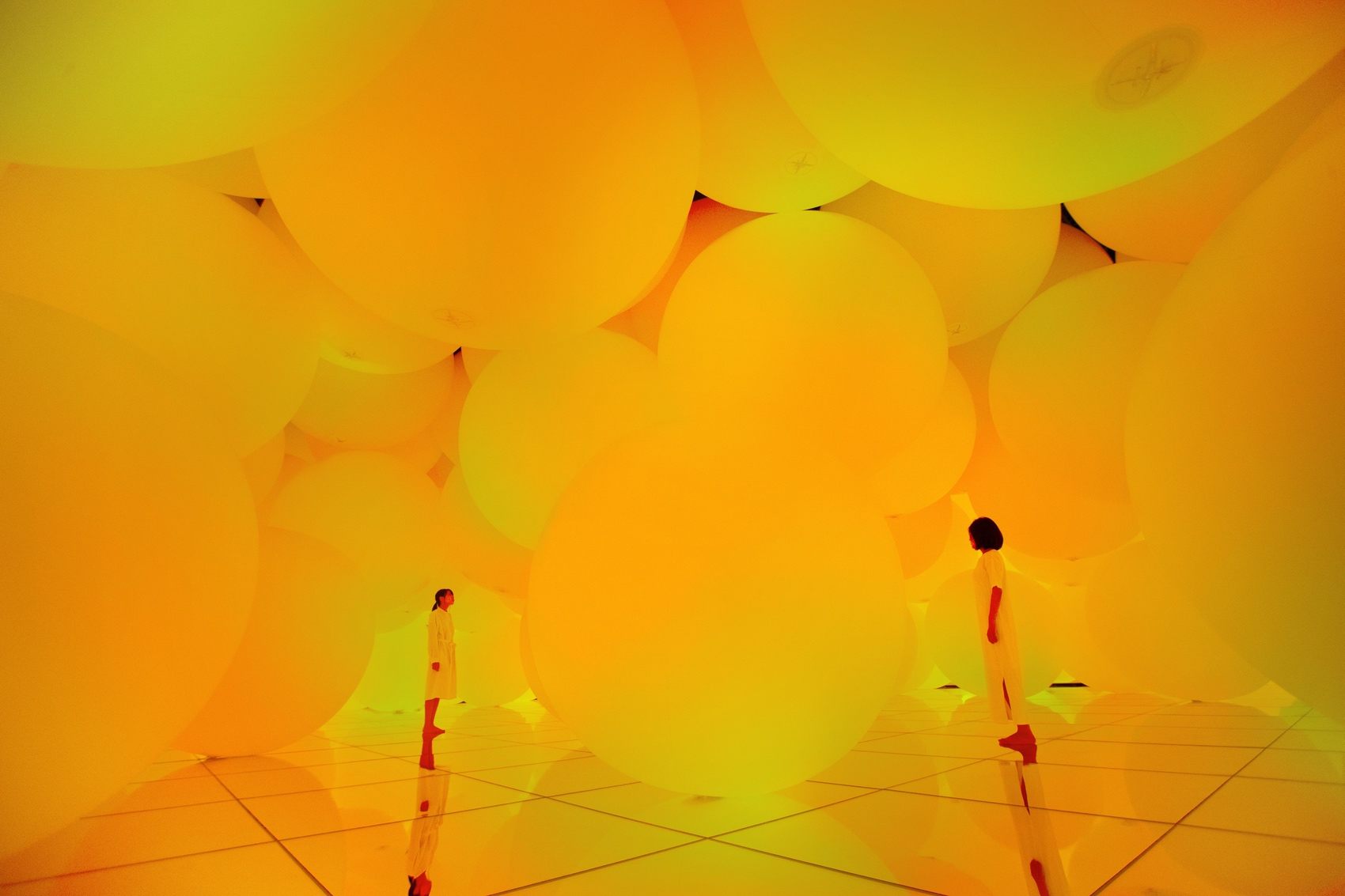
As hues shift endlessly, the space oscillates between three-dimensionality and flatness through the collective of spheres. When a sphere is brushed aside, tapped, or jostled, it blooms into new color and hums a distinct tone. From there, a radial chain reaction ripples through the surrounding spheres in three dimensions—spreading the same hue, the same note, outward and onward. With each color’s rise and fall, the space weaves between a sculptural mass of spheres and a planar field of pure color, forever in flux.
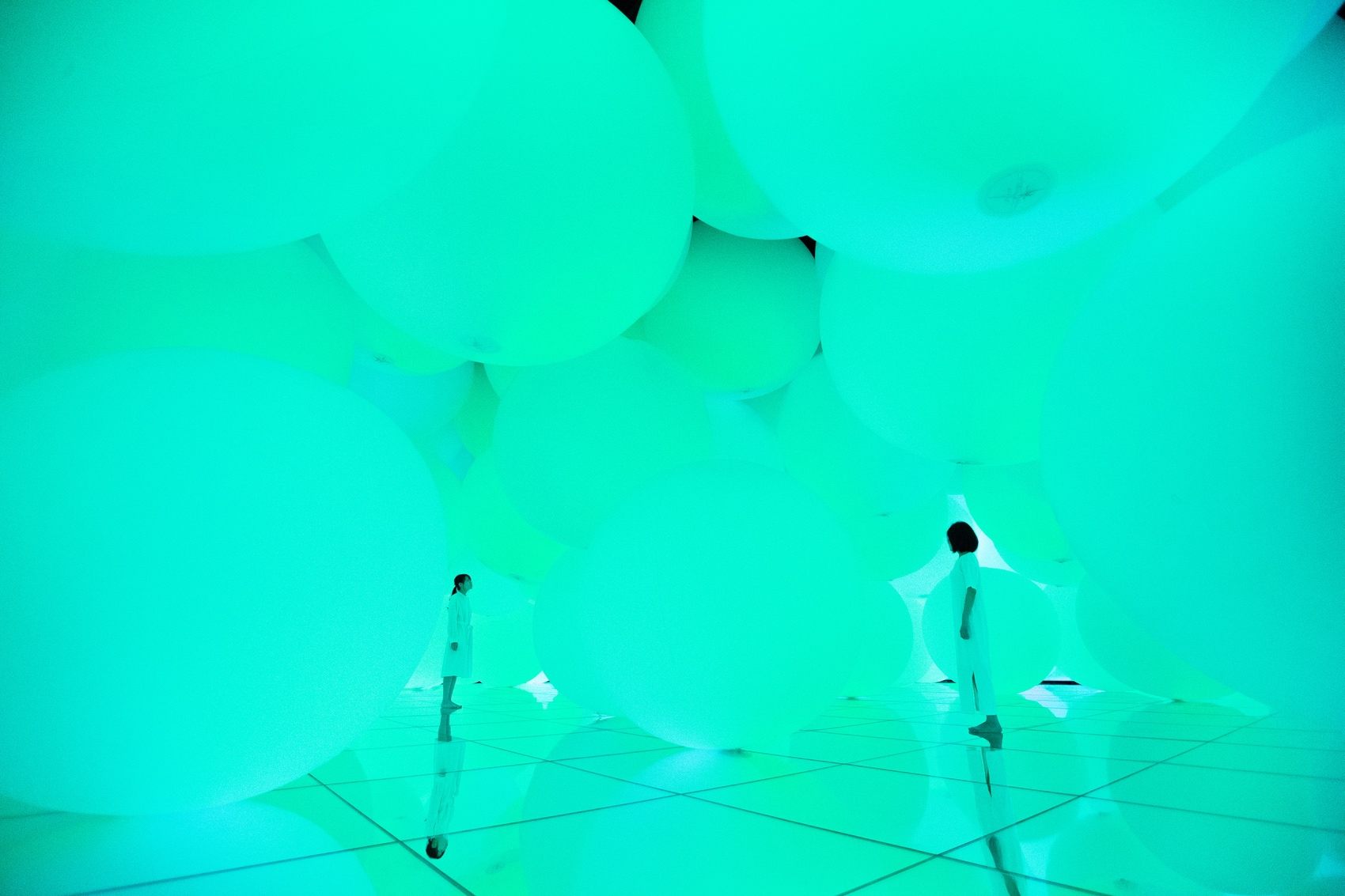
Though each sphere drifts freely, the space’s overall play of light stays in unison—seen as a whole, the space becomes a three-dimensional image, each sphere a single dot. Thus, the varied forms of light, grouped as one, amount to a complete, solid presence. Here, light expands outward in a spherical wave, centered on the sphere that felt the impact.
And yet, the spheres—free to drift as the building blocks of this solid form—let people perceive its wholeness even as they brush them aside to step into its midst. The space, shaped by these floating spheres, shifts with human touch: a tap, a nudge, a brush. And as the spheres cluster and interweave in ever-changing patterns, wind and shifts in air pressure from overhead fans cause the lower spheres to mass densely, then rise in unison. So the space remakes its form anew, again and again.
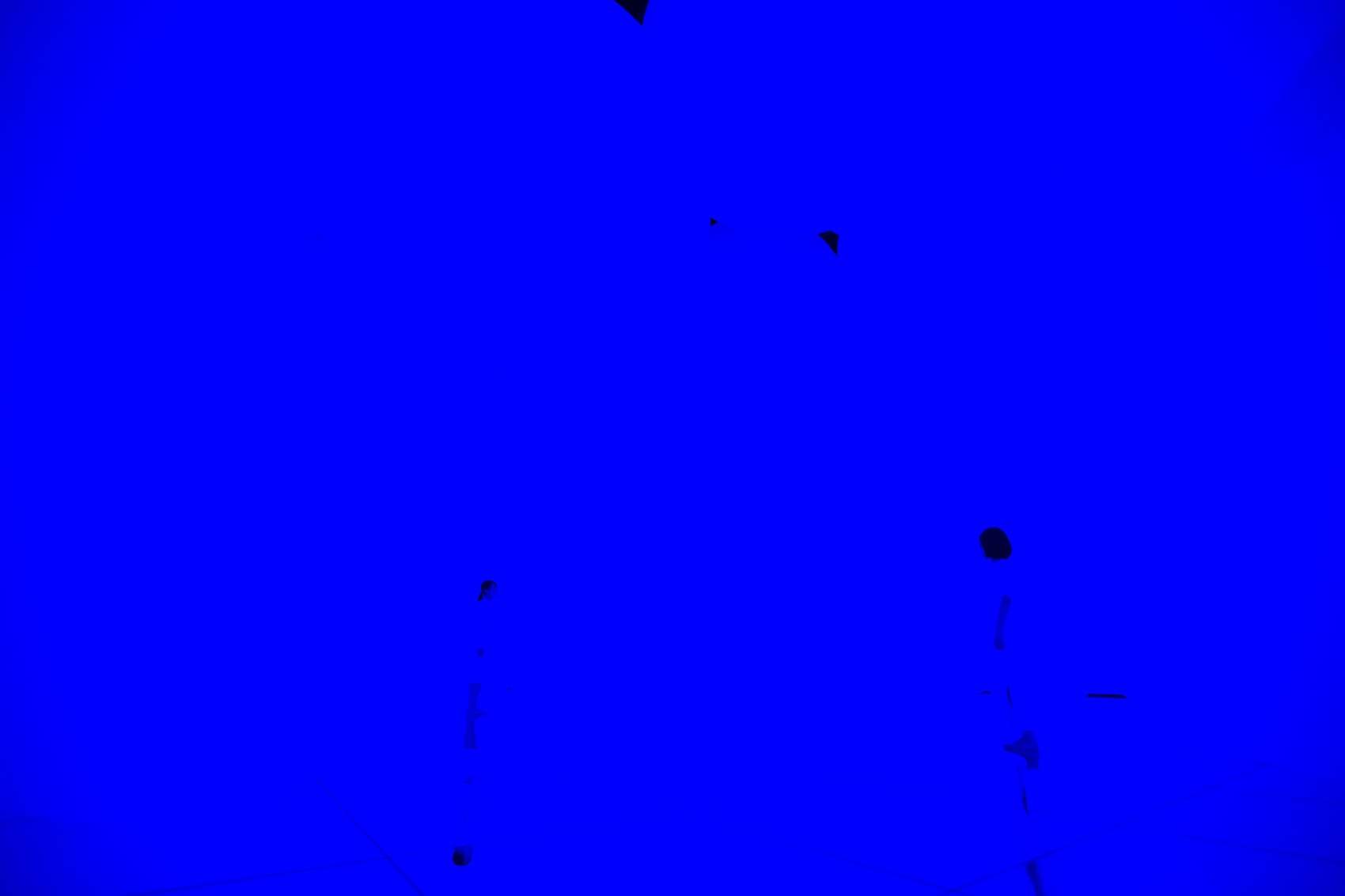
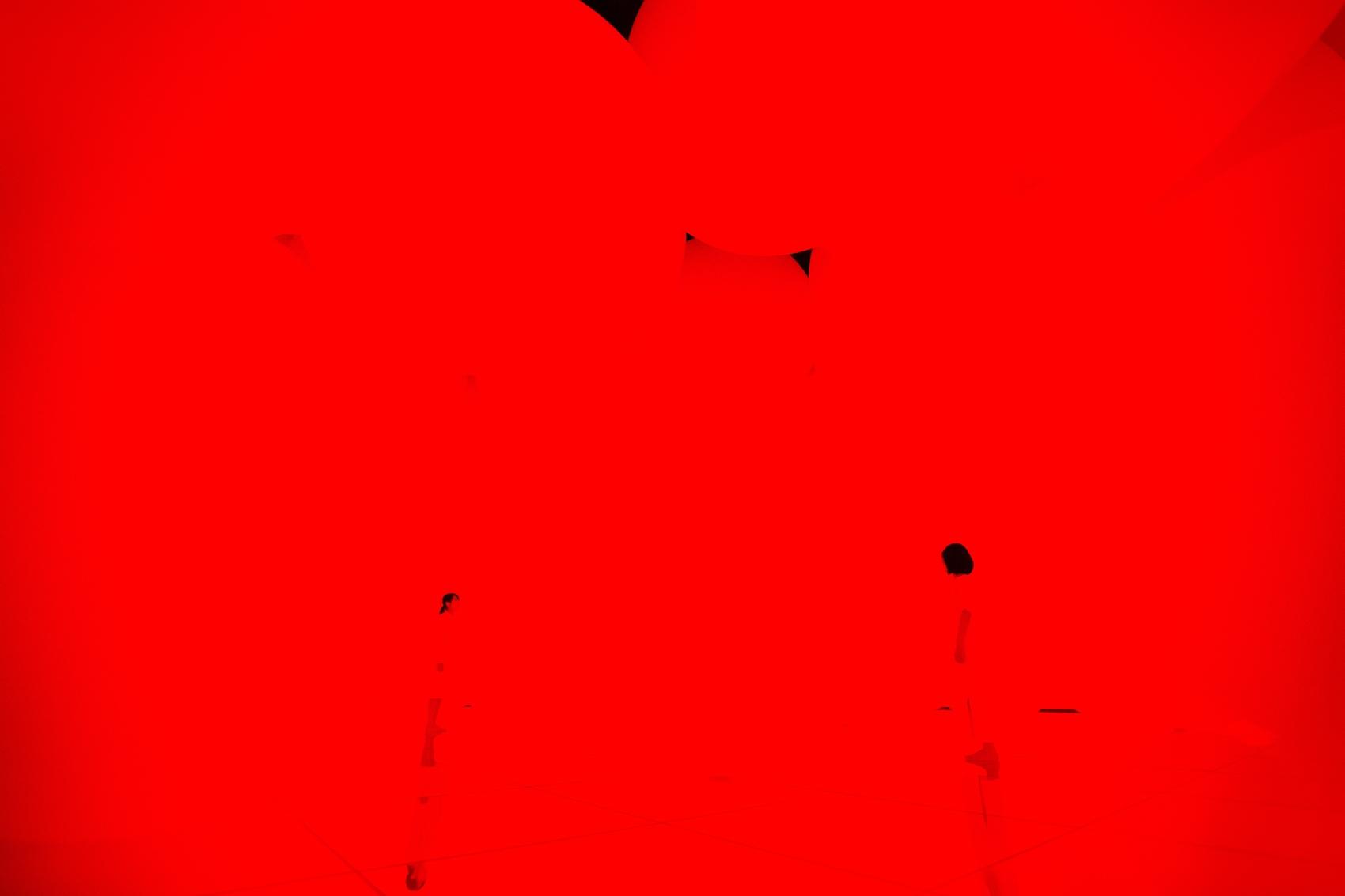
Before modern times in Japan, there was “layered hues”—a play of surface and undercolor. Thin silk let the hue beneath show through the one above, weaving complex tones; these soft, blended gradients bore names tied to the seasons. The spheres shift through twelve colors: nine born of light—light through water, sunlight filtered by aquatic plants, dawn glow, morning sky, evening sky, peach, plum, iris, spring maple—and three that flatten the space: blue, red, green.




The content of this article was provided by teamLab or sourced from their official media channels, and has been curated and edited by WeHow. All copyrights to images, videos, and related design works remain with their respective creators or design firms. Reproduction, republication, or commercial use of the WeHow-edited version in any form is prohibited without prior written permission from both WeHow and the respective copyright holders.