The exhibition Toxicité coloniale : Architecture et paysage radioactifs français dans le Sahara, by historian and curator Samia Henni, documents the little-known history of French nuclear colonialism in the Algerian Sahara and its lasting impacts on the territories and populations. The exhibition is presented as a world premiere in French at UQAM’s Centre de design.
An investigation into the French nuclear program in Algeria
Between 1960 and 1966, the French colonial regime detonated four atmospheric atomic bombs and thirteen underground nuclear bombs in the Sahara Desert in Algeria. The resulting toxification of the Sahara spread radioactive fallout across Algeria, North, Central and West Africa, as well as the Mediterranean (including Southern Europe), causing irreversible and ongoing contamination of living bodies, cells and particles, as well as in the natural and built environments. More than sixty years later, the French nuclear program’s archives remain closed, and as a result, the historical details and the ongoing consequences of these experiments remain largely unknown.
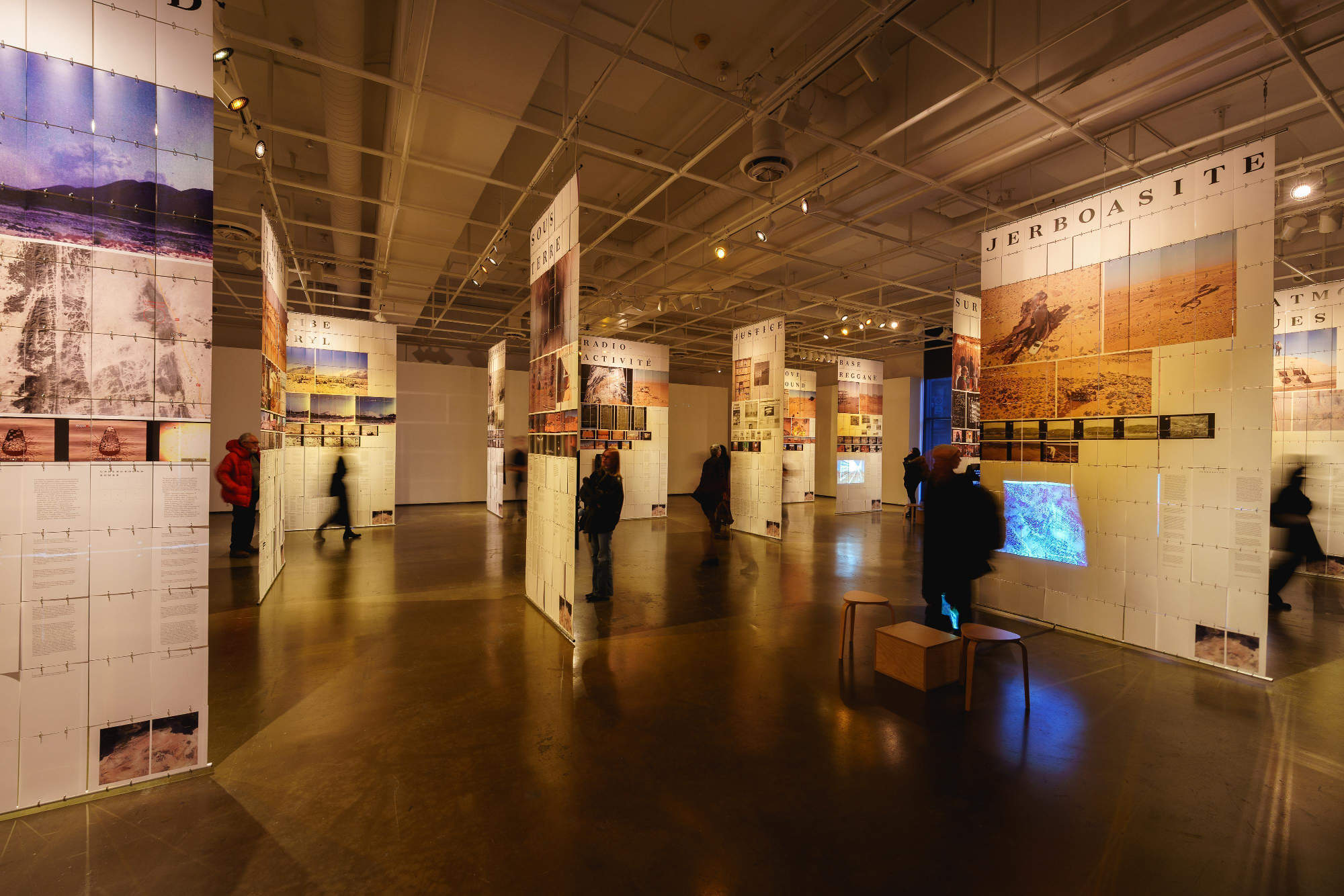
The exhibition Toxicité coloniale presents available, offered, collected and leaked documents in an immersive multimedia installation. From these materials, Henni creates a series of thirteen audiovisual assemblages, or “stations,” referencing the original military structures. These stations trace the spatial, atmospheric, and geological impacts of nuclear bombs while highlighting colonial vocabulary and the persistence of radioactive and architectural debris.
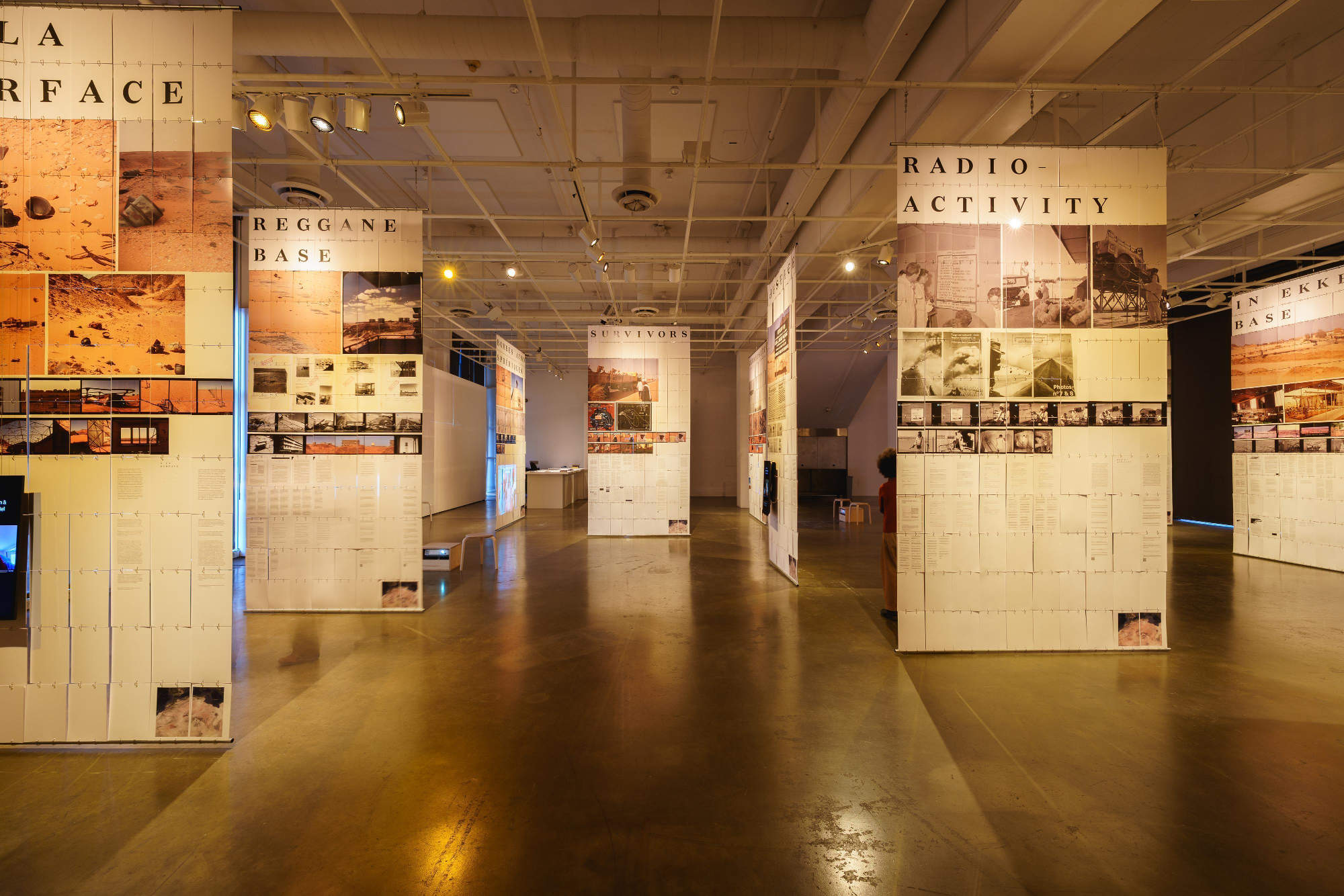
The Reggane and In Ekker bases form the geographical anchor points of the exhibition. Around Reggane, the atmospheric nuclear bombs of the Gerboise series (Blue, White, Red and Green) were exploded, while in the In Ekker sector and on the Tan Afella mountain, the explosion of thirteen underground nuclear bombs took place, including that of Beryl.
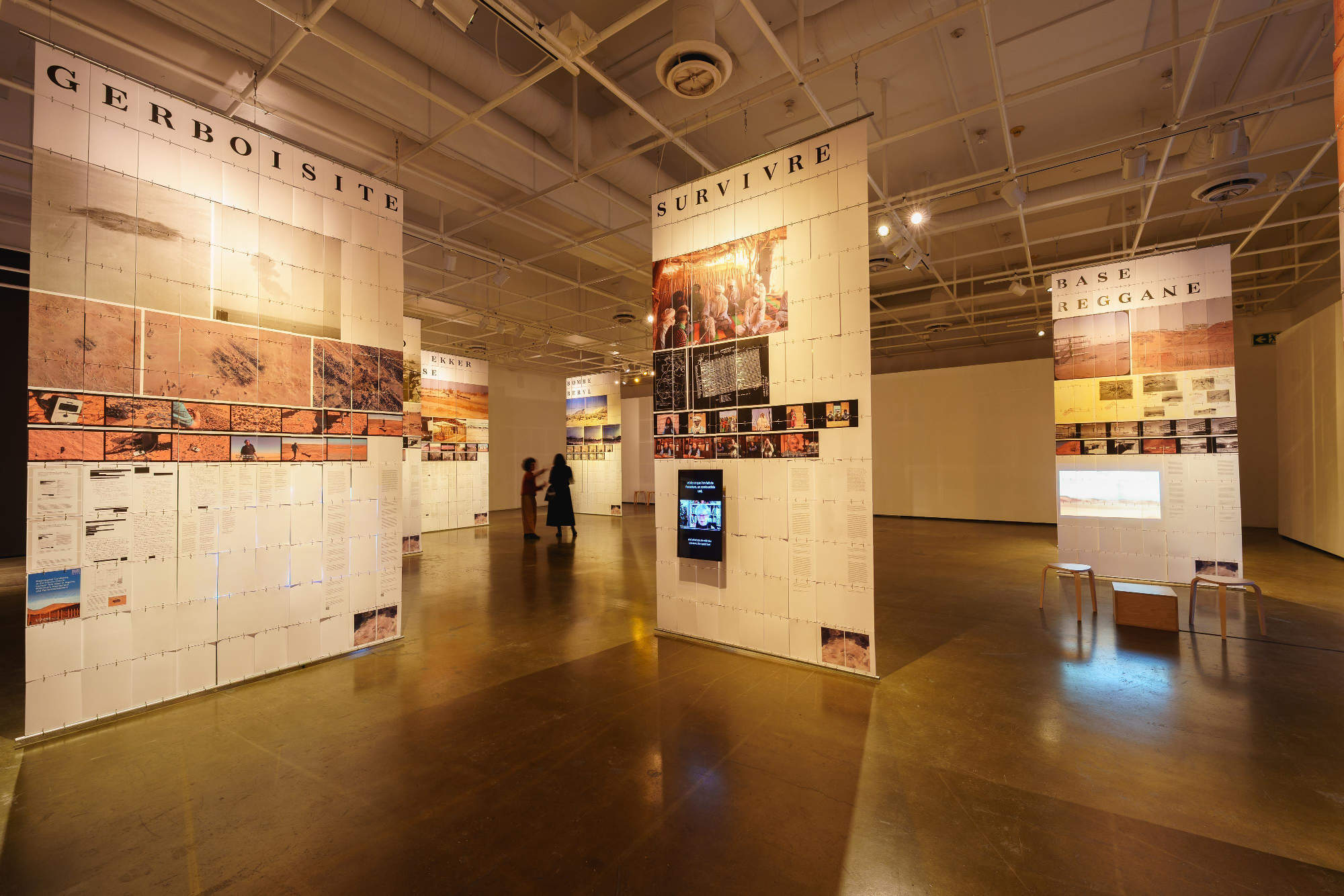
The exhibition takes visitors both above and below ground, highlighting the infrastructure, landscapes, and bodies exposed to radioactivity and radiation. It also addresses the realities of survival in these permanently contaminated territories and raises the unresolved question of justice.
Exhibition Design
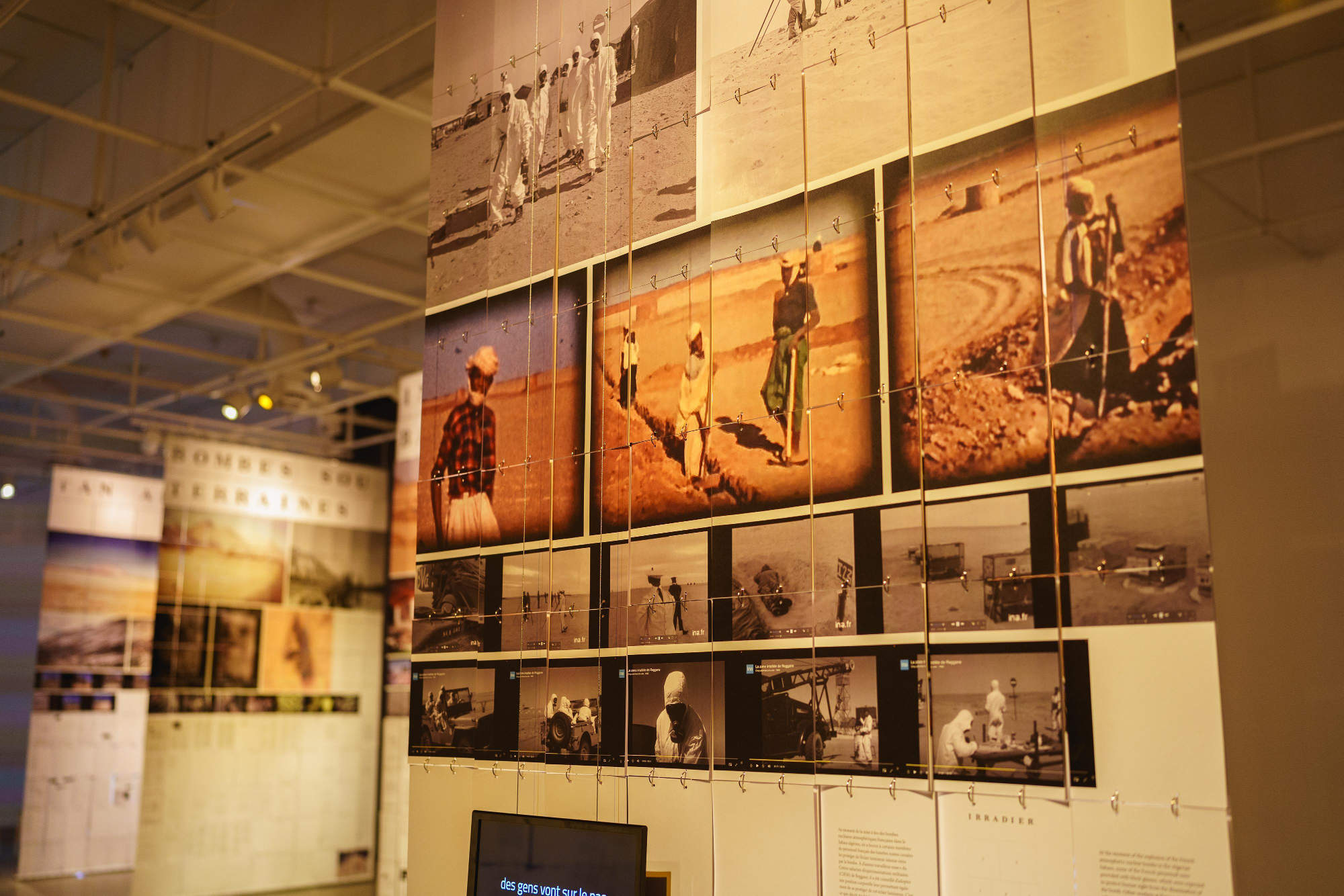
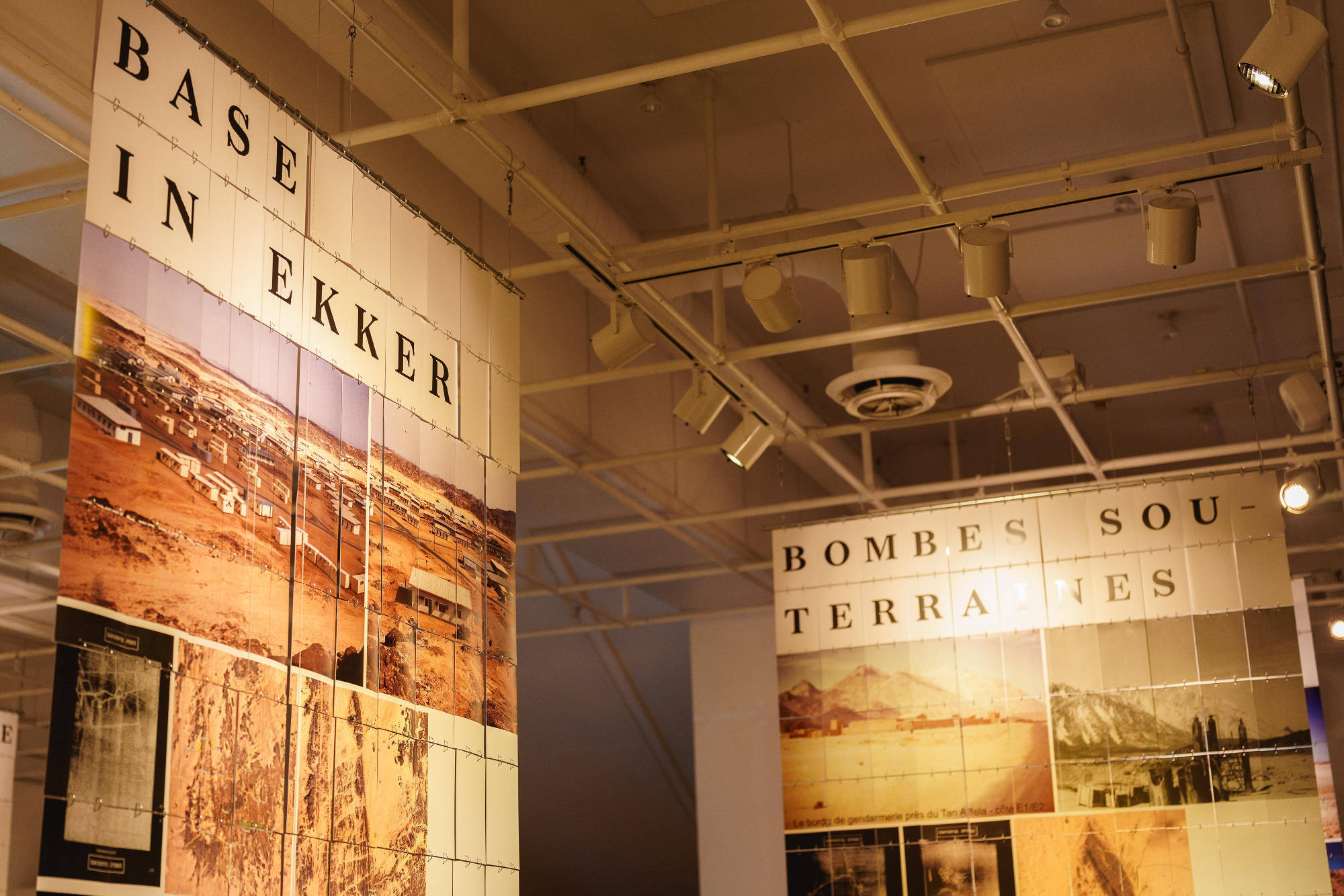
The exhibition unfolds as an immersive multimedia installation, conceived as the opening of an ongoing investigation. Each station presents a distinct facet of the research findings. The space is organized by lightweight partitions made of standard A4 sheets of paper, suspended using binder rings and held in place by metal tubes. Layered in pairs, these sheets form curtain-like partitions, visible from both sides.
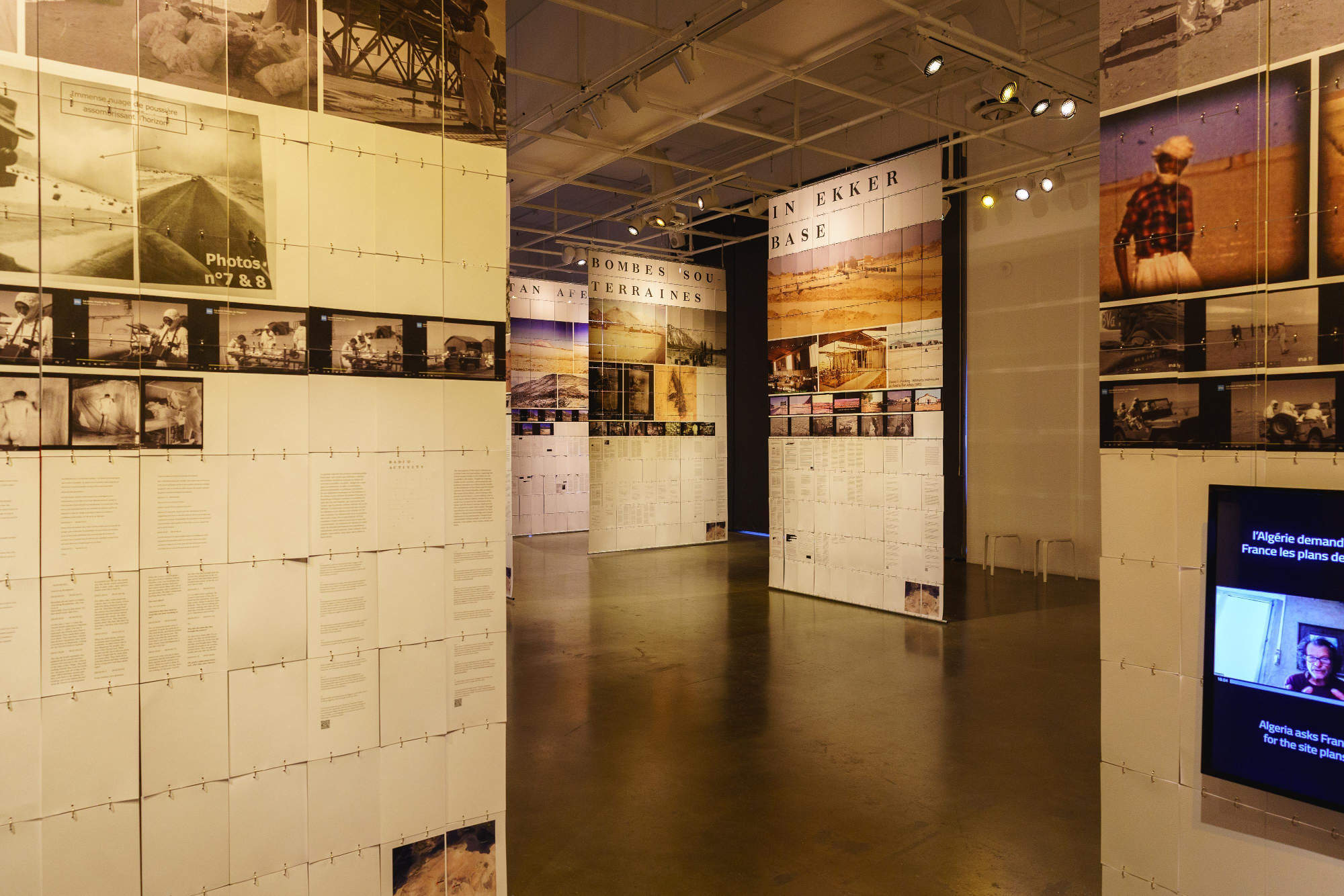
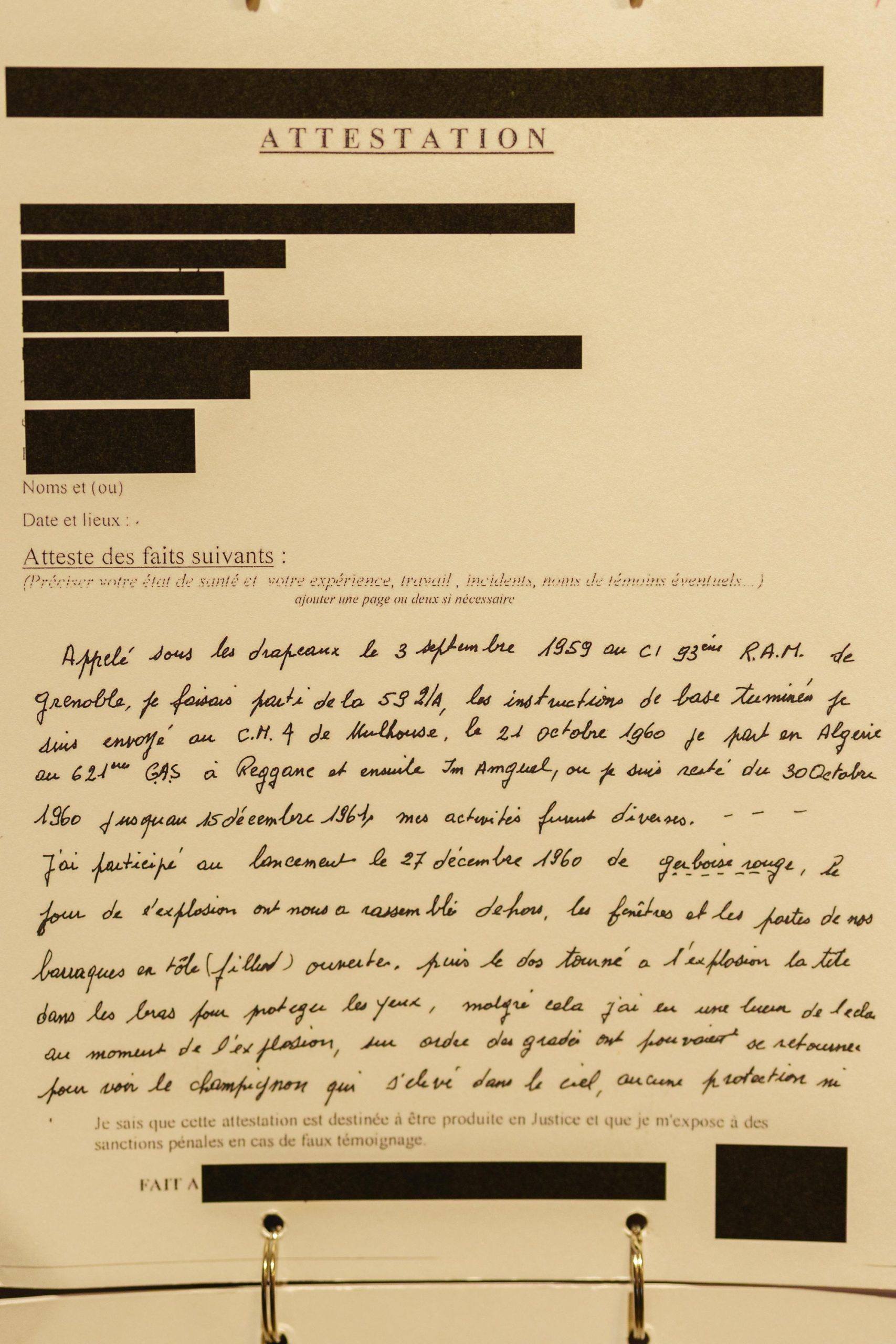
Printed on these supports are a variety of artifacts, ranging from government and military documents to handwritten testimonies from victims. The typed translations are dated and include the translator’s name, thus serving as additional witnesses to the narrative. Enlarged archival images and stills from videos filmed in the Sahara are arranged in sequences, allowing for the construction of counter-narratives to the official versions. Some pages are intentionally left blank to suggest the absence and silence of still-classified archives.
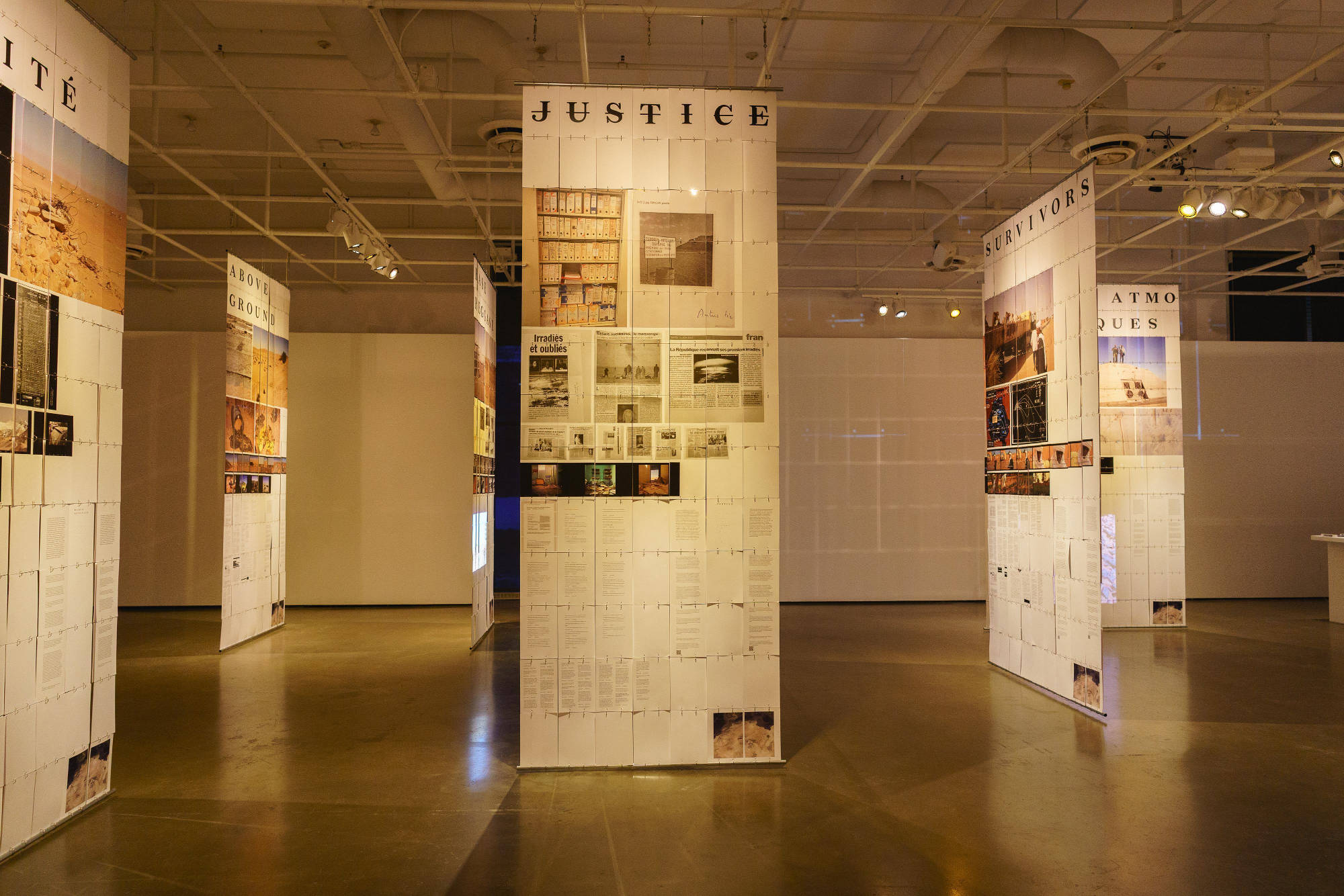
Eight televisions displaying filmed testimonies and five projections punctuate the space. An audio track continuously plays ambient desert wind sounds, enveloping visitors and enhancing the immersive experience.
An exhibition based on years of research
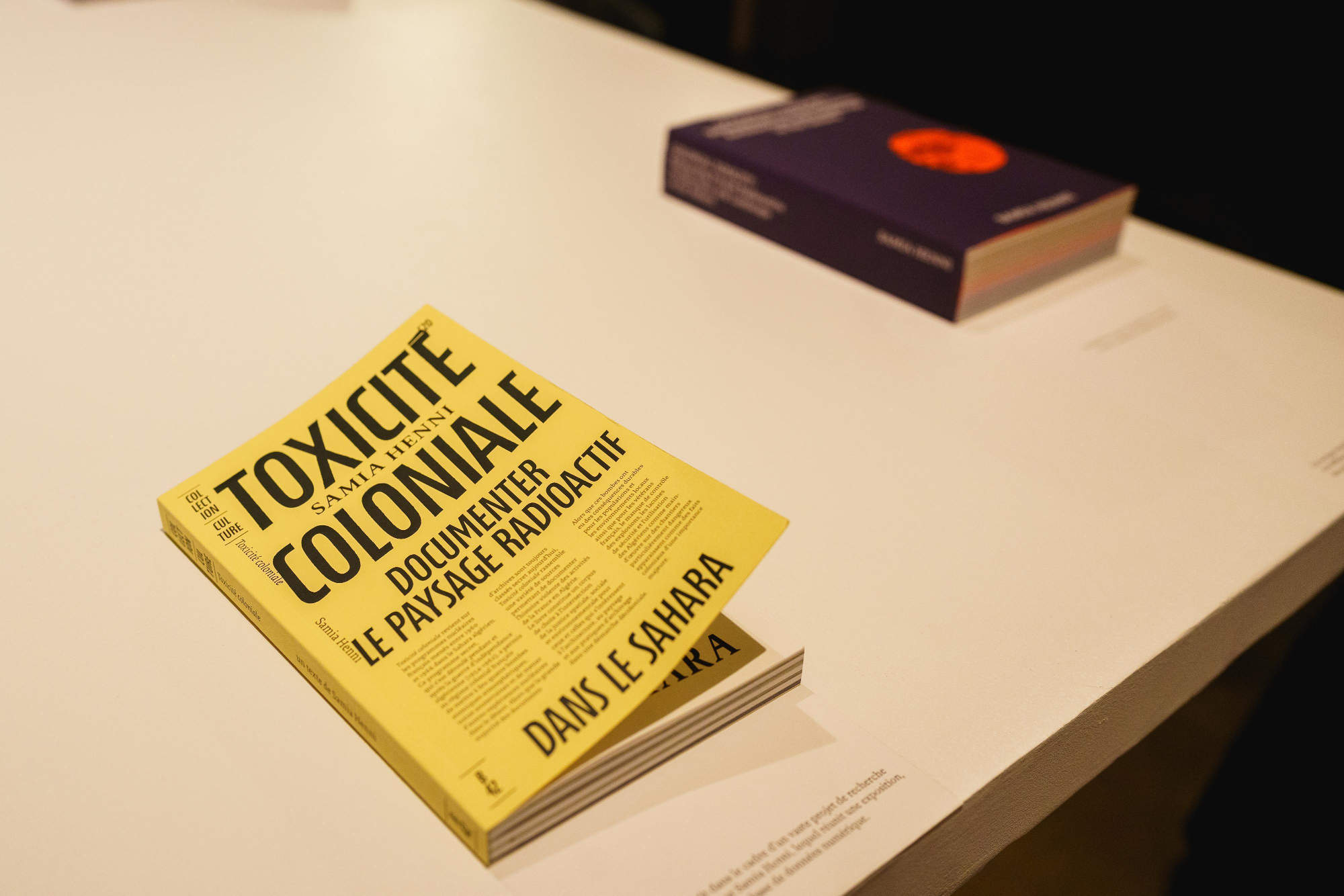
This exhibition is part of a broader research project and dissemination project that also includes two books: Colonial Toxicity: Rehearsing French Radioactive Architecture and Landscape in the Sahara (Amsterdam and Zurich, 2024, 2025), a nearly 600-page work that won the Swiss Most Beautiful Books and The Best Dutch Book Designs awards, and Colonial Toxicity: Documenting the Radioactive Landscape in the Sahara (Paris, 2026).
The exhibition also features an open-access digital database, The Testimony Translation Project, a research and translation project that aims to make accessible approximately 40 written testimonies from victims and witnesses of French nuclear bombs in the Algerian Sahara, originally written or recorded in Arabic, Tamahaq, or standard French. All documentation is available for consultation at the UQAM’s Centre de design.
These various methods of spatializing and disseminating information constitute a powerful call to action, demanding the opening of still-secret archives and the decontamination of the sites in question. These two steps are essential for understanding the past, present, and future of colonial toxicity.
A first at UQAM’s Centre de design
The exhibition is being presented for the first time in French at the UQAM’s Centre de design. The original curatorial texts in English are retained alongside the new French translations. Videos, interviews, and other materials appear in their original language (English, French, or Tamasheq), with translations in both French and English. This edition also marks the first complete presentation of this major exhibition since its initial staging at the Framer Framed gallery in Amsterdam in 2023.
“Showing this exhibition at the UQAM’s Centre de design is a necessary step, as it provides a space where research, teaching, and design practice converge. Samia Henni mobilizes tools specific to architecture and design, including drawing, mapping, and spatial visualization, to conduct a genuine investigation and forensic reconstruction of a subject long shrouded in secrecy. She reveals how the architect’s tools can do more than simply construct a building: they can also be used to understand and decipher complex historical and territorial events, to build knowledge, and to take a stand.” – Patrick Evans, Director of UQAM’s Centre de design.
“Designing an exhibition and thinking through it constitutes a form of research and a way to engage a diverse audience. The exhibition has a dual purpose: first, to showcase the architectural and landscape production of radioactivity, as well as the irreversible and ongoing impact of this production and contamination; and second, to juxtapose these with powerful testimonies from victims of nuclear power. The exhibition also serves as a call for the declassification of institutional archives and the decontamination of sites around which Saharan populations still live. For all these reasons, I thank UQAM’s Centre de design for contributing to the international circulation of this exhibition.” – Samia Henni, historian and curator of the exhibition.
About Samia Henni
Samia Henni is an architectural historian and exhibition curator who focuses on built, destroyed, and imagined environments. Employing textual and visual strategies, her practice examines the histories of these environments produced by the processes and mechanisms of colonization, forced displacement, nuclear weapons, resource extraction and war.
Samia Henni obtained her PhD in the history and theory of architecture from ETH Zurich and has taught at several universities, including ETH Zurich, the University of Technology Sydney, Cornell, and Princeton. She currently teaches at the Peter Guo-hua Fu School of Architecture at McGill University.
The content of this article was provided by UQAM设计中心 or sourced from their official media channels, and has been curated and edited by WeHow. All copyrights to images, videos, and related design works remain with their respective creators or design firms. Reproduction, republication, or commercial use of the WeHow-edited version in any form is prohibited without prior written permission from both WeHow and the respective copyright holders.