The Bavarian State Archaeological Collection, located near the English Garden in Munich, shines in new splendour. It was reopened on 15 April in a state ceremony attended by Bavarian Prime Minister Markus Söder and Minister of State Markus Blume. From 17 April, the doors will be open to visitors from all over the world.
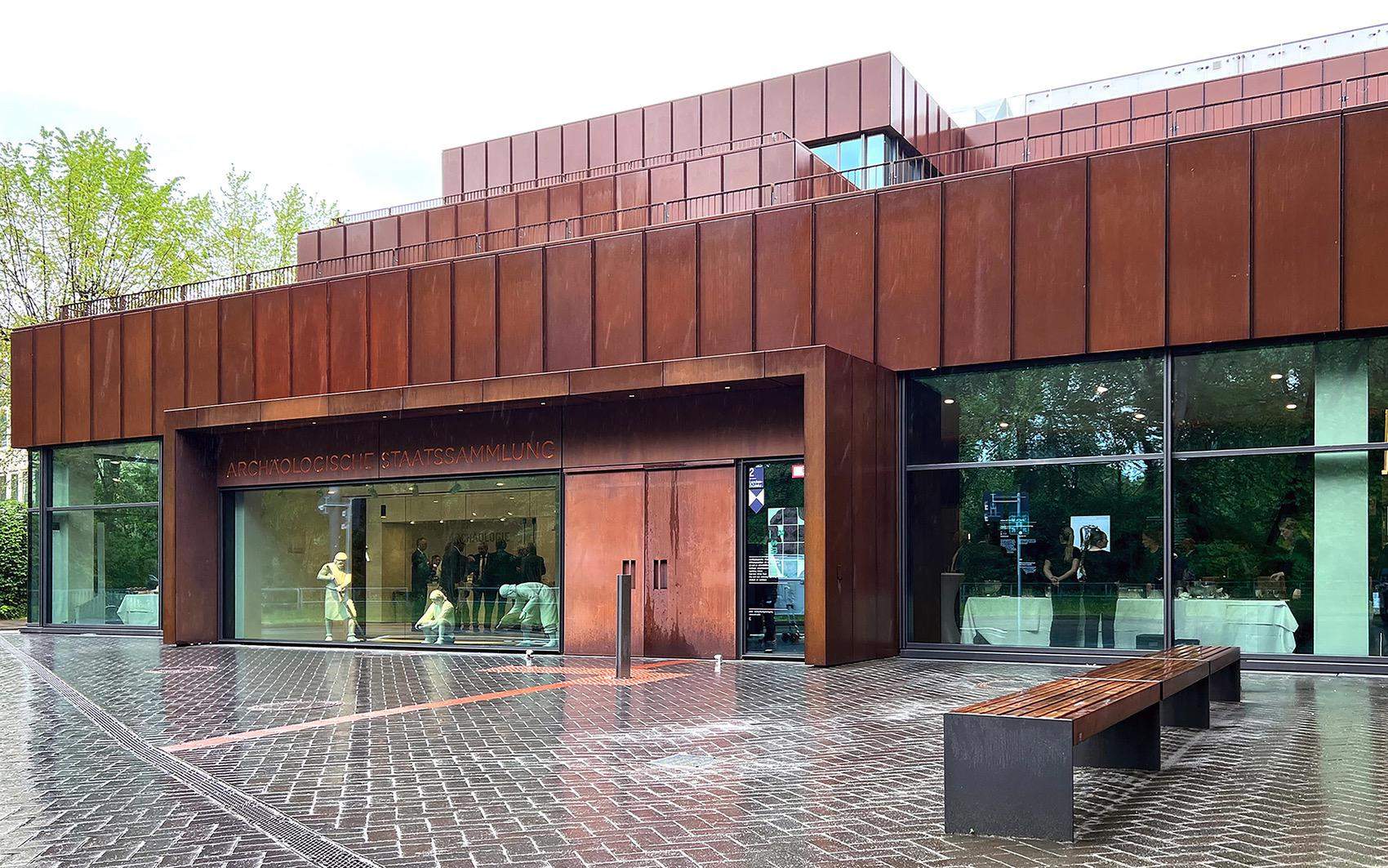
The building with its striking Corten steel façade (architecture: von Werz, Ottow, Bachmann and Marx), home to the Bavarian State Collection since 1976, was extensively refurbished by Nieto Sobejano Arquitectos and extended to include a new area for special exhibitions and a catered roof terrace. The exhibition concept and design of the new permanent exhibition were created by ATELIER BRÜCKNER. More than 15,000 artefacts from the history of mankind – each of them unique are placed in context.
The visitor routing, which covers more than 1,200 square metres of exhibition space, is divided into two tours, each with five themed rooms that convey archaeological and historical facts. The first part is dedicated to the main aspects and methods of archaeology as a science. The second part is a presentation of the collection.
The content of both parts is framed by a media installation in the central staircase. Falling terms are deposited in archaeological layers, including power, domination, values and faith.
The basic design element of all the rooms is a square grid, given by the listed architecture. It is present in the floor plan each room measures approximately eleven by eleven square metres and the striking ceiling beams. Individual room narratives have been developed based on this grid. Each staging is self contained. The rooms are architecturally separated from each other by light gaps or atriums.
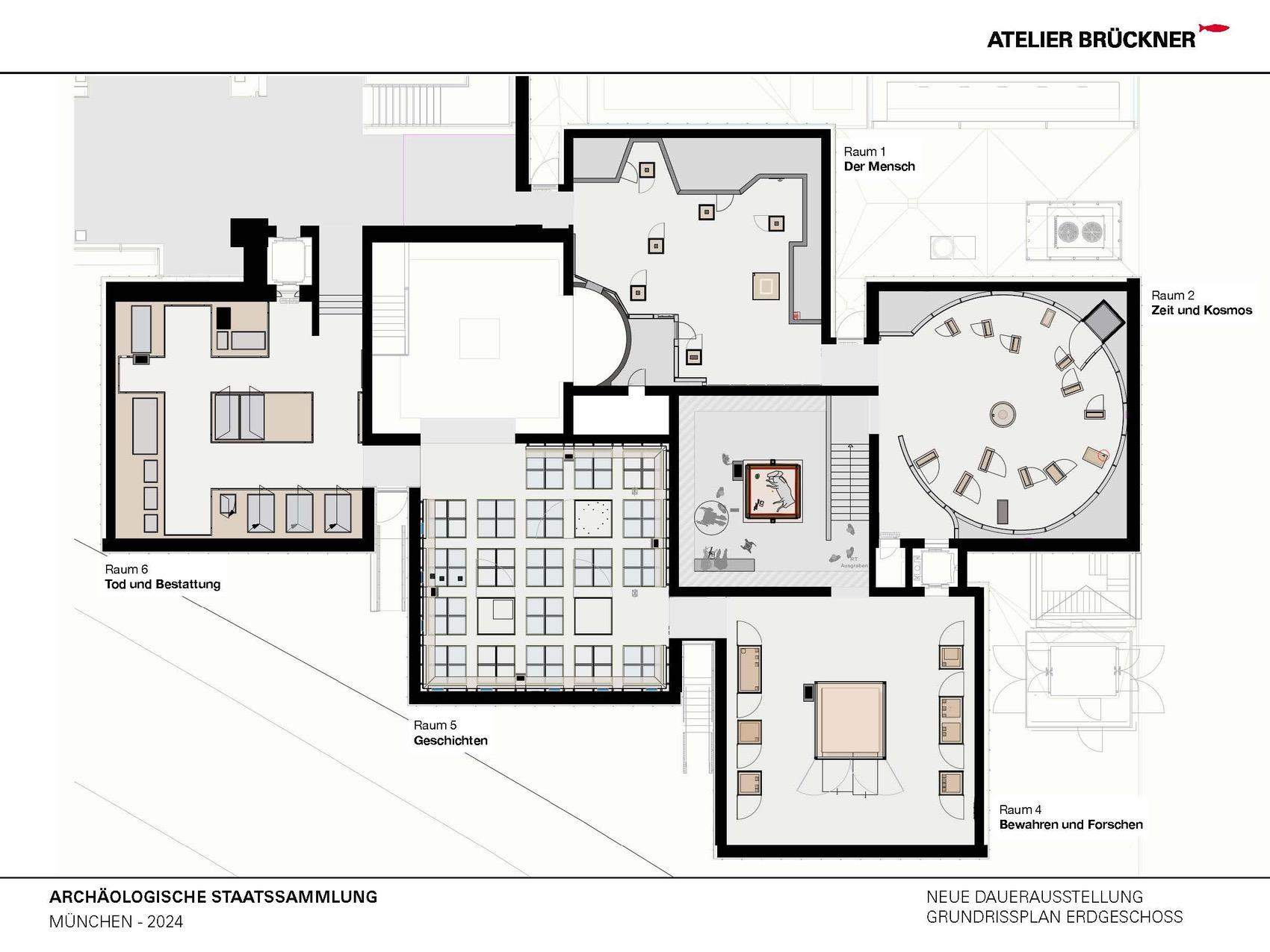
Archaeology begins with an artefact found in the ground and its interpretation. On the first tour, visitors are introduced to the methods of archaeology and learn more about the insights that science can gain from the finds. The exhibits are placed in the centre of the room. Information is displayed on the walls as an interpretation of the objects. During the tour, the floor of the exhibition opens up more and more to reveal the excavations.
In the first room, “Humankind”, only small sections of the floor are open. The ‘spades’ reveal outstanding objects, that provide information about the self image of mankind.
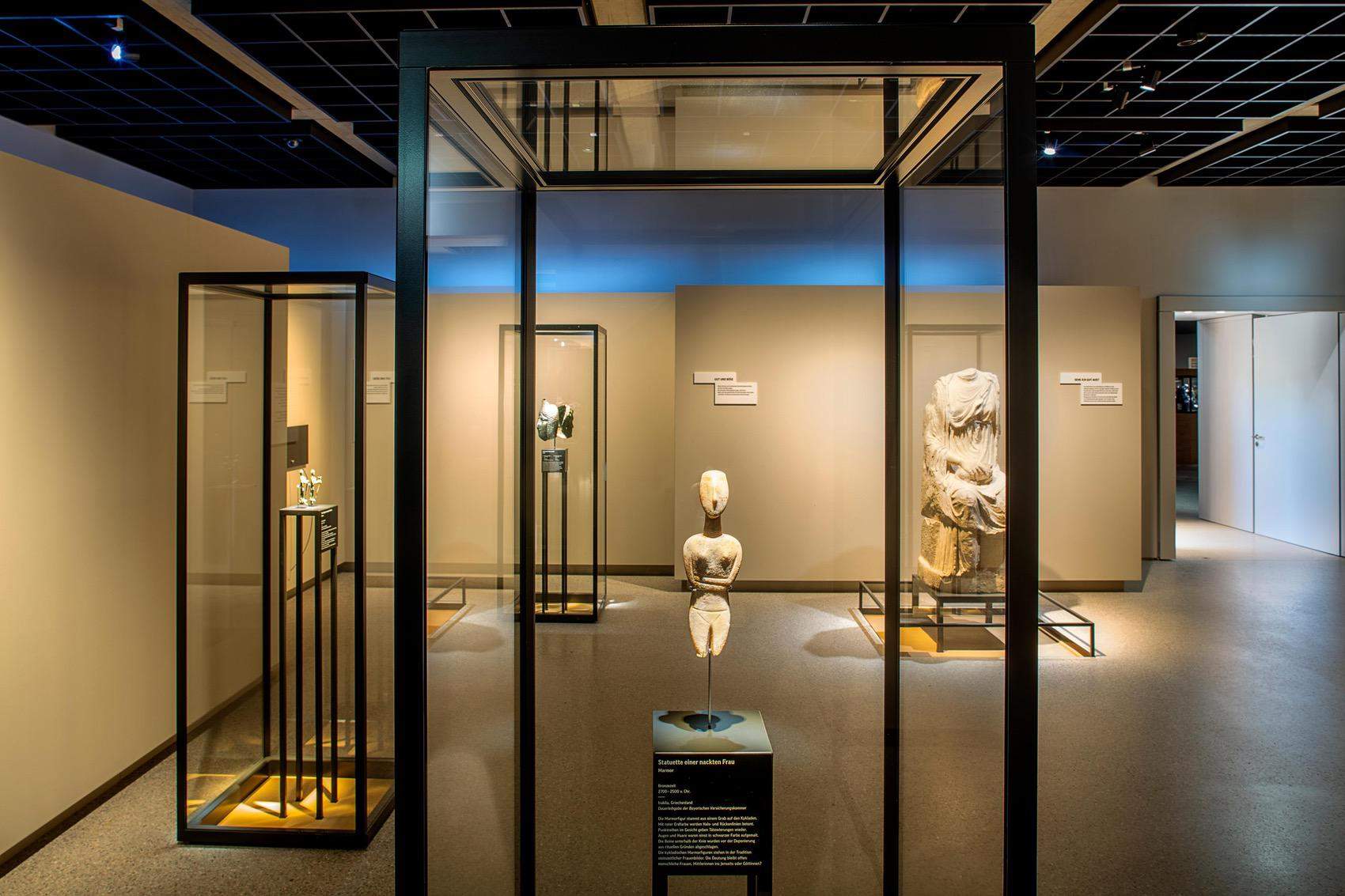
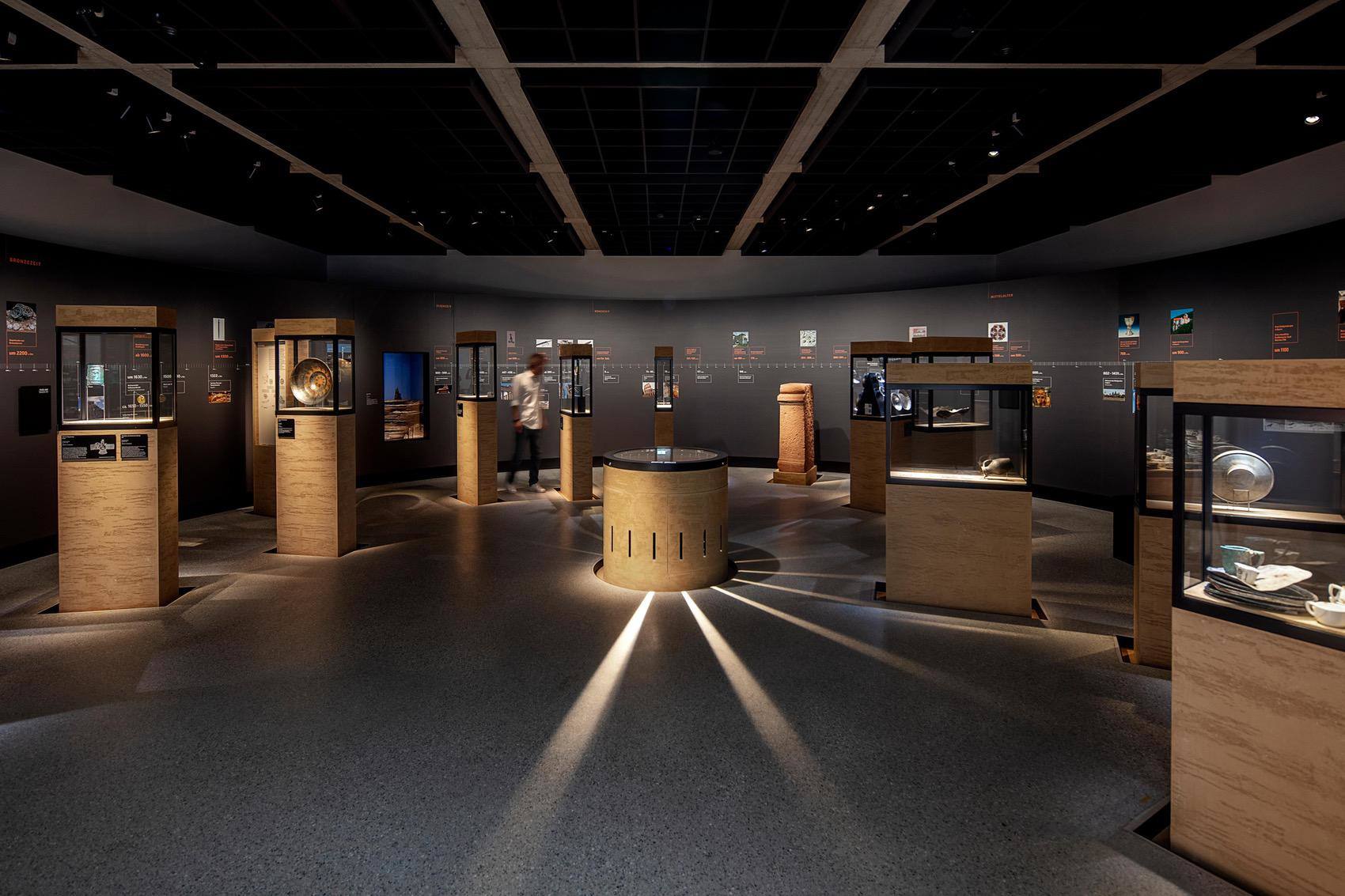
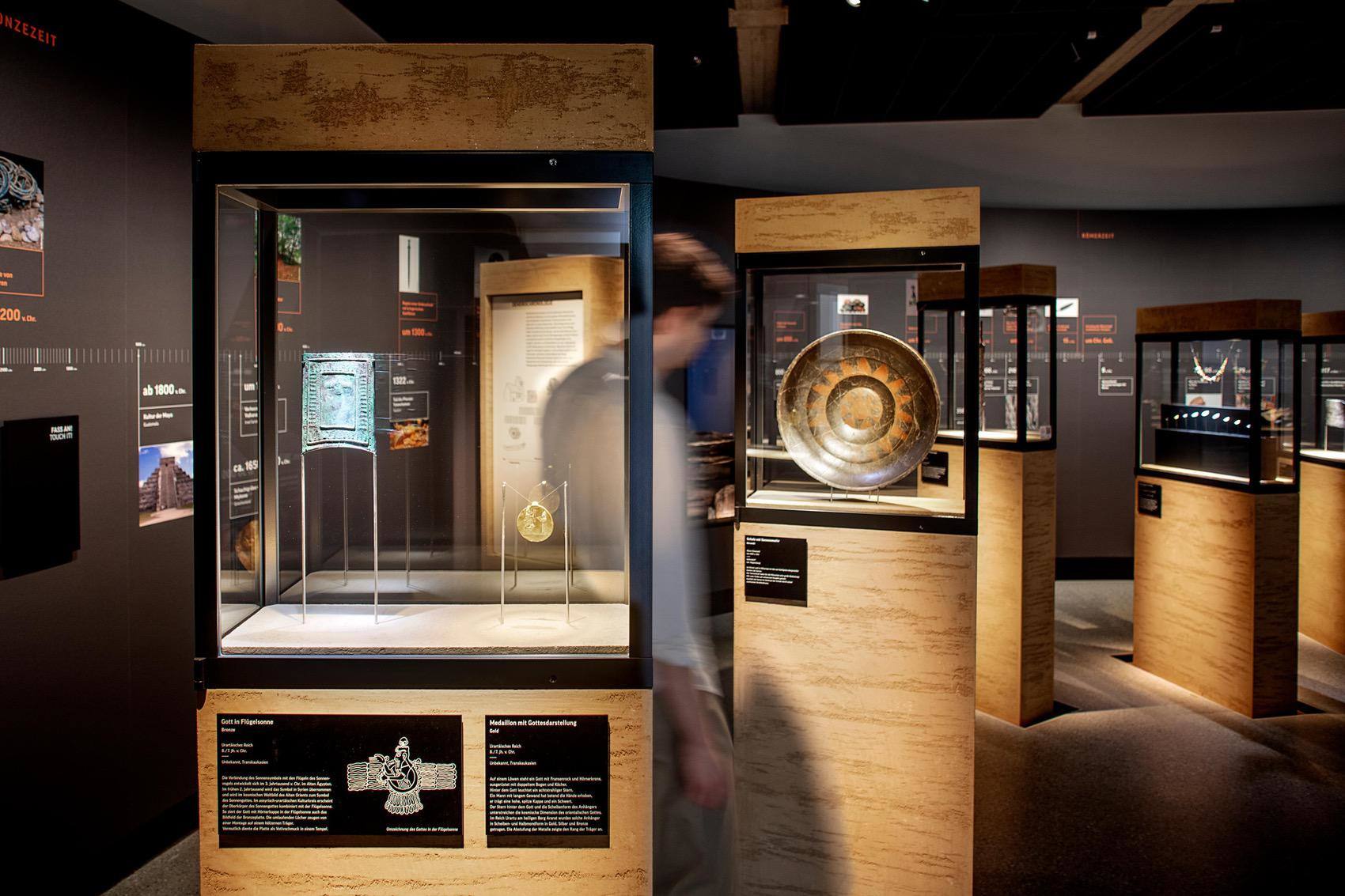
Room 2 “Time & Cosmos” illustrates the importance of time in archaeology. The objects are arranged in a semicircle along a ticking time clock with rays of light. The height of the display cases symbolises the time the objects spent in the earth. The plinths are reminiscent of layers of sediment. Our idea of time is fundamental for the categorisation and classification of the finds.
Via an atrium, in which an impressively preserved well shaft from Munich’s Marienhof is presented as a large exhibit (13th century), visitors reach the “Preserving and Investigating” room. Here, the methods of archaeology take centre stage. The central exhibit is an excavation block from Otzing in the Bavarian district of Deggendorf. The burial find from the early Celtic period is unique in its preservation in Central Europe.

As the exhibition tour progresses, the floor openings widen. The “Stories” room impresses with its floor showcases that shape the space and can be walked on. The exhibits here are literally at the visitor’s feet. The context, composition and condition of the artefacts form the basis for an interpretation of what happened in the past. A surrounding bench is equipped with media displays that provide in-depth information on the artefacts on display.
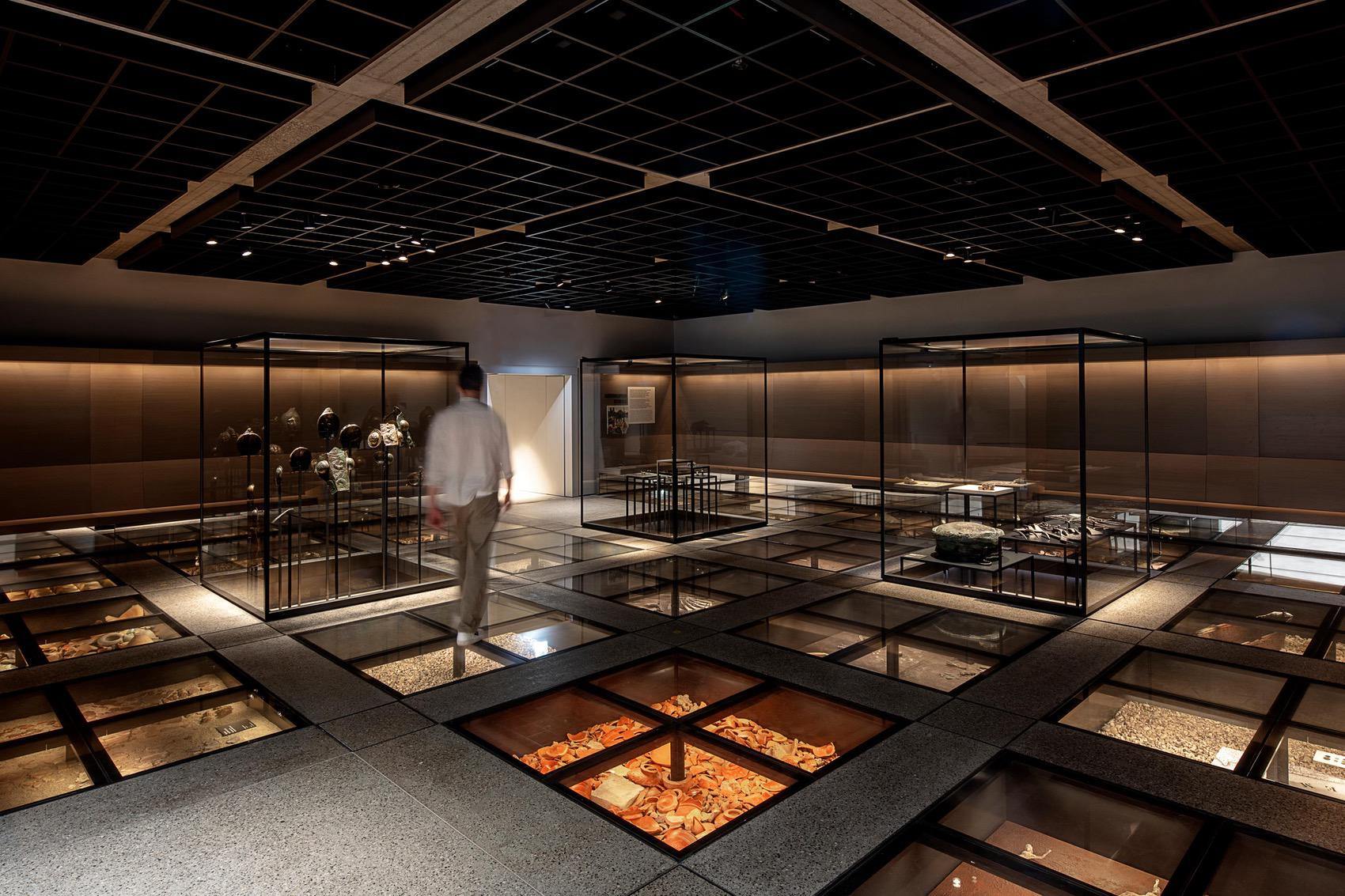
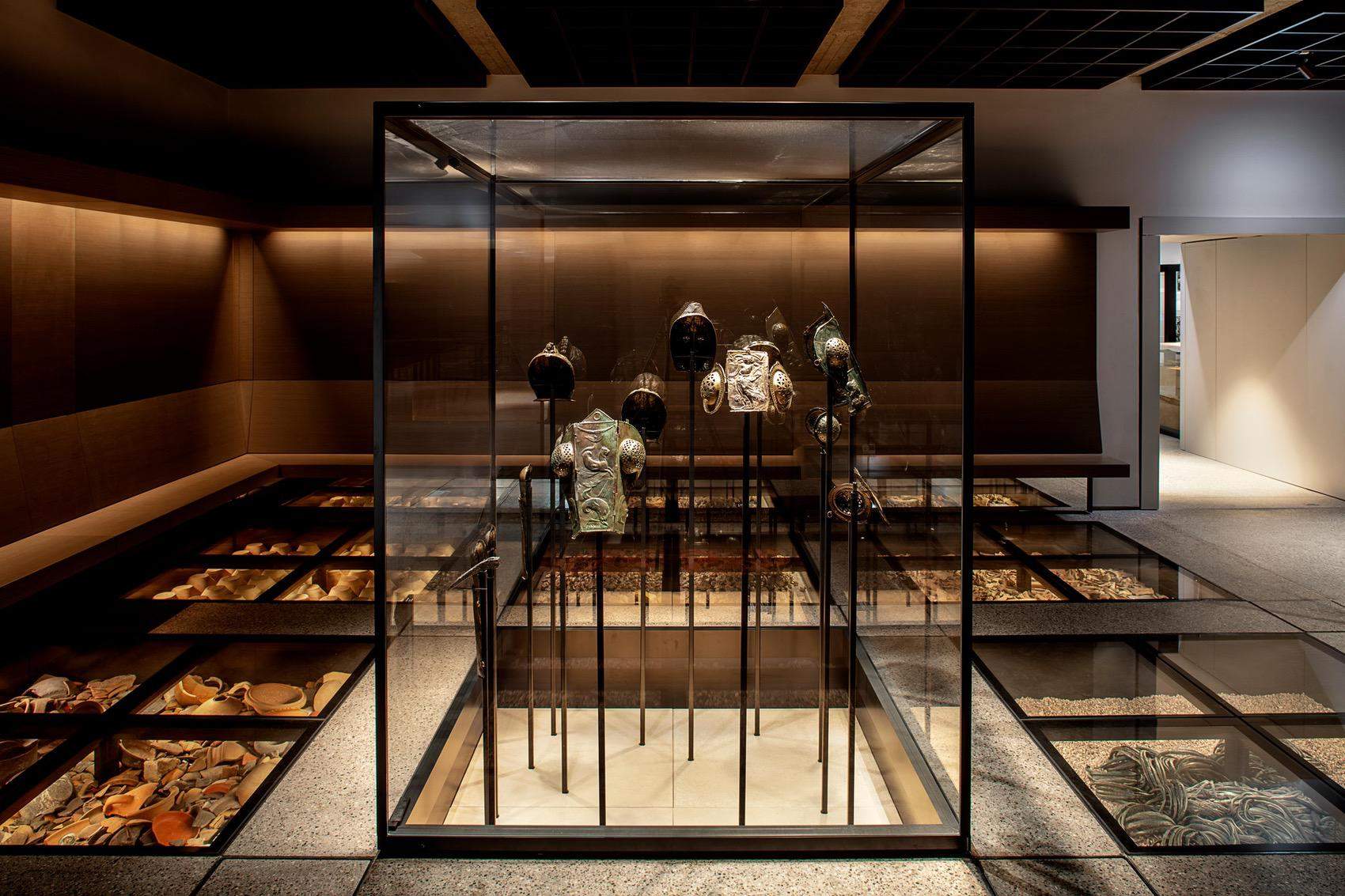
In the last themed room, entitled “Death and Burial”, visitors enter an excavation site, accessible only via a footbridge. The exposed floor forms the “archaeological terrain”. The design idea is the excavation landscape.
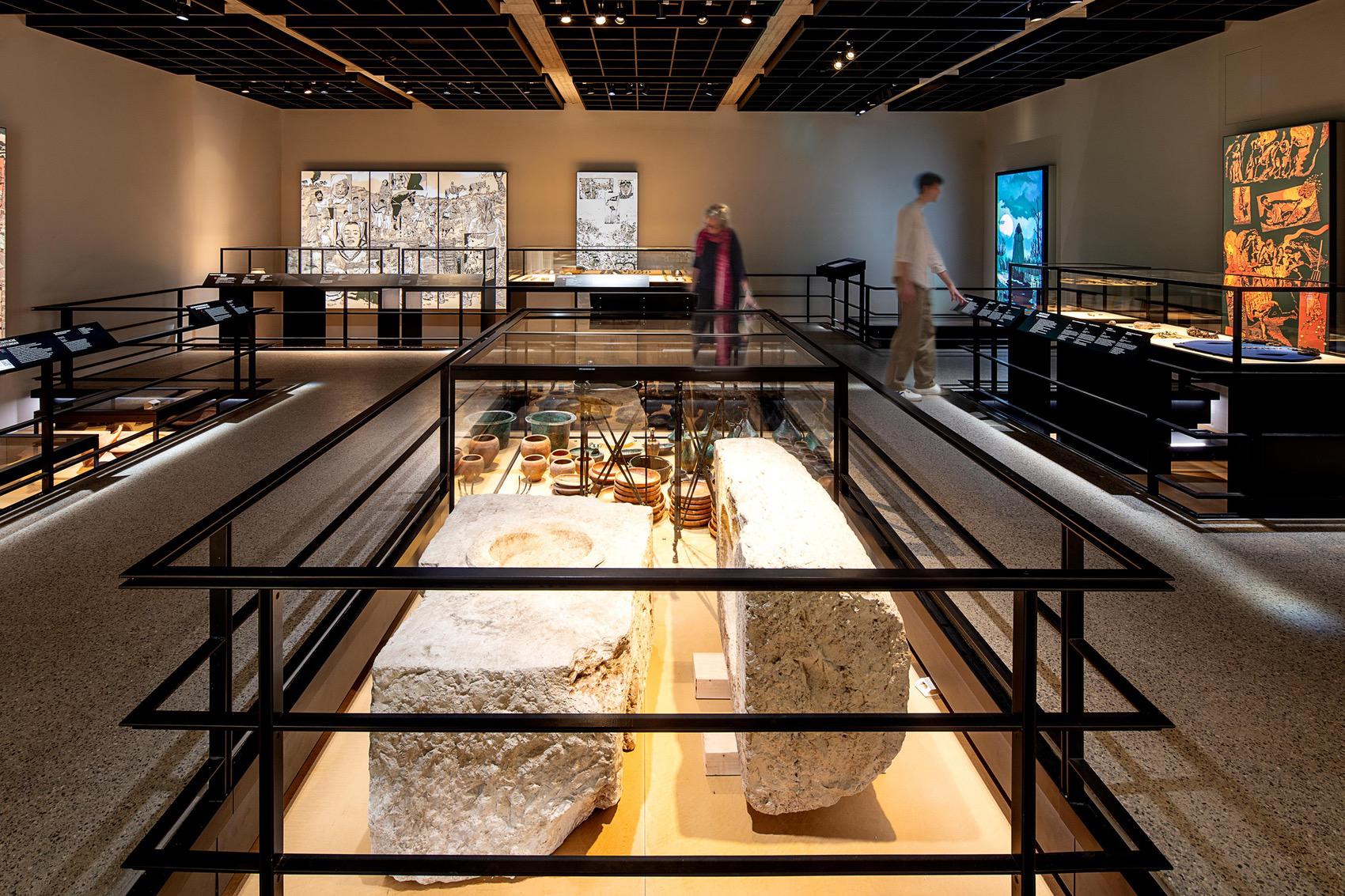
Burials are one of the most important sources of archaeological information. Here, visitors learn about the information science gathers from human remains. A mummy from the Dachauer Moos (13th-14th centuries AD), is one of the museum’s main attractions.
The finds are buried in the ground. Large, backlit graphic panels, which can be activated, offer a visual-illustrative classification, the design of which is particularly appealing to young people. Their comic-like language was created by illustrator Frank Schmolke.
The tour ends in the second atrium, which displays a Roman floor mosaic (3rd century AD). It comes from a Roman villa in district of Eichstätt.
The second visitor routing (on the upper floor) presents the museum’s collections. The design is characterised by collection display cases, most of which are wall mounted. The first room, ‘The Basis of Life’, focuses on signs of human life in Bavaria. Everyday objects such as storage vessels and tools provide an insight into the living conditions of the past.

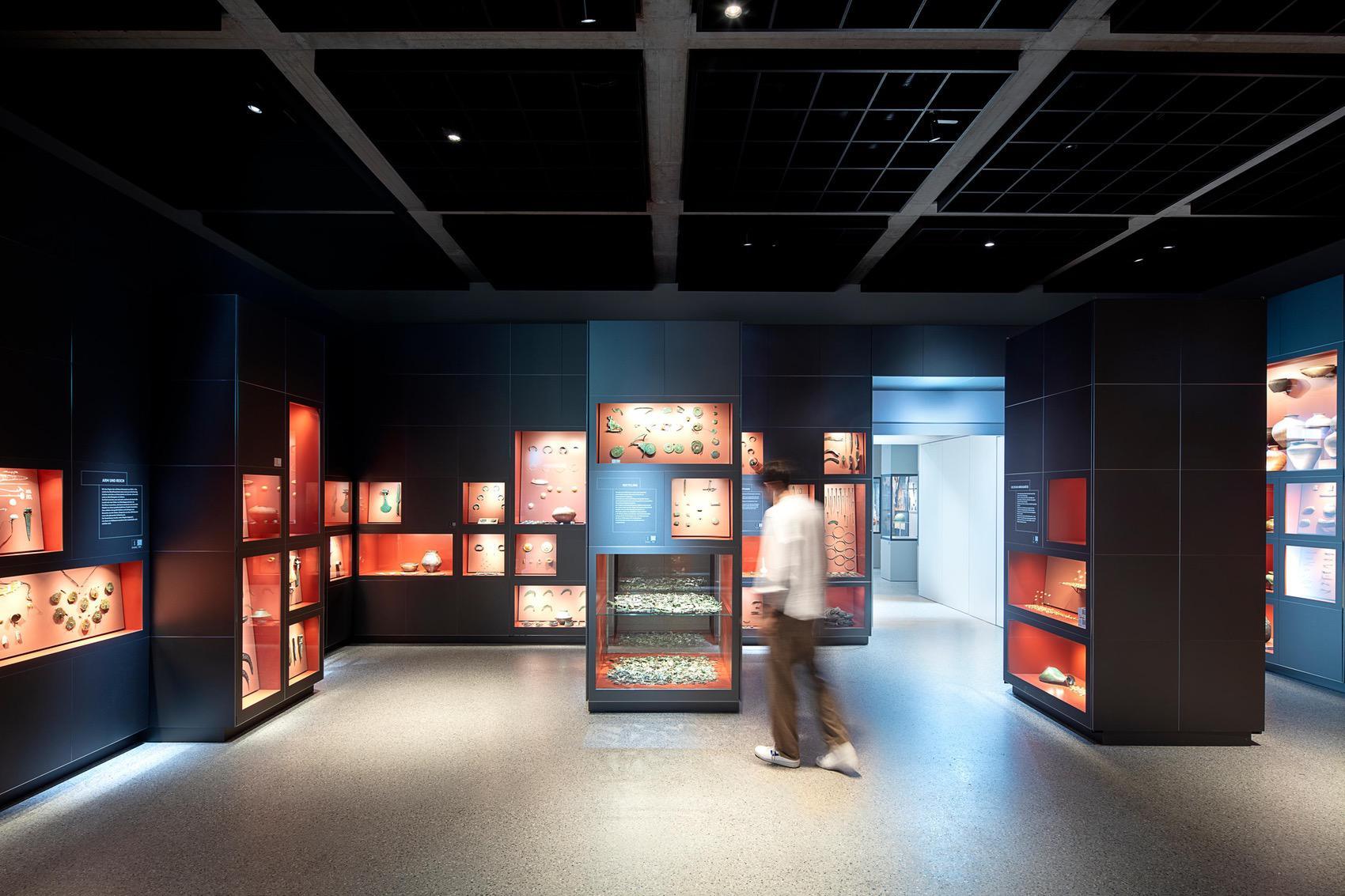
In the adjoining themed room “The Value of Things”, which is reminiscent of a vault, coins, jewellery and weapons made of different metals reveal their significance in the respective eras.
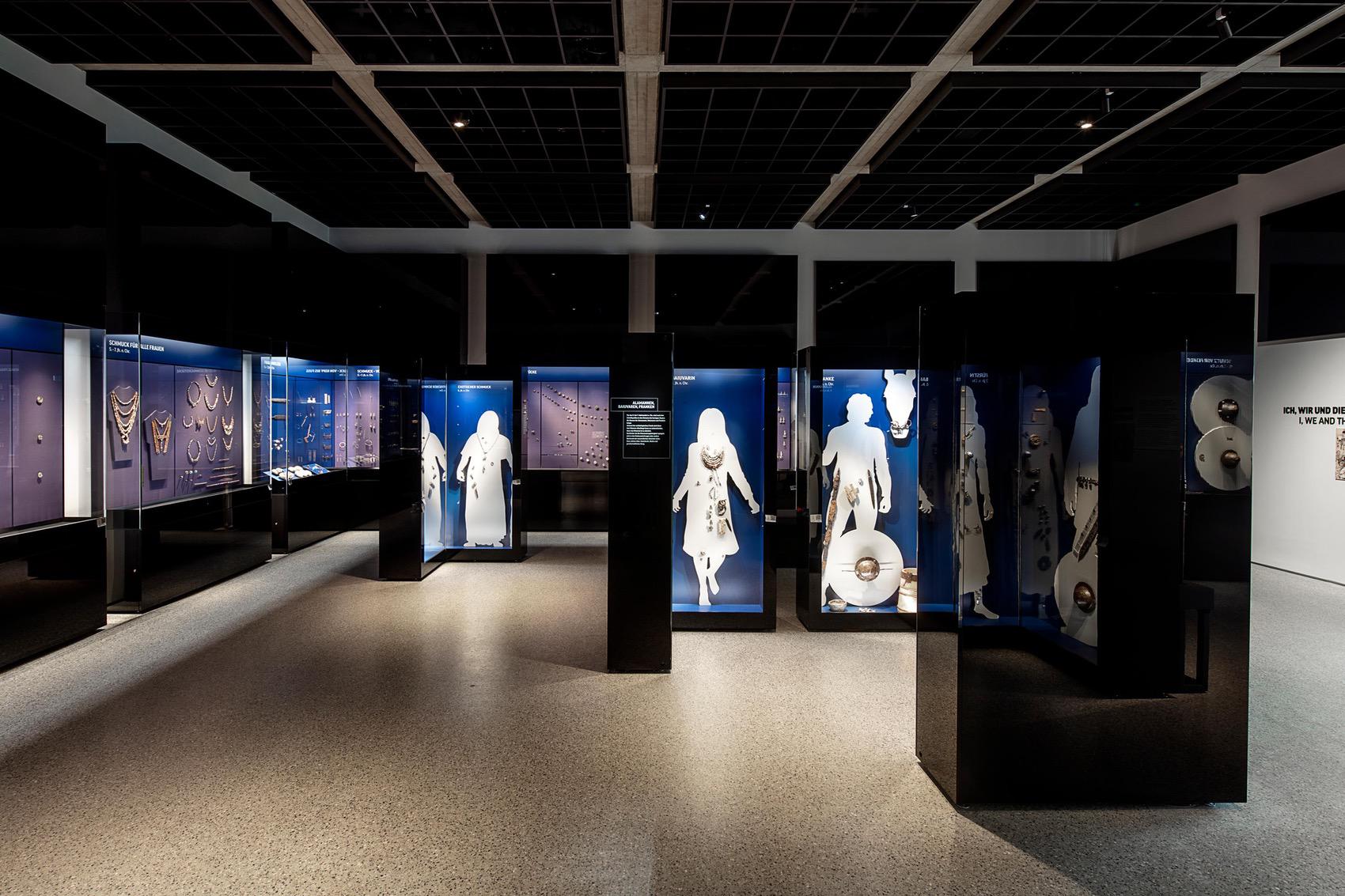
A separate room is dedicated to the Romans. “Global Power Rome” looks at the time when large parts of Bavaria belonged to the Roman Empire, while the following room, “I, We and the Others”, is all about identity. Objects assigned to silhouettes say something about the position of individual people in society. The visitors are reflected in dark glass surfaces and are thus themselves integrated into the staging.
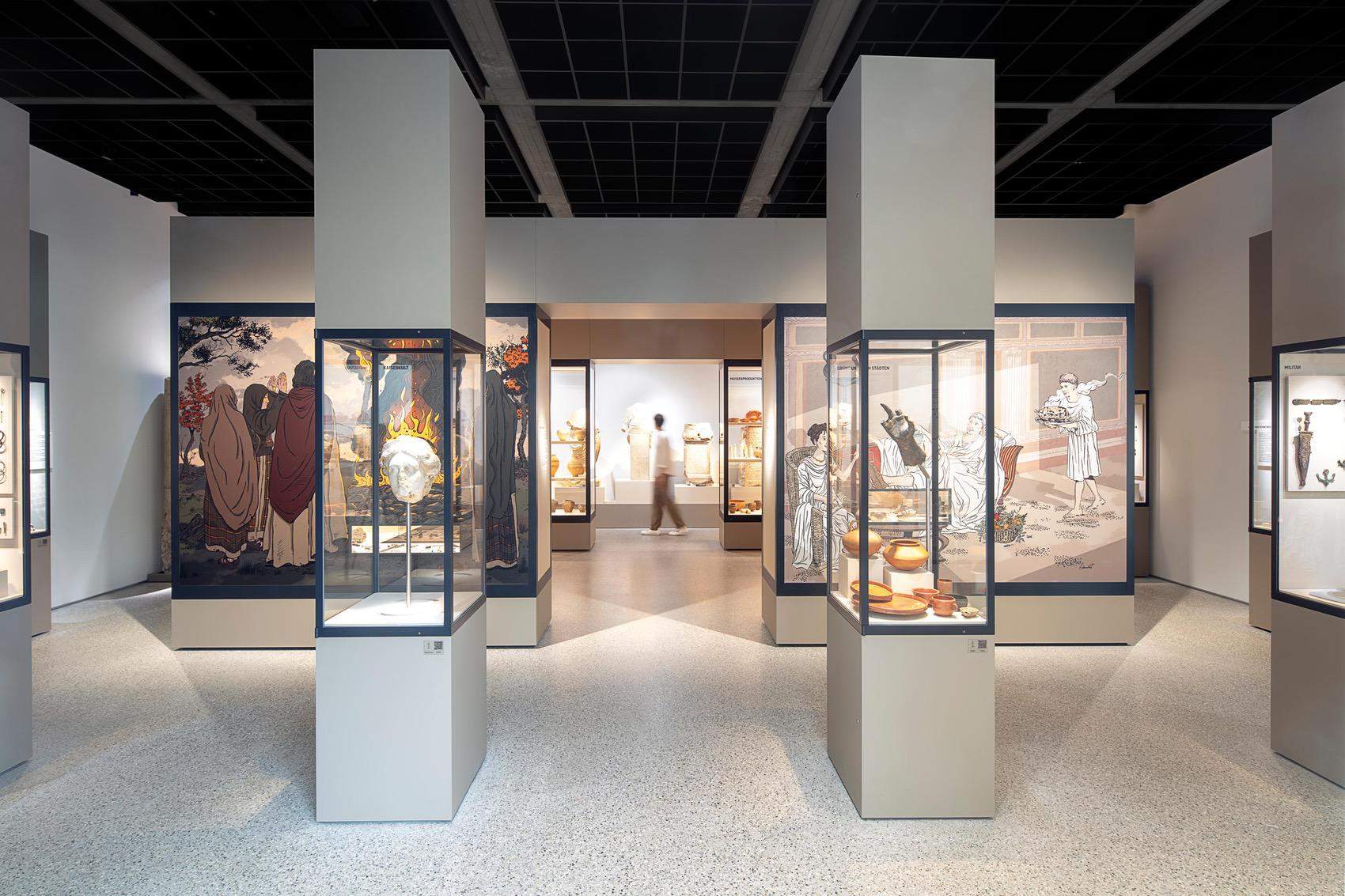
The “Faith and Religion” room marks the end of the tour on the upper floor. It presents various forms of faith in the history of mankind. These include fallen gods. The fragments of a Roman Jupiter column are placed in the centre of the room. Visitors to the exhibition can assemble them – on a small-scale replica.


Finally, the staircase with the falling words media installation takes visitors to the roof terrace.
The exhibition allows exhibits from all departments of the Bavarian State Archaeology to enter into dialogue. The objects from prehistory, Roman times, the Middle Ages and modern times, the Mediterranean and the Near East as well as numismatics are the attraction within the expressive spatial images.
The Bavarian State Archaeological Collection in Munich is both a collection and a museum. Behind the scenes, a team of scientists and restorers work to preserve and study the archaeological treasures found in excavations throughout Bavaria. In the museum, special artefacts are on display, serving as a kind of showcase to the ‘outside world’. The art and everyday objects, burial objects and treasures on display bring to life the history of Bavaria and the everyday life of the people who lived here. History becomes tangible from its beginnings 250,000 years ago to the present day.

The content of this article was provided by ATELIER BRÜCKNER or sourced from their official media channels, and has been curated and edited by WeHow. All copyrights to images, videos, and related design works remain with their respective creators or design firms. Reproduction, republication, or commercial use of the WeHow-edited version in any form is prohibited without prior written permission from both WeHow and the respective copyright holders.