
非常感谢 ATELIER BRÜCKNER 分享内容给 WeHow。
Thanks to ATELIER BRÜCKNER for sharing with WeHow.
埃卡特·克讷教授谈及“巴登的博物馆革命”。德国卡尔斯鲁厄巴登州立博物馆新常设展“巴登考古”采用一种全新的知识传播方式:博物馆观众成为展品的主动体验的用户。“目标是让观众以全新、深入的方式接触各类藏品”,博物馆馆长埃卡特·克讷表示。
Prof. Dr. Eckart Köhne talks about the “museum revolution in Baden”. The new permanent exhibition “Archaeology in Baden” in the Baden State Museum in Karlsruhe, Germany, adopts a new approach to the communication of knowledge: the museum visitor becomes an active user of the exhibits. “The aim is to enable a new, intensive mode of access to the various collections”, says museum director Eckart Köhne.
观众只挑自己真正感兴趣的内容,通过互动、多元媒体并与展品直接接触来探索博物馆;他们数字化选择感兴趣的项目。一张替代门票的“用户ID”可随时调用并扩展个人知识库。
Users explore the contents of the museum on the basis of what they are actually interested in – interactively, through diverse media and in direct contact with the exhibits. They select the items of interest digitally. A user ID, which replaces the admission ticket, makes it possible to retrieve and expand the store of knowledge at any time.
“巴登考古”是巴登州立博物馆新概念的试点项目。展览由康斯坦茨应用技术大学建筑与设计系(埃伯哈德·施拉格教授负责)和康斯坦茨大学信息技术与科学系(哈拉尔德·赖特勒教授负责)合作完成,ATELIER BRÜCKNER负责展览设计的落地。“将实物的类比展示与数字传播层面相连,使大量藏品能在Expothek中展出并可在意义与内容上被理解”,ATELIER BRÜCKNER合伙人埃伯哈德·施拉格表示。
“Archaeology in Baden” is the pilot project for the new museum concept of the Baden State Museum. The exhibition was created in collaboration with the HTWG Konstanz University of Applied Sciences, Faculty of Architecture and Design, headed by Prof. Eberhard Schlag, and the University of Konstanz, Faculty of Information Technology and Science, headed by Prof. Dr. Harald Reiterer. ATELIER BRÜCKNER was responsible for the implementation of the exhibition design. “Linking the analogue presentation of objects to the digital level of communication makes it possible to show such a large number of objects in the Expothek and make them accessible in terms of their meaning and content”, says Prof. Eberhard Schlag, partner at ATELIER BRÜCKNER.
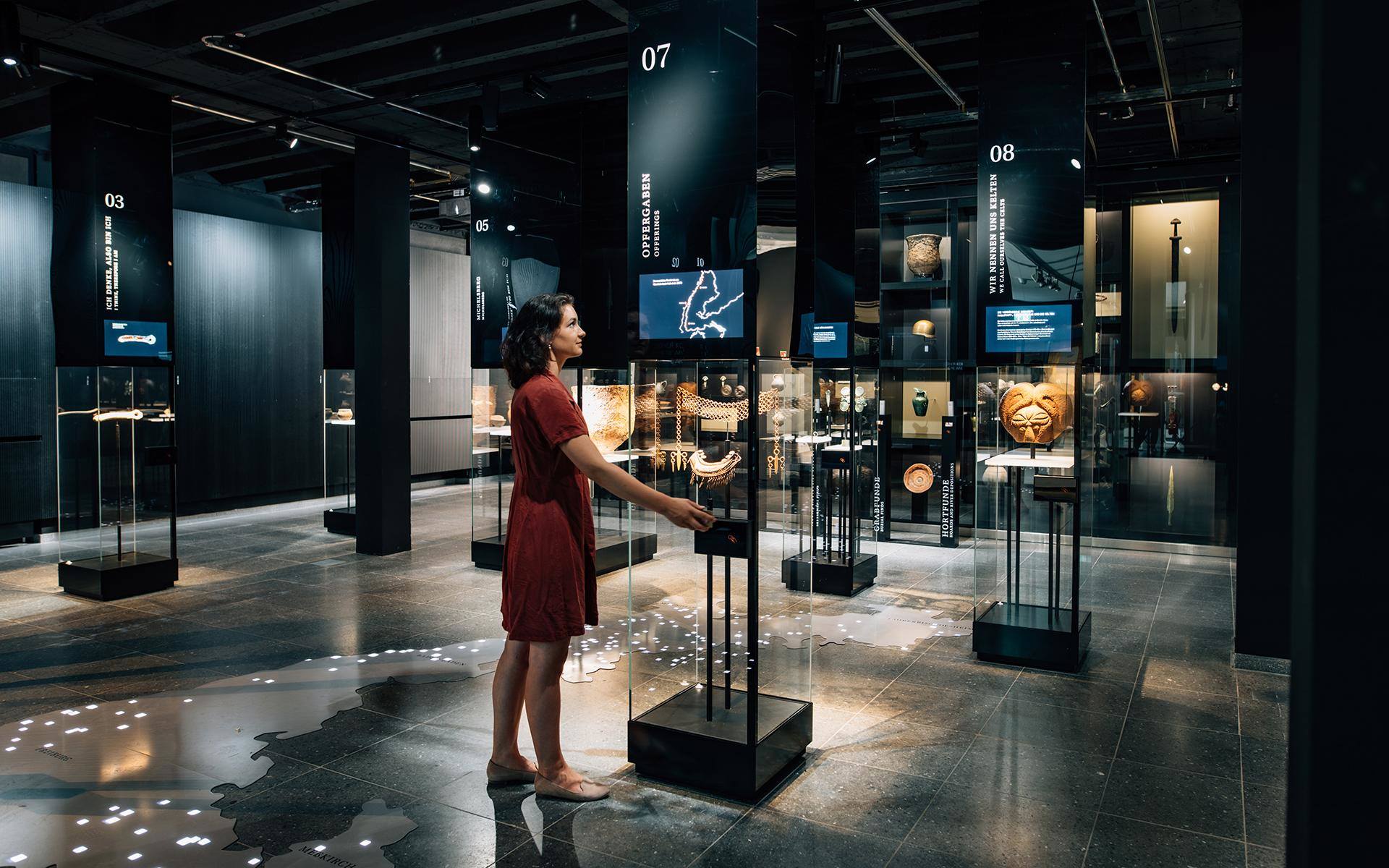
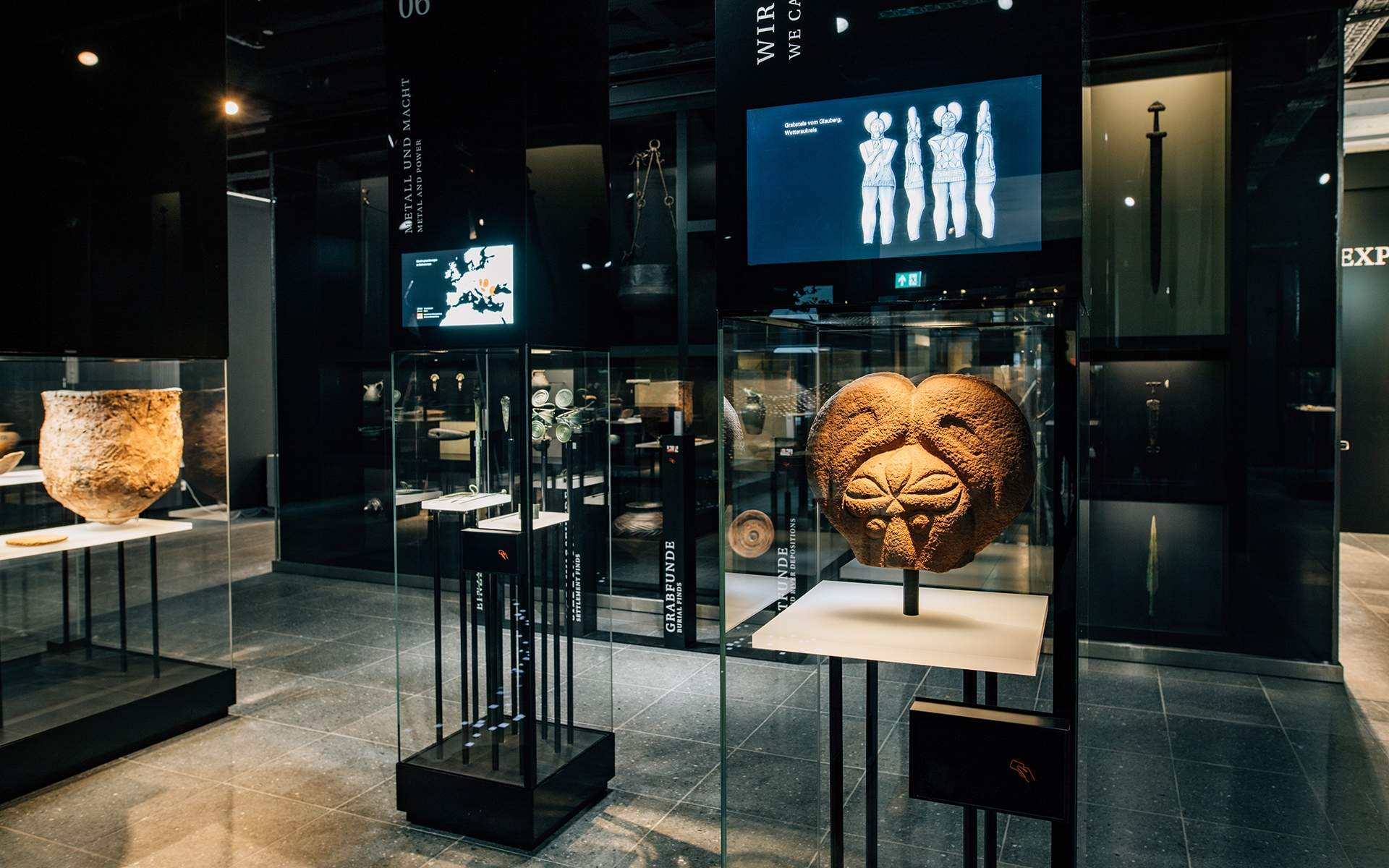
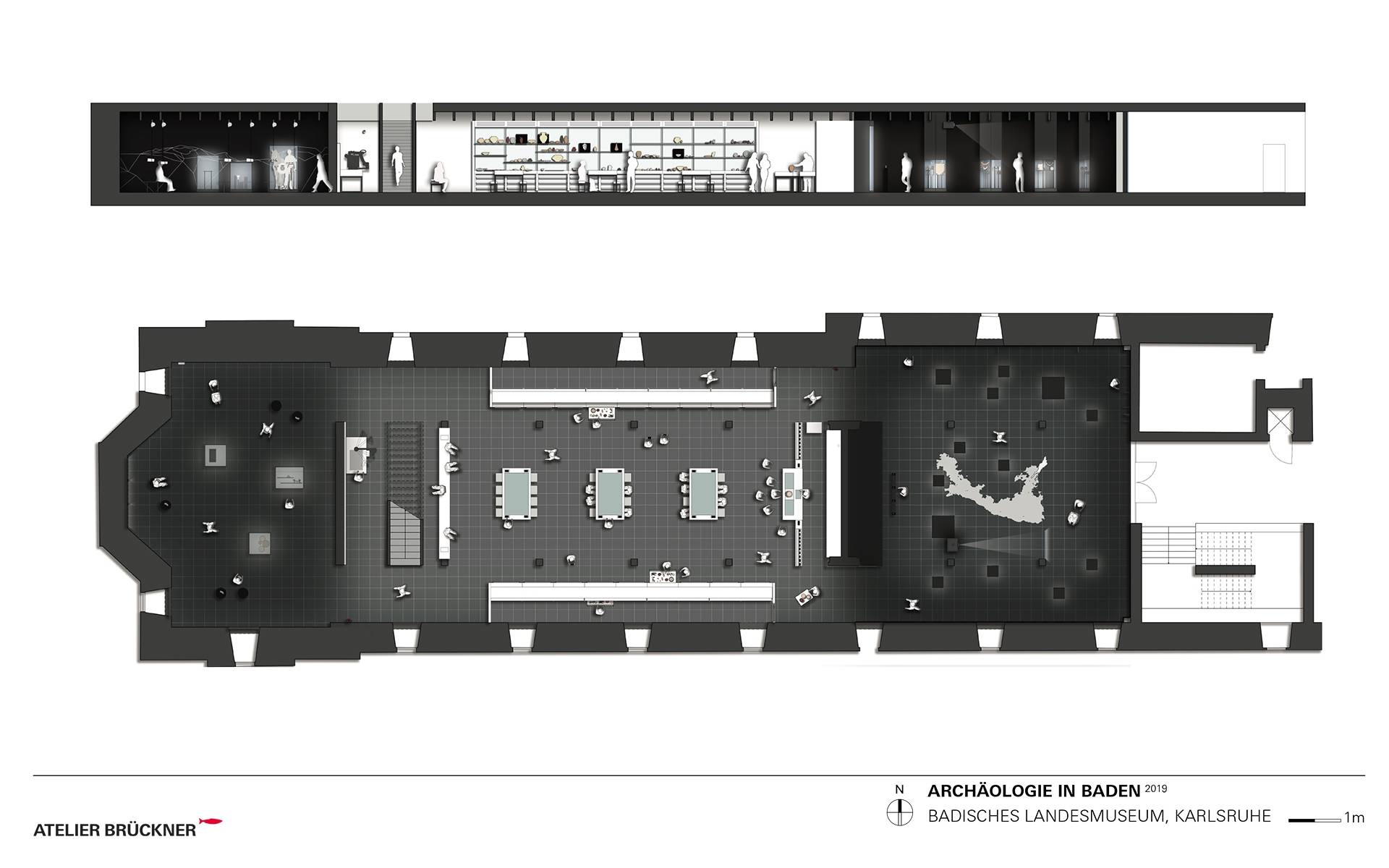
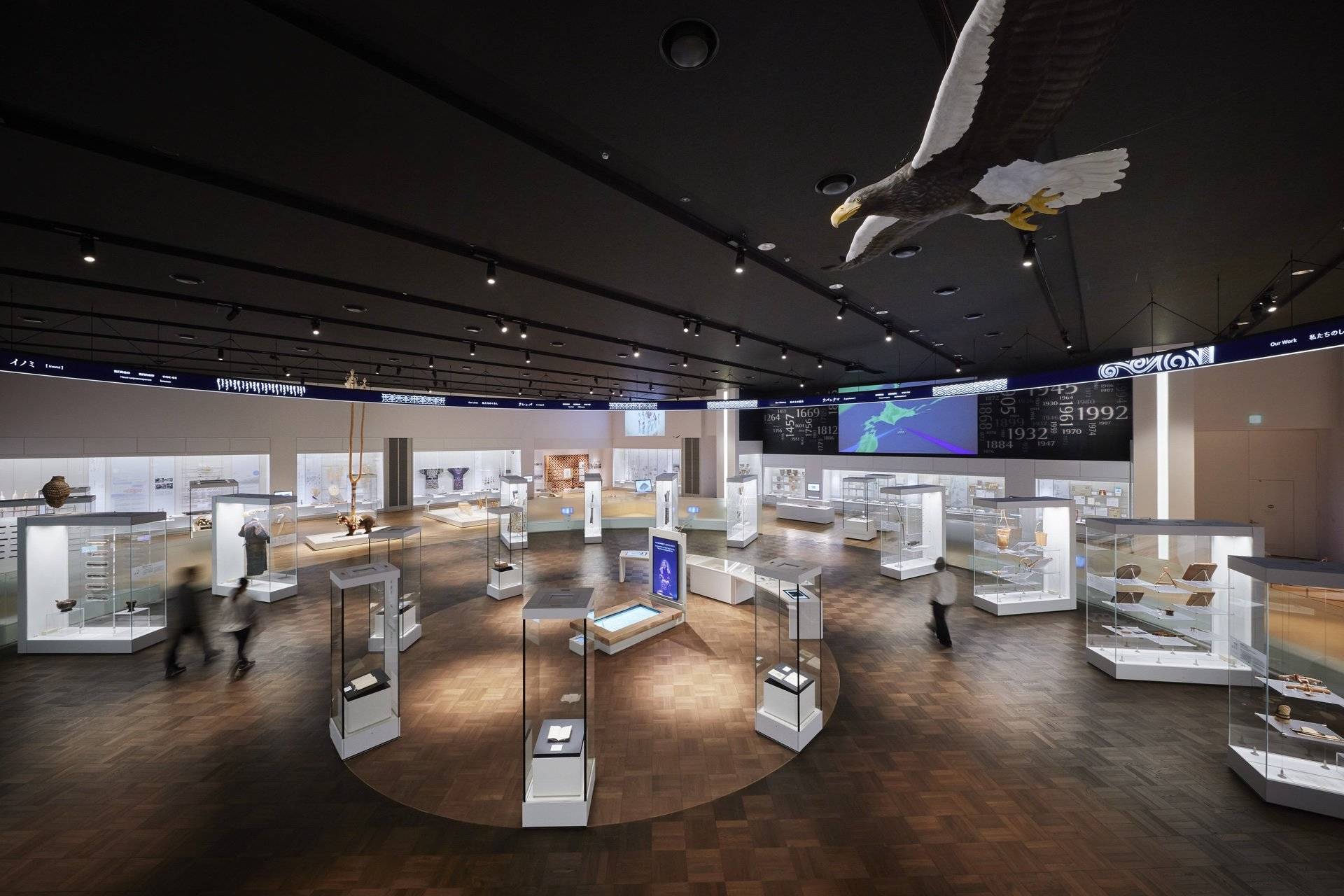
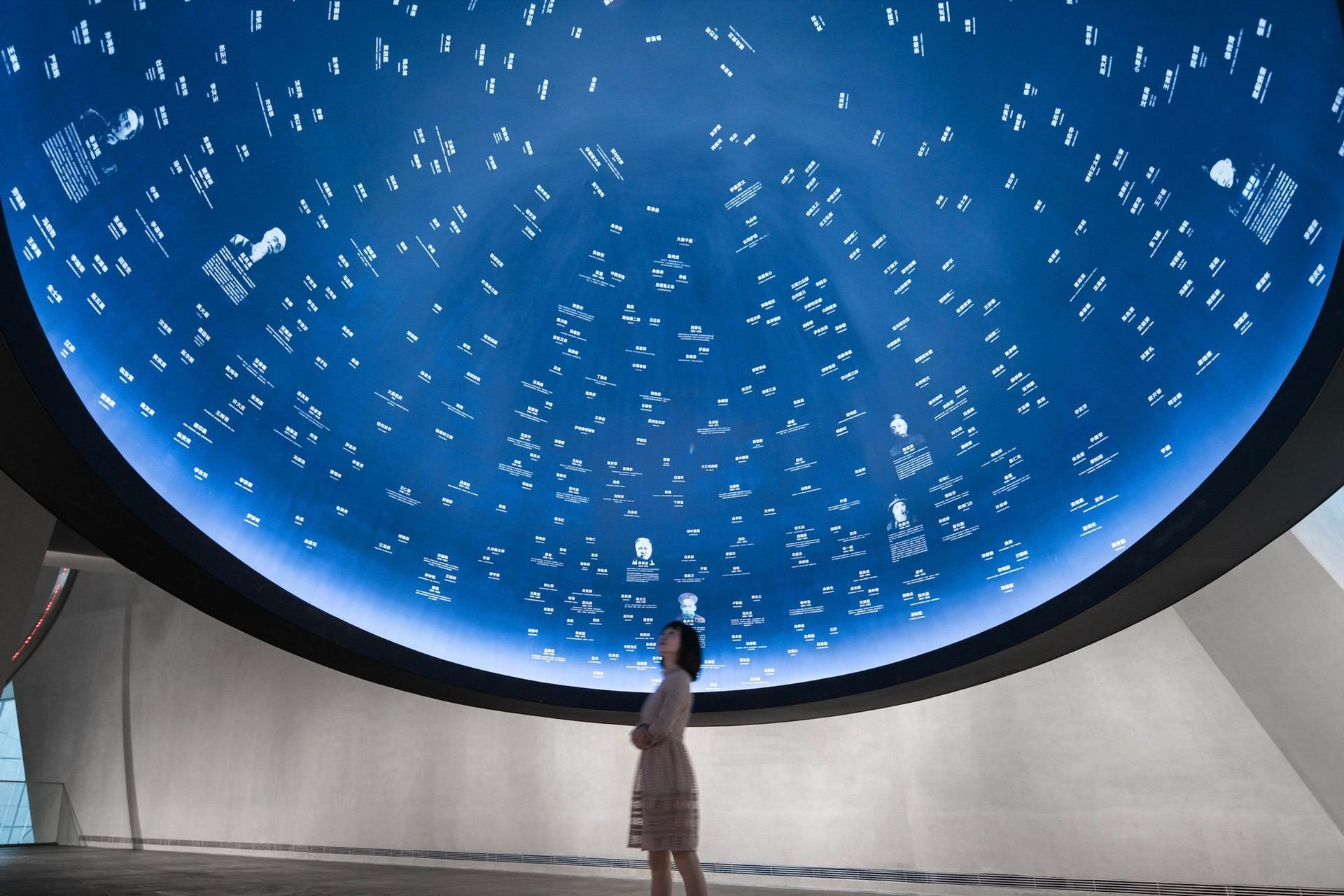
600平方米的展览设有三个不同互动方式的叙事空间:名为“巴登里程碑”的暗室作为序厅。博物馆考古品的出土地点在巴登地区地面地图上以发光方点呈现;13件重点文物——包括公元前5世纪凯尔特墓碑“海德堡头像”及阿尔卑斯以北最古老圣母像(墨洛维装饰圆盘上的宝座圣母)——在展厅中突出陈列。观众可用用户ID激活玻璃展柜,集成显示屏即展示文物描述及复原或原始用途等细节;例如该银装饰圆盘在公元600年左右用作马饰。
The 600 square metre exhibition offers three narrative spaces with different possibilities of interaction: the darkened room entitled “Meilensteine Badens” (Baden’s Milestones) serves as an introduction. The sites where the archaeological items in the museum were found are illuminated as square points of light on a floor map of the Baden region. 13 highlights, which stand out and are prominently placed in the room, include the “Heidelberger Kopf” (Heidelberg Head), a fragment of a Celtic tomb stele from the 5th century BC and the oldest depiction of St. Mary north of the Alps: an enthroned Mother of God on a Merovingian decorative disc. Visitors can obtain information on the objects by activating the glass showcases with their user ID. The integrated display shows a description of the object and other details about it such as the reconstruction or original use. The silver decorative disc, for example, was used as horse decoration around 600 AD.
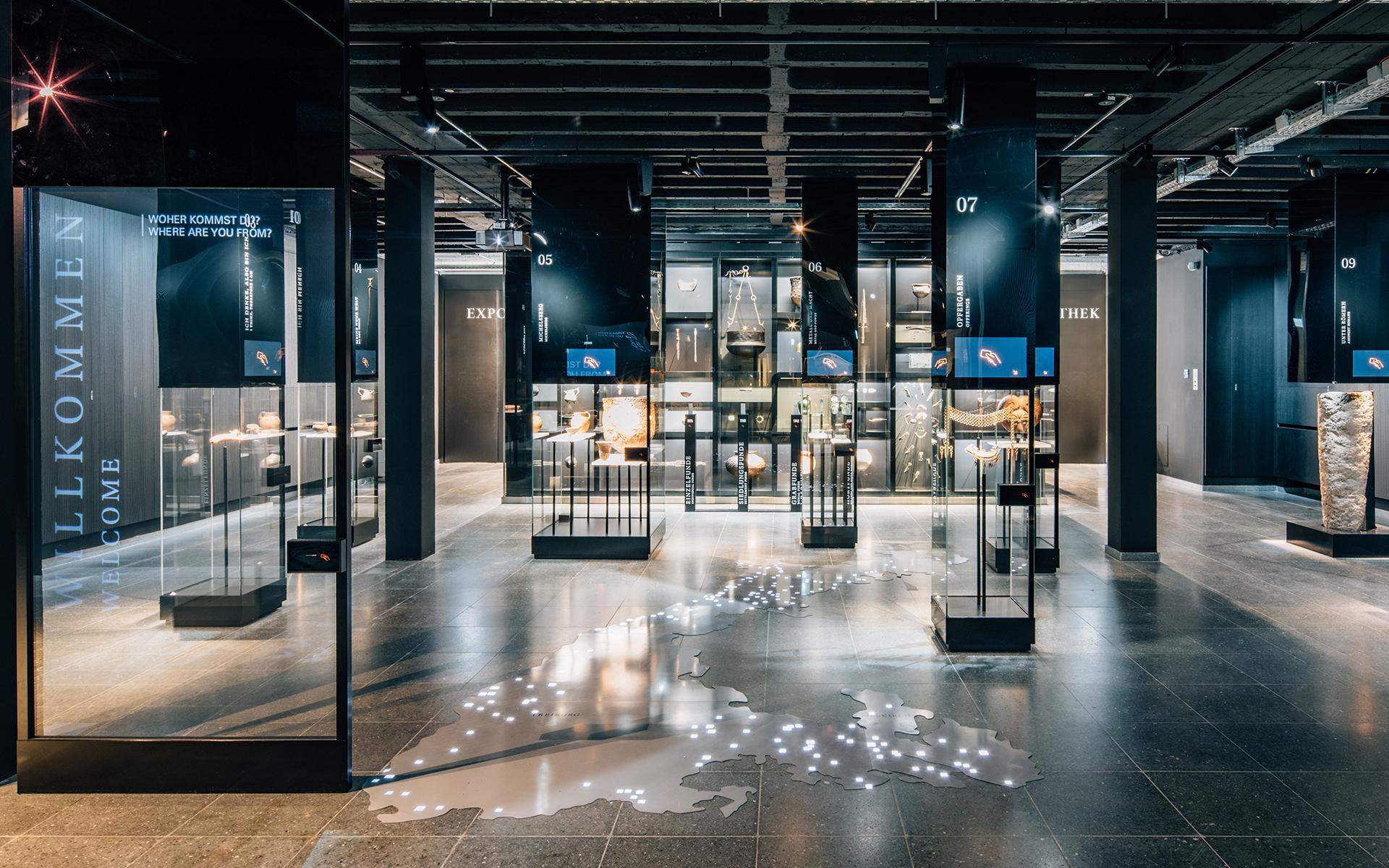
“巴登里程碑”区域概述该地区的考古年代。观众仿佛置身其中:一面“欢迎墙”以预选语言(德语或英语)向他们致意,并显示其当前参观位置。
The “Meilensteine Badens” section provides an overview of the region’s archaeological epochs. The visitors feel like being directly involved: A “welcome wall” greets them in the previously chosen language (German or English) and shows their current place of visit.
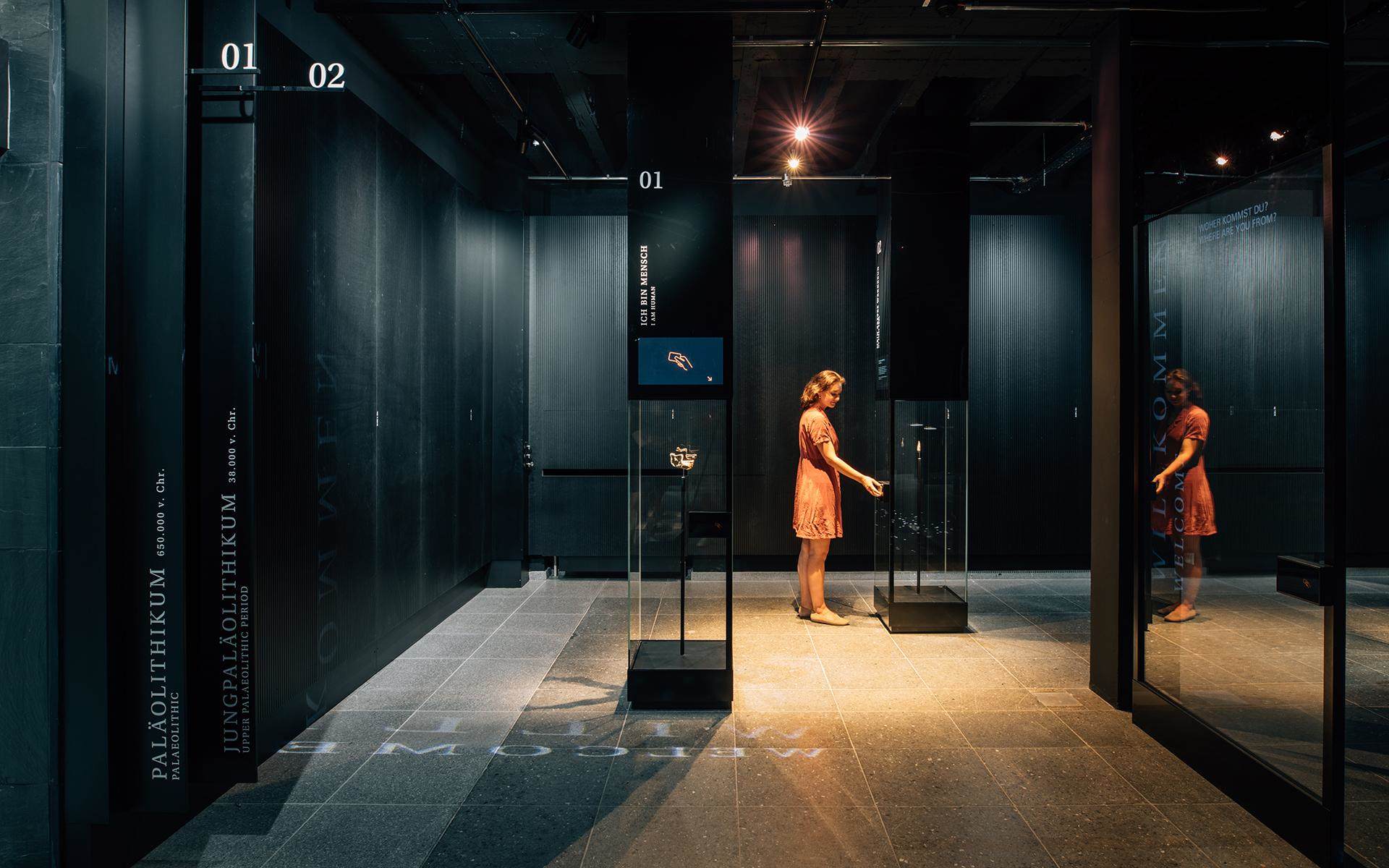
环绕空间的深色垂直条构成一条时间轴,从当下的“我”延伸至石器时代。2000根条带每根代表一代人(20年),个别条带被拉出并标注年代名称,与展出的考古文物相对应。
The dark, vertical strips that enclose the space make up a timeline. They start with the “I” of today and reach back to the Stone Age. Each of the 2,000 strips represents a generation (20 years). Individual strips are pulled out and given epoch names. They correspond with the exhibited archaeological objects.
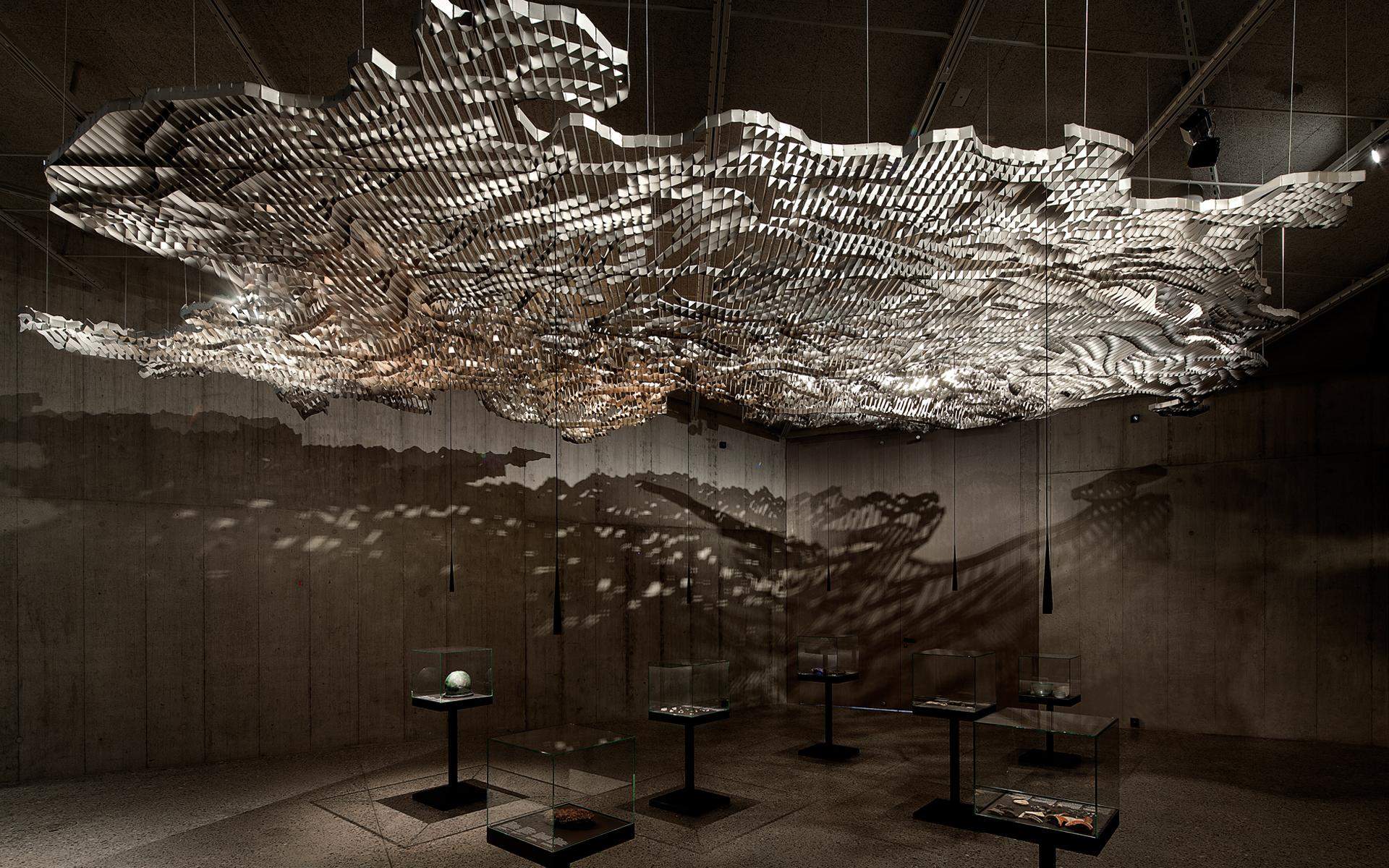
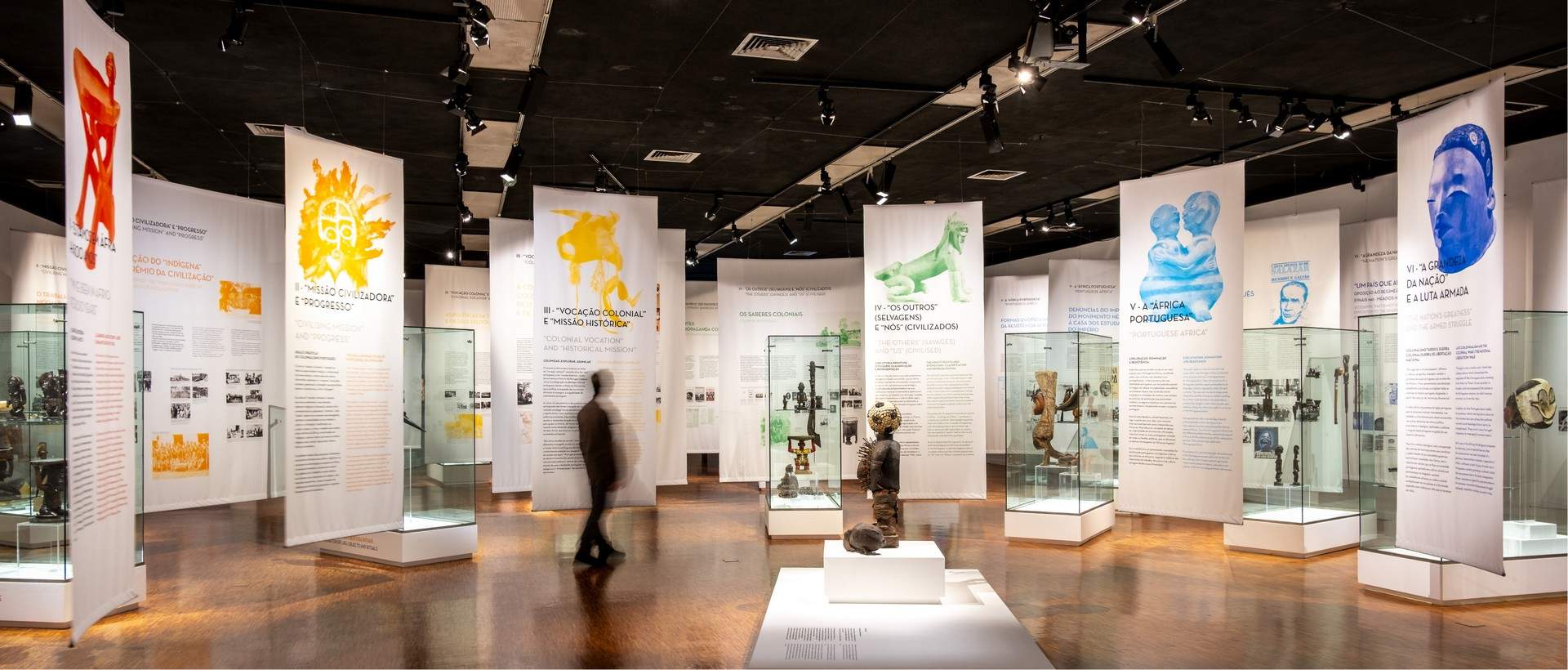
一面玻璃展柜墙将“巴登里程碑”与邻区分开;邻区按发现情境悬浮呈现更多文物。观众选择后,个别发现物、聚落遗存、墓葬或窖藏会被点亮,音频站同步解说内容。
A wall of glass showcases separates the “Meilensteine Badens” from the neighbouring space, which presents further finds, mounted to look as if they are hovering, in accordance with the context in which they were discovered. Depending on the visitor’s selection, individual finds, settlement remains, burial finds or hoards are lit up. Audio stations explain the content.
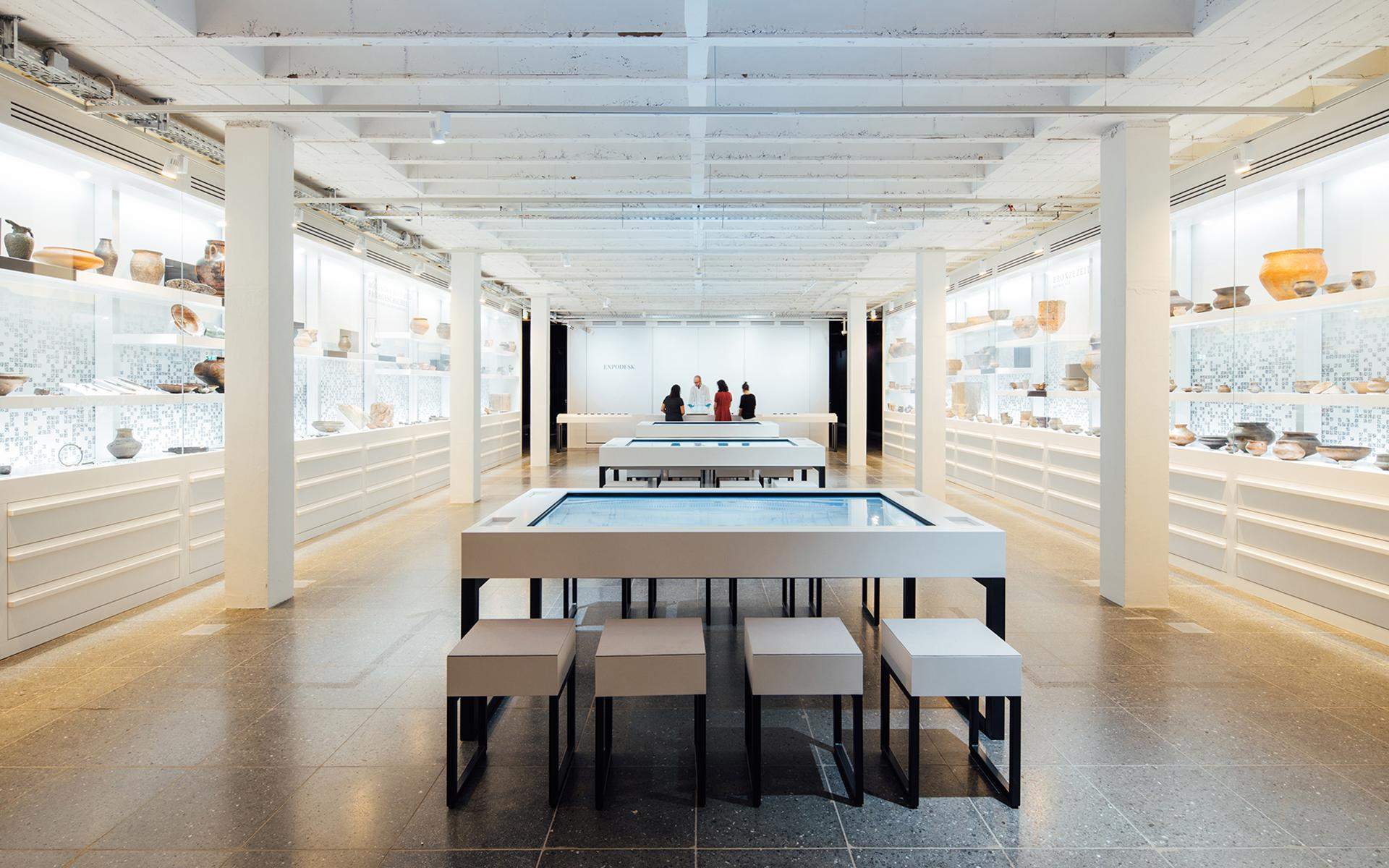
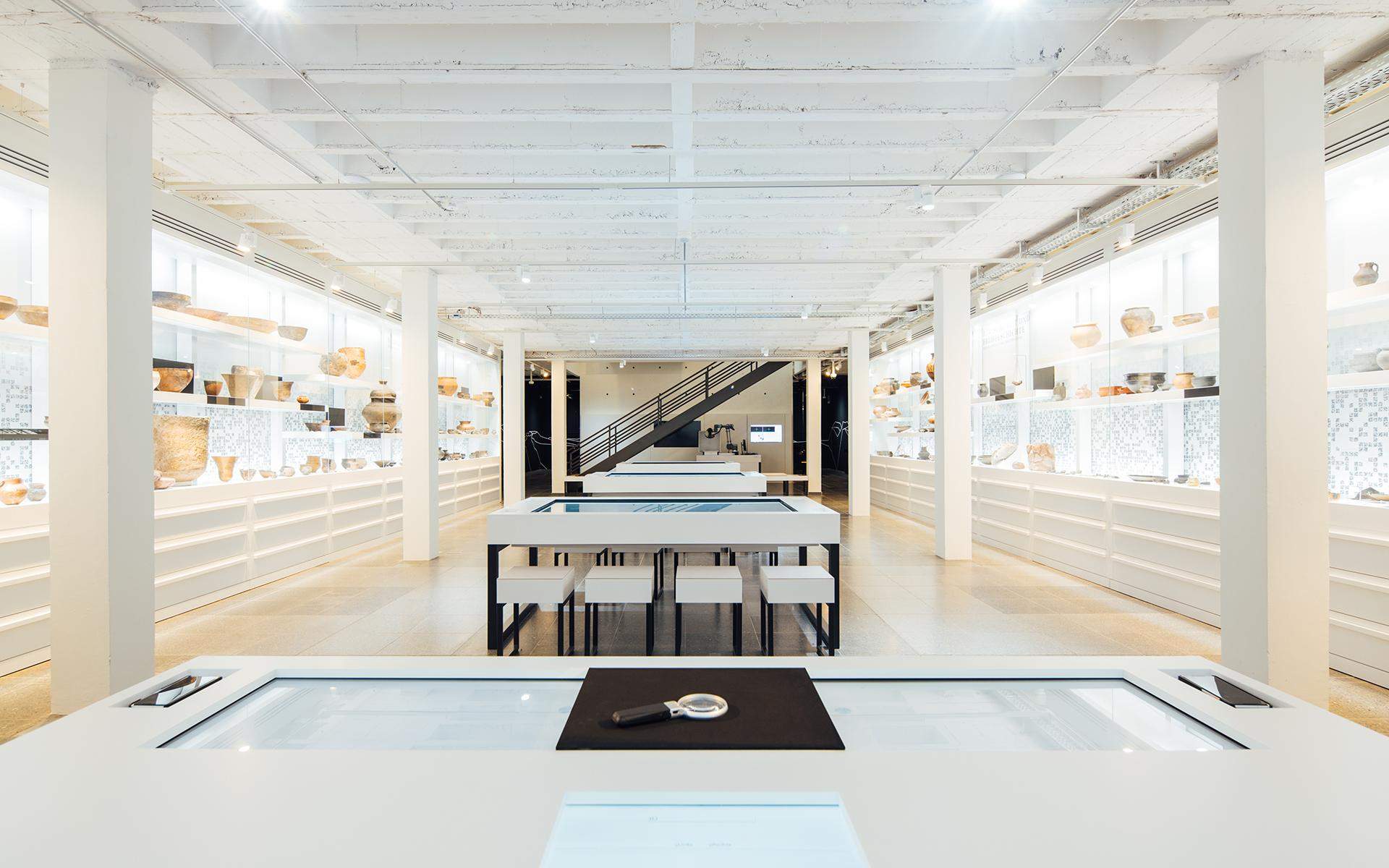
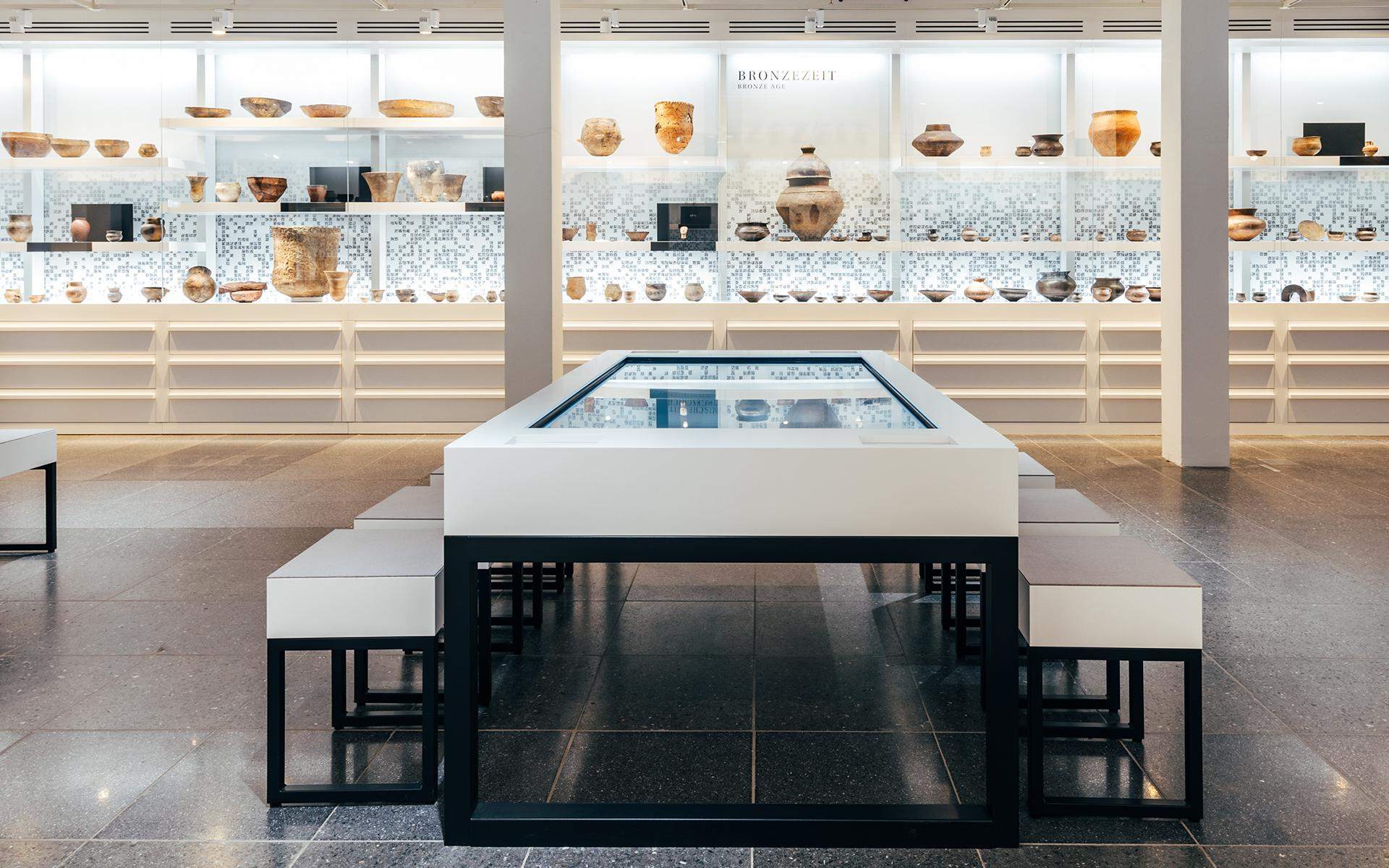
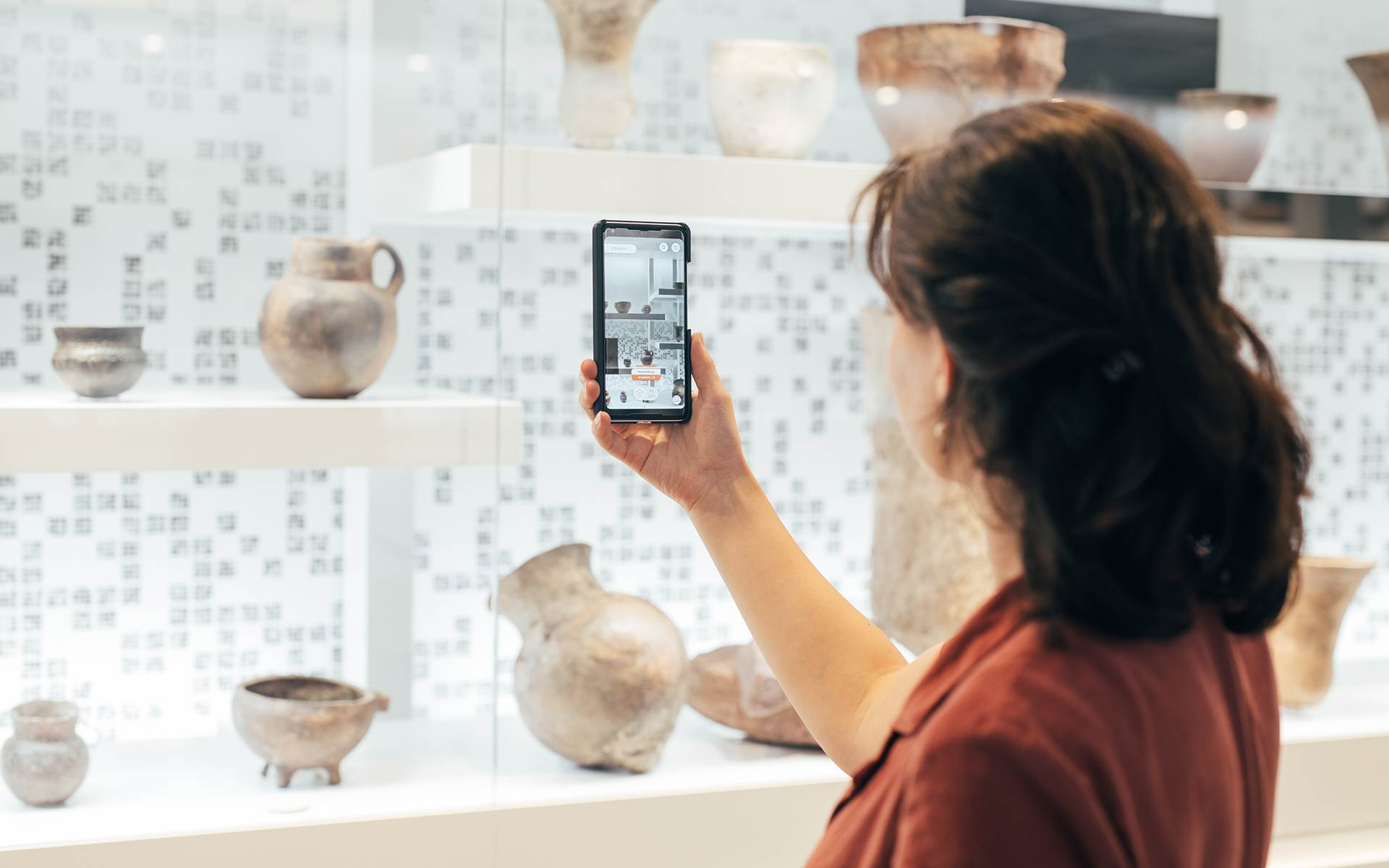
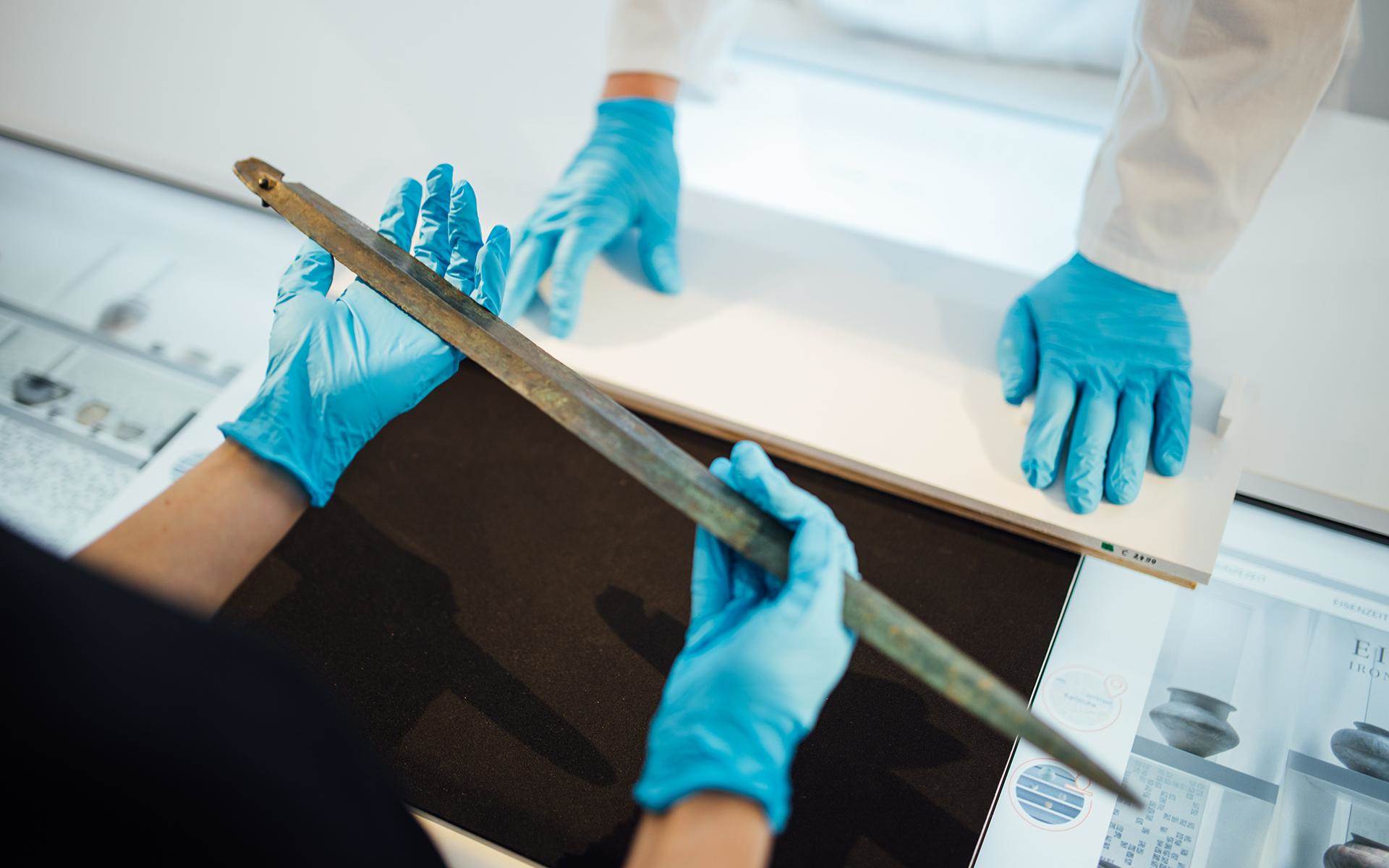
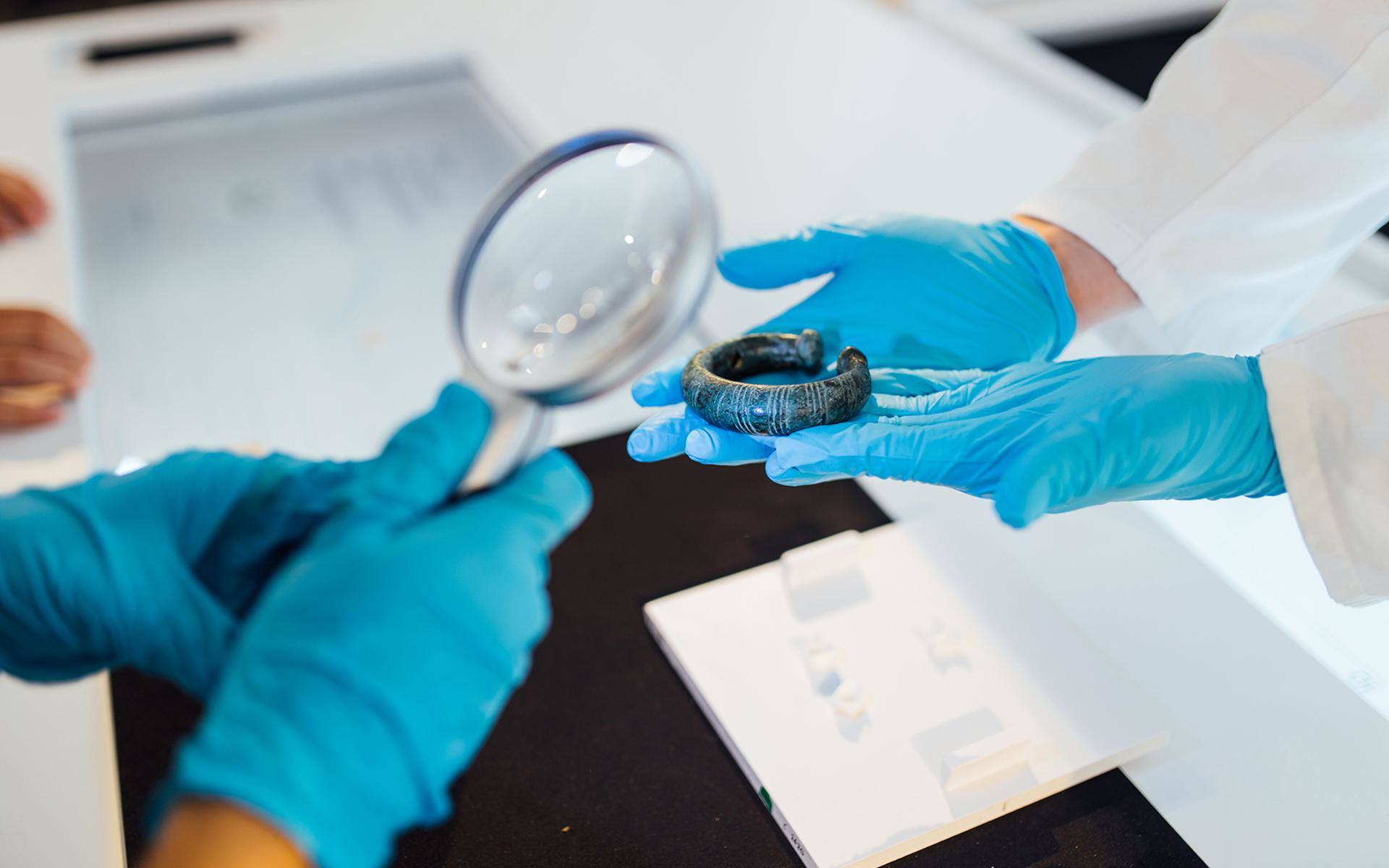
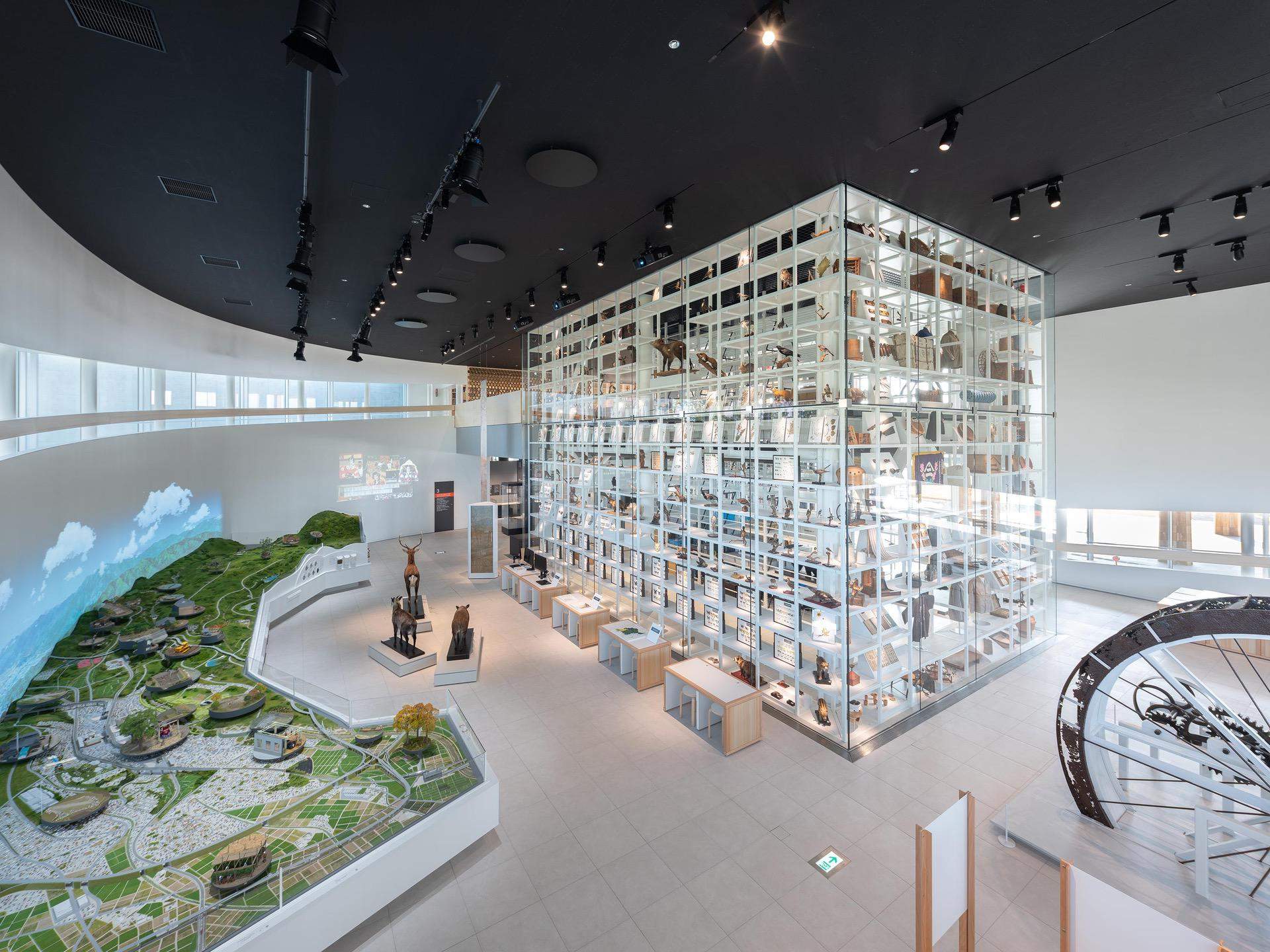
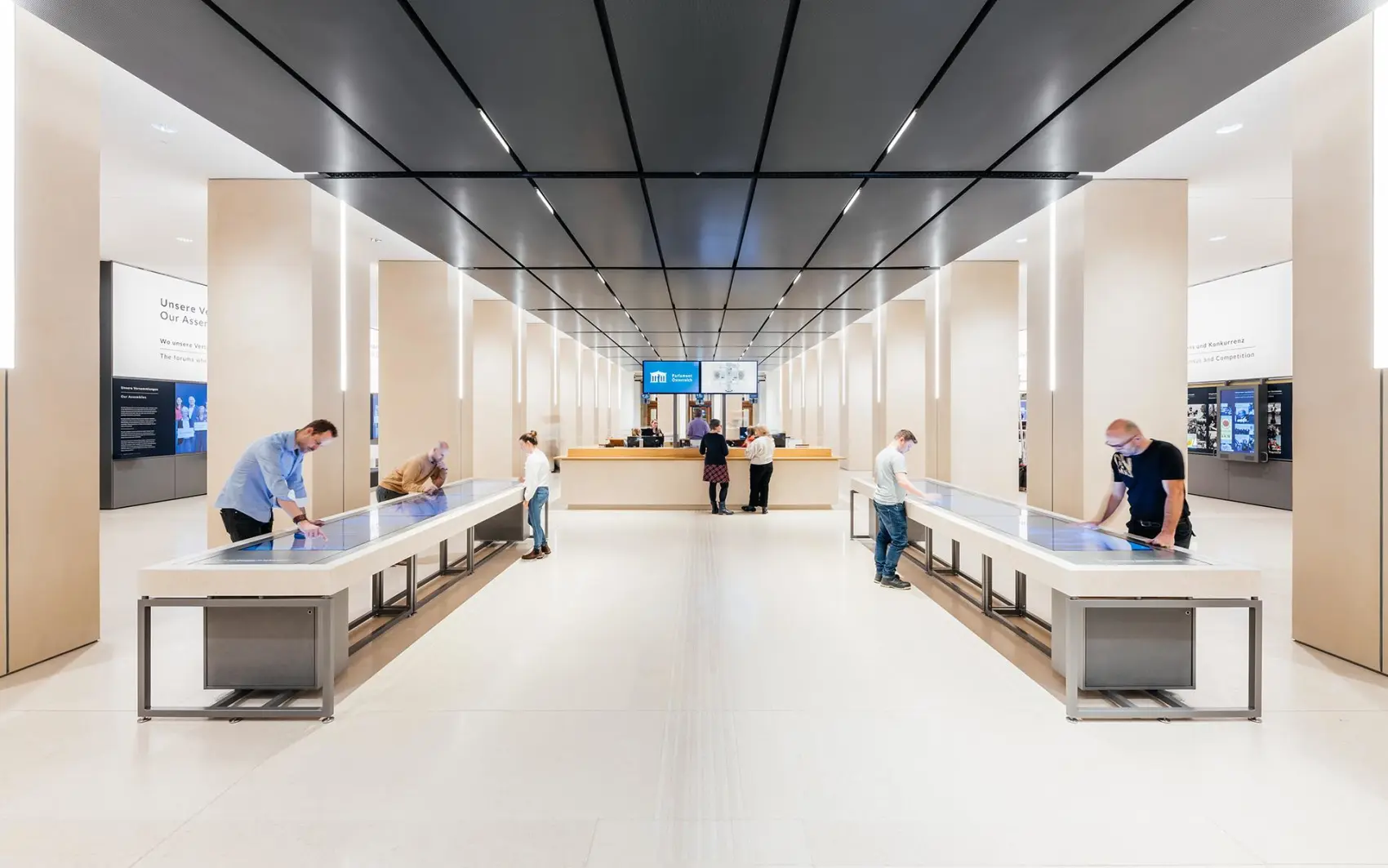
中央展厅Expothek是整个新概念的核心。在这里,观众可以亲手触摸预先选定的文物。一位被称为“Explainer”的科学家会介绍历史背景并将文物递交给观众。文物的气场、重量、表面结构和使用痕迹都令人印象深刻。此外,这些文物还可以通过3D扫描仪进行记录,从而同步扩充博物馆的数字档案。明亮展厅的长墙被设计成可视档案,形似研究实验室。架屉内存放约1400件按时代排列的文物:石器时代、青铜时代、铁器时代及罗马时期与原史时代。通过Explainer递出的ExpoPhone,观众可虚拟探索藏品,文物信息将以增强现实形式显示在手机上。展厅中央的三台大型互动媒体桌也可访问藏品,观众可在此检索特定考古地点、参与问答游戏并查看文物的高分辨率图像。
The central room, the Expothek, is the heart of the new concept. Here, the visitor can physically handle previously selected objects. A scientist, called an “Explainer”, describes the historical background and hands the object over to the visitor. The aura, the weight, the surface structure and signs of usage are impressive. In addition to this, the objects can be recorded with a 3D scanner, as a result of which the museum’s digital archive is simultaneously expanded. The long walls of the brightly lit room, looking like a research laboratory, are designed as visible archive. Shelves and drawers contain around 1,400 objects, arranged according to epochs: Stone Age, Bronze Age and Iron Age, as well as Roman Period & Protohistory. With the help of an ExpoPhone, which the Explainer hands out, the collections can be explored virtually. Information on the objects is displayed on the ExpoPhone in augmented reality. Three large interactive media tables in the middle of the room also enable access to the collection. Here, the visitor can look for specific archaeological sites, take part in quiz games and view high-resolution images of the artifacts.
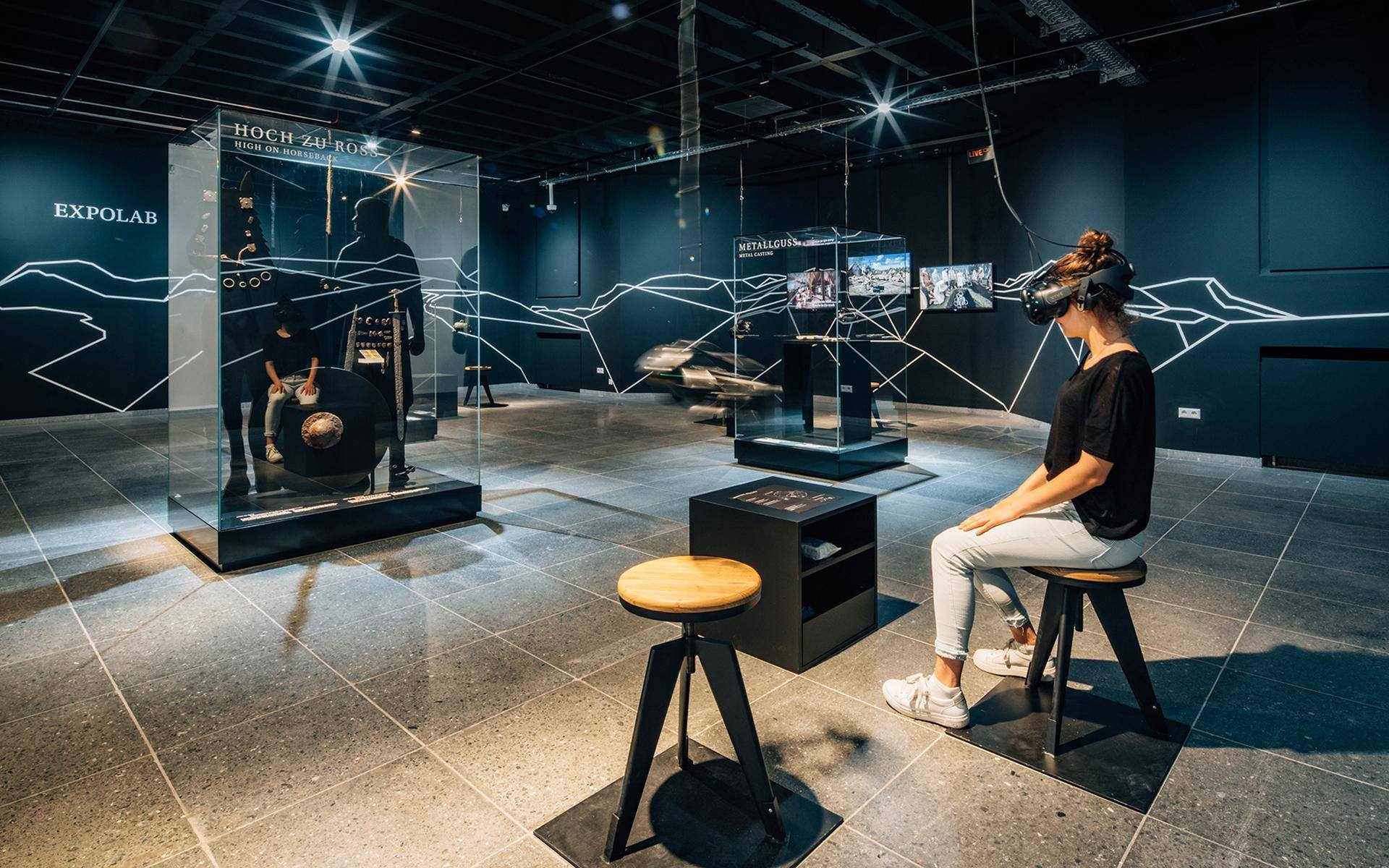
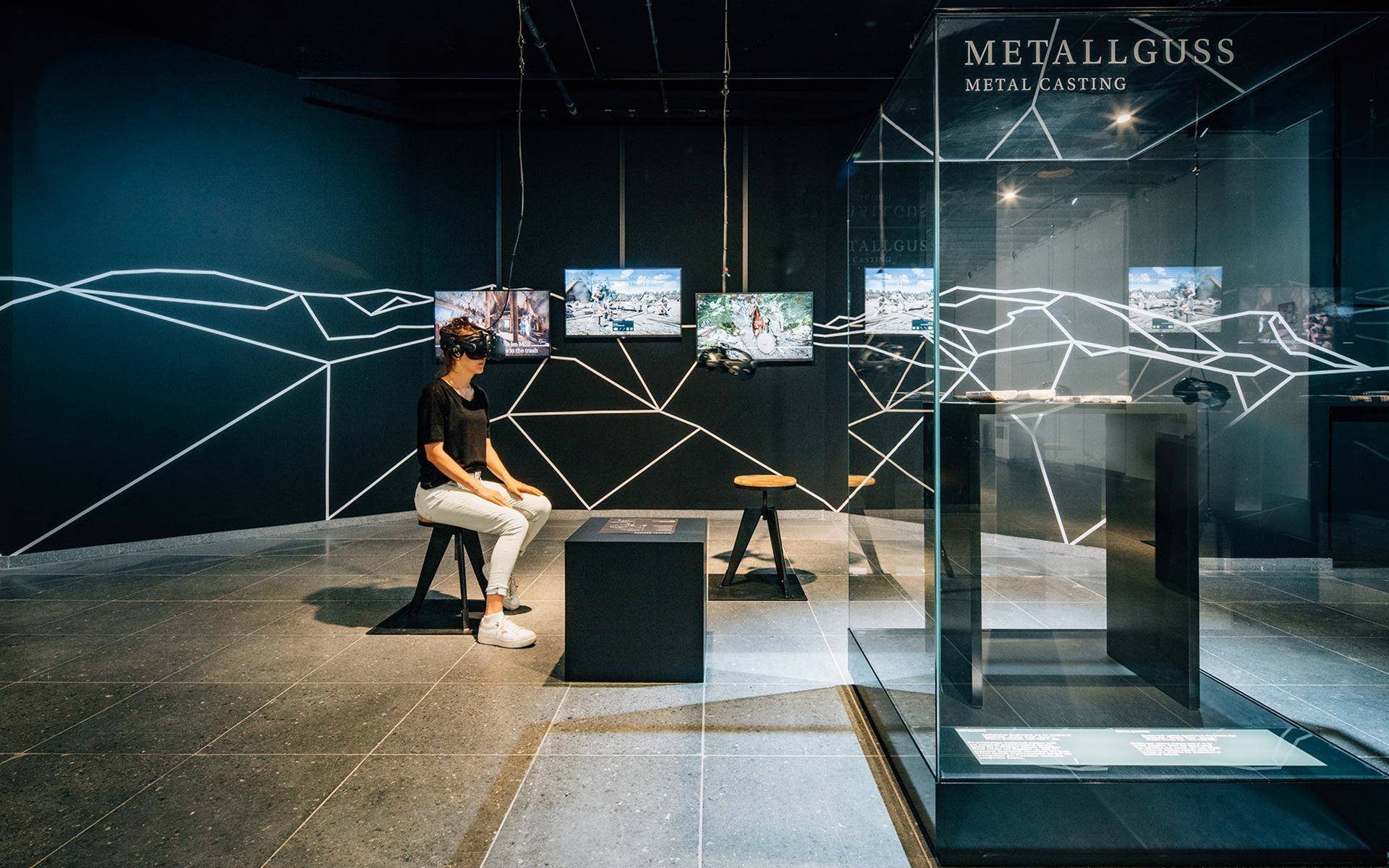
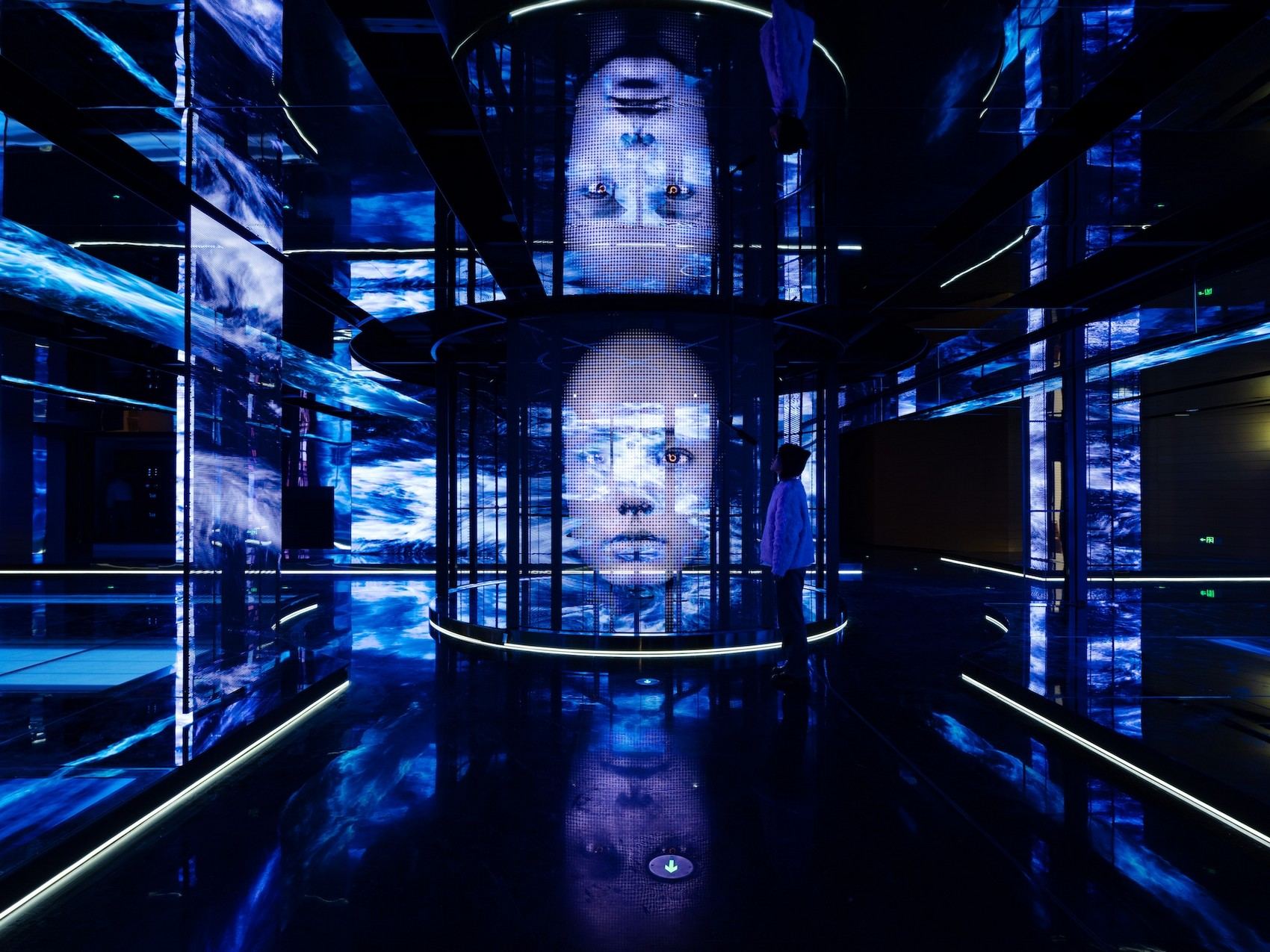
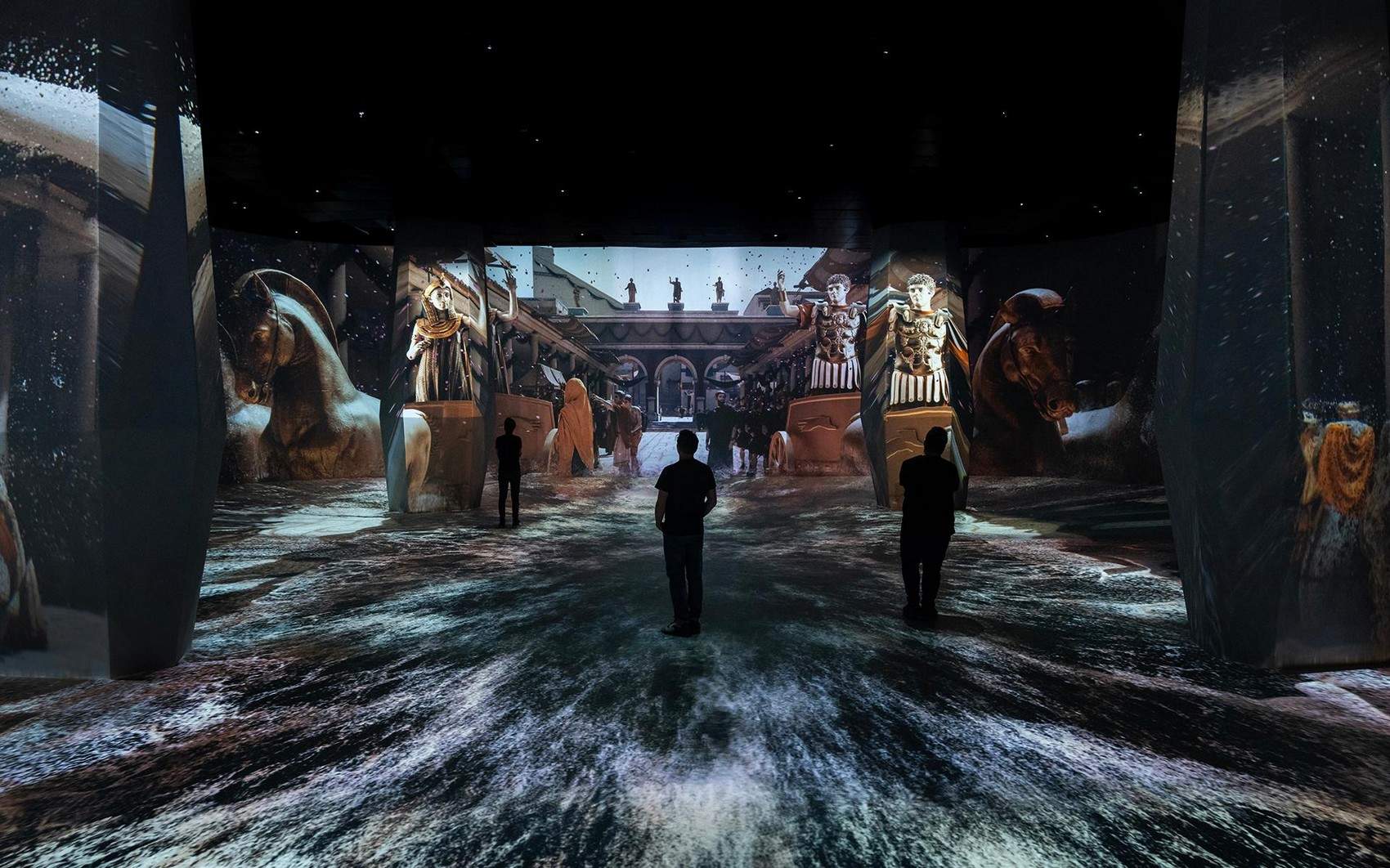
最后,ExpoLab 暗室邀请观众进行体验,目前展示三件发现物。虚拟现实头显将观众带入过去,使其能够在原始语境中体验展品。例如,7世纪上半叶的一处墓葬发现让观众沉浸于被埋葬的墨洛温人的世界,数字景观环绕四周。通过视角引导系统,观众可选择首选语言,激活单个物体描述及观看视角。起初,观众身处森林,站在战士与伏击弓手之间;下一场景以鸟瞰视角展示墓中死者。墙面显示器实时展示观众所体验的画面。
Finally, the ExpoLab, a darkened room, in which three finds are currently being presented, invites the visitor to experiment. Virtual-reality goggles take the visitor into the past, making it possible to experience the exhibits in their original context. A grave find from the 1st half of the 7th century, for example, allows for immersing oneself into the world of the interred Merovingian, whereby the visitor is surrounded by a digital landscape. By means of a view guidance system, the visitors select their preferred language; they activate the individual object descriptions and the perspectives from which they look at the occasion. Initially, the visitor is in a forest, standing between the warrior and a bowman, who attacks from ambush. The next scene shows the dead man in his grave from a bird’s-eye perspective. Monitors on the wall show what the visitor is experiencing at any particular moment.
实施及展览设计 / Implementation Exhibition Design:ATELIER BRÜCKNER
灯光设计 / Light Planning:Belzner Holmes
多媒体规划 / Media Planning:medienprojekt p2
摄影 / Photography:Marcus Sies
本文内容由 ATELIER BRÜCKNER 提供或来源于其官方媒体渠道,由 WeHow 整理编辑。图片、视频及相关设计作品的版权归原作者/设计方所有。未经 WeHow 及版权方书面许可,禁止以 WeHow 编辑版本进行任何形式的转载或商业使用。





评论列表(1条)
ATELIER BRÜCKNER(布鲁克纳工作室)是一家德国的叙事性空间与展览设计事务所,以“形式追随内容”为核心理念,擅长将建筑、展陈、媒体与灯光融合,打造具有国际水准的叙事性建筑与沉浸式展览体验。