非常感谢 Pills Architects 分享内容给 WeHow。
Thanks to Pills Architects for sharing with WeHow.
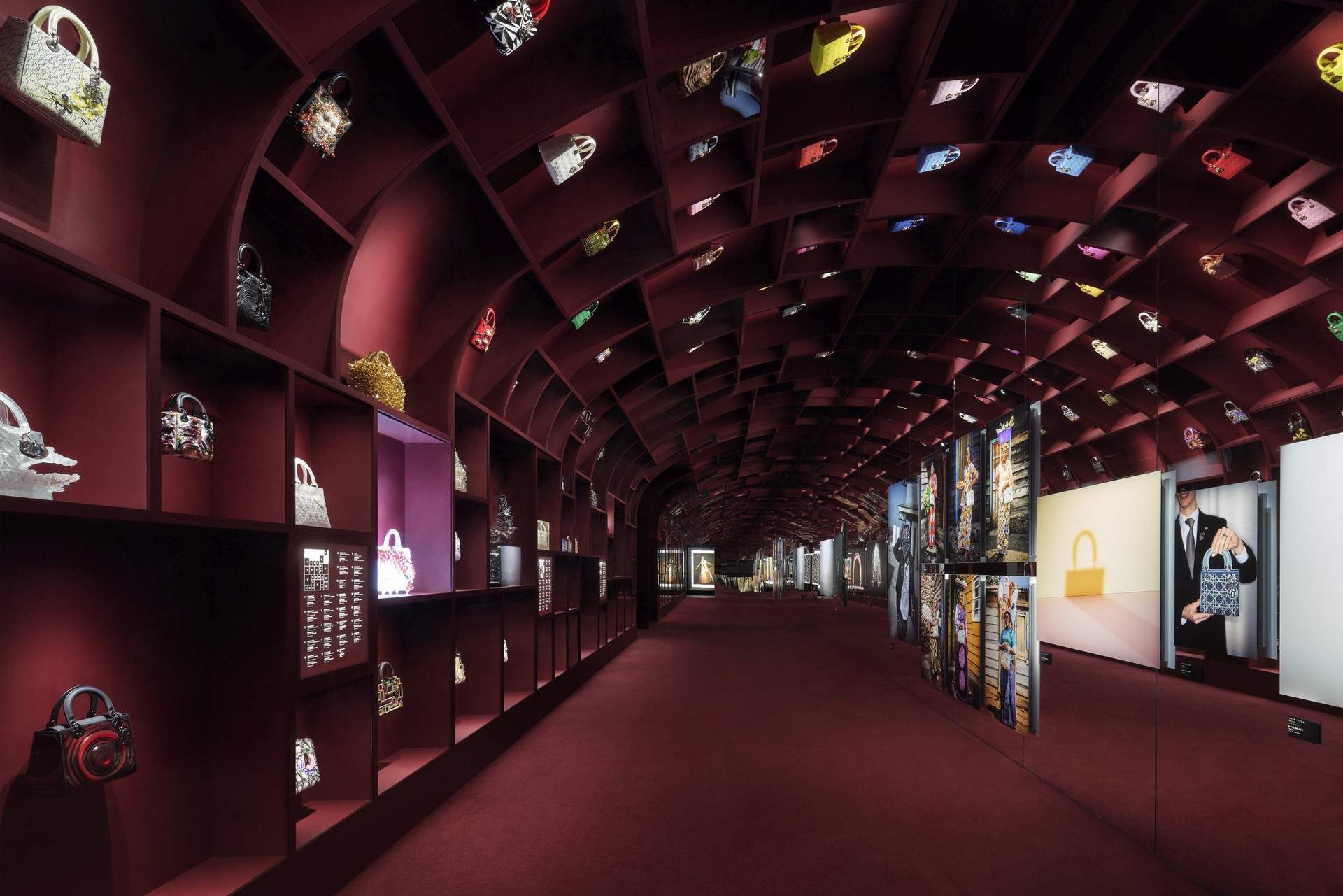
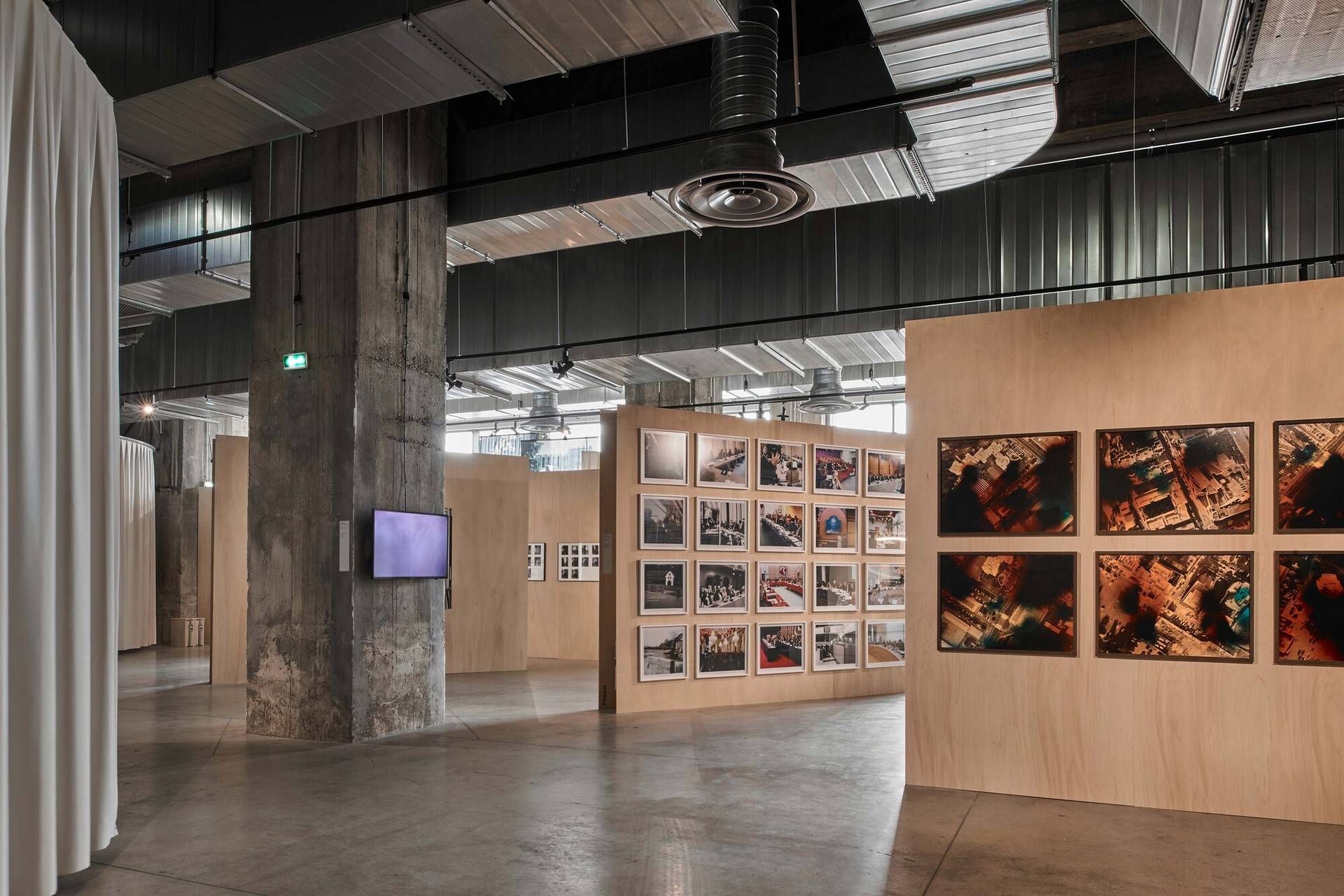
2025年5月22日至25日,备受瞩目的北京廿一现当代艺术博览会(ART021 BEIJING)在798·751园区的七九罐与第一车间两大标志性建筑正式开幕。作为中国现当代艺术领域的重要展会,此次博览会吸引了来自11个国家及地区的超50家画廊与特别项目参展,共计展出近千件涵盖绘画、雕塑、装置、书画及珠宝等多个门类的现当代艺术作品。 其中,由PILLS工作室负责展览设计的“珍宝阁”(KunstKammer)特别展览在第一车间精彩呈现,成为本次博览会的一大亮点。
From May 22 to 25, 2025, the highly anticipated ART021 BEIJING Contemporary Art Fair officially opened at two iconic venues—the 79 Tank and the First Workshop in Beijing’s 798/751 Art District. As a pivotal event in China’s contemporary art scene, this edition of the fair brought together over 50 galleries and special projects from 11 countries and regions, showcasing nearly a thousand modern and contemporary artworks spanning painting, sculpture, installation, calligraphy, jewelry, and more. Among them, the “KunstKammer” special exhibition, designed by PILLS Studio, stood out as a highlight at the First Workshop.
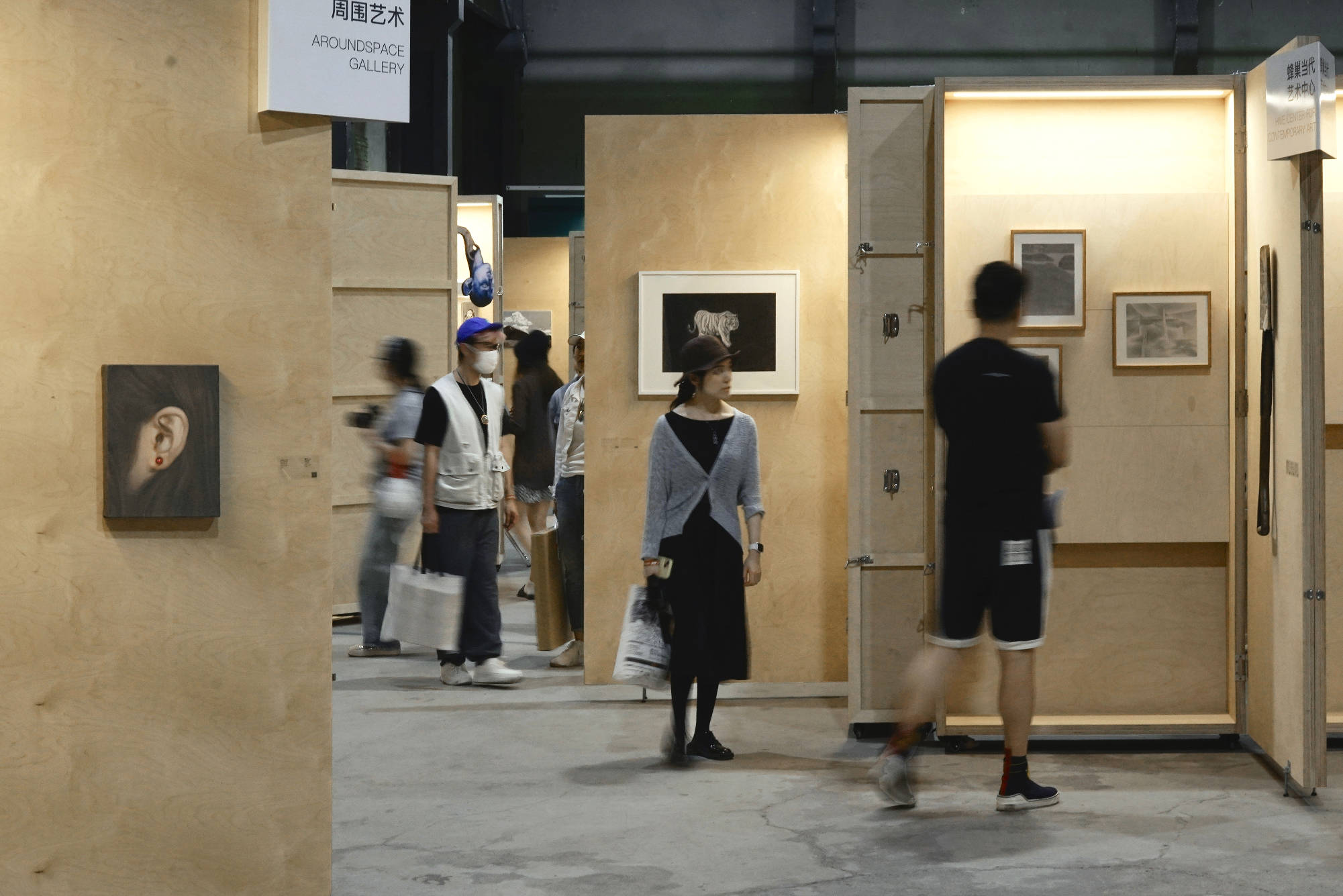
“珍宝阁”展柜系列是PILLS工作室为应对极限的展览搭建时间而专门设计的创新展示系统。设计团队采用预制化、模块化、集成化的设计方案,实现了极速安装与布展,并赋予了展陈系统灵活多变的呈现方式和独特的艺术个性,为观众带来了全新的观展体验。
The “KunstKammer” display system is an innovative exhibition solution developed by PILLS Studio to address the challenges of ultra-tight installation timelines. By adopting a prefabricated, modular, and integrated design approach, the team achieved rapid assembly and curation, while endowing the system with flexible configurations and a distinctive artistic identity—delivering a fresh viewing experience for audiences.
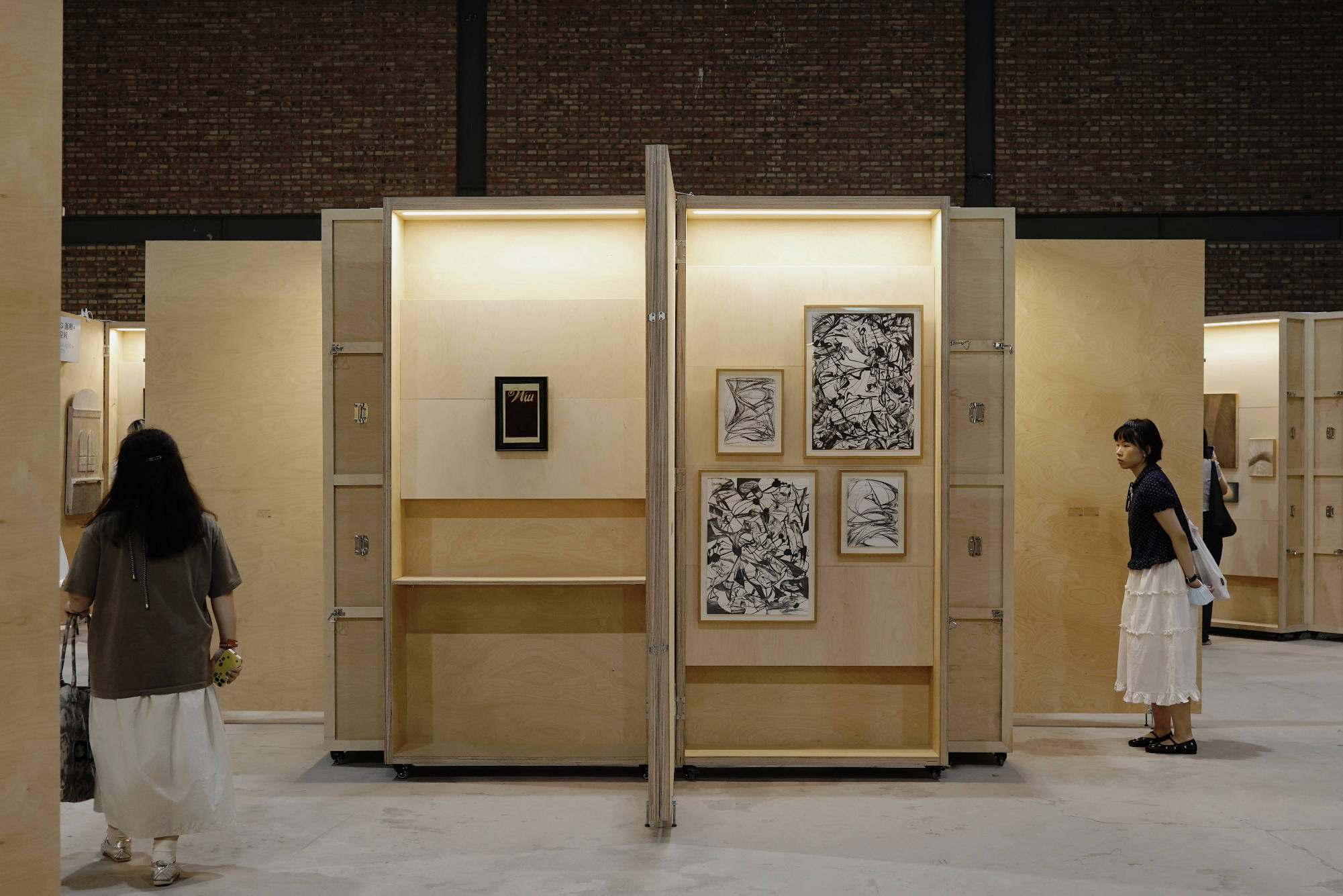
珍宝阁 / KunstKammer
PILLS方案的设计原型源自文艺复兴时期收藏家展示奇珍异宝的“珍宝阁”(KunstKammer德语、Cabinet de curiosités法语),它是现代“博物馆”的雏形,承载着展览发展演化的线索。从作为16世纪欧洲文艺复兴晚期王室贵族财富、权力、宇宙观和知识体系的象征,到如今面向公众的文化场所,“珍宝阁”深刻影响了现代展陈方式和策展方法,成为探讨“世界的观看方式”与“知识建构”的重要艺术文化符号。
The design concept of PILLS’ “KunstKammer” traces its origins to the Renaissance-era “cabinet of curiosities” (KunstKammer in German, Cabinet de curiosités in French), a precursor to modern museums that embodies the evolution of exhibition practices. From its role as a symbol of wealth, power, cosmology, and knowledge among European aristocracy in the 16th century to its contemporary incarnation as a public cultural space, the “KunstKammer” has profoundly influenced modern display and curatorial methods, becoming a significant artistic and cultural symbol for exploring “ways of seeing the world” and “knowledge construction.”
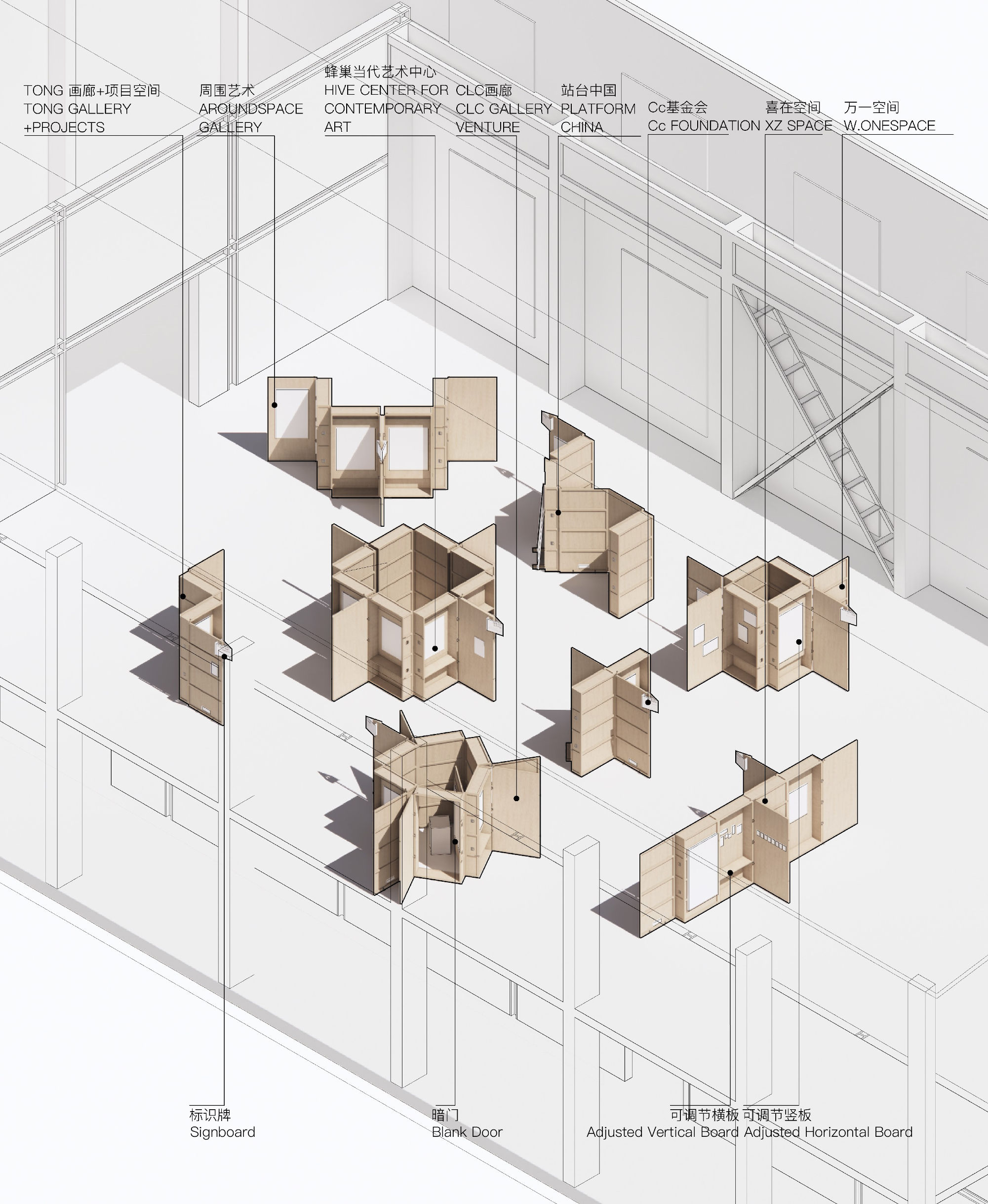
本届ART021 BEIJING“珍宝阁”特展中,八家画廊以独特视角诠释了对于“珍宝阁”的不同解读。通过差异化的展柜的布局和展品的陈列,构建起多元认知的探索。有的画廊采用对视的作品布局构成电影分镜般的叙事表达;有的则将艺术品视为图像,运用蒙太奇将这些图像构建为思想的影像,形成一个图像自治的独立世界。“珍宝阁”作为展陈实验的载体,提供了开放的语境给画廊与观众,赋予其充分的自主权。它激发了观众主动地观看、感知以及对话,最终展览的物理空间转化成为不同精神世界汇聚的文化场域,构成了一幅现当代艺术的“文化地图”。
At this year’s ART021 BEIJING, eight galleries offered unique interpretations of the “KunstKammer” concept. Through varied layouts and displays, they constructed a multifaceted exploration of perception. Some galleries arranged works in a confrontational manner to create cinematic, narrative sequences, while others treated artworks as images, using montage to assemble them into a visual tapestry of ideas—forming autonomous worlds of imagery. As a vessel for curatorial experimentation, the “KunstKammer” provided an open context for galleries and audiences alike, granting them full agency. It encouraged active viewing, perception, and dialogue, ultimately transforming the physical exhibition space into a cultural field where diverse mental worlds converged—a “cultural map” of contemporary art.
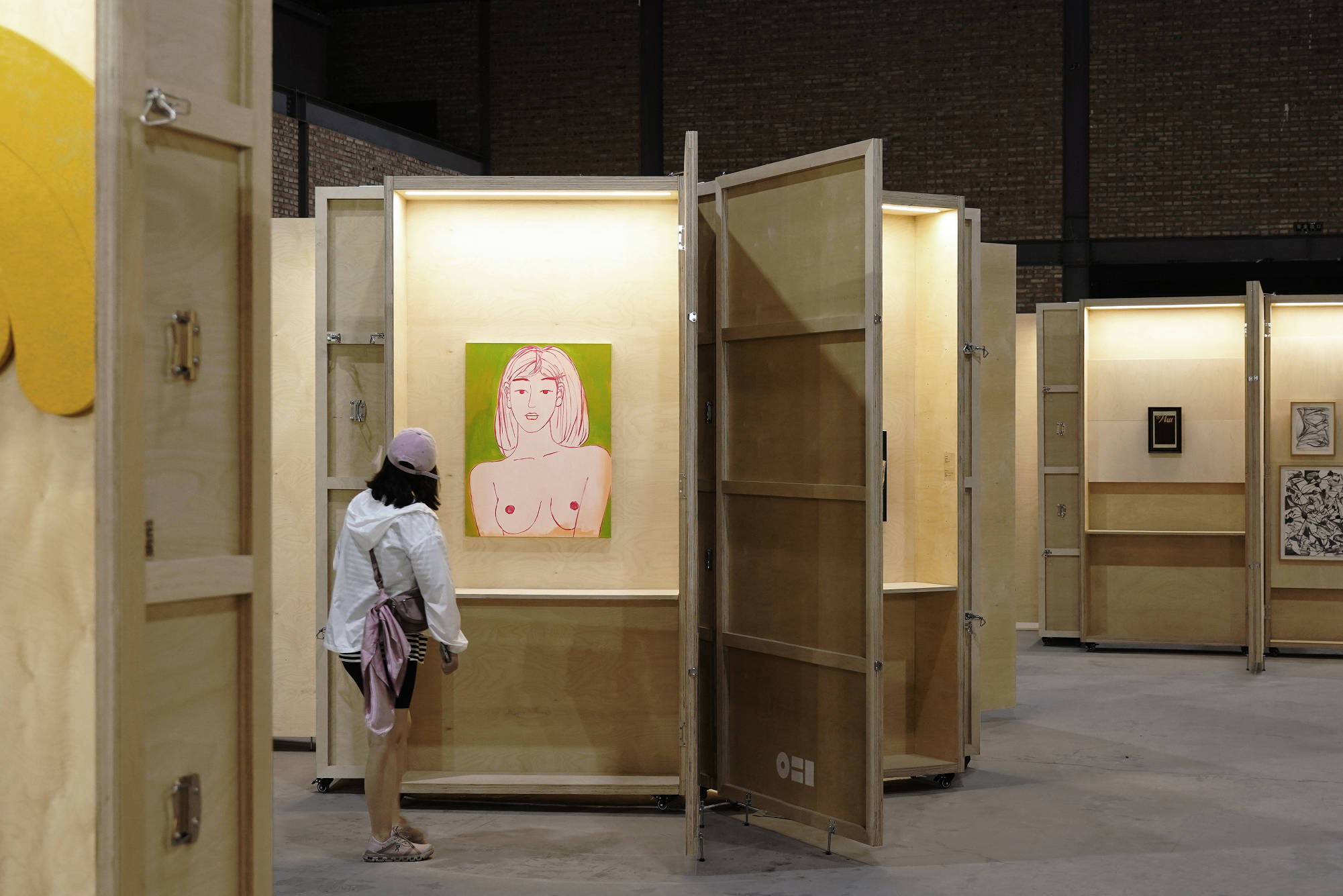
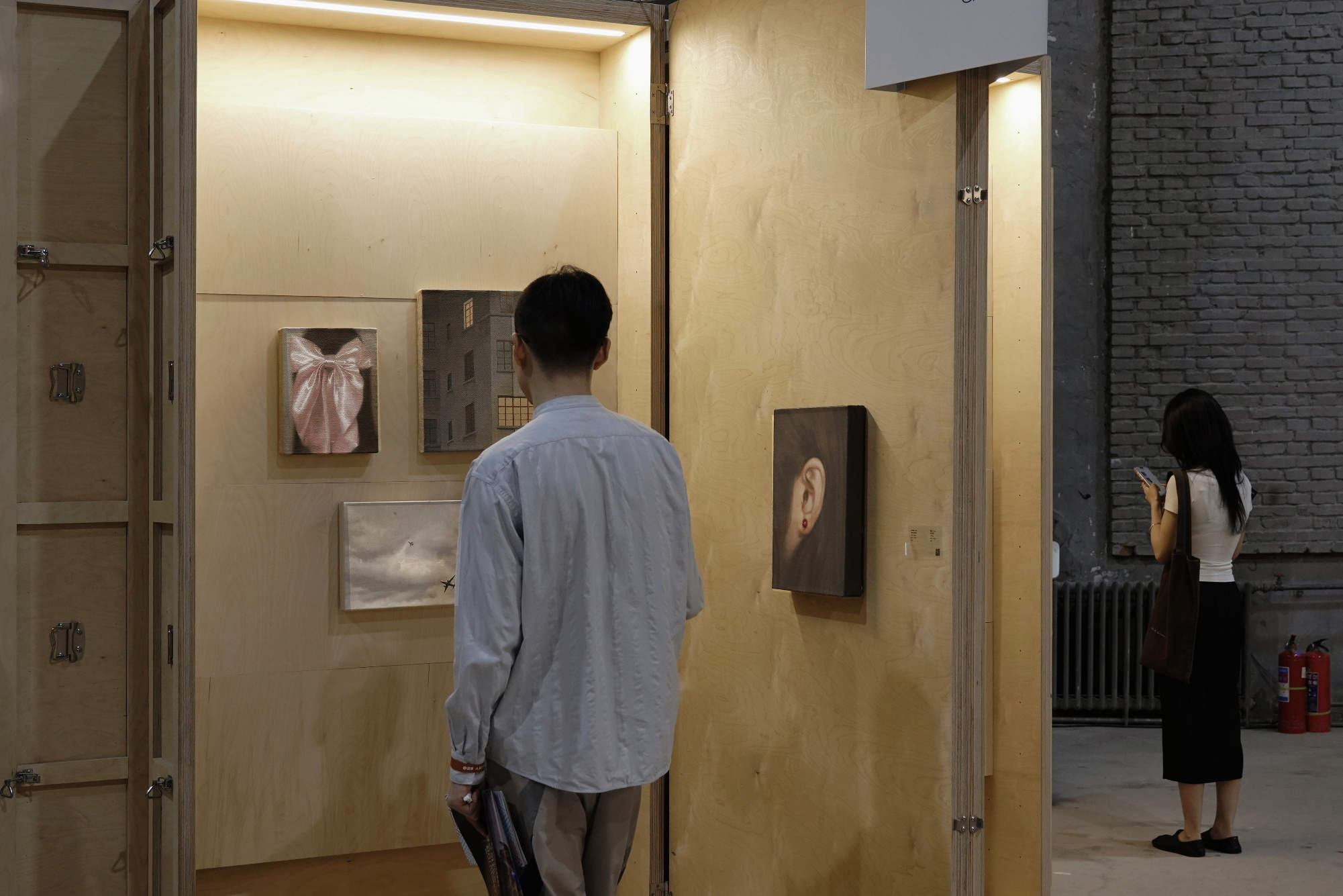
珍宝阁作为“世界的观看方式”,鼓励人们反思和构建人类自身在世界中的位置。在展示方法上,物品的排列并非按照传统的学科划分,而是基于一种更为流动和关联的思维方式。跨时空的作品可能并排展示,表明在认知世界过程中,知识、物件之间并非彼此独立,而是相互交织的。这种方式也挑战了固有的知识结构,并启发观众从多个维度去理解世界,从而激发了一种更加全面的宇宙观。
As a “way of seeing the world,” the “KunstKammer” invites reflection on humanity’s place within it. In its display methodology, objects are not arranged according to traditional disciplinary classifications but rather through a fluid and interconnected logic. Works spanning different eras and geographies may be juxtaposed, suggesting that knowledge and objects are not isolated but interwoven in the process of understanding the world. This approach challenges fixed knowledge structures and inspires audiences to engage with the world multidimensionally, fostering a more holistic worldview.
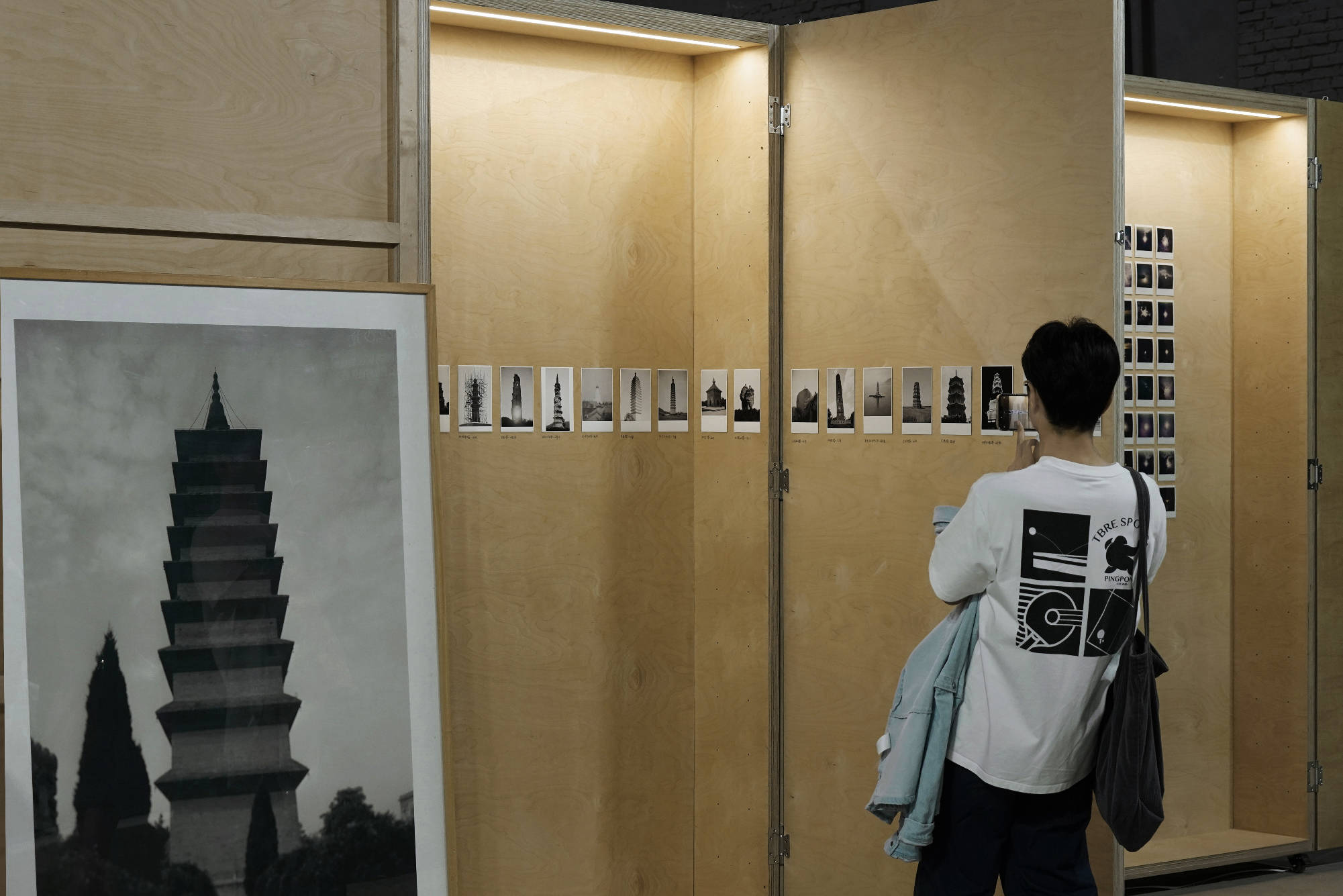
PILLS的设计方案就体现了这样的哲学思考,将“珍宝阁”展柜视作一个对艺术作品的集合与再创造,同时兼具收纳功能和展示功能的复合体系。
PILLS’ design embodies this philosophical approach, treating each “KunstKammer”display unit as both a collection and a reinterpretation of artworks—a hybrid system integrating storage and exhibition functions.
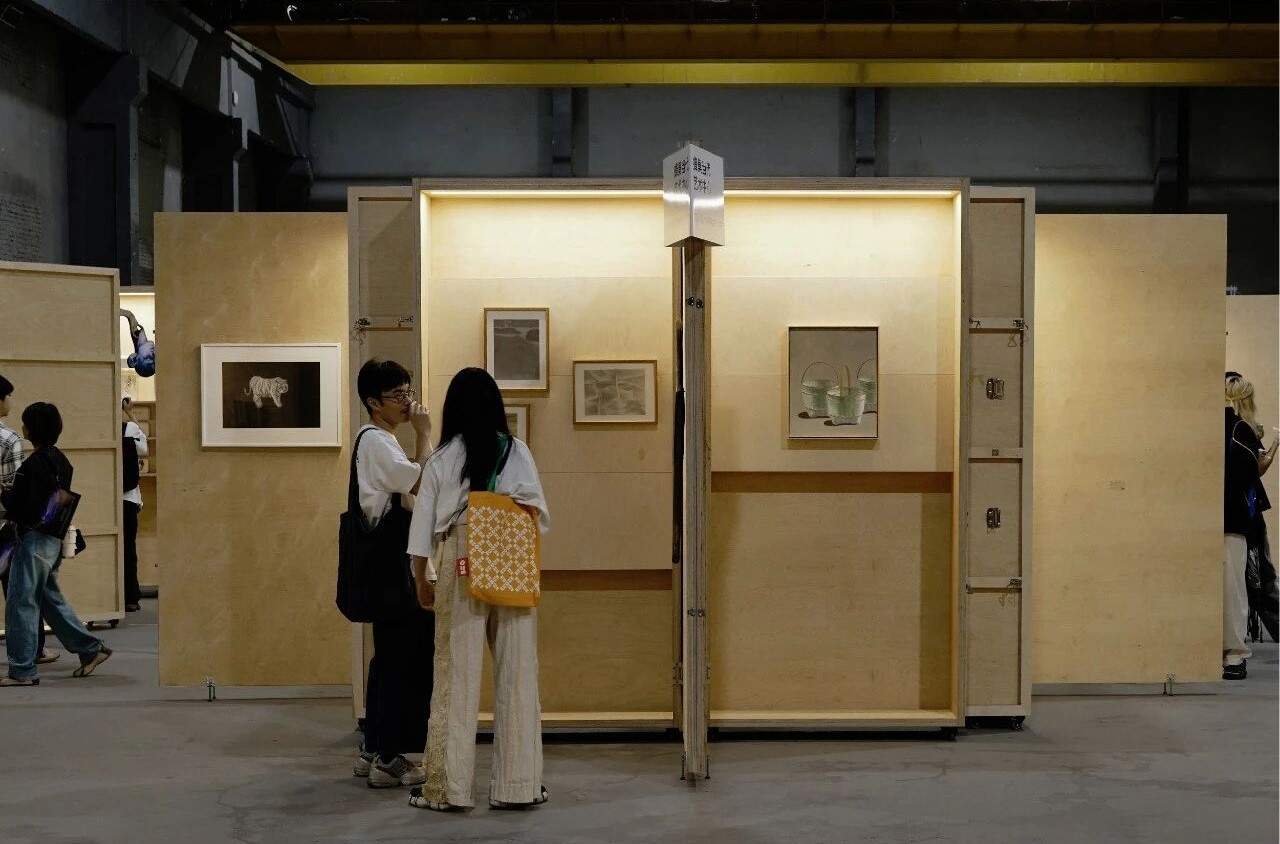
开启展柜,犹如步入一个“微型珍宝阁”——展柜系统作为一种综合的媒介载体,可收纳视频、图像、手稿、雕塑实体、文字等不同形式的展品,通过不同展品之间的关联性建立新的认知框架,形成完整的创作叙事脉络;除此之外,展柜也可将艺术家的创作工具——如画笔、雕刻刀、数码设备等纳入展品序列,使工具本身成为解读作品的重要密码,将流动的艺术过程转化为艺术现场,激发兴趣,制造一种探索感,建立起观众与艺术品之间的对话机制。
Opening a display unit is like stepping into a “miniature KunstKammer”: the system serves as a multimedia platform, accommodating videos, images, manuscripts, sculptures, and texts, while establishing new cognitive frameworks through the relationships between objects. Additionally, the units can incorporate artists’ tools—brushes, chisels, digital devices—into the display, turning the creative process itself into an artistic encounter. This not only sparks curiosity but also fosters a sense of discovery, creating a dialogue between viewers and artworks.
模块化系统 / Modulr System
从运输箱到展示台——模块化设计的突破
From Shipping Crate to Display Stand — A Breakthrough in Modular Design
本次展陈设计理念的形成,是基于项目实际面临的时间与空间双重约束条件而逐步成型的。由于项目周期紧迫且现场布展时间有限,PILLS工作室与ART021在设计初期,就制定了工厂预制、现场组装的模块化系统设计解决方案。
The exhibition design was shaped by the project’s tight timeline and spatial constraints. With limited on-site installation time, PILLS and ART021 adopted a prefabricated modular system from the outset.
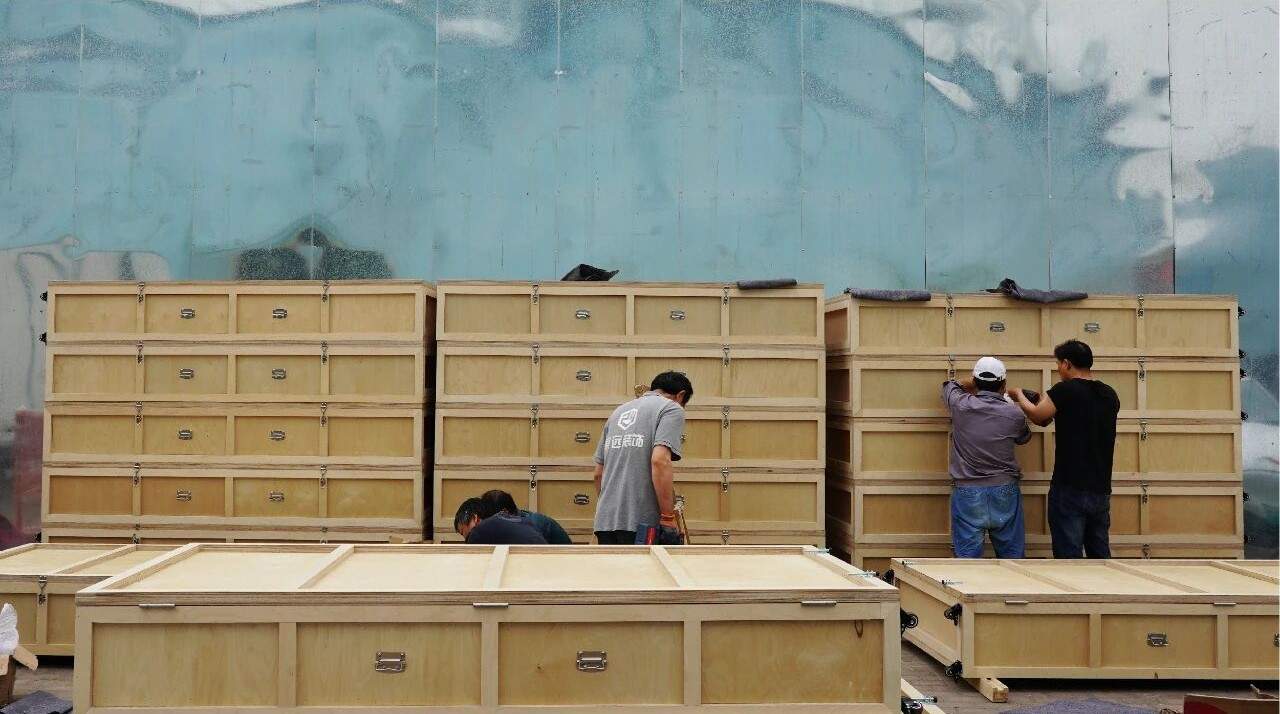
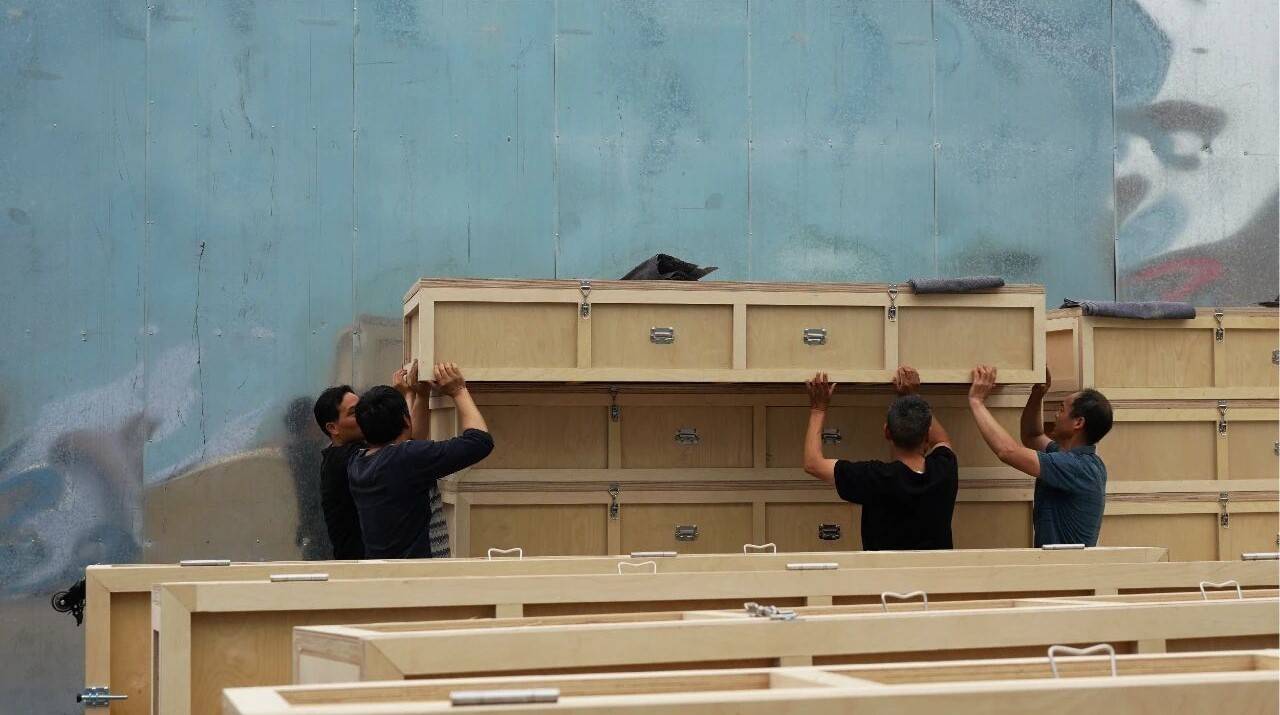
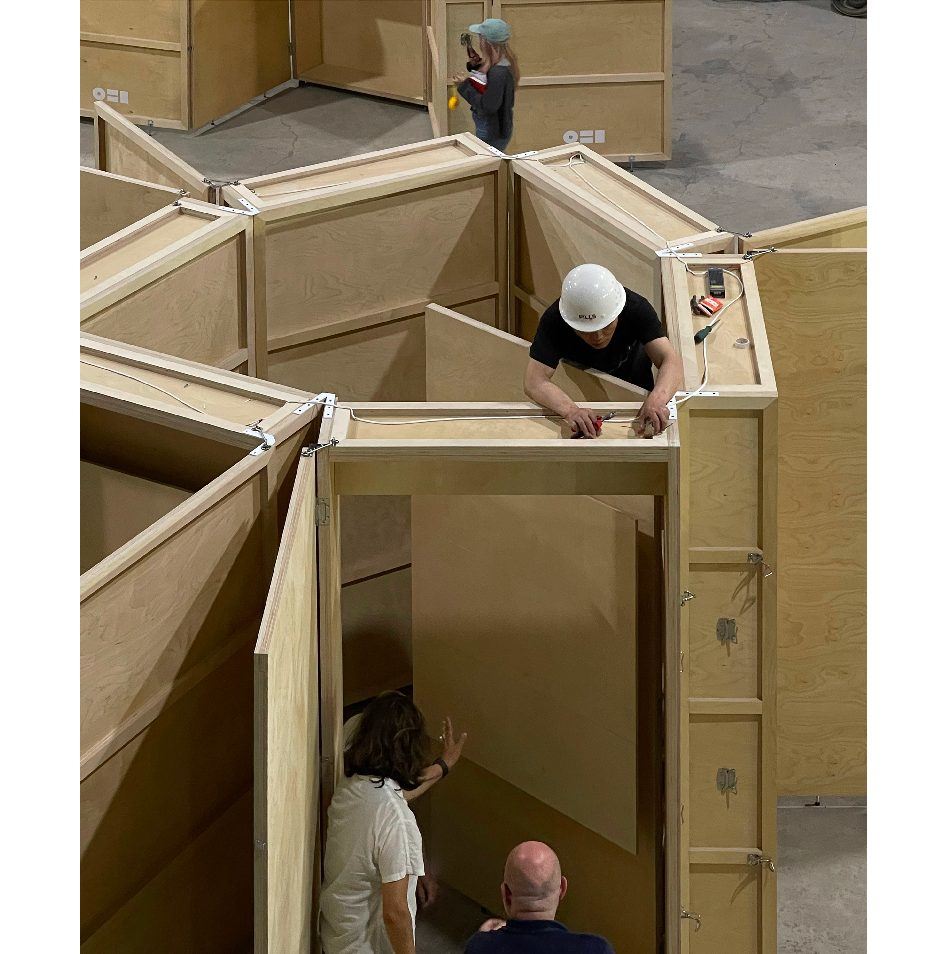
该策略通过将传统墙体搭建方式升级为标准化模块生产与组装,实现了展陈系统的工业化预制与快速装配,从而有效保障了在严格时限内完成高质量布展的需求。甚至画廊在运输前就能够完成部分布展,使运输箱直接转化为展览空间,实现展陈与运输之间的无缝连接。这种从储存、运输到展示一体的逻辑,不仅贯穿于整个展览结构体系,更转化为一种独特的策展方式。
By replacing traditional wall construction with standardized, factory-produced modules, the team achieved rapid assembly while ensuring high-quality presentation—even enabling galleries to partially pre-install works before shipping, seamlessly converting transport crates into exhibition spaces. This integrated logic of storage, transport, and display not only defined the structural system but also became a curatorial methodology.
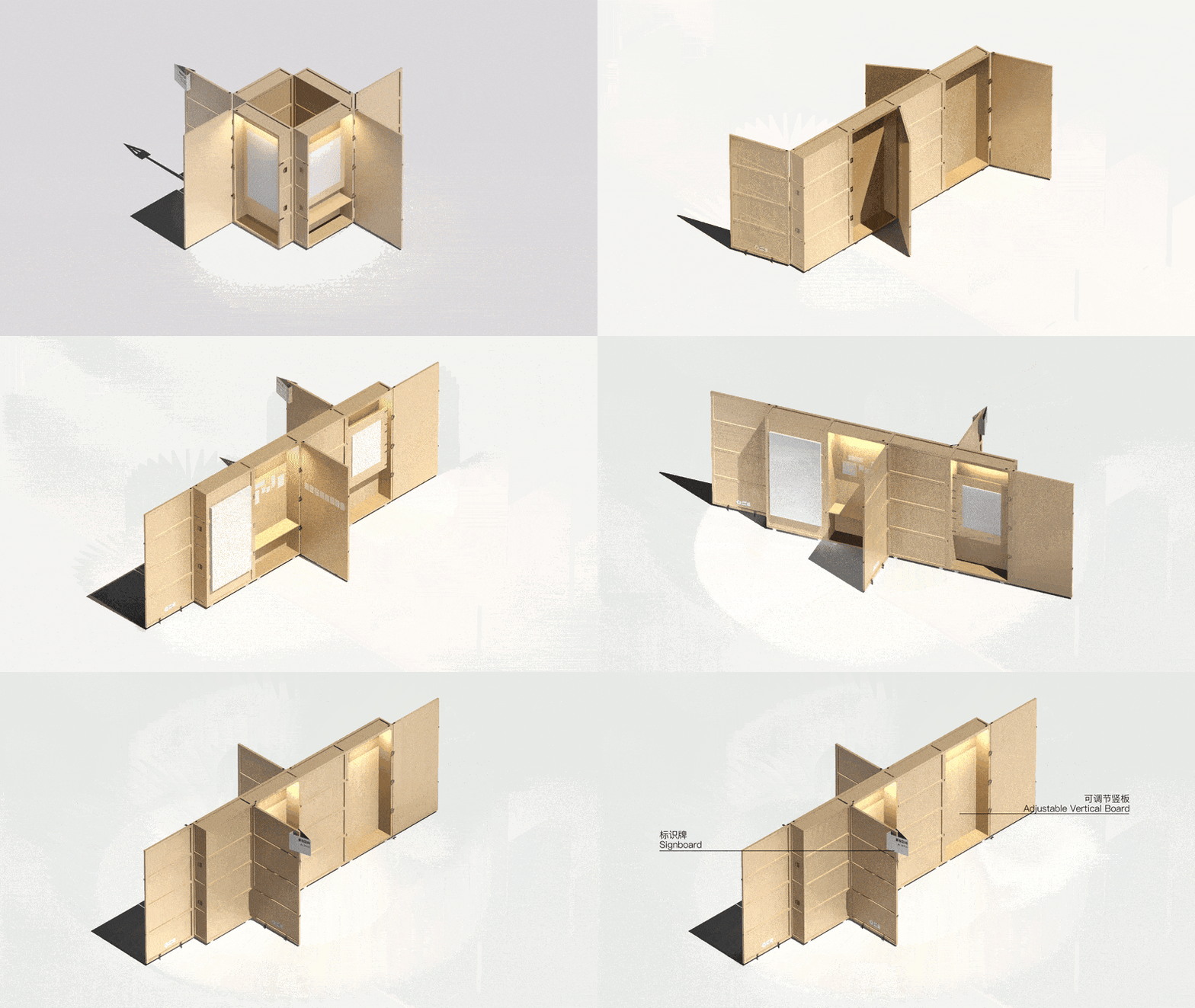
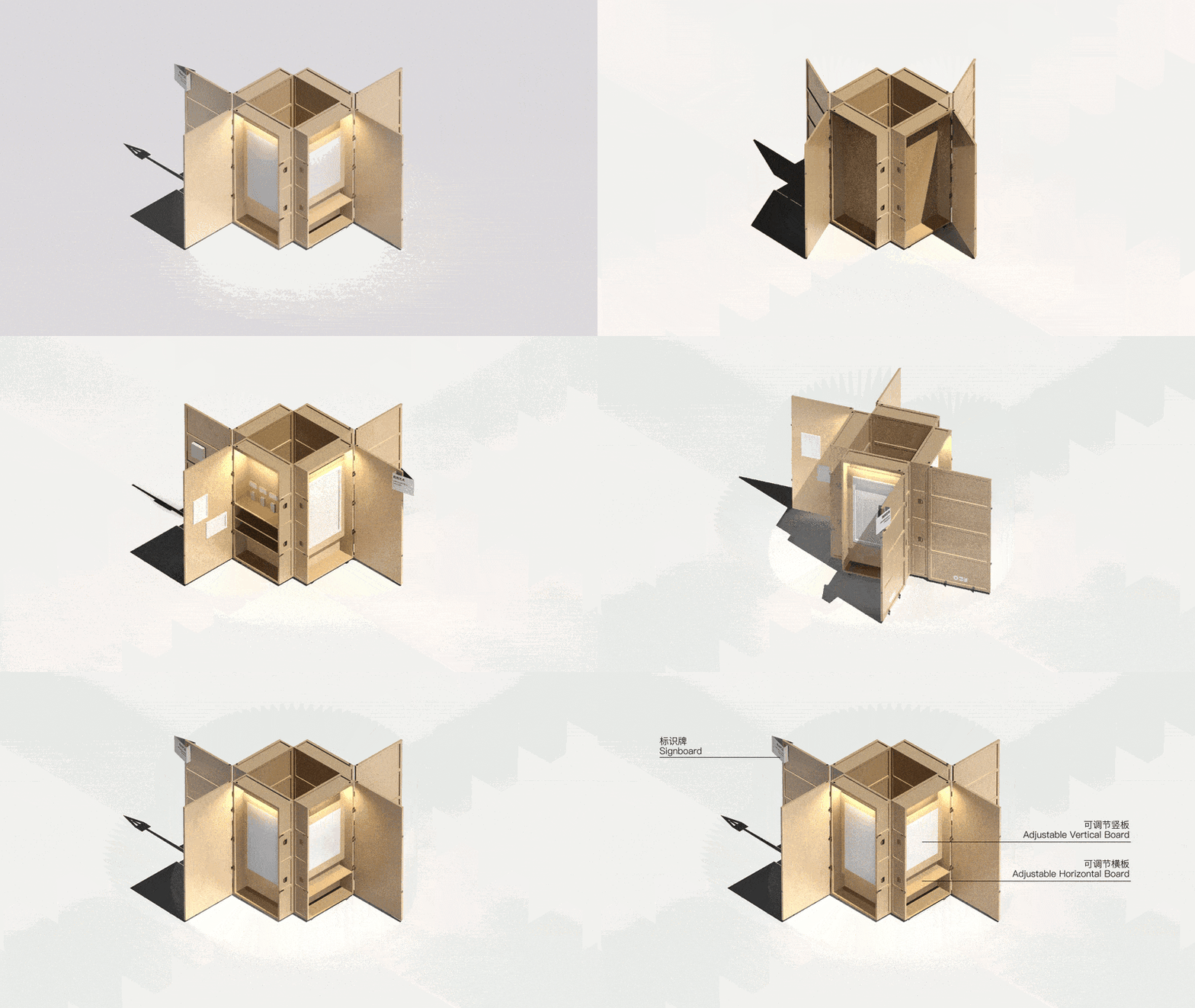
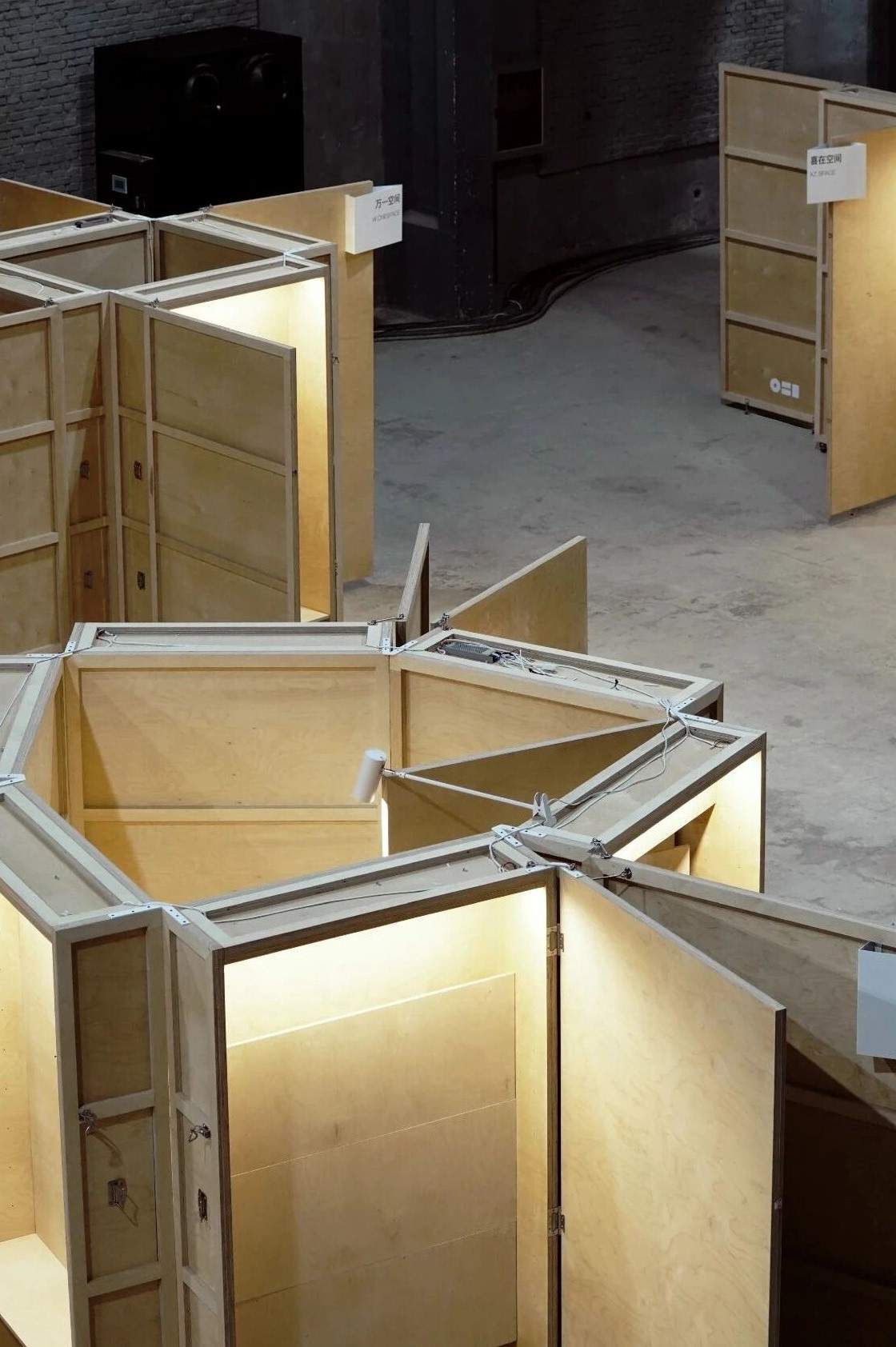
“珍宝阁”的单元由可折叠变化的实木箱体组成:运输时收拢为小体积木箱,抵达现场后迅速展开为立体的展示平台。模块化体系设计,正在重新定义艺术展览的空间与体验。
Each “KunstKammer” unit consists of foldable solid wood crates: compact for shipping, they quickly unfold into three-dimensional display platforms on-site. This modular system redefines the spatial and experiential possibilities of art exhibitions.
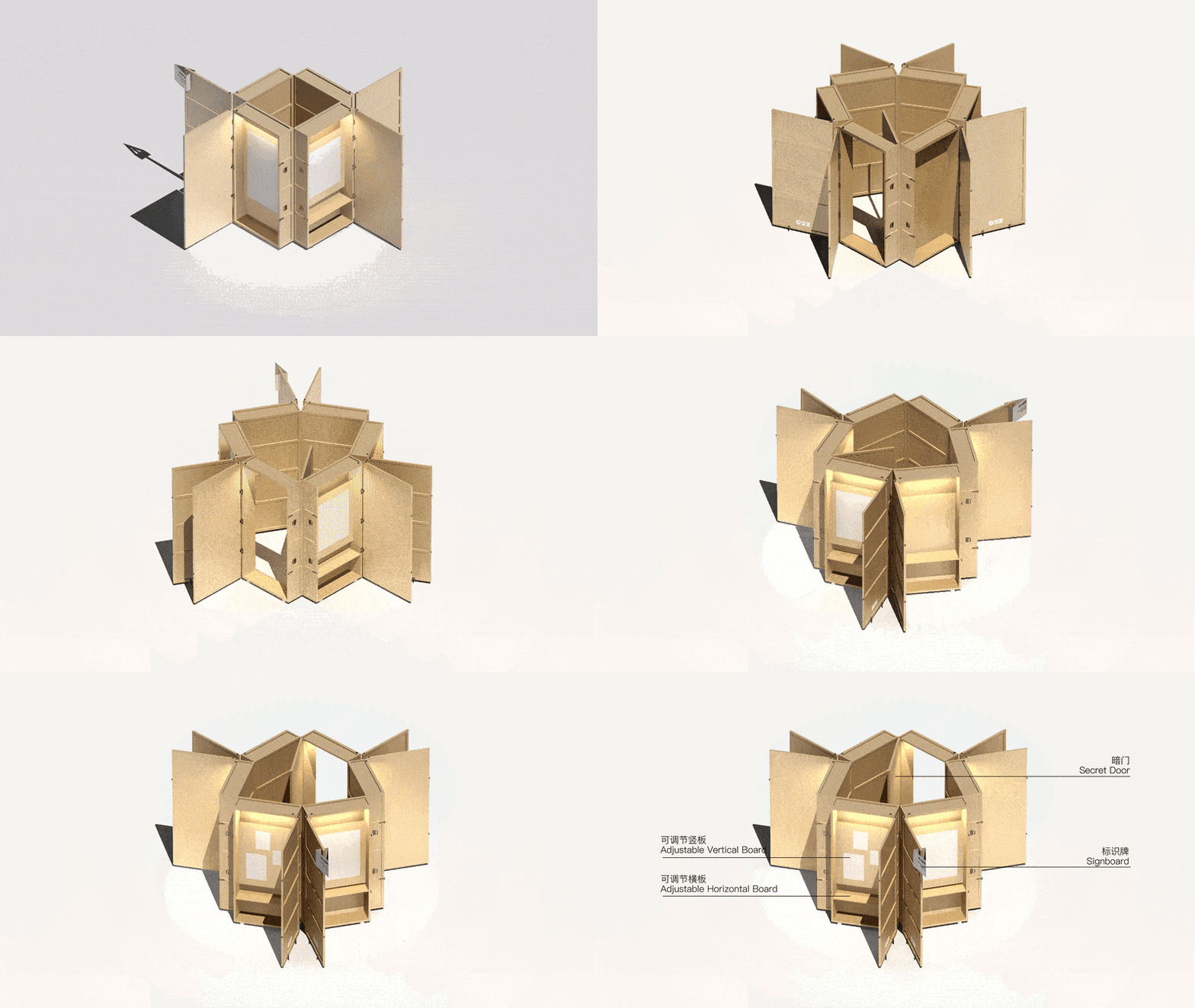
方案可以看作是多个“珍宝阁”单元的“奇想组合”,通过对模块单元的精心设计,以及保留其变体的多样开放性,实现一整套灵活多变的展览体系的建立——每个展柜单元的侧板角度可灵活调节,内部精心配置了可移动的隔板和模组,比如可挂画的竖向挂钩模块,以及适用于雕塑实物的横向展板等,能根据不同艺术家和展品的需求调整。在高度标准化的基础上,不论是体系内部模块,抑或展柜单元本身的不同组合方式仍然保留了充分的个体差异性。
The design can be seen as a “fantastical assembly” of multiple units, with each cabinet featuring adjustable side panels and customizable interiors—movable partitions, vertical hooks for paintings, or horizontal platforms for sculptures—allowing tailored configurations for different artists and artworks. Despite high standardization, the system retains ample flexibility, enabling diverse combinations and individual variations.
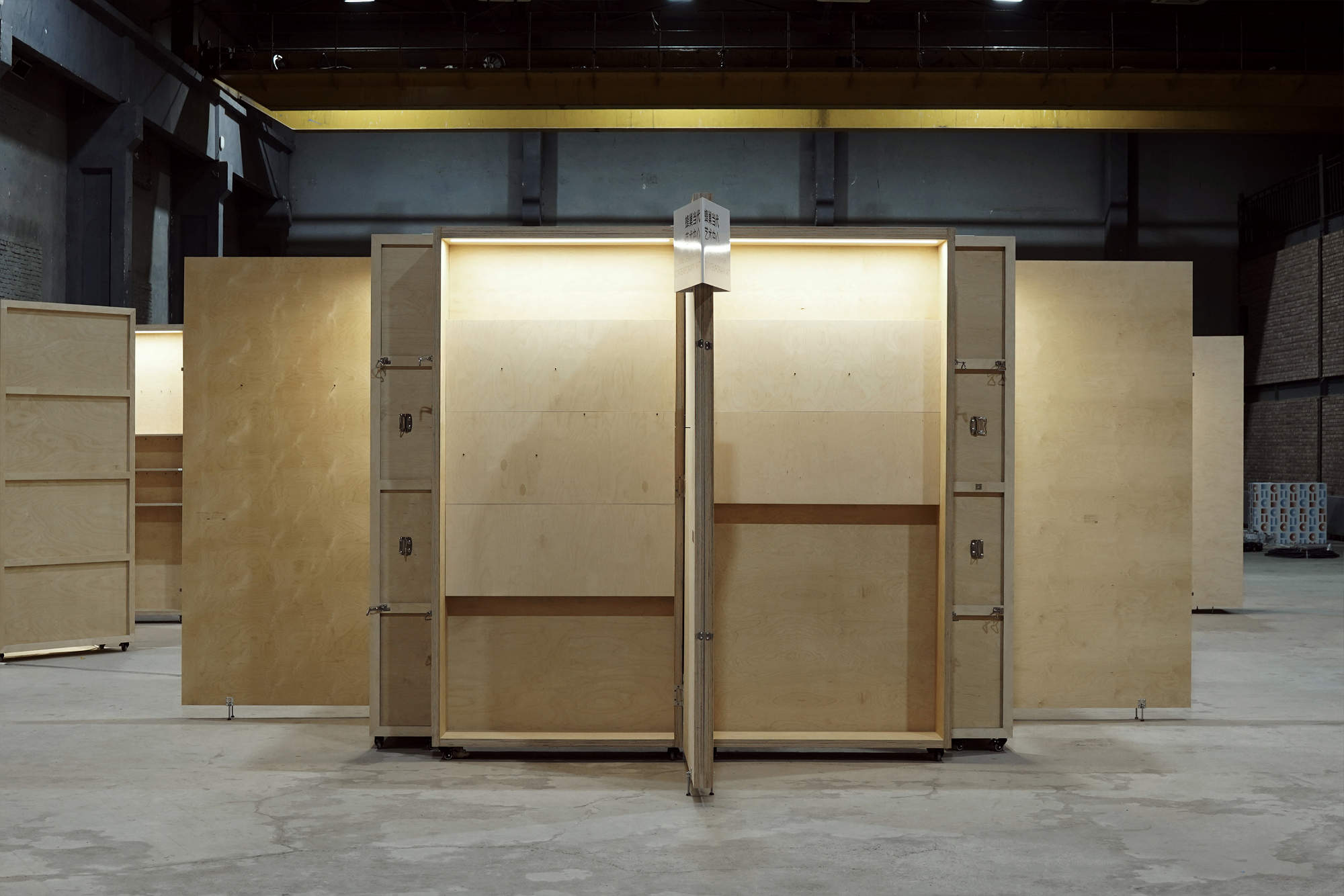
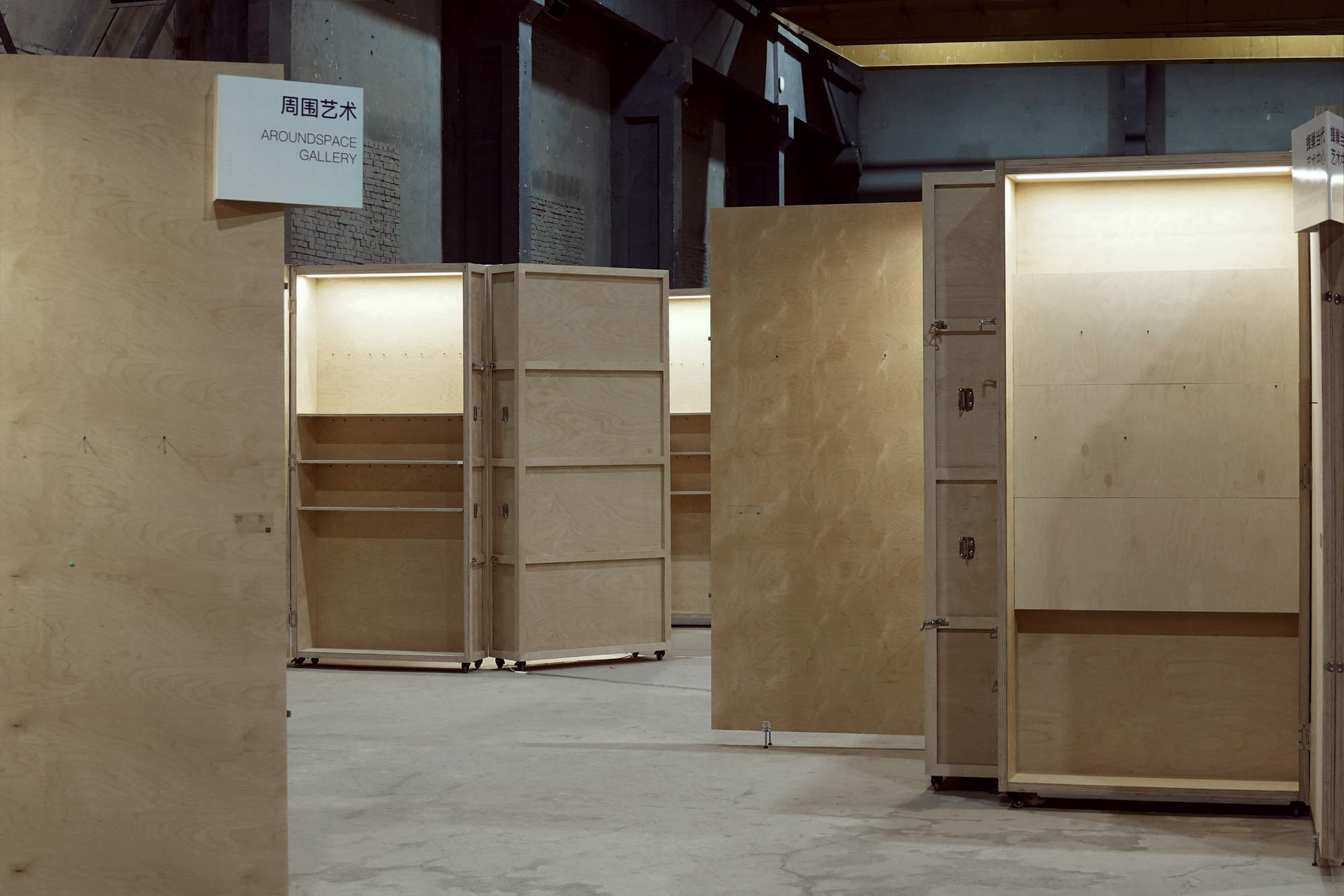
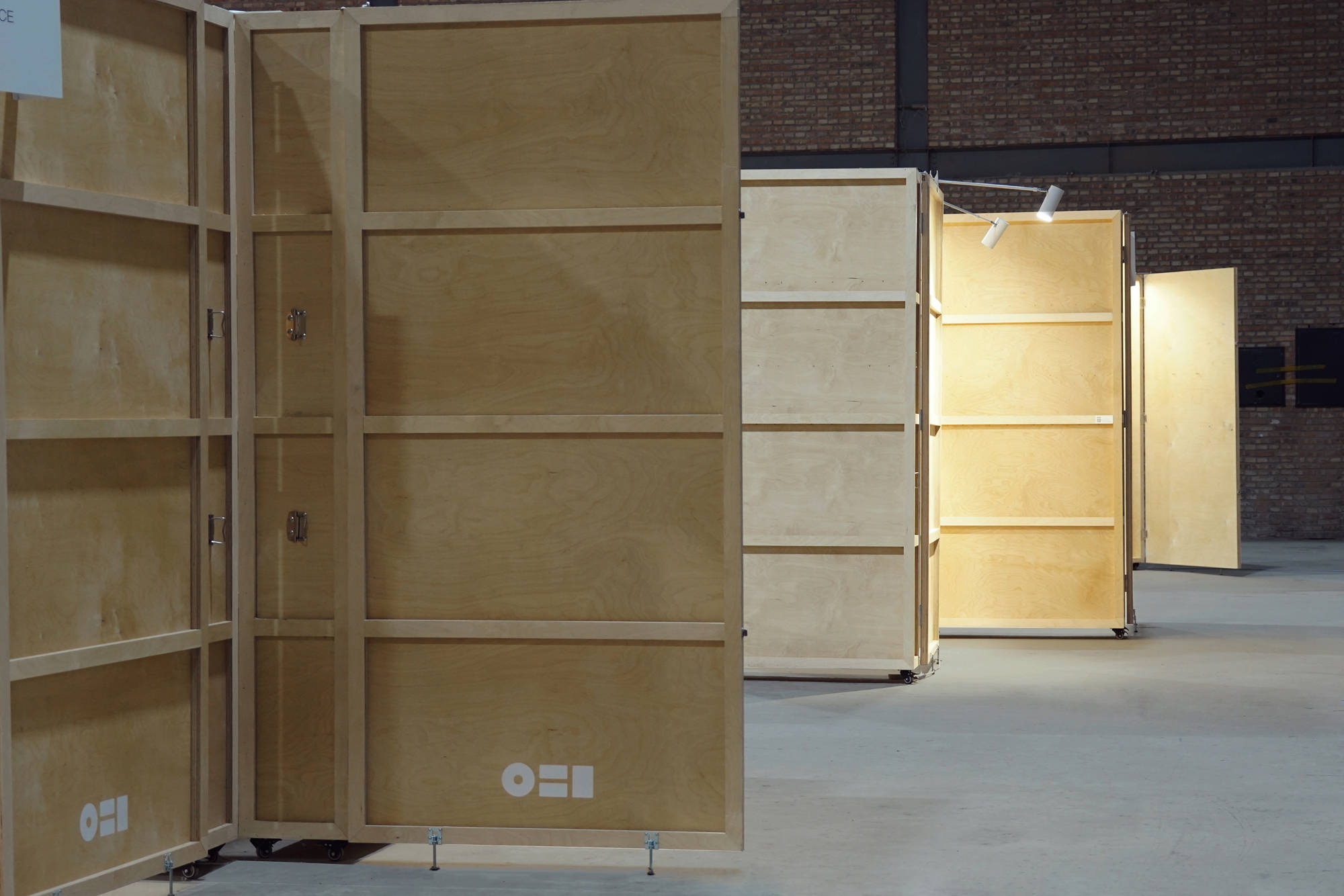
模块的变形与组合——实现“微型策展”自由度最大化 “
Modular Transformation and Reconfiguration — Maximizing Flexibility for Micro-Curation
展示系统从来都不是中性的,它与作品之间存在着互为支撑、互相增强的关系。好的展示系统不仅要契合作品的类型,更要强化观众的情绪体验、知识背景的理解,以及整体氛围的营造。”
——王子耕
“Display systems are never neutral; they interact with artworks in a mutually reinforcing relationship. A good system must not only suit the type of work but also amplify the viewer’s emotional experience, intellectual engagement, and the overall atmosphere.”
— Zigeng Wang
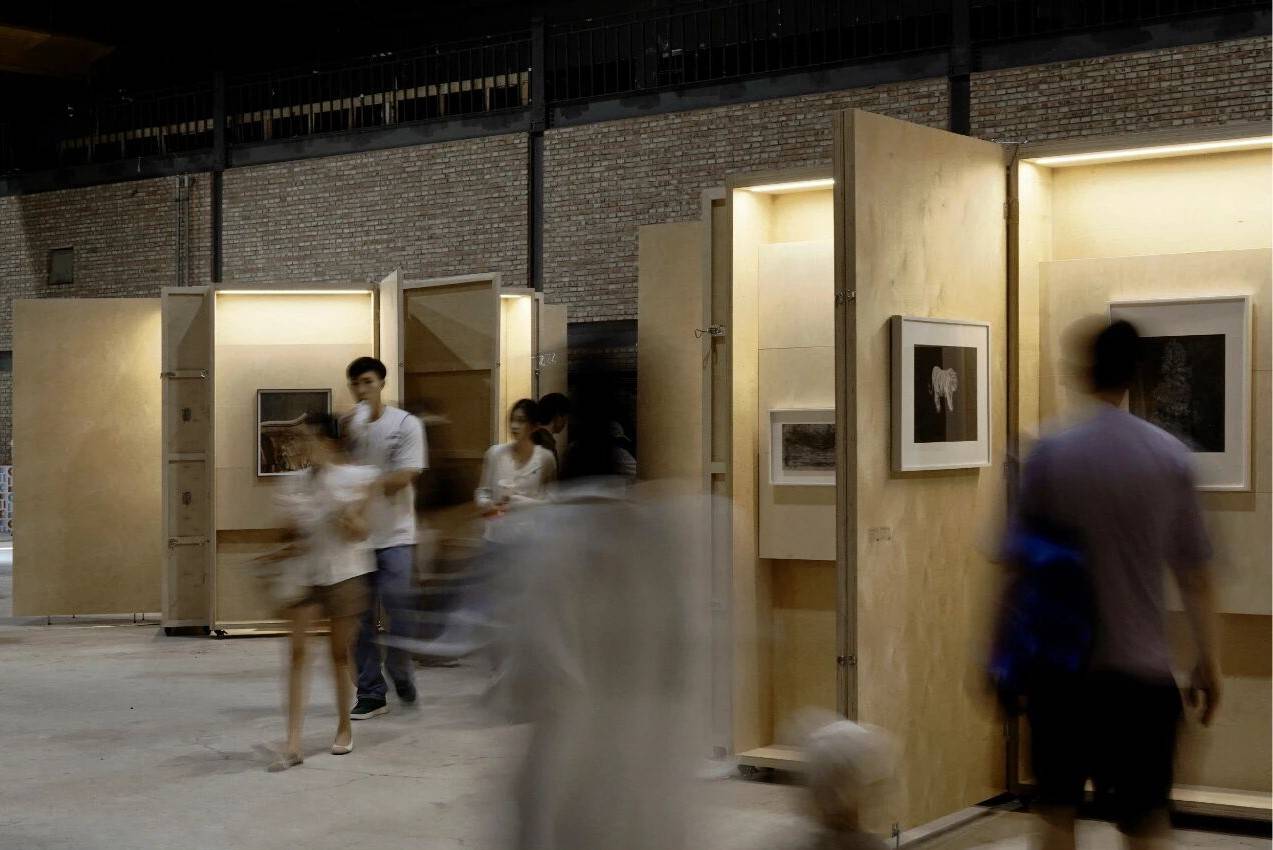
每一组“珍宝阁”展柜单元,皆具备高度的可组合性与灵活性,仅凭组合方式的差异,便可衍生出不止八种的展陈形态。画廊视自身需求,根据展览作品的媒介形式、类型与自身的微型策展策略进行自主搭配和调整,赋予展示系统不同的性格与张力。
Each “KunstKammer” unit is highly combinatory, capable of producing over eight distinct display formats through different arrangements. Galleries could freely adapt the system based on their curatorial strategies, media types, and spatial narratives.
尽管展柜单元是统一模数的,但内部模块灵活可调节,展柜单元之间亦可自由拼接,并且我们还特别设计了暗门的机制,为观众增添了游戏性的观看体验。这样统一而开放的模数化结构,在确保空间的协调性的同时,赋予了展览多元的空间叙事,鼓励观众以不同方式进入作品的语境。各家画廊对展柜的个性化编排,真正实现了“微型策展”在空间组织和表达自由度上的极致拓展。
Though the units follow a uniform module, their interiors are adjustable, and they can be interconnected—even featuring hidden doors to add playful discovery for viewers. This open modular structure ensures spatial harmony while enabling diverse narratives, inviting audiences to engage with artworks in multiple ways. The galleries’ personalized arrangements achieved unprecedented freedom in “micro-curation,” expanding the possibilities of spatial storytelling.
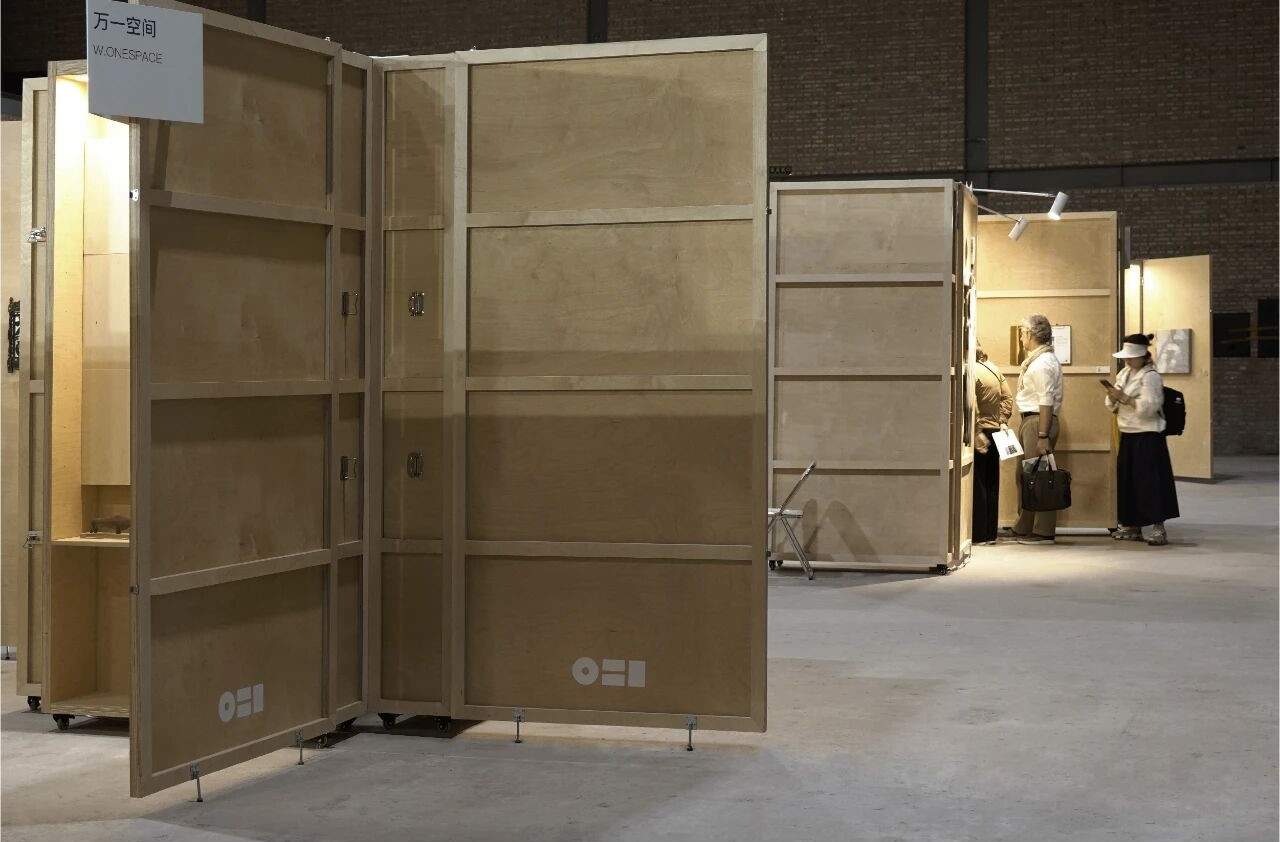
可持续展陈系统的范式转型——从消耗到“零废弃”
A Paradigm Shift in Sustainable Exhibition Systems — From Consumption to Zero Waste
随着全球化展览产业快速发展,传统展陈产生的建筑垃圾占城市固体废弃物的比例也逐年增高,既有的“搭建-展示-拆除-废弃”的线性模式,与联合国可持续发展目标中“负责任的消费与生产”要求形成严重冲突。
With the rapid growth of the global exhibition industry, traditional setups contribute significantly to urban solid waste, clashing with the UN’s Sustainable Development Goals for “responsible consumption and production.”
为此,PILLS团队希望借由这一预制模块化设计提供现实可行的环保解决方案:方案实现材料循环,可再生实木板材,通过模块化设计实现无损拆解,面板和零件可100%循环利用——在不同场合重复使用、重新组合,甚至进行下轮的定制改造——使碳足迹较传统方案显著降低,对展览行业具有变革价值。该模块化展陈体系在ART021 BEIJING的实证应用中,既实现了将布展周期成功压缩,更建立了完整的回收和再循环路径。
PILLS’ prefabricated modular design offers a practical eco-solution: using renewable solid wood panels, the system allows for damage-free disassembly, with 100% reusable components. These modules can be repurposed, reconfigured, or even redesigned for future exhibitions, drastically reducing carbon footprints compared to conventional methods. At ART021 BEIJING, this system not only shortened installation time but also established a closed-loop recycling model, setting a transformative precedent for the industry.
结语 / Conclusion
“珍宝阁”作为“世界的观看方式”,不仅是一种物理空间的设计,它更代表了一种深刻的艺术认知方法。在现当代艺术策展中,“珍宝阁”提供了一种多维度、开放性和互动性的观看与思考世界的方式。本次ART021 BEIJING特别展览通过模块化系统的设计与非线性叙事的呈现,将展览的主动权交还给了观众,让每一次观看都成为独特的体验与知识的生成。其可持续设计理念,更是呼应了当代策展对环境保护的呼唤。“珍宝阁”的展陈设计不仅为艺术展览的带来了全新的可能性,也提供了深刻的启示:真正的“奇珍异宝”,是观众在探索中发现的意义,以及在艺术与生活中建立的深刻连接。
The “KunstKammer,” as a “way of seeing the world,” transcends physical design—it represents a profound artistic epistemology. In contemporary curatorial practice, it offers a multidimensional, open, and interactive approach to engaging with art and ideas. Through modular design and nonlinear narratives, this ART021 BEIJING special exhibition returned agency to viewers, making each encounter a unique experience of knowledge creation. Its sustainable ethos further aligns with the urgent call for environmental responsibility in curation. The “KunstKammer” not only redefines the possibilities of art exhibitions but also delivers a powerful message: the true “treasures” are the meanings discovered through exploration and the deep connections forged between art and life.
参展画廊 / Participating Galleries:Cc基金会、CLC画廊、蜂巢当代艺术中心、TONG画廊+项目空间、万一空间、喜在空间、站台中国、周围艺术
设计单位 / Design Firm:PILLS
主持设计师 / Principal Designer:王子耕
设计团队 / Design Team:刘晨瑶、汪曼颖、孙康淳
深化顾问 / Technical Consultant:魏源
制作方 / Fabrication:北京如一堂文化传媒服务有限公司
摄影 / Photography:张玉婷、王子耕、刘师麟
文本及编辑 / Text & Editing:袁琳娜、张圣媛
本项目国家专利号 / National Patent No.:ZL2025303361848
本文内容由 Pills Architects 提供或来源于其官方媒体渠道,由 WeHow 整理编辑。图片、视频及相关设计作品的版权归原作者/设计方所有。未经 WeHow 及版权方书面许可,禁止以 WeHow 编辑版本进行任何形式的转载或商业使用。