本案例由 UQAM’s Centre de design 提供,WeHow整理编辑。
Materials courtesy of UQAM’s Centre de design, curated by WeHow.
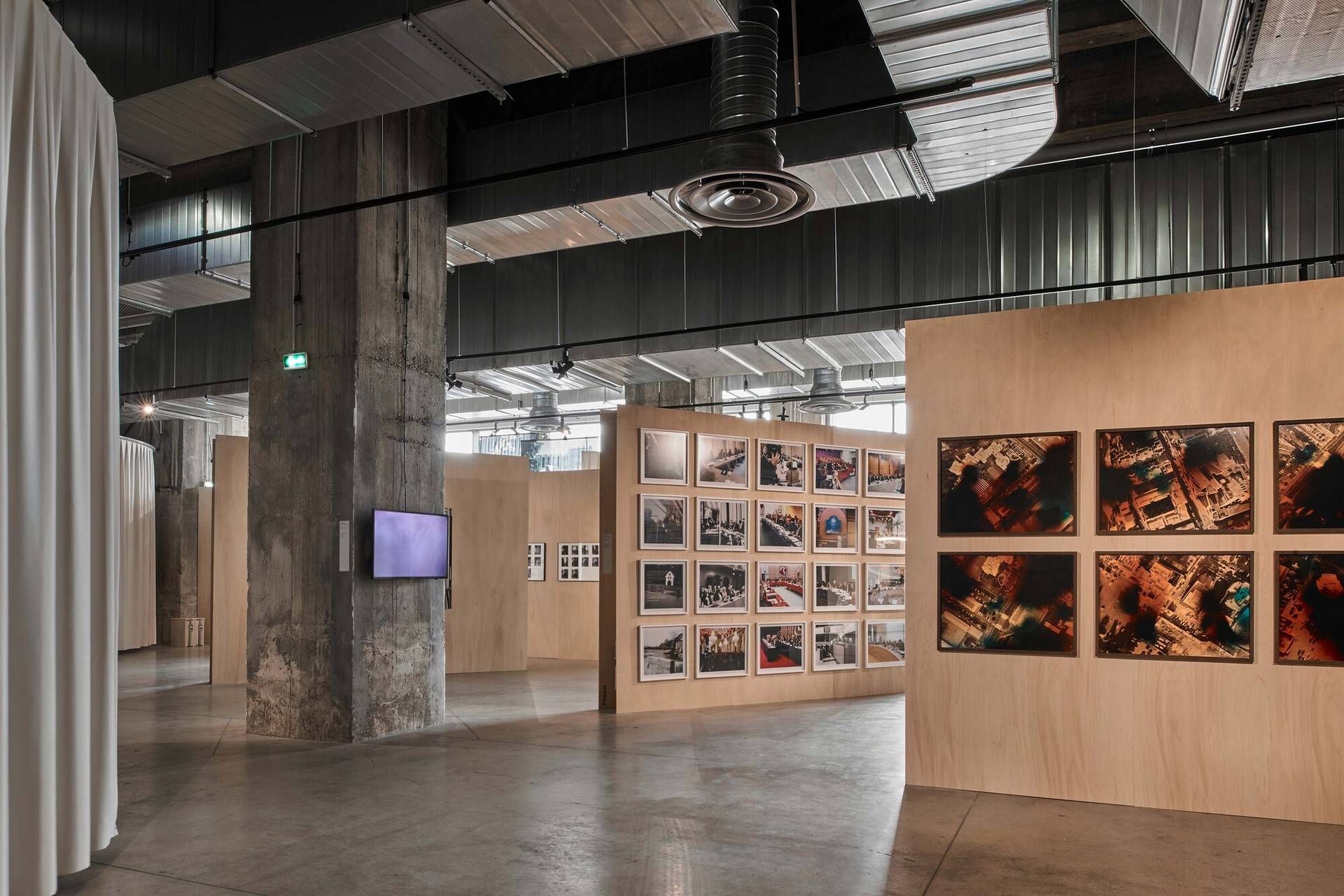
展览“殖民毒性:撒哈拉沙漠中的法国建筑与放射性景观”由历史学家兼策展人萨米亚·海尼(Samia Henni)创作,记录了法国在阿尔及利亚撒哈拉沙漠进行核殖民的鲜为人知的历史,及其对当地领土和人口造成的持久影响。该展览在蒙特利尔大学(UQAM)设计中心举行法语版本的世界首展。
The exhibition Toxicité coloniale : Architecture et paysage radioactifs français dans le Sahara, by historian and curator Samia Henni, documents the little-known history of French nuclear colonialism in the Algerian Sahara and its lasting impacts on the territories and populations. The exhibition is presented as a world premiere in French at UQAM’s Centre de design.
对法国在阿尔及利亚核计划的调查
An investigation into the French nuclear program in Algeria
1960年至1966年间,法国殖民政权在阿尔及利亚撒哈拉沙漠引爆了4枚大气层原子弹和13枚地下核弹。由此产生的撒哈拉毒化现象使放射性沉降物蔓延至阿尔及利亚、北非、中非、西非以及地中海地区(包括南欧),对生物体、细胞、颗粒以及自然和建筑环境造成了不可逆转且持续至今的污染。六十多年后,法国核计划的档案仍未公开,导致这些实验的历史细节和持续后果在很大程度上鲜为人知。
Between 1960 and 1966, the French colonial regime detonated four atmospheric atomic bombs and thirteen underground nuclear bombs in the Sahara Desert in Algeria. The resulting toxification of the Sahara spread radioactive fallout across Algeria, North, Central and West Africa, as well as the Mediterranean (including Southern Europe), causing irreversible and ongoing contamination of living bodies, cells and particles, as well as in the natural and built environments. More than sixty years later, the French nuclear program’s archives remain closed, and as a result, the historical details and the ongoing consequences of these experiments remain largely unknown.
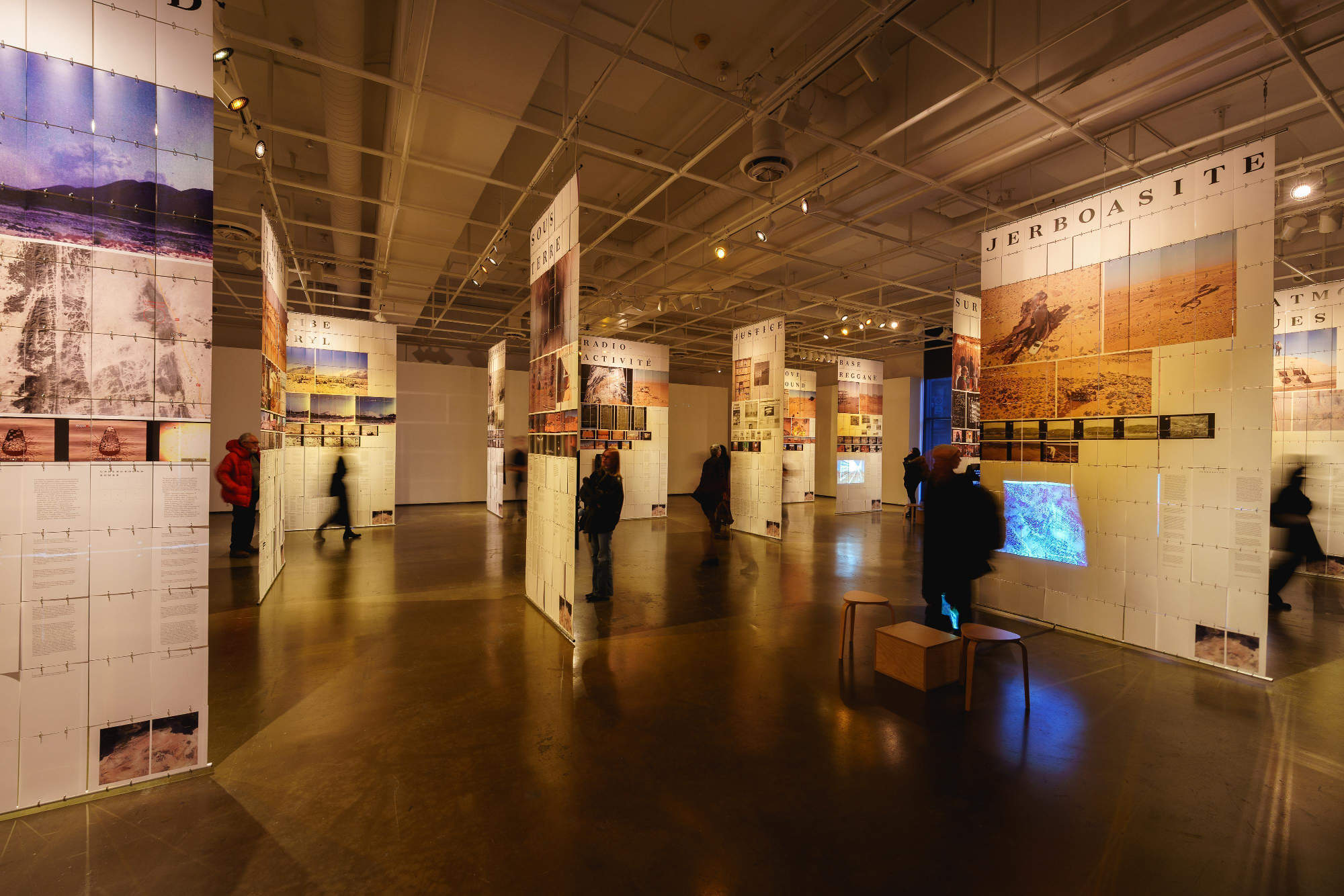
展览“殖民毒性”通过沉浸式多媒体装置,展示了已公开、被提供、收集以及泄露的各类文件。海尼利用这些材料创作了13组视听组合,即“站点”,以此映射当时的军事结构。这些站点追溯了核弹对空间、大气和地质的影响,同时揭示了殖民话语以及放射性碎屑与建筑废墟的残留。
The exhibition Toxicité coloniale presents available, offered, collected and leaked documents in an immersive multimedia installation. From these materials, Henni creates a series of thirteen audiovisual assemblages, or “stations,” referencing the original military structures. These stations trace the spatial, atmospheric, and geological impacts of nuclear bombs while highlighting colonial vocabulary and the persistence of radioactive and architectural debris.
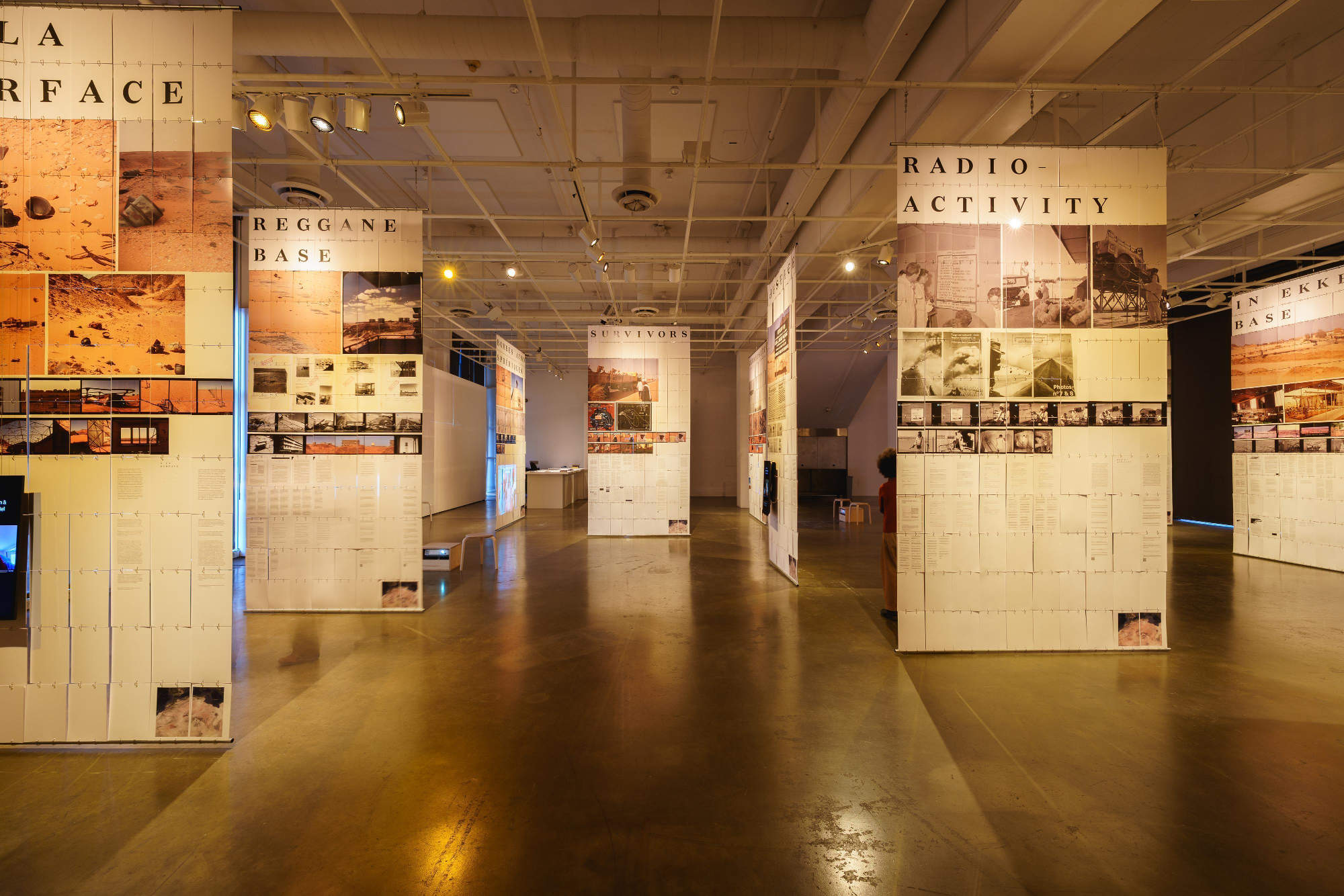
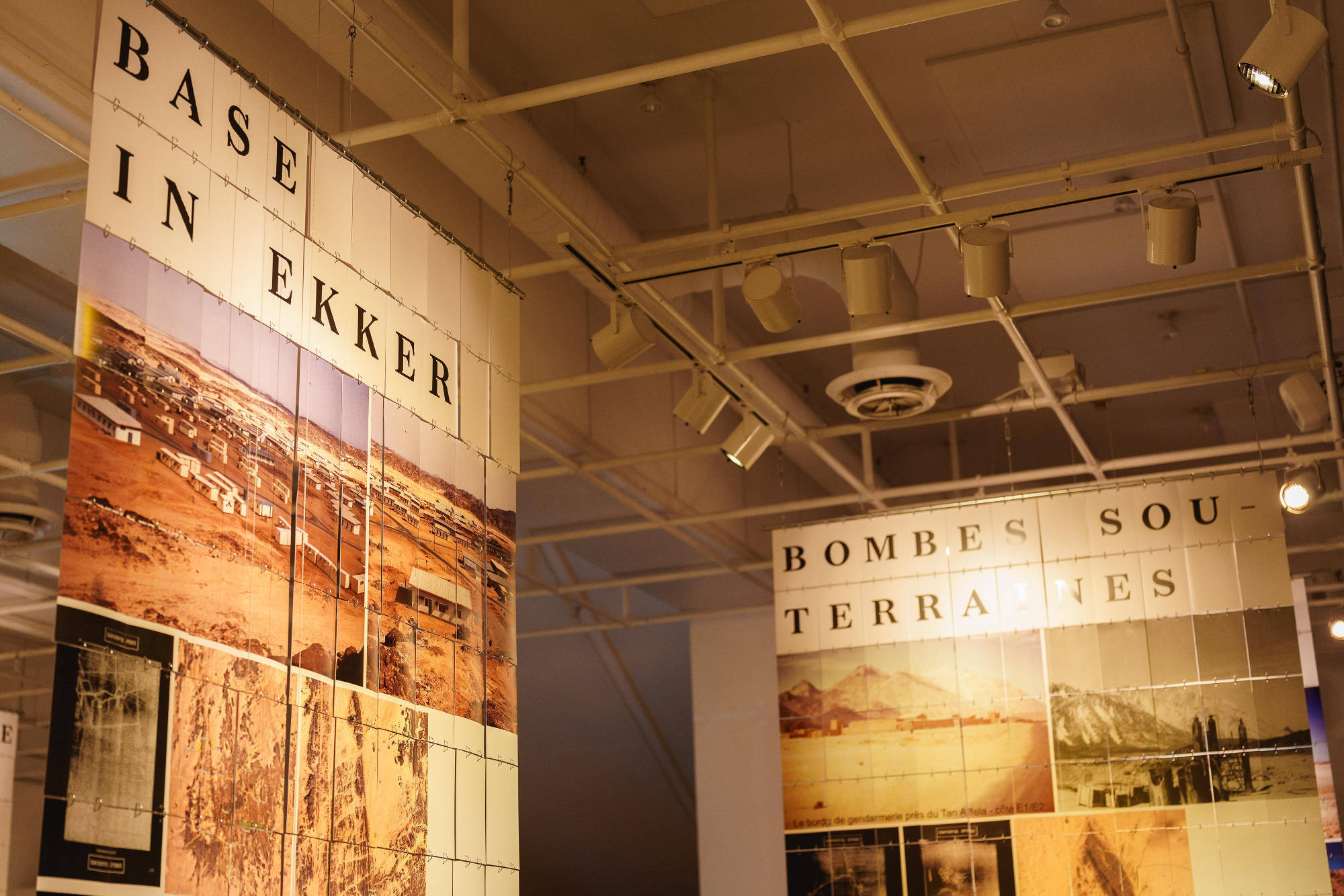
雷甘(Reggane)和因埃克(In Ekker)基地构成了展览的地理锚点。在雷甘周边,引爆了“跳鼠”(Gerboise)系列(蓝、白、红、绿)大气层核弹;而在因埃克地区和塔纳费拉山,则进行了包括“蓝宝石”(Beryl)在内的13次地下核实验。
The Reggane and In Ekker bases form the geographical anchor points of the exhibition. Around Reggane, the atmospheric nuclear bombs of the Gerboise series (Blue, White, Red and Green) were exploded, while in the In Ekker sector and on the Tan Afella mountain, the explosion of thirteen underground nuclear bombs took place, including that of Beryl.
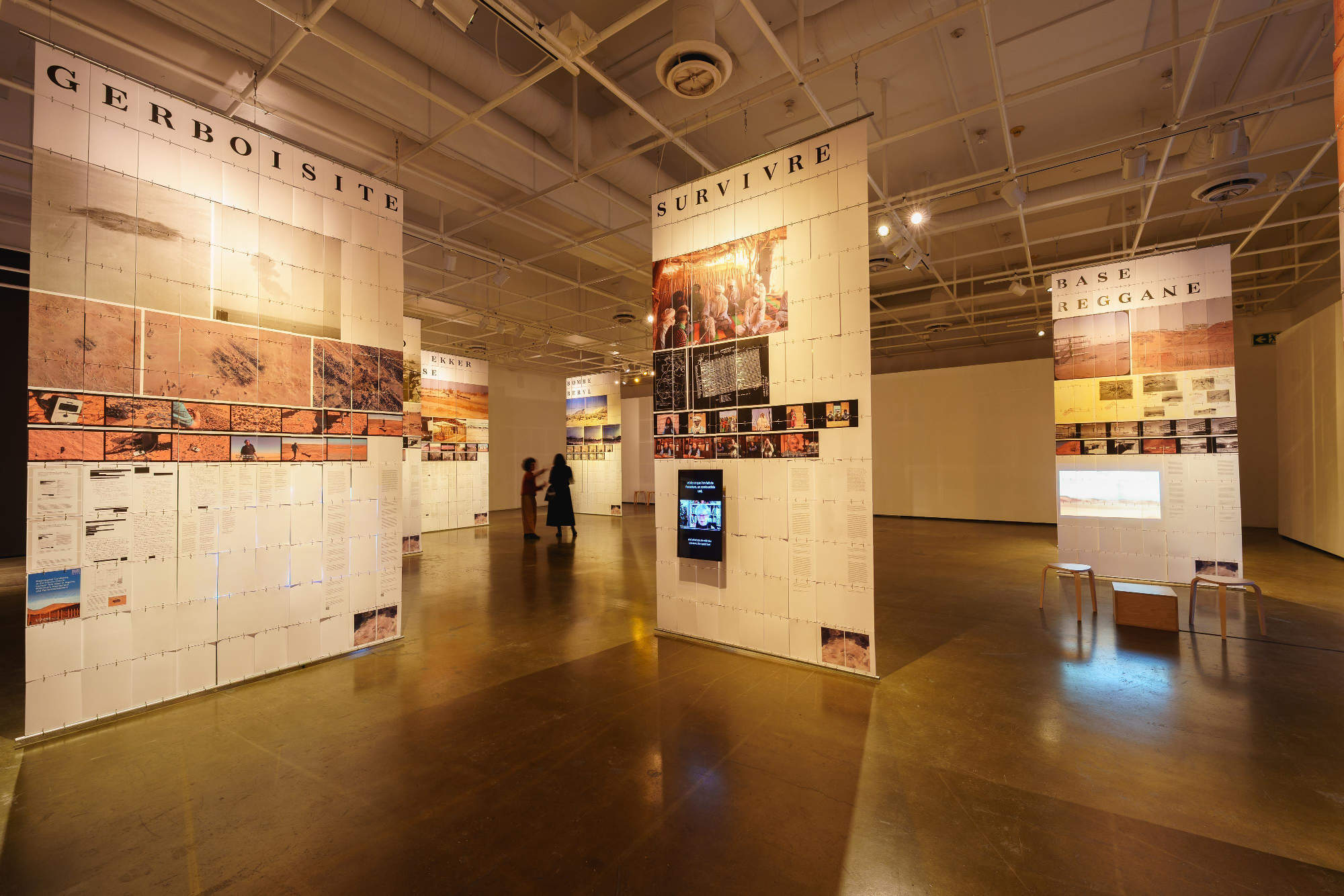
展览带领参观者深入地下并回到地面,聚焦于暴露在放射性物质和辐射下的基础设施、景观与人体。它还探讨了在这些永久污染领土上的生存现状,并提出了尚未解决的正义问题。
The exhibition takes visitors both above and below ground, highlighting the infrastructure, landscapes, and bodies exposed to radioactivity and radiation. It also addresses the realities of survival in these permanently contaminated territories and raises the unresolved question of justice.
展陈设计
Exhibition Design
展览以沉浸式多媒体装置的形式展开,被构思为一场持续调查的开端。每个站点展示了研究结果的不同侧面。空间由A4纸制成的轻型隔断组织而成,这些纸张通过活页环悬挂在金属管上。成对堆叠的纸张形成了类似帘幕的隔断,正反两面均清晰可见。
The exhibition unfolds as an immersive multimedia installation, conceived as the opening of an ongoing investigation. Each station presents a distinct facet of the research findings. The space is organized by lightweight partitions made of standard A4 sheets of paper, suspended using binder rings and held in place by metal tubes. Layered in pairs, these sheets form curtain-like partitions, visible from both sides.
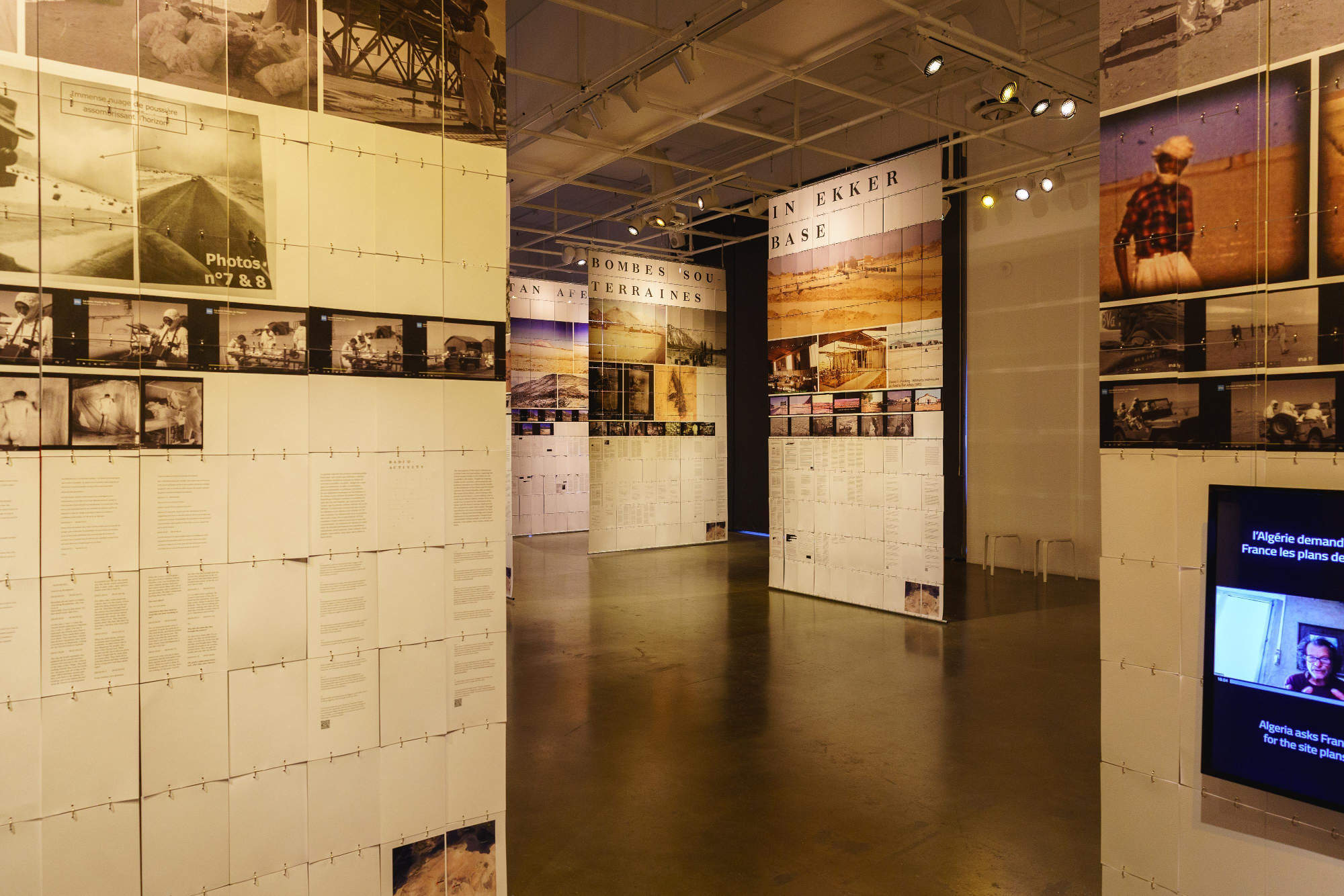
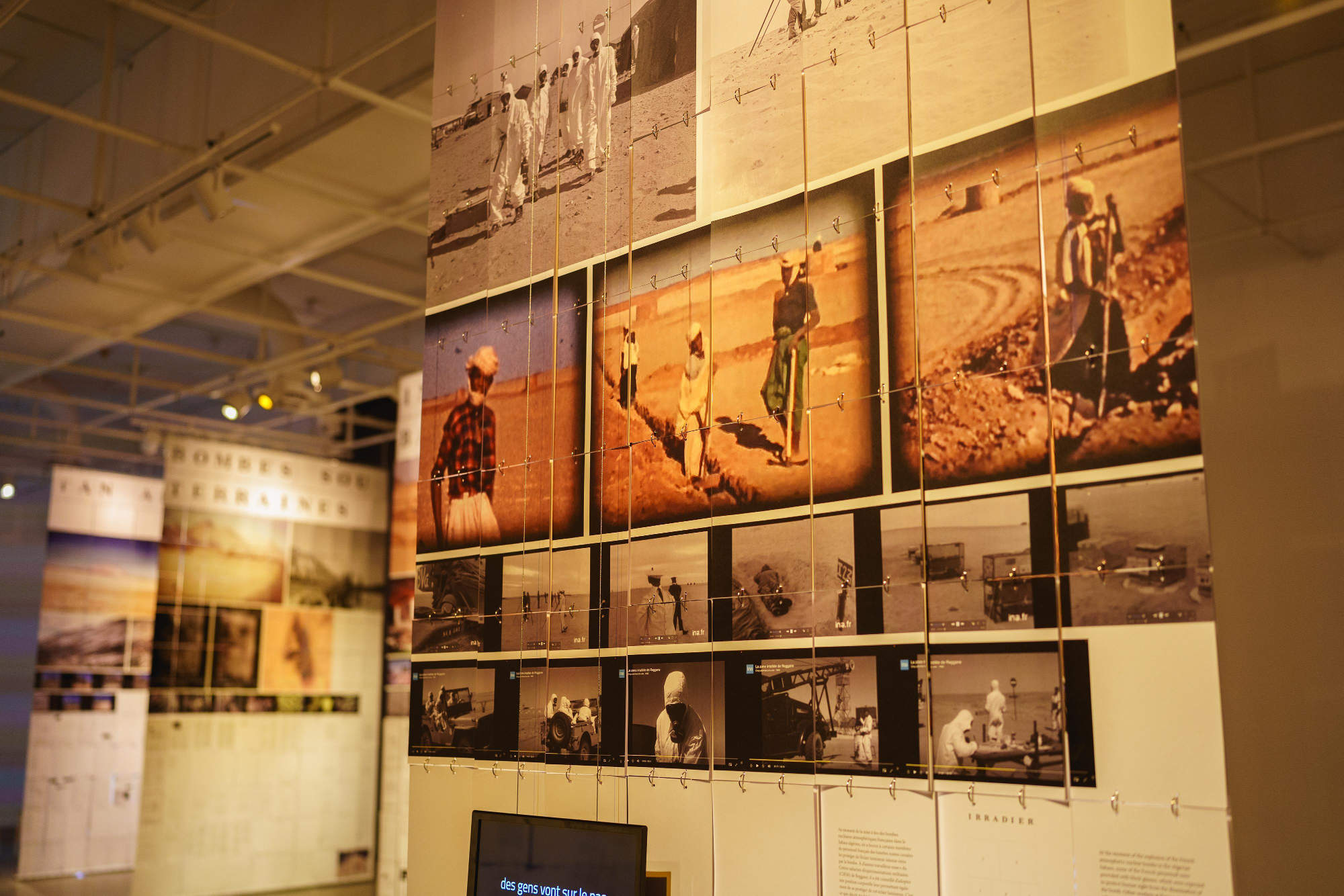
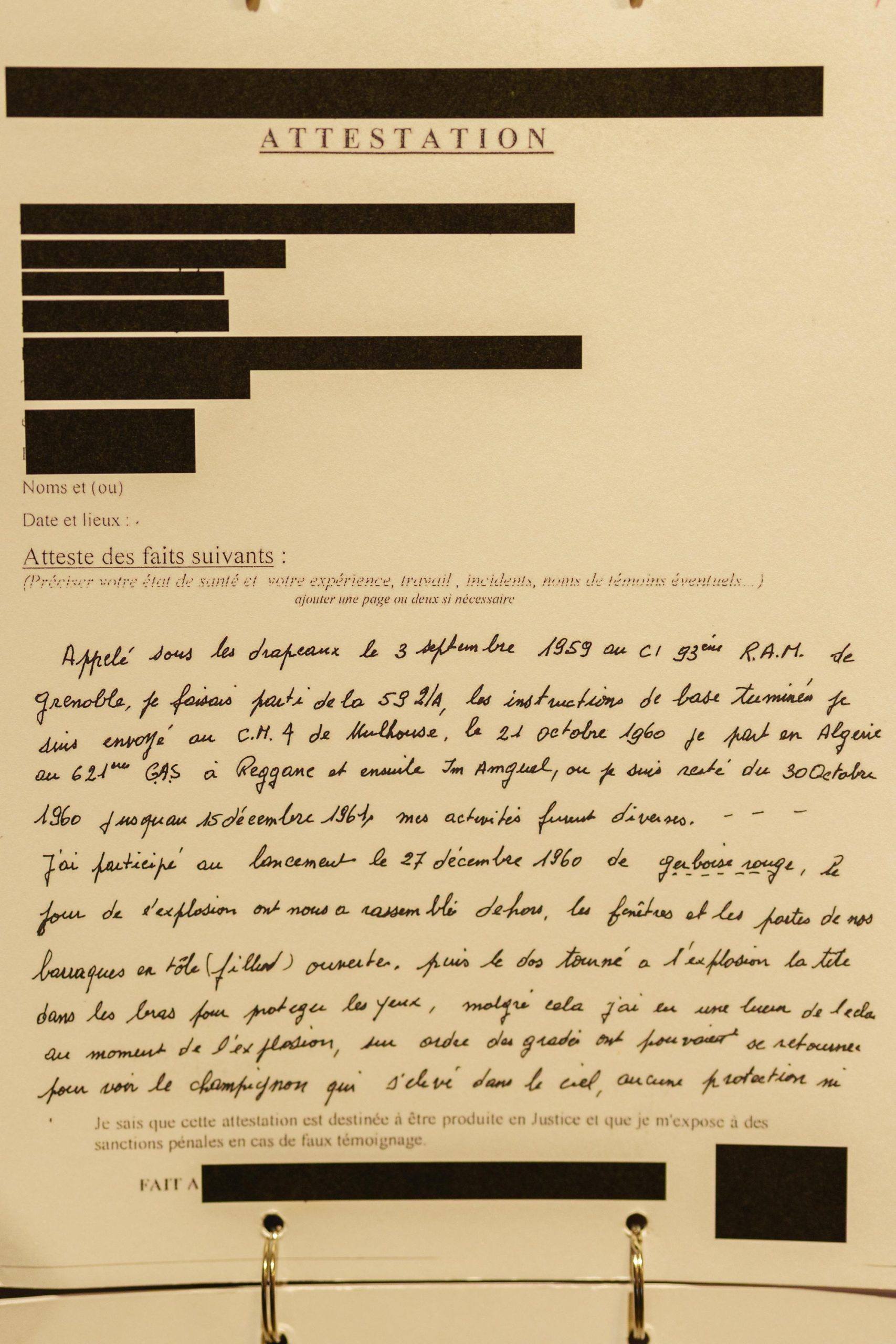
这些载体上印有各种文献,从政府和军事文件到受害者的手写证词。打印的译文标明了日期和译者姓名,从而成为叙述的额外见证。放大的档案图像和在撒哈拉拍摄的视频截屏按序列排列,构建出与官方版本相对立的叙事。部分页面被刻意留白,暗示仍处于机密状态的档案所造成的缺失与沉默。
Printed on these supports are a variety of artifacts, ranging from government and military documents to handwritten testimonies from victims. The typed translations are dated and include the translator’s name, thus serving as additional witnesses to the narrative. Enlarged archival images and stills from videos filmed in the Sahara are arranged in sequences, allowing for the construction of counter-narratives to the official versions. Some pages are intentionally left blank to suggest the absence and silence of still-classified archives.
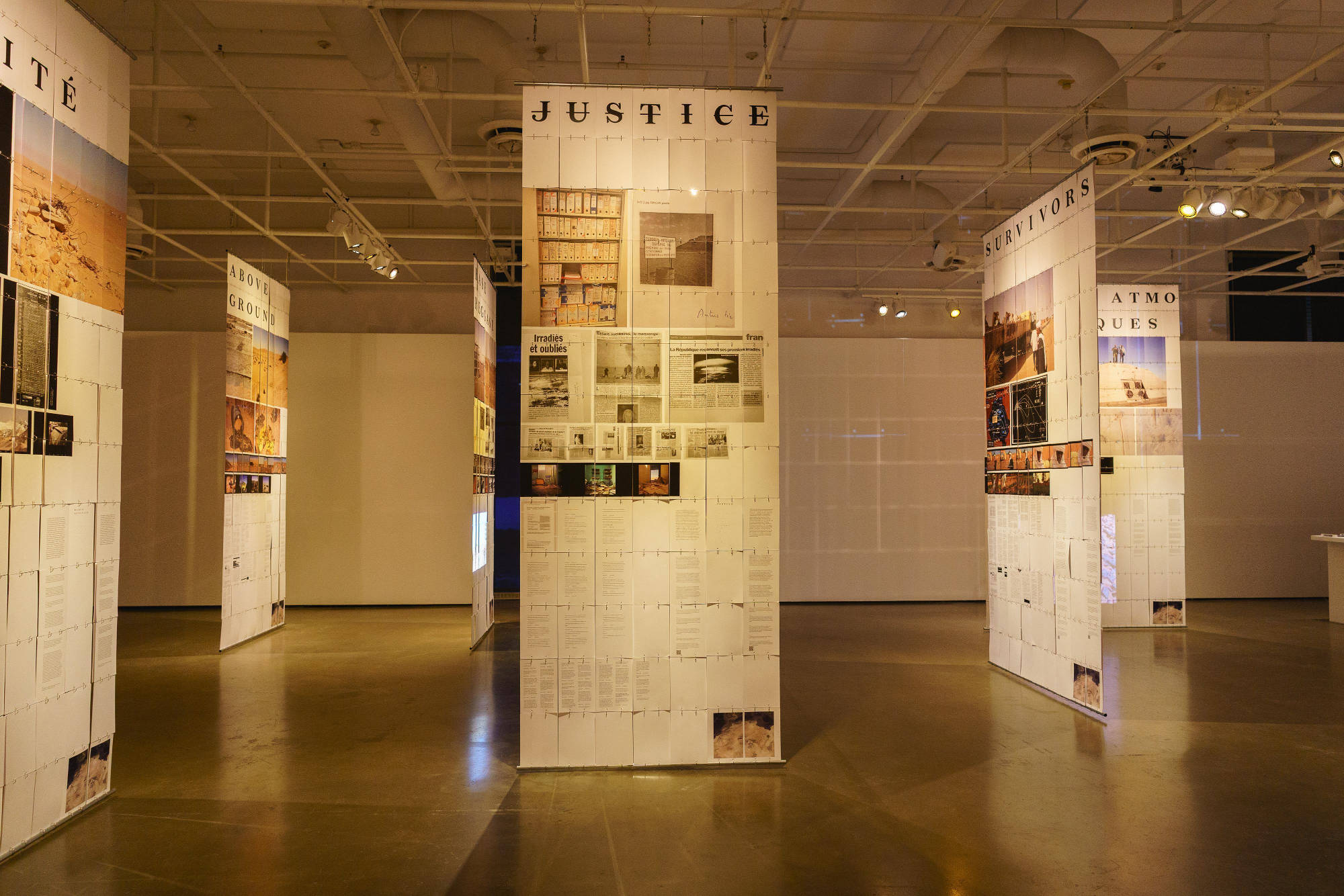
空间中布置了8台播放录制证词的电视和5处投影。音轨持续播放着沙漠风声的背景音,将参观者包围其中,增强了沉浸感。
Eight televisions displaying filmed testimonies and five projections punctuate the space. An audio track continuously plays ambient desert wind sounds, enveloping visitors and enhancing the immersive experience.
基于多年研究的展览
An exhibition based on years of research
该展览是一个更广泛研究和传播项目的一部分,该项目还包括两本书籍:《殖民毒性:演练撒哈拉沙漠中的法国放射性建筑与景观》(2024-2025年出版,曾获瑞士最美图书奖及荷兰最佳图书设计奖)以及《殖民毒性:记录撒哈拉沙漠中的放射性景观》(2026年巴黎出版)。
This exhibition is part of a broader research project and dissemination project that also includes two books: Colonial Toxicity: Rehearsing French Radioactive Architecture and Landscape in the Sahara (Amsterdam and Zurich, 2024, 2025), a nearly 600-page work that won the Swiss Most Beautiful Books and The Best Dutch Book Designs awards, and Colonial Toxicity: Documenting the Radioactive Landscape in the Sahara (Paris, 2026).
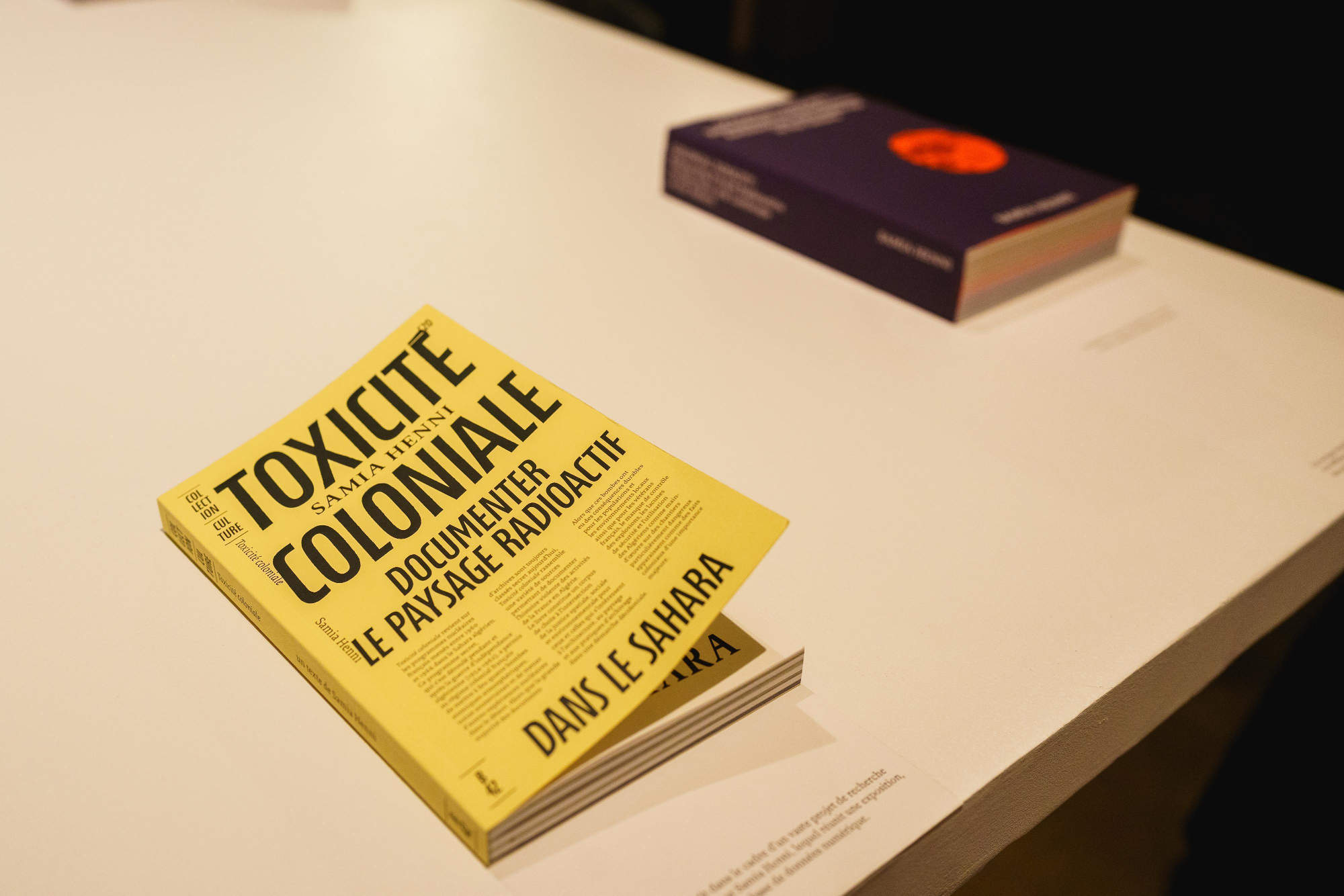
展览还包含一个名为“证词翻译项目”的开放获取数字数据库,旨在使公众能够查阅约40份来自阿尔及利亚撒哈拉核弹受害者和目击者的书面证词。所有文献均可在UQAM设计中心查阅。
The exhibition also features an open-access digital database, The Testimony Translation Project, a research and translation project that aims to make accessible approximately 40 written testimonies from victims and witnesses of French nuclear bombs in the Algerian Sahara, originally written or recorded in Arabic, Tamahaq, or standard French. All documentation is available for consultation at the UQAM’s Centre de design.
这些空间化和传播信息的手段构成了强有力的行动号召,要求公开仍处于保密状态的档案并对相关场所进行除污。这两个步骤对于理解殖民毒性的过去、现在和未来至关重要。
These various methods of spatializing and disseminating information constitute a powerful call to action, demanding the opening of still-secret archives and the decontamination of the sites in question. These two steps are essential for understanding the past, present, and future of colonial toxicity.
UQAM 设计中心首展亮点
A first at UQAM’s Centre de design
本次展览是该项目首次以法语形式在 UQAM 设计中心呈现。展览保留了英文策展原文,并辅以全新的法语翻译。视频、访谈等素材均以原语言(英语、法语或图阿雷格语)呈现,并提供法英双语字幕。这也是该展览自 2023 年在阿姆斯特丹 Framer Framed 画廊首展以来,最完整的一次全貌展示。
The exhibition is being presented for the first time in French at the UQAM’s Centre de design. The original curatorial texts in English are retained alongside the new French translations. Videos, interviews, and other materials appear in their original language (English, French, or Tamasheq), with translations in both French and English. This edition also marks the first complete presentation of this major exhibition since its initial staging at the Framer Framed gallery in Amsterdam in 2023.
“在 UQAM 设计中心举办此次展览是至关重要的一步,它提供了一个研究、教学与设计实践交汇的空间。萨米亚·海尼动用了建筑与设计特有的工具——包括绘图、制图和空间可视化,对一个长期笼罩在秘密中的主题进行了真实的调查和法医式重建。她向我们展示了建筑师的工具不仅能用来建造大楼,还能用来理解和破译复杂的历史与领土事件,构建知识并表达立场。” —— Patrick Evans,UQAM 设计中心总监
“Showing this exhibition at the UQAM’s Centre de design is a necessary step, as it provides a space where research, teaching, and design practice converge. Samia Henni mobilizes tools specific to architecture and design, including drawing, mapping, and spatial visualization, to conduct a genuine investigation and forensic reconstruction of a subject long shrouded in secrecy. She reveals how the architect’s tools can do more than simply construct a building: they can also be used to understand and decipher complex historical and territorial events, to build knowledge, and to take a stand.” – Patrick Evans, Director of UQAM’s Centre de design.
“策划并思考一场展览本身就是一种研究形式,也是与多元受众交流的方式。本次展览具有双重目的:首先,展示放射性物质对建筑与景观的影响,以及这种污染所造成的不可逆且持续的影响;其次,将这些影响与核能受害者的有力证词并置。展览同时也是一种呼吁,要求解密官方档案,并对撒哈拉居民仍生活于其周边的污染现场进行除污。” —— Samia Henni,历史学家兼策展人
“Designing an exhibition and thinking through it constitutes a form of research and a way to engage a diverse audience. The exhibition has a dual purpose: first, to showcase the architectural and landscape production of radioactivity, as well as the irreversible and ongoing impact of this production and contamination; and second, to juxtapose these with powerful testimonies from victims of nuclear power. The exhibition also serves as a call for the declassification of institutional archives and the decontamination of sites around which Saharan populations still live. For all these reasons, I thank UQAM’s Centre de design for contributing to the international circulation of this exhibition.” – Samia Henni, historian and curator of the exhibition.
关于策展人:萨米亚·海尼
About Samia Henni
萨米亚·海尼是一位建筑历史学家和展览策展人,专注于研究建筑、被毁及想象中的环境。她通过文本和视觉策略,考察由殖民进程、强迫流离失所、核武器、资源开采和战争所产生的环境历史。
Samia Henni is an architectural historian and exhibition curator who focuses on built, destroyed, and imagined environments. Employing textual and visual strategies, her practice examines the histories of these environments produced by the processes and mechanisms of colonization, forced displacement, nuclear weapons, resource extraction and war.
海尼在苏黎世联邦理工学院(ETH Zurich)获得建筑历史与理论博士学位,曾任教于康奈尔大学、普林斯顿大学等。目前,她在麦吉尔大学彼得·郭华·富建筑学院任教。
Samia Henni obtained her PhD in the history and theory of architecture from ETH Zurich and has taught at several universities, including ETH Zurich, the University of Technology Sydney, Cornell, and Princeton. She currently teaches at the Peter Guo-hua Fu School of Architecture at McGill University.
项目名称 / Project Name:殖民毒性:撒哈拉沙漠中的法国建筑与放射性景观
策展研究 / Curatorial Research:Samia Henni
主办单位 / Organizer:UQAM’s Centre de design
合作伙伴 / Partner:Centre de design de l’UQAM, Framer Framed, If I Can’t Dance, École de design de l’UQAM, MP
本文内容由WeHow设计网经 UQAM设计中心 授权编辑、整理发布。文中图片及资料版权归原作者所有,任何形式转载需事先获得授权。
禁止以WeHow编辑版本进行任何形式转载。